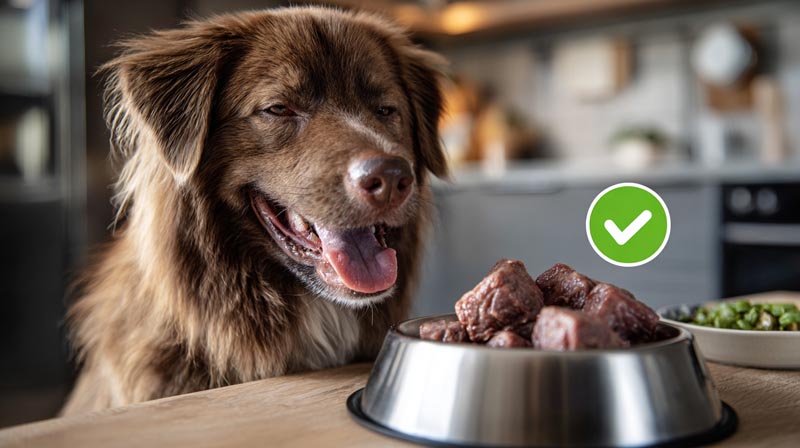
Bison is good for dogs. Most dogs thrive on it. But a few details can make or break whether it’s the right choice for your specific dog.
Bison is a lean, novel protein with a better fat profile than beef, a complete amino acid lineup, and real practical value for dogs with food sensitivities. It also comes with caveats around cross-reactivity, cost, and specific health conditions that most articles skip over.
This guide covers the full picture: nutritional data, safety, allergy use, comparisons to other proteins, feeding amounts, label reading, and condition-specific guidance for dogs with pancreatitis, kidney disease, or age-related muscle loss.
What Is Bison Meat for Dogs?
Bison meat for dogs is the processed or raw flesh of Bison bison, the North American bison species, used as a named animal protein ingredient in kibble, wet food, freeze-dried meals, and raw dog food blends.
It sits in a separate category from standard proteins like beef or chicken. Under AAFCO’s definition of “meat”, the ingredient is the clean flesh of slaughtered mammals, and when a label names the species, such as bison, the meat must come from that species.
What Makes Bison Different from Beef
Bison and beef are not the same ingredient. Both belong to the family Bovidae, but bison do not marble fat within muscle tissue the way cattle do. The finished meat product carries less total fat, a different fatty acid ratio, and a slightly different amino acid distribution than conventional beef.
Bison are also not raised like cattle. According to the USDA Food Safety and Inspection Service, antibiotics and growth hormones are not given to bison, and bison spend most of their lives on open range eating grass or hay. Most are then fed grain for the last 90 to 120 days before slaughter, which affects the nutritional profile of the meat.
Forms of Bison in Dog Food
Raw bison: sold as ground, organ, or whole cuts for raw feeding protocols.
Kibble with bison: listed as “bison” or “bison meal” in the ingredient panel. Bison as a first ingredient indicates fresh meat; bison meal is a concentrated, dehydrated form.
Freeze-dried and air-dried: used in high-end single-protein formulas, raw-coated kibble lines, and as meal toppers.

Wet food: bison appears in some grain-free canned lines, where it is paired with broth and limited plant ingredients.
Why “Novel Protein” Classification Matters
Novel protein means a protein source a dog’s immune system has not previously encountered through diet.
Because food allergies in dogs develop only after repeated exposure to a specific protein, bison qualifies as novel for most dogs. Most commercial dog food historically relies on beef, chicken, and dairy, meaning bison exposure is limited. That absence of prior exposure is the mechanism behind its use in limited ingredient diets and elimination diet trials.
The novel status is not permanent. If a dog has eaten bison repeatedly for years, it is no longer novel to that individual dog.
What Nutrients Does Bison Provide for Dogs?
Bison delivers a high-density nutritional profile with low caloric cost. Per 100 grams of cooked lean meat, bison provides 28.44g of protein, 143 calories, and approximately 2.42g of fat (USDA FoodData Central). That protein-to-calorie ratio beats ground beef, roasted chicken meat, pork loin, and farmed salmon at equivalent serving sizes.
Protein and Amino Acid Profile
Bison is a complete protein source. It supplies all 10 amino acids that are essential for dogs, including lysine and methionine, and like other meats it also contains taurine, which is relevant to canine muscle repair, neurotransmitter function, and cardiac health.
USDA data put lean roasted bison at about 28g of protein and only about 2.4g of fat per 100g. For dogs, this means high lean muscle support without the caloric surplus that comes with fattier protein sources. Ground bison is a different story: cooked ground grass-fed bison has about 8.6g of fat per 100g, so the cut matters.
| Protein Source | Protein (per 100 g cooked) | Fat (per 100 g cooked) | Calories (per 100 g cooked) |
|---|---|---|---|
| Bison (lean, roasted) | 28.44 g | 2.42 g | 143 |
| Beef (90% lean ground, broiled) | 26.1 g | 11.8 g | 217 |
| Chicken (meat only, roasted) | 28.9 g | 7.41 g | 190 |
| Pork (top loin, roasted) | 26.4 g | 8.82 g | 192 |
| Salmon (Atlantic, farmed, cooked) | 22.1 g | 12.4 g | 206 |
Source: USDA FoodData Central (SR Legacy)
Fat Content and Fatty Acid Ratio
Range-fed bison carries more omega-3 fatty acids than feedlot-finished animals, and its muscle fat profile is similar to that of grass-fed beef and wild elk (Rule et al., Journal of Animal Science, 2002). Because most commercial bison is grain-finished, the exact omega-6 to omega-3 ratio varies by how the animal was raised.
That ratio matters for dogs because chronic inflammation is often linked to omega-6 excess. A lower ratio supports skin health, coat condition, and joint function. Bison also contains conjugated linoleic acid (CLA), a fatty acid found mainly in ruminant meat and studied for anti-inflammatory effects; chicken breast had the least CLA in the same study.
In lean roasted bison, saturated fat makes up about 38% of total fat, monounsaturated fat about 39%, and polyunsaturated fat about 10% (USDA FoodData Central).
Vitamins and Minerals
Bison is a rich source of selenium, zinc, B12, and iron, all of which serve specific biological functions in dogs. Values below are per 100g of lean roasted bison (USDA FoodData Central).
- Selenium: 35.5mcg, about 65% of the daily human value; supports antioxidant function and prevents cellular oxidative damage
- Zinc: 3.68mg; supports immune response, skin integrity, and coat quality
- Vitamin B12: 2.86mcg, about 119% of the daily human value; involved in myelin sheath maintenance and neurological function
- Iron: 3.42mg, more than 90% lean ground beef (2.71mg); critical for oxygen transport
- Choline: 115mg; supports fat metabolism and nervous system function
Is Bison Safe for Dogs to Eat?
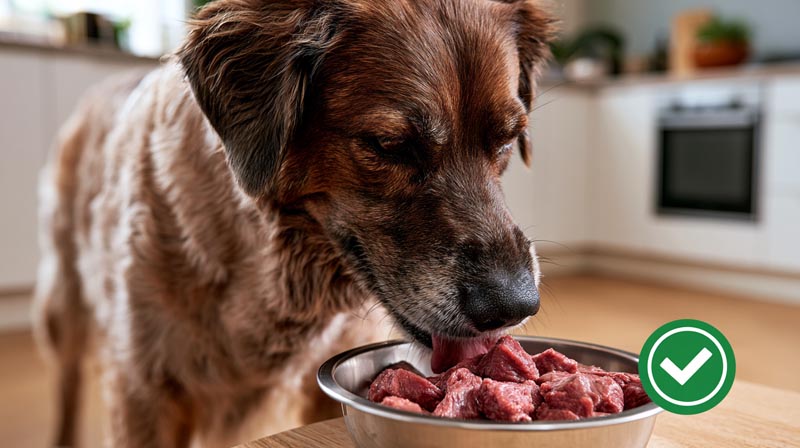
Bison is safe for dogs when sourced from complete and balanced commercial products or handled correctly as a raw ingredient. No known toxicity exists in dogs. Bison is an accepted named meat ingredient in dog food, and commercially prepared bison formulas carry the same food safety regulations as any other pet food protein.
Raw Bison Safety Considerations
The AVMA discourages feeding any raw or undercooked animal-source protein to dogs because of contamination risk from bacteria such as Salmonella, Campylobacter, E. coli, and Listeria, and the CDC does not recommend feeding raw pet food.
In FDA testing, 15 of 196 raw pet food samples (about 8%) tested positive for Salmonella and 32 for Listeria monocytogenes, while virtually none of the dry and semi-moist dog and cat foods tested did (FDA). Dogs fed raw meat-based diets can also shed Salmonella in their feces without looking sick, creating secondary exposure risk for household members.
For raw bison specifically, safe handling means keeping it frozen until you need it, thawing it in the refrigerator, using dedicated utensils, and throwing away leftovers that have sat out at room temperature (CDC pet food safety guidance).
Commercial Bison Dog Food Safety Standards
Cooked commercial bison products, such as kibble and canned food, are heat-processed in a way that kills pathogens. This is the primary practical difference between raw and commercial bison for most pet owners. Commercial raw and freeze-dried raw bison products are not cooked, so the raw handling advice above still applies unless the maker uses a validated step such as high-pressure processing.
The FDA’s investigation into diet-associated dilated cardiomyopathy (DCM), which began in July 2018, focused on diets labeled grain-free and high in peas, lentils, other legume seeds, or potatoes. Protein sources in the reported diets varied widely; chicken, lamb, and fish were most common, but some diets contained atypical proteins such as kangaroo, bison, or duck, and no single protein predominated (FDA). The FDA has not established a causal link, and in December 2022 it said it would not release further updates until there is meaningful new scientific information.
Is Bison Good for Dogs With Allergies?
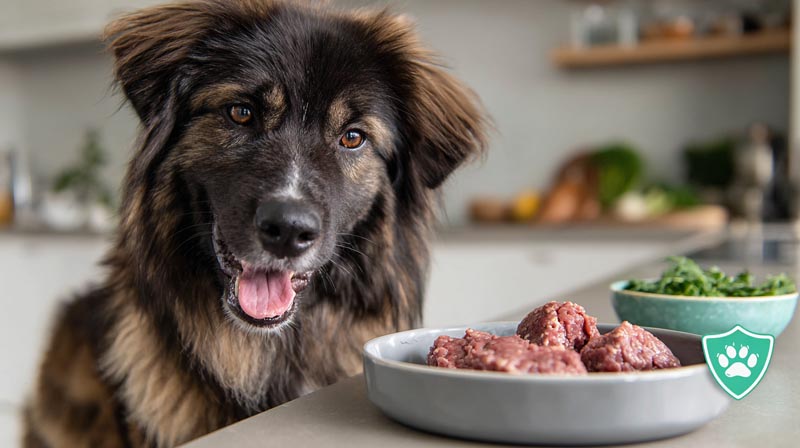
Bison is a practical option for dogs with confirmed food allergies to common proteins, because most dogs have never eaten it. A protein can only trigger an allergic reaction after repeated prior exposure. Since bison rarely appears in mainstream commercial dog food, it qualifies as a novel protein for the majority of the dog population.
How Novel Proteins Reduce Allergic Reactions
Food allergies in dogs develop through sensitization: repeated exposure to a specific protein trains the immune system to treat it as a threat. The 2016 systematic review by Mueller, Olivry, and Prélaud in BMC Veterinary Research identified beef as the most common allergen in dogs at 34% of confirmed cases, followed by dairy at 17% and chicken at 15%.
Those 3 proteins were the most frequently reported triggers in the 297 food-allergic dogs reviewed. Bison does not appear in the review at all, largely because commercial exposure has historically been low.
| Allergen | Prevalence in Confirmed Canine Reactions |
|---|---|
| Beef | 34% |
| Dairy | 17% |
| Chicken | 15% |
| Wheat | 13% |
| Lamb | 5% |
| Bison | Not reported in the review |
Source: Mueller, Olivry & Prelaud, BMC Veterinary Research, 2016
Using Bison in Elimination Diet Trials
An elimination diet trial requires feeding a protein the dog has genuinely never eaten before, with zero deviation. A review by Olivry, Mueller, and Prélaud found that trials should last at least 8 weeks to diagnose more than 90% of dogs with food allergies (BMC Veterinary Research, 2015).
Bison works as a novel protein in this context for most dogs. Single-protein bison formulas with limited carbohydrate ingredients reduce the risk of inadvertent allergen exposure during the trial, but labels are not always accurate: testing has found unlisted ingredients in 33-83% of over-the-counter pet foods marketed with “novel” or “limited” ingredients (Olivry and Mueller, 2018). Your vet may recommend a veterinary diet for the trial itself.
One caution worth knowing from your vet: bison and beef both belong to the Bovidae family. No study has measured bison-beef cross-reactivity in dogs specifically, but a serological study of 469 dogs confirmed cross-reactive IgE binding between related foods such as beef, lamb, and cow’s milk, and the authors advised avoiding related foods in elimination diets (Bexley et al., Veterinary Dermatology, 2017). If a dog has a confirmed beef allergy, bison is not automatically safe and should be introduced only under veterinary guidance.
Food allergy is found in about 9-40% of dogs presenting with itching and 8-62% of dogs with allergic skin disease, depending on the study (Olivry and Mueller, BMC Veterinary Research, 2017).
How Does Bison Compare to Other Dog Food Proteins?
Lean bison outperforms ground beef, roasted chicken meat, pork loin, and farmed salmon on fat content and caloric density at similar protein levels (USDA FoodData Central). Whether it is the right choice depends on the individual dog’s health history, allergen exposure, and budget.
Bison vs. Beef
This is the most common comparison, and the answer is not straightforward.
Nutritionally: bison wins. Lean roasted bison delivers more protein per 100g than 90% lean ground beef (28.44g vs 26.1g), about 79% less fat (2.42g vs 11.8g), and about 34% fewer calories (143 vs 217). Compared ground to ground, the gap narrows: cooked ground grass-fed bison has 8.62g of fat and 179 calories per 100g, still about a quarter less fat than the ground beef. Range-fed bison also tends to carry more omega-3s than feedlot beef.
For allergies: risky if beef allergy is confirmed. Because both proteins belong to the Bovidae family, cross-reactivity is possible, and related foods are known to share IgE-binding proteins (Bexley et al., 2017). A vet consultation is needed before assuming bison is a safe swap for a beef-allergic dog.
Cost: bison dog food usually costs noticeably more than beef-based food because supply is limited. The USDA’s most recent Census of Agriculture counted about 192,000 bison on U.S. farms and ranches, and about 80,000 bison are harvested each year, compared with roughly 125,000 cattle per day (USDA FSIS).
Bison vs. Chicken
Chicken is the most widely used protein in commercial dog food. That wide use is exactly why it ranks as the third most common allergen in dogs at 15% of confirmed cases.
Lean bison has about a third of the fat of roasted chicken meat (2.42g vs 7.41g per 100g) and about 30% less fat than skinless roasted chicken breast (3.57g), according to USDA data. Chicken breast muscle is higher in omega-6 fatty acids than bison, beef, or elk muscle (Rule et al., 2002). For dogs with chicken sensitivity, cross-reactivity with bison is unlikely, since mammal and bird proteins are only distantly related.
Bison vs. Venison and Lamb
Venison is the closest direct comparison to bison as a novel protein. Both are lean, both are rarely used in mainstream commercial kibble, and both work well in elimination diets. Fat content is very similar: roasted venison has about 3.19g of fat per 100g versus 2.42g for lean roasted bison (USDA FoodData Central). Availability is similar, with both mostly found in specialty and limited ingredient lines.
Lamb is no longer considered novel by most veterinary nutritionists because of its widespread use in commercial dog food over the past two decades. It ranks sixth among confirmed canine allergens at 5%, just behind soy. Bison currently retains more novel status than lamb.
What Are the Benefits of Bison for Dogs?
Bison supports lean muscle development, skin and coat health, digestive tolerance, and energy efficiency, all backed by its specific nutritional composition rather than general claims about “high-quality protein.”
Lean Muscle Support
High protein with minimal fat is the defining feature of lean bison. At 28.44g protein and 2.42g fat per 100g, the protein-to-fat ratio is exceptional even among lean meats.
Dogs require complete amino acid intake for tissue repair, hormone production, and immune function. Bison covers all essential amino acids, including lysine and methionine, and also supplies taurine, which matters for canine cardiac and metabolic health.
Skin, Coat, and Inflammation
Range-fed bison’s higher omega-3 content can support skin barrier function and help limit the inflammation that drives itching and coat deterioration in sensitive dogs.
The zinc content in bison (3.68mg per 100g of lean meat) plays a specific role in keratin production. Zinc-deficient dogs show dry, flaky coats and slow wound healing. Bison contributes meaningful zinc when fed as part of a complete and balanced diet.
Digestive Tolerance and Pancreatitis Risk
Low-fat proteins reduce the workload on the pancreas. The Merck Veterinary Manual describes a low-fat diet for dogs with pancreatitis as one with less than 20g of fat per 1,000 kcal.
Lean roasted bison works out to about 17g of fat per 1,000 kcal, just under that threshold. Cooked ground bison is closer to 48g per 1,000 kcal, and 90% lean ground beef about 54g. This makes lean bison cuts one of the safer red meat options for dogs with a history of pancreatic issues, though a vet should confirm the specific dietary fat limit for each individual dog, and the complete food’s total fat matters more than the protein alone.
Energy Efficiency for Active Dogs
At 143 calories per 100g with 28.44g protein, lean bison provides the caloric profile of a performance protein without the fat load of conventional red meat.
Working dogs and high-activity breeds like the Australian Shepherd or Siberian Husky benefit from proteins that deliver maximum muscle fuel without pushing total daily caloric intake into weight-gain territory. Lean bison’s caloric density is slightly below skinless chicken breast (165 calories per 100g), though chicken breast has a little more protein per gram.
Are There Any Risks or Downsides to Feeding Dogs Bison?
Bison is not risk-free. Cost, supply limitations, cross-reactivity with beef, and caloric considerations for sedentary dogs are all real practical concerns that affect whether bison is the right choice for a specific dog.
Cross-Reactivity With Beef Allergies
This is the most clinically significant risk associated with bison for allergic dogs.
Bison and beef are close relatives in the Bovidae family, and closely related foods often share allergenic proteins. In dogs, serological testing has confirmed cross-reactive IgE binding between related foods such as beef, lamb, and cow’s milk (Bexley et al., 2017). No published study has measured how often beef-allergic dogs react to bison, so the true rate is unknown.
The practical implication: do not assume bison is a safe alternative for a confirmed beef-allergic dog without running a supervised elimination trial of at least 8 weeks. Confirm with a veterinarian before introducing it.
Weight Management Considerations
Bison’s high protein density makes it excellent for active dogs. It creates a problem for sedentary or overweight dogs if portion size is not adjusted.
Caloric density: 143 kcal per 100g for lean cooked bison, and 179 kcal for cooked ground bison. That is lower than ground beef or roasted chicken meat, but protein itself still contributes roughly 3.5-4 kcal per gram and must be factored into daily energy budgets.
Dogs that are already overweight need total caloric restriction, not just a protein swap. Switching from beef kibble to a bison formula without recalculating total daily intake does not produce weight loss on its own. Pair the protein change with a measured feeding plan, and use our dog calorie calculator to set a daily target.
For dogs with sensitive stomachs or specific dietary needs, bison-based healthy dog treats can be a lower-commitment way to introduce the protein before switching to a full bison diet.
Cost and Availability
Bison dog food is more expensive than beef or chicken formulas, often by a meaningful margin per pound of finished product.
The supply constraint is structural: the U.S. harvests about 80,000 bison a year, roughly what the cattle industry processes in less than a day (USDA FSIS). That ratio drives the price floor regardless of brand. Owners should factor this into long-term feeding budgets. Owning a dog can be expensive, and premium protein sources like bison add meaningfully to the annual cost of feeding, especially for large breeds.
Availability also varies by retailer. Bison formulas are more reliably found in specialty pet food stores or online than in standard grocery chains, and single-source bison options have fewer SKUs than chicken or beef lines.
How Much Bison Should Dogs Eat Per Day?
There is no single right amount. Daily bison intake depends on whether you are feeding raw or commercial kibble, the dog’s life stage, body weight, and activity level.
Common raw feeding guidelines point to the same baseline: 2-3% of the dog’s ideal body weight per day for adult dogs at a healthy weight.
Feeding Guidelines by Dog Size
Raw bison amounts by weight class (adult dogs, maintenance):
- 10 lb dog: 0.2-0.3 lb per day (split into 2 meals)
- 25 lb dog: 0.5-0.75 lb per day
- 50 lb dog: 1-1.5 lb per day
- 75 lb dog: 1.5-2.25 lb per day
- 100 lb dog: 2-3 lb per day
These amounts assume a complete and balanced raw diet, not plain bison meat. Use thawed portions within a few days and wash hands after every serving.
For kibble and commercial bison formulas, follow the feeding chart on the packaging. These charts are calibrated per formula because caloric density varies significantly between brands and formats (kibble vs. wet vs. freeze-dried).
Adjusting Portions for Age and Activity
Life stage changes the baseline by a meaningful margin.
Puppies: raw feeding guides often suggest 4-6% of current body weight daily, fed 3-4 times per day for very young puppies and twice daily for older puppies. Puppies grow fast and have significantly higher caloric needs per pound than adults, and their diet must be complete and balanced for growth.
Senior dogs: senior dogs at an ideal weight often do well on about 2-2.5% of body weight per day, while overweight or less active seniors may need closer to 1.5-2%.
Working and high-activity dogs: 3-4% of body weight. Breeds like the Border Collie, Belgian Malinois, or Vizsla that work or train daily need the upper end of the protein range to sustain lean muscle.
Vet consultation triggers: weight gain over 2 weeks, loose stool persisting beyond the transition period, coat changes, or loss of appetite. Any of these after a bison diet switch warrants a check-in before adjusting portions on your own.
What Should You Look for in a Bison Dog Food?
Not all bison dog food is equal. The label tells you most of what you need to know, if you know where to look.
| Label Element | What to Look For | Red Flag |
|---|---|---|
| AAFCO statement | “Complete and balanced” for your dog’s life stage | “For intermittent or supplemental feeding only” |
| First ingredient | Named meat source such as “bison” | “Bison by-product” or an unnamed meat meal |
| Protein source | A single, clearly named protein source (for example, bison only) | Multiple unnamed or mixed protein sources |
| Verification method | Feeding trial statement such as “Animal feeding tests using AAFCO procedures…” | Diet validated by formulation only, without a feeding trial |
Reading the Ingredient Label
Ingredients must be listed in descending order of weight before processing, under FDA and state labeling rules.
Bison listed first means fresh bison contributes the largest weight. That is the most favorable position. “Bison meal” as a second ingredient is acceptable and provides concentrated protein. “Bison by-product” includes non-muscle parts and is a lower-quality designation.
Watch for hidden proteins. A label showing “bison” as the first ingredient can still contain chicken fat, beef broth, or egg powder further down the list. For allergy management, every ingredient matters, not just the primary protein. Single-protein bison formulas should exclude other named animal proteins from the ingredient list, though even then, testing shows labels are not always complete.
AAFCO Certification vs. Feeding Trials
There are 2 ways a brand can claim “complete and balanced”: meeting an AAFCO nutrient profile through formulation and analysis, or passing an AAFCO feeding trial in live dogs (FDA). For adult maintenance, the feeding trial runs 26 weeks.
Feeding trial language on the label: “Animal feeding tests using AAFCO procedures substantiate that [Product Name] provides complete and balanced nutrition.” This is the stronger claim. It shows the food worked in actual dogs, not just in a spreadsheet calculation.
Formulation-only products are not inferior by definition, but they carry more theoretical risk, because feeding trial data provides evidence of real-world nutritional adequacy that formulation alone cannot replicate.
Some manufacturers go further, running feeding trials that also track blood counts, cardiac biomarkers, and taurine levels. If a brand makes that claim, ask for the data.
Grain-Free vs. Grain-Inclusive
Grain-free bison formulas are common in the limited ingredient diet category. Most single-protein bison kibbles use peas, chickpeas, or lentils as the primary carbohydrate.
The FDA’s DCM investigation flagged grain-free diets high in legumes as potentially associated with dilated cardiomyopathy in dogs. The FDA has not established a confirmed causal link, and its testing found similar protein, fat, and taurine levels in grain-free and grain-containing products. Tufts veterinary nutritionist Lisa Freeman has highlighted boutique, grain-free, and exotic-ingredient diets as a pattern of concern, and listed bison among the exotic ingredients seen in affected dogs’ diets (Tufts Petfoodology, 2018). Grain-free is not categorically unsafe, but it carries more ongoing scrutiny.
For dogs without grain sensitivity, a grain-inclusive bison formula from an established manufacturer sidesteps much of the DCM discussion. The protein quality of the bison itself is unaffected by whether the carbohydrate base uses grains or legumes.
Is Bison Good for Dogs With Specific Health Conditions?
Bison’s nutritional profile makes it useful for several specific health conditions, and problematic for one. The determining factors are fat content, phosphorus levels, and protein density.
Bison for Dogs With Pancreatitis
Pancreatitis in dogs requires a low-fat diet as the primary dietary intervention. The Merck Veterinary Manual describes feeding a low-fat diet, under 20g of fat per 1,000 kcal, as crucial for treatment success in dogs.
Lean roasted bison, at 2.42g fat per 100g, works out to about 17g of fat per 1,000 kcal, one of the lowest-fat red meat options available. It fits under that threshold when used as the primary protein in a low-fat formula, but ground bison does not. Beef at 11.8g fat per 100g would require careful formulation to stay within the same threshold. Breeds prone to pancreatitis, including Miniature Schnauzers and Cocker Spaniels, may do well with lean bison as part of a vet-approved low-fat diet.
Bison for Dogs With Kidney Disease
This is the one condition where bison requires clear veterinary guidance before use.
The core issue: phosphorus. Phosphorus in the diet is directly linked to protein content, and bison is a high-protein meat. For dogs with CKD (Chronic Kidney Disease), the IRIS treatment recommendations aim to keep blood phosphate between 2.7 and 4.6 mg/dL, and dietary phosphate restriction with a clinical kidney diet is the first tool to reach that target.
A study of 24 dogs with surgically reduced kidney function showed that dogs on a high-phosphorus, high-calcium diet had a 33% survival rate over 2 years, compared to 75% for the mineral-restricted group (Brown et al., Journal of the American Society of Nephrology, 1991).
Standard over-the-counter bison dog food exceeds the phosphorus targets for mid-to-late stage CKD. Bison may be appropriate for very early-stage CKD under veterinary supervision, but IRIS recommends considering a clinical renal diet from Stage 2 onward. Do not swap a prescribed renal diet for bison without explicit veterinary sign-off.
Bison for Senior Dogs
Healthy senior dogs without CKD actually need more protein than conventional wisdom suggested for years, not less.
The 2023 AAHA Senior Care Guidelines note that dogs tend to lose lean body mass and gain fat as they age, and that senior pets, particularly cats, may need up to 50% more protein to improve or slow muscle loss.
Bison’s protein density (28.44g per 100g cooked lean meat) and complete amino acid profile make it a practical match for this recommendation. The lean protein supports muscle maintenance without adding excess fat that sedentary or overweight senior dogs do not need.
Senior dogs with health problems common to larger breeds, including joint issues and reduced mobility, can also benefit from the omega-3 fatty acids in range-fed bison. Less inflammation around joints supports easier movement in dogs already managing age-related stiffness.
One exception applies: senior dogs with confirmed CKD fall into the previous section’s guidance, where a clinical renal diet is usually recommended from IRIS Stage 2 onward. Age alone does not justify restricting protein. Only confirmed kidney disease does.
Breeds prone to hip dysplasia in their senior years, like the German Shepherd Dog or Labrador Retriever, can also benefit from the selenium and zinc content in bison, both of which support connective tissue repair alongside a consistent exercise routine. Owners managing hip dysplasia in large breeds should discuss protein choice as part of a broader joint management plan with their vet.
For dogs needing additional support between meals, collagen chews for dogs pair well with a bison-based diet as a joint health supplement, particularly in senior dogs where connective tissue support becomes increasingly relevant. Owners can also explore one ingredient dog treats made from single proteins, which reduce the risk of inadvertent allergen exposure while keeping snacks aligned with the main diet’s protein source.
FAQ on Bison Meat For Dogs
Is bison good for dogs to eat daily?
Yes, when fed as part of an AAFCO-complete diet. Lean bison provides about 28g of protein per 100g with only 2.42g of fat, making it a solid daily protein source. Rotate proteins periodically to avoid sensitization over time.
Can dogs be allergic to bison?
It is possible, though uncommon. Bison does not appear in published reviews of common canine food allergens. However, dogs with a confirmed beef allergy may also react to bison, because closely related foods can share allergenic proteins, and the true cross-reactivity rate in dogs is unknown.
Is bison better than beef for dogs?
Nutritionally, yes. Lean bison has far less fat and fewer calories than 90% lean ground beef, and even ground bison is about a quarter leaner. For dogs with beef allergies, it depends. Cross-reactivity is possible, so a vet check is needed before switching.
Is raw bison safe for dogs?
It carries real risk. Raw bison can harbor Salmonella, E. coli, and Listeria. The AVMA discourages raw animal protein for dogs, and in FDA testing about 8% of raw pet food samples tested positive for Salmonella.
How much bison should I feed my dog?
For raw feeding, the standard guideline is 2-3% of body weight daily for adult dogs at a healthy weight. Puppies need more, often 4-6% of current weight. Split into 2 meals and adjust for activity level and body condition.
Is bison good for dogs with sensitive stomachs?
Often yes. Bison is a novel protein most dogs have not been previously exposed to, reducing the chance of an immune reaction. Lean bison’s low fat content also reduces digestive strain compared to higher-fat proteins like beef or pork.
Can dogs with pancreatitis eat bison?
Lean bison is one of the better red meat options for pancreatitis-prone dogs. At about 17g of fat per 1,000 kcal, lean roasted bison stays under the 20g per 1,000 kcal low-fat threshold, but ground bison is much higher, so ask your vet which form fits.
Is bison a novel protein for dogs?
For most dogs, yes. Novel protein status depends on your individual dog’s dietary history. Since bison rarely appears in mainstream commercial kibble, most dogs have never been exposed to it, making it a valid option for elimination diet trials.
Is bison dog food worth the extra cost?
It depends on your dog’s needs. Bison typically costs more than beef-based formulas due to limited supply (about 80,000 bison harvested in the U.S. each year, versus roughly 125,000 cattle per day). For allergic or sensitive dogs, the price difference is usually justified.
Can senior dogs eat bison?
Yes, and it can actively help. Dogs tend to lose lean body mass as they age, and AAHA notes that senior pets may need more protein to slow muscle loss. Bison’s high protein density and low fat suit healthy aging dogs that do not have kidney disease.
Conclusion
Bison is a genuinely useful protein for most dogs, not just a premium-priced trend.
The nutritional data is clear. High protein density, low saturated fat in lean cuts, a favorable fatty acid profile in range-fed animals, and a complete amino acid profile make bison one of the stronger single-protein options available in commercial dog food today.
For dogs managing food sensitivities, limited ingredient diets built around bison offer real allergen avoidance value, provided beef allergy cross-reactivity has been ruled out with a vet first.
Pancreatitis-prone dogs, active breeds, and aging dogs dealing with sarcopenia all have specific reasons to consider lean bison over higher-fat proteins.
Cost and availability remain the practical limits. But for the right dog, grass-fed bison dog food earns its price.