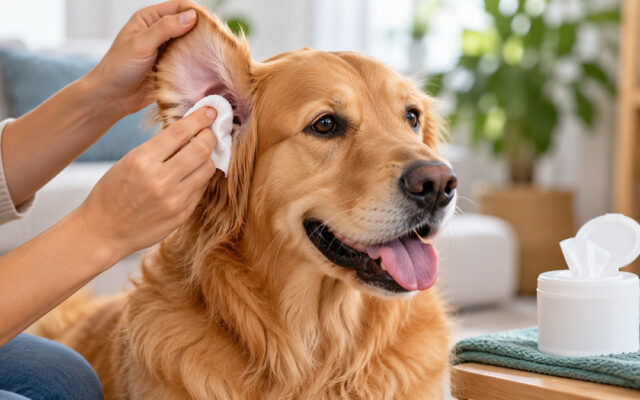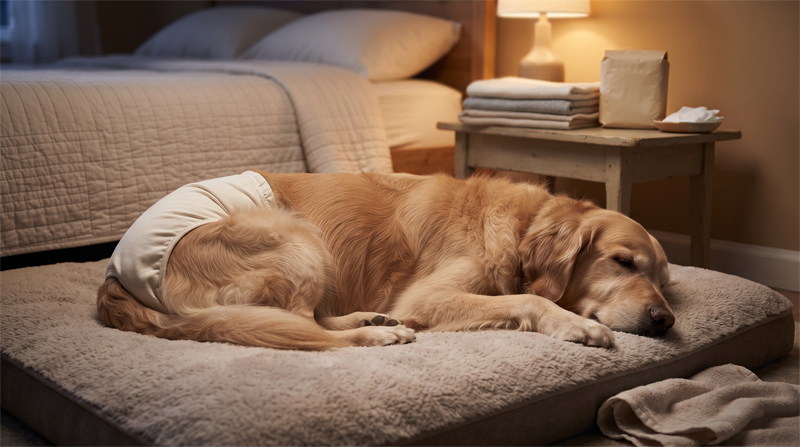
A dog can absolutely wear a diaper overnight, but not just any diaper. The daytime kind you’d use for a car ride or a walk through the park isn’t built for eight hours of nobody checking on it. An overnight dog diaper is a different product: a heavier absorbent core, tighter cuffs around the legs, made specifically to sit against skin through 6 to 8 hours of sleep without a change.
Most people reach for one because of urinary incontinence, a heat cycle, or recovery after surgery, and the sizing that actually works comes from a waist measurement rather than a breed chart. Disposable versions dominate the shelf. Grand View Research’s 2024 industry analysis found disposable designs hold over 62% of global pet diaper sales, even though washable ones end up cheaper per use once you tally a full year of nightly wear.
Can Dogs Wear Diapers Overnight?
Fit and follow-through are what make it safe. A diaper that’s too tight overnight can leave marks by morning, and one that’s too loose leaks the moment the dog rolls over in its sleep. Check it before bed, and check it again before letting the dog out of the crate.
The situations that call for one repeat across owners pretty predictably. Senior dogs with age-related bladder weakness. Female dogs mid heat cycle. Dogs a few days out from a spay or neuter. Puppies still learning where the bathroom actually is. Dogs adjusting to a crate overnight for the first time.
None of that is an emergency by itself. Diapering manages the mess of a nighttime accident. It doesn’t do anything about whatever’s causing the leak in the first place, and that distinction matters more than it sounds like it should.
How Does an Overnight Dog Diaper Prevent Leaks While a Dog Sleeps?
Four parts do the actual work while a dog lies still for hours at a stretch, and none of them are all that clever on their own.
The leg cuffs, elastic bands around each hind leg, seal the gap where side leaks usually start. That gap opens up especially once a dog curls onto its side, which is how most dogs actually sleep. A properly cut tail hole keeps the tail free while still covering the skin around its base, so waste doesn’t pool right where the cut ends. Elastic tension across the belly, the waist strap, is what keeps the whole diaper from sliding down or twisting as the dog shifts position through the night. And underneath everything sits the absorbent core itself, either super absorbent polymer or a dense cloth layer, backed by a thin polyethylene film that stops liquid from soaking through to the mattress or crate pad below.
Sleep position matters more than most owners expect going in. A dog that sleeps curled tight puts more pressure on one leg cuff than a dog that sprawls flat, which is a big part of why the same diaper fits one breed well and fails on another.
How Long Can a Dog Wear a Diaper Overnight?
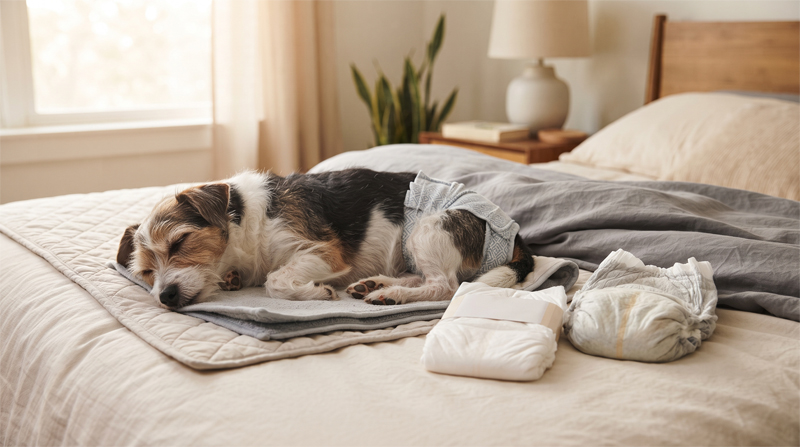
Six to eight hours is the rough ceiling for a diaper that’s actually sized right, and that number moves depending on the dog’s size, how much it’s producing, and how saturated the diaper already was at bedtime.

A few numbers are worth keeping in mind. A diaper matched to the dog’s weight is generally safe for 6 to 8 hours. Smaller breeds often need that window shortened, especially if the diaper feels wet before the six hour mark. The actual trigger to change it is visible sagging, a cool damp feel, or a core that’s fully saturated, not the clock. And if there’s redness at the waistband or leg cuffs after waking, that’s the signal to shorten the interval the next night, not to wait and see.
Dry by morning doesn’t mean it needs changing right at the eight hour mark either. Moisture is what drives skin problems, not time by itself.
What Conditions Require a Dog to Wear a Diaper Overnight?
Several medical and behavioral conditions push owners toward overnight diapering, and each one calls for a slightly different response.
Medical Causes of Overnight Incontinence
Urinary incontinence is the big one, and it affects more of the dog population than most owners realize going in. VCA Animal Hospitals reports that it affects more than 20% of spayed female dogs, and up to 30% of large-breed dogs.
Merck Animal Health data, cited by Small Door Veterinary, shows that among spayed females who go on to develop incontinence, the average onset lands around 2.9 years after the spay surgery. Not right after. Years later, which is part of why so many owners get caught off guard by it.
There’s active research trying to move past lifelong medication for this. A North Carolina State University trial backed by the AKC Canine Health Foundation tested muscle stem cell injections as an alternative, and 14 of 15 dogs in the trial improved.
- Spay incontinence from sphincter weakness
- Urinary tract infections, more common in older females
- Cushing’s disease, which drives excess thirst and urination
Behavioral and Age-Related Causes
Not every overnight accident has a medical diagnosis behind it.
Canine cognitive dysfunction syndrome throws off a senior dog’s sleep-wake cycle and its bladder awareness at the same time. Research published in Frontiers in Aging Neuroscience puts prevalence at 14% to 35% of the senior dog population, and it climbs sharply with age.
Arthritis and general mobility loss keep plenty of older dogs from getting up and reaching the door in time, even when bladder control itself is completely fine. Submissive urination and the tail end of house-training regression round things out, and both tend to fade with training rather than needing a permanent diaper routine.
Disposable vs Washable Overnight Dog Diapers: Which Is Better?
Disposable is the easier call if you only need this once in a while. Convenience wins there, no contest. Washable turns out to be the better math when the dog needs one every night, since cost per use drops fast once you’re doing this for months instead of days.
| Dimension | Disposable | Washable |
|---|---|---|
| Absorbency | High; single-use super-absorbent polymer core | Moderate; reusable microfiber layers |
| Cost Over Time | Higher; replaced daily | Lower; washed and reused nightly |
| Best For | Travel, heat cycles, short-term recovery | Ongoing nightly incontinence |
Disposable Overnight Diaper Pros and Cons
The case for disposables is pretty simple: higher single-use absorbency from a super absorbent polymer core, no laundry, just toss it and grab the next one. Brands like Out! Pet Care and Hartz sell overnight-specific sizes that are actually built for this rather than repurposed daytime stock.
The downside shows up in the budget. A dog wearing one every night burns through a box in days, and the ongoing cost stacks up faster than most people expect compared to a one-time set of washables.
Washable Overnight Diaper Pros and Cons
Reusable options built from microfiber cloth and cotton blends cost more upfront, but they pay for themselves within weeks for a dog that’s diapering every night. Lower cost per use across months of wear, and a softer material against skin that’s already prone to irritation.
Brands such as Wegreeco and Rascal Dog Diapers pair their washable inserts with fitted outer covers that hold the absorbent liner in place through a full night of movement.
How to Choose the Right Overnight Diaper Size and Fit
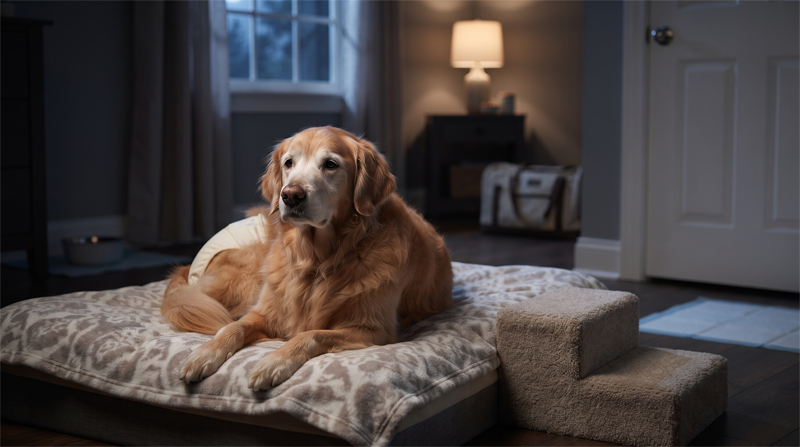
The right size comes from a waist measurement, not the weight range printed on the bag.
Measure around the fullest part of the belly, just in front of the hind legs, and match that number against a size chart that combines waist measurement with weight tiers. Breed shape still throws off the chart at the edges though. A French Bulldog‘s short tail and wide chest need a shorter tail hole and a wider waist panel than a standard chart accounts for, and a Dachshund needs the opposite adjustment: a diaper cut long enough to cover the belly without bunching at the shoulders or riding up by 2am.
You’ll know pretty quickly if it fits. Two fingers should slide comfortably under the waistband. The leg cuffs sit flat against skin without gapping, and the tail moves freely without pulling at fabric anywhere near its base. Too loose, and the diaper leaks the first time the dog shifts position. Too tight, and the elastic leaves marks or cuts off circulation by morning.
Signs of Diaper Rash and Skin Irritation From Overnight Wear
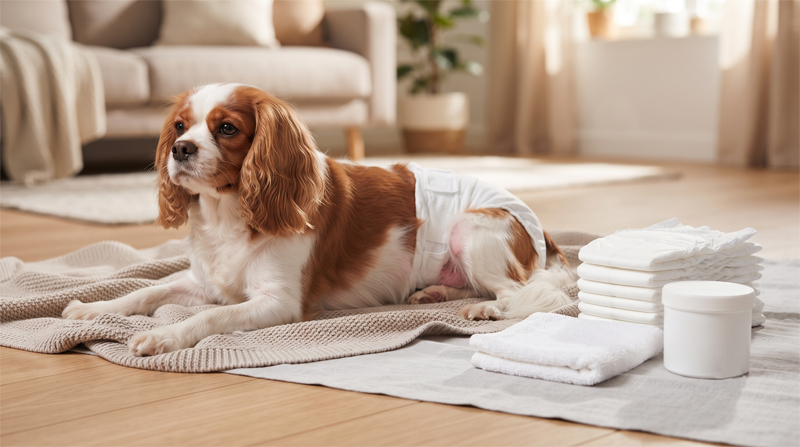
Diaper rash starts small: redness and mild warmth around the waistband or leg cuffs. It gets worse the longer wet fabric sits against skin, which is exactly the situation an overnight diaper creates by design.
Urine scald is usually the first visible sign, showing up as raw, irritated patches where ammonia in urine has broken down the skin’s surface. Left alone, that broken skin barrier opens the door to infection. A peer-reviewed meta-analysis in the National Library of Medicine’s PMC database found urinary tract infections in 26.1% of dogs and cats with lower urinary tract disease or a related illness, and prolonged moisture under a diaper is exactly the kind of condition that raises that risk.
Worth checking for at every diaper change:
- Redness or swelling around the genital or anal area
- A strong odor that wasn’t there at the last change
- Licking, biting, or scratching at the diaper area
- Small sores or scabbing on the inner thighs
A fragrance-free barrier cream on clean, dry skin helps head off irritation before it starts. Some dogs react to a specific material rather than to moisture at all. That kind of allergic reaction, usually to a fabric softener or dye, shows up as a rash confined tightly to wherever the diaper touches, unlike infection-driven irritation, which tends to spread. If redness doesn’t clear within a day of switching materials, that’s worth a vet visit rather than waiting it out.
How to Put a Diaper on a Dog for Overnight Wear
Getting this right the first time is what prevents most of the leaks that show up by morning.
- Lay the diaper flat and find the tail hole before you pick up the dog.
- Slide the tail through the hole first, keeping the absorbent core facing the belly.
- Pull the waist strap up and fasten it snug across the lower back.
- Adjust each leg cuff so it sits flat against the inner thigh, no gaps.
- Slide two fingers under the waistband to confirm it isn’t too tight.
- Place a washable pad or liner under the sleeping area as backup.
A puppy pad tucked under the bedding catches whatever gets past the diaper itself, and that matters most in the first few nights while you’re still dialing in the fit.
Do one last check before crating the dog or settling it in for the night. Run a hand around the waistband and both leg cuffs. Nothing should feel loose enough to shift. Nothing should feel tight enough to leave a mark by morning.
What Goes Wrong With Overnight Dog Diapers (and How to Fix It)
Most problems trace back to one of three things: how much the diaper can hold, how well it fits, or what the dog decides to do about wearing it.
Leaking Overnight
A diaper leaks for one of two reasons, really. It’s undersized for what the dog actually produces, or it got left on past its capacity.
Veterinary reference guidelines put normal urine production at 1 to 2 mL per kilogram of body weight per hour, which is the baseline a diaper’s absorbent core has to keep pace with over a full night. Do the math on a 30-kilogram dog and you get well over 300 mL across an 8-hour stretch, more than some diapers are actually built to hold.
- Move up one size if leaks happen consistently at the leg cuffs
- Switch to a diaper with a higher-capacity absorbent core for larger dogs
- Shorten the change interval instead of assuming the diaper failed
Diaper Slipping or Falling Off
Nine times out of ten this comes down to the waist strap. Weight loss, a recent grooming session, or just buying by breed instead of an actual measurement can all throw the fit off without anyone noticing right away.
Re-measure the waist instead of trusting the size printed on the last bag, and if you’re using a reusable design, check whether the elastic still has tension after multiple washes. It doesn’t always.
Chewing or Removing the Diaper
Some dogs treat a diaper as something to fight rather than wear, and there’s usually a reason behind it.
A 2020 study of 13,700 Finnish pet dogs, published in Scientific Reports, found separation-related behavior in 5% of the population, one of the traits most tied to destructive chewing at whatever the dog can reach.
Distraction works better than repeatedly refastening the same diaper. A chew toy or a familiar blanket during the first few nights goes further than most owners expect. If a dog won’t stop chewing at night despite a correct fit, that’s telling you something behavioral is going on, not that the diaper is wrong.
When Should a Dog Not Wear a Diaper Overnight?
There’s a specific set of situations where a diaper works against you, and knowing them matters just as much as knowing how to fit one.
Open wounds or active infections near the diaper area get worse under a diaper, not better, since trapped moisture feeds exactly the bacteria a healing wound needs to avoid. Untreated urinary tract infections are a different problem entirely: they need antibiotics, not containment, and a diaper just hides the accidents without touching what’s actually causing them. And plenty of owners underestimate how much severe heat or poor ventilation in the sleeping area raises infection risk, disposable diaper or washable, it doesn’t matter which.
Dogs that chew, shred, or swallow diaper material fall into a different risk category entirely. A 2025 study in the Journal of Advanced Veterinary and Animal Research found fabric in 20% of gastric foreign body cases in dogs, compared with just 1.8% of esophageal cases, which suggests swallowed fabric tends to travel further before it causes a blockage.
A dog with a documented history of chewing at wearables generally isn’t a good candidate for overnight diapering.
Alternatives to Overnight Dog Diapers for Incontinence
A diaper manages the mess. It doesn’t fix whatever’s causing it.
Phenylpropanolamine, sold under brand names like Proin, resolves or improves urinary incontinence in 85% to 90% of female dogs with the underlying muscle weakness that causes most spay-related leaking, according to research summarized in Clinician’s Brief. That’s a strong enough number that a vet visit is worth doing before settling into a permanent diaper routine.
Bed Pads and Potty Pads
A washable or disposable pad under the dog’s regular sleeping spot catches leaks without anything touching its skin. No fit issues, no rash risk, no fasteners to check. It works well for dogs that tolerate a diaper poorly, though it only helps if the dog reliably sleeps in one spot instead of wandering the house at night.
Belly Bands
Belly bands wrap around the midsection and work for male dogs, covering the area where males typically leak or mark. They don’t cover female anatomy the way a full diaper does, so they’re a poor substitute for females dealing with incontinence or a heat cycle.
Scheduled Nighttime Breaks
A single trip outside in the middle of the night resolves plenty of overnight accidents without any product involved at all.
This works best for dogs whose incontinence is closer to “can’t hold it 8 hours” than “no bladder control while asleep,” and that distinction is worth raising with a vet if it’s not obvious which one applies. Crate training combined with one late break tends to outperform a diaper for dogs still finishing house-training, as opposed to managing an actual medical condition.
FAQ on Can Dogs Wear Diapers Overnight
Are Overnight Dog Diapers Safe for Puppies?
Puppies mid house-training can wear one safely for short stretches, though their bladders hold nowhere near what an adult dog’s does. Check every 2 to 3 hours instead of the full wear window, and don’t treat the diaper as a substitute for actual training.
Can a Female Dog in Heat Wear a Diaper Overnight?
Yes. It contains bleeding during a heat cycle and protects bedding overnight, but it needs checking more often than a standard incontinence case. Estrus discharge runs heavier and more frequent than urine leakage alone, so plan on changes every 3 to 4 hours.
How Often Should You Check the Diaper If the Dog Wakes Up at Night?
If the dog wakes up mid-sleep, check it regardless of what the clock says. Feel the outside for sagging or coolness, and change it if it’s heavier than it was at bedtime. Skipping the check to avoid fully waking up just costs more sleep later anyway.
What Should You Do First Before Relying on an Overnight Dog Diaper?
An overnight dog diaper works best as a short-term bridge while a vet figures out and treats whatever’s actually causing the accidents, not as a permanent stand-in for that visit when incontinence, an infection, or a hormonal issue is behind the nightly mess.
Large-breed spayed females carry up to a 30% incontinence rate, and phenylpropanolamine resolves or improves 85% to 90% of those cases. Put those two numbers together and the diaper phase should run weeks, while treatment gets adjusted, not years of nightly wear.
A practical order follows from that. Confirm the cause with a veterinary exam. Start medical treatment if incontinence turns out to be the diagnosis. Use the diaper only as the bridge in between those two steps. One vet visit upfront beats months of guessing at fit and change intervals.
For chewing that continues even after a correct fit and a clean vet exam, a dog pacifier often redirects the habit better than repeated refastening ever does.