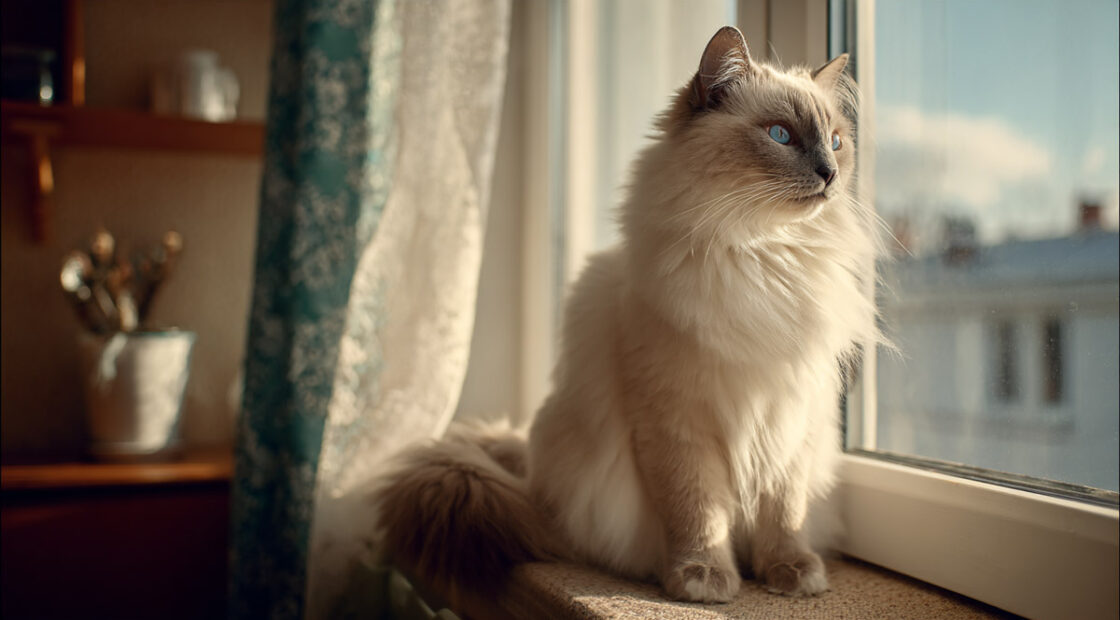
Picture a cat with piercing blue eyes, white “mittens” on all four paws, and a personality that rivals most dogs in loyalty. That’s a Snowshoe cat.
Born from an accidental breeding discovery in 1960s Philadelphia, these rare felines blend Siamese elegance with American Shorthair sturdiness.
Their distinctive white markings and social temperament make them stand out, yet finding one proves challenging. The recessive genes controlling their signature look mean breeders can’t predict which kittens will have proper markings.
This guide covers everything about the Snowshoe breed, from their unique physical characteristics and affectionate personality to health considerations, care requirements, and where to find reputable breeders. You’ll learn whether this vocal, attention-loving cat fits your lifestyle and what makes them worth the search.
Snowshoe Cat Breed Statistics
| Characteristic | Details |
|---|---|
| Weight | Males: 9-12 lbs, Females: 7-10 lbs |
| Height | 8-13 inches at shoulder |
| Lifespan | 14-20 years |
| Coat Length | Short to medium |
| Coat Type | Single layer, smooth |
| Shedding | Low to moderate |
| Colors | Seal point, blue point, chocolate point, lilac point |
| Eye Color | Blue (all Snowshoes) |
| Temperament | Affectionate, social, playful, intelligent |
| Energy Level | High |
| Vocalization | Moderate to high (softer than Siamese) |
| Good with Children | Yes |
| Good with Dogs | Yes |
| Good with Other Cats | Yes |
| Trainability | High (learns tricks, commands, leash walking) |
| Grooming Needs | Low (weekly brushing) |
| Exercise Needs | 60-90 minutes daily |
| Apartment Friendly | Yes (with vertical space) |
| Indoor/Outdoor | Best kept indoors with supervised outdoor access |
| Health Issues | HCM, PKD, diabetes, obesity |
| Hypoallergenic | No |
| Price Range | $600-$1,200 (pet quality), $1,200-$2,500 (show quality) |
| Rarity | Very rare |
| Recognition | TICA, ACFA, FIFe (not yet CFA) |
| Origin | United States (1960s) |
| Parent Breeds | Siamese x American Shorthair |
What Is a Snowshoe Cat?
The Snowshoe is a rare cat breed born from crossing Siamese cats with American Shorthairs in the 1960s.
These cats sport white “mittens” on all four paws, striking blue eyes, and a color point pattern similar to their Siamese ancestors.
Born completely white, Snowshoe kittens develop their darker points and signature white markings within the first few weeks of life.
Dorothy Hinds-Daugherty, a Philadelphia breeder, started the breeding program after three kittens in her Siamese litter appeared with white feet.
The breed gained recognition from TICA in 1993 and ACFA in 1990.
They remain rare because the white paw markings and facial V pattern come from recessive genes that make breeding predictably difficult.
Physical Characteristics
How Big Do Snowshoe Cats Get?

Male Snowshoe cats weigh 9-12 pounds on average.
Females are smaller at 7-10 pounds.
They stand 8-13 inches tall at the shoulder and have a medium-large, muscular body that feels heavier than it looks.
Males are noticeably sturdier than females, though both have athletic builds.
This breed reaches full size at 3-5 years old, growing more slowly than most cats.
The body is moderately long without being extreme, giving them a rectangular appearance perfect for running and jumping.
What Does a Snowshoe Cat’s Coat Look Like?
Snowshoe cats have short to medium-length fur with a smooth, single-layer coat.
No undercoat means less shedding compared to double-coated breeds.
The coat feels dense and resilient to the touch with a natural glossy appearance.
Color patterns include:
- Seal point (dark brown points)
- Blue point (gray-blue points)
- Chocolate point (lighter brown, less common)
- Lilac point (pale gray, rare)
The body ranges from light cream to beige, with darker shading developing on the back, shoulders, and hips as they age.
All Snowshoes must have white paws that contrast with their colored points. The white can extend up the legs, creating a “boot” effect.
Many have a white bib on the chest, white belly, and an inverted V marking on the face.
The coat darkens with age, sometimes turning chocolate brown shades.
Shedding is moderate to low, making grooming straightforward.
Distinctive Physical Features
Every Snowshoe has striking blue eyes ranging from sparkling bright blue to pale blue-gray.
The head can be either triangular (like Siamese) or apple-shaped (rounder, more traditional cat look).
Ears are medium to medium-large with slightly rounded tips, positioned to continue the triangular head shape.
The nose is straight without breaks, and high cheekbones give the face elegant contours.
Legs are slender but strong with good length, built for agility rather than bulk.
Paws are medium-sized ovals. The extent of white should be similar on both front feet and both hind feet.
The tail is medium to long with a medium base and gentle taper toward the tip.
Some Snowshoes inherit a kinked tail or crossed eyes from their Siamese lineage, though these cosmetic traits don’t affect health.
Paw pads may be point-colored, pink, or a mottled combination of both.
Snowshoe Personality and Temperament
Are Snowshoe Cats Affectionate?

Yes. Snowshoes form strong bonds with their families, often choosing one favorite person.
They follow their chosen human around like a shadow, earning them the nickname “dog-like cats.”
These cats seek out attention actively rather than waiting for it. Expect your Snowshoe to be involved in whatever you’re doing.
They’re friendly with family members but can be reserved around strangers, taking time to warm up to new people.
This breed doesn’t do well alone. Single Snowshoes often develop separation anxiety if left for extended periods.
Most enjoy lap time and cuddling, though they’re not content to nap all day like some lap cats.
They want interactive engagement, not just passive companionship.
How Active Are Snowshoe Cats?
Snowshoe cats have high energy levels that demand regular outlets.
They need 60-90 minutes of daily activity spread across the day.
Intelligence makes them easy to train. Many learn to fetch, walk on leashes, and respond to commands like “sit” and “come.”
Favorite activities include:
- Climbing to high perches
- Interactive toy play
- Fetching (retriever-style)
- Water play (many love splashing)
- Puzzle feeders
About four 10-minute sessions of interactive playtime daily keeps them satisfied.
Cat trees, scratching posts, and vertical spaces are must-haves.
Without proper stimulation, they’ll create their own entertainment by climbing furniture and getting into things.
Do Snowshoe Cats Get Along with Others?
Snowshoes excel in multi-pet households.
They interact well with children, other cats, and cat-friendly dogs.
Their social nature actually makes them happier with companions. A second cat or dog helps prevent loneliness.
With children: Great family cats. Supervision helps with very young kids to ensure respectful handling.
With dogs: They adapt well to dog companions and often play together.
With other cats: Generally friendly and non-territorial.
Proper introductions and early socialization produce the best results.
How Vocal Are Snowshoe Cats?
Snowshoes are moderately to highly vocal, depending on which parent breed they take after.
Some inherit the chatty Siamese tendency, while others are quieter like American Shorthairs.
Their voices are typically softer and more melodic than full Siamese cats.
They “talk” to their owners throughout the day, commenting on activities and asking for attention.
Expect meowing when they want food, play, or company.
The vocalization is conversational rather than demanding or annoying.
Health and Lifespan
How Long Do Snowshoe Cats Live?

Snowshoe cats live 14-20 years on average.
This longer-than-average lifespan makes them one of the healthier cat breeds.
Some reach their late teens or even 20 years old with proper care.
Longevity factors include:
- High-quality diet with adequate protein
- Regular veterinary checkups
- Healthy weight maintenance
- Indoor-only living
- Genetic health screening
Compared to the average domestic cat lifespan of 12-15 years, Snowshoes tend to outlive mixed breeds.
Common Health Issues in Snowshoe Cats
Snowshoes are generally healthy and hardy, but certain conditions appear more frequently.
Hypertrophic Cardiomyopathy (HCM)
The most common heart condition in cats, causing thickening of the heart muscle walls.
- Symptoms: Heart murmur, difficulty breathing, lethargy, loss of appetite
- Age of onset: Can develop at any age but more common in middle-aged to senior cats
- Treatment: No cure, but medication and diet changes manage the condition
- Prevention: Regular cardiac exams (no genetic test available for Snowshoes yet)
Polycystic Kidney Disease (PKD)
Inherited condition causing gradual kidney function loss.
- Symptoms: Increased thirst, frequent urination, weight loss, poor appetite
- Age of onset: Usually shows in adult cats
- Treatment: Supportive care with fluids, medications, specialized diet
- Prevention: Screening breeding cats
Chronic Kidney Disease
Common in older cats, not breed-specific but worth monitoring.
- Symptoms: Similar to PKD
- Age of onset: Typically affects senior cats
- Treatment: Diet management, medications, regular monitoring
Diabetes Mellitus
Pancreatic disease affecting blood sugar regulation, believed to have genetic predisposition in Snowshoes.
- Symptoms: Increased thirst and urination, weight loss despite increased appetite
- Age of onset: More common in older, overweight cats
- Treatment: Weight management, insulin injections, blood glucose monitoring
- Prevention: Healthy diet, regular exercise, weight control
Hyperthyroidism
Overactive thyroid more common in cats with Siamese ancestry.
- Symptoms: Weight loss, increased appetite, restlessness, increased vocalization
- Age of onset: Common in older cats
- Treatment: Medication, dietary changes, or surgery
Obesity
Not breed-specific but requires attention.
- Prevalence: Common if overfed or under-exercised
- Impact: Leads to arthritis, diabetes, heart disease
- Prevention: Portion control, daily activity
Pica
Tendency to eat non-food items, seen in Oriental breeds like Siamese.
- Symptoms: Chewing or eating fabric, plastic, plants, string
- Dangers: Poisoning, intestinal blockages
- Treatment: Environmental management, veterinary consultation
Cosmetic Issues (Not Health Problems)
- Kinked tail
- Crossed eyes
These Siamese-inherited traits don’t affect quality of life.
What Health Testing Should Snowshoe Cats Have?
Pre-breeding screening:
- Cardiac ultrasound for HCM
- Kidney function tests
- General health certification
Regular veterinary care:
- Annual wellness exams (twice yearly for seniors)
- Cardiac auscultation at every visit
- Blood work starting at age 7-10
- Urinalysis to monitor kidney function
Vaccination schedule:
- FVRCP (feline viral rhinotracheitis, calicivirus, panleukopenia)
- Rabies
- Others as recommended based on lifestyle
Parasite prevention:
- Regular deworming
- Flea and tick prevention (especially if outdoor access)
Reputable breeders screen parent cats for genetic conditions before breeding.
Caring for a Snowshoe Cat
What Do Snowshoe Cats Eat?

Snowshoe cats need high-protein, meat-based diets as obligate carnivores.
Look for food where the first ingredient is actual meat (chicken, turkey, salmon), not meal or by-products.
Protein requirements: 35-45% protein content supports their muscular build.
Taurine: Critical amino acid for heart and eye health. Found in animal proteins.
Feeding frequency:
- Kittens (under 1 year): 3-4 meals daily
- Adults: 2 meals daily
- Seniors: 2 meals daily, possibly special senior formula
Portion sizes: Follow package guidelines based on weight, typically 1/3 to 1/2 cup dry food per day or 5-6 oz wet food.
Wet vs. dry considerations:
Wet food provides hydration (over 70% water) and zero carbohydrates.
Dry food is convenient but should be limited in carbohydrates.
Many owners offer both.
Foods to avoid:
- High-carbohydrate fillers (corn, wheat)
- Artificial flavors and preservatives
- Excessive “meal” or by-products
- Anything with the first ingredient not being protein
Weight management:
Monitor body condition. You should feel ribs easily but not see them prominently.
Obesity leads to diabetes and joint problems.
How Do You Groom a Snowshoe Cat?
The short, single-layer coat makes grooming easy.
Brushing frequency: Once or twice weekly removes dead hair and distributes skin oils.
Most Snowshoes groom themselves effectively unless stressed or ill.
Bathing: Rarely necessary. Many Snowshoes enjoy water, but baths aren’t required for coat health.
Nail trimming: Every 2-3 weeks keeps claws healthy and prevents furniture damage.
Dental care: Brush teeth 2-3 times weekly (daily is ideal) to prevent periodontal disease.
Ear cleaning: Check weekly, clean when waxy buildup appears. Use veterinarian-approved ear cleaners.
Eye cleaning: Generally not needed. Wipe away any discharge with damp cloth if necessary.
Professional grooming is unnecessary for this breed.
How Much Exercise Does a Snowshoe Cat Need?
Snowshoe cats require 60-90 minutes of daily activity total.
Break this into four 10-minute interactive play sessions throughout the day.
Recommended toys:
- Feather wands
- Laser pointers (always end with physical toy to “catch”)
- Fetch toys
- Puzzle feeders
- Cat trees for climbing
Mental stimulation needs:
This intelligent breed gets bored easily.
Rotate toys to maintain novelty.
Training sessions provide mental exercise.
Climbing/vertical space:
Critical for this breed. Install cat trees, wall shelves, or window perches.
They love observing from high vantage points.
Indoor vs. outdoor:
Best kept indoors with supervised outdoor access (catios, leash walks).
Their friendly nature makes them vulnerable to theft, and their curiosity can lead to danger.
Living with a Snowshoe Cat
Are Snowshoe Cats Good for Apartments?

Yes, Snowshoes adapt well to apartment living with proper accommodations.
Space requirements: No specific square footage needed, but vertical space matters more than floor space.
Noise level: Moderate vocalization won’t disturb neighbors, as their voices are softer than Siamese.
Indoor suitability: Excellent for indoor-only living if exercise needs are met.
Vertical space needs: Essential. Install cat trees, shelves, and climbing structures.
Lack of vertical space leads to climbing furniture and curtains.
Considerations:
Provide a second pet if you work long hours.
Window perches let them watch outdoor activity.
What Environment Do Snowshoe Cats Need?
Temperature tolerance:
Average indoor temperatures suit them fine.
Not particularly heat-sensitive or cold-tolerant due to short coat.
Humidity: No special preferences.
Safe outdoor access options:
- Catios (enclosed outdoor spaces)
- Leash walking (many learn easily)
- Fully fenced yards with supervision
Never allow unsupervised outdoor roaming due to theft risk and friendly nature.
Environmental enrichment:
- Multiple scratching posts (vertical and horizontal)
- Window perches for bird watching
- Hiding spots (boxes, cat tunnels)
- Interactive toys
- Food puzzles
Litter box: One per cat plus one extra, kept scrupulously clean.
Are Snowshoe Cats Good for First-Time Owners?
Yes, Snowshoes work well for first-time cat owners.
Care difficulty level: Beginner to intermediate.
Time commitment: 2-3 hours daily for play, interaction, and care.
Experience level needed: Basic cat care knowledge sufficient.
Common challenges:
- High attention needs (not good for very busy people)
- Separation anxiety if alone too long
- Need for another pet companion
- Vocal nature may surprise those expecting quiet cats
Advantages for beginners:
- Easy grooming
- Trainable and intelligent
- Generally healthy
- Affectionate and social
- Straightforward dietary needs
Snowshoe Kittens
What Are Snowshoe Kittens Like?

Snowshoe kittens are born completely white.
Point colors and white markings develop within the first 3 weeks, darkening as they mature.
Personality development:
- 2-7 weeks: Critical socialization window
- 8-16 weeks: Playful, energetic, learning boundaries
- 4-6 months: Adolescent energy peaks
Early socialization needs:
Handle kittens daily from birth.
Expose to various people, sounds, and experiences between 2-7 weeks.
This window creates confident, well-adjusted adults.
Kitten energy levels:
Extremely high. They’re constantly playing, climbing, and exploring.
Provide safe outlets or they’ll make their own.
Training windows:
Start litter training immediately (usually learned from mom).
Begin leash training, commands, and tricks at 8-10 weeks for best results.
When Can Snowshoe Kittens Leave Their Mother?
Minimum age: 12-16 weeks.
Most reputable breeders won’t release kittens before 12 weeks, with 14-16 weeks being ideal.
Developmental milestones:
- 8 weeks: Weaned, eating solid food
- 12 weeks: Fully socialized, litter trained, started vaccinations
- 16 weeks: Fully vaccinated, ready for new home
Vaccination schedule before adoption:
- First FVRCP at 6-8 weeks
- Second FVRCP at 10-12 weeks
- Third FVRCP at 14-16 weeks
- Rabies at 12-16 weeks
Spay/neuter timing:
Many breeders spay/neuter before releasing kittens, typically at 12-16 weeks.
Some wait until 5-6 months.
Breeding and Genetics
Snowshoe Breed Standards

TICA Standards:
- Body: Medium, muscular, rectangular
- Head: Modified wedge shape, either triangular or apple-shaped
- Ears: Medium-large, slightly rounded tips
- Eyes: Walnut-shaped, blue (deeper colors preferred)
- Coat: Short, smooth, single layer
- Pattern: Color points with white markings
- Markings: White on all four paws, inverted V on face preferred
ACFA Recognition: Achieved championship status in 1990.
FIFe Recognition: Fully recognized.
CFA Status: Not yet fully recognized. Working toward acceptance but struggle with low breeder and cat numbers.
Show quality vs. pet quality:
Show cats have precise white markings, especially the facial V and symmetrical white boots.
Pet quality may have uneven white markings or less-defined patterns but are equally healthy and loving.
Disqualifying faults:
- Green or yellow eyes
- Lack of white markings
- Excessive white (over 1/3 of body)
- Long coat
Genetics of Snowshoe Cats
Hereditary traits:
The signature white paws come from the piebald pattern gene, which is recessive.
Color point genetics:
Points result from temperature-sensitive albinism genes from Siamese ancestry.
Breed-specific mutations:
The inverted V facial marking comes from incomplete dominance.
Getting kittens with desired markings is essentially “luck of the draw.”
No two Snowshoes look exactly alike because genetic expression varies.
Outcross breeds:
Acceptable outcrosses include Siamese and American Shorthair to maintain genetic diversity.
Genetic diversity concerns:
The breed’s rarity means limited gene pools.
Responsible breeders use outcrossing to prevent inbreeding problems.
DNA testing recommendations:
While HCM genetic tests exist for some breeds, none are available specifically for Snowshoes.
General feline DNA testing can identify some hereditary conditions.
History of the Snowshoe Cat
Where Do Snowshoe Cats Come From?

The Snowshoe originated in Philadelphia, Pennsylvania, United States in the 1960s.
This is a developed breed, not a natural one.
Dorothy Hinds-Daugherty discovered three Siamese kittens in her litter with unusual white feet.
Intrigued, she began breeding to reproduce the trait.
Original purpose: Companion cat with unique markings combining Siamese elegance with American Shorthair sturdiness.
How Did the Snowshoe Breed Develop?
1960s: Dorothy Hinds-Daugherty noticed white-footed Siamese kittens.
She crossed these Siamese cats with bicolor American Shorthairs.
The offspring initially lacked Siamese points, but breeding them back to Siamese produced the desired look.
She named the breed “Snowshoe” after their white feet.
Late 1960s: Hinds-Daugherty promoted the breed at cat shows but struggled to gain recognition.
Early 1970s: She eventually abandoned the breeding program.
1970s: Vikki Olander from Virginia took over, preventing the breed’s extinction.
Olander wrote the first breed standard.
1974: Obtained “experimental breed” status from Cat Fanciers Federation (CFF) and American Cat Association (ACA).
1977: Olander was the last remaining Snowshoe breeder in the U.S.
Late 1970s-1980s: Jim Hoffman and Georgia Kuhnell joined Olander. Other breeders followed.
1983: Achieved champion status with CFF.
1989: Olander left the program (fiance’s cat allergy).
1990: ACFA granted championship status.
1993: TICA officially recognized the breed.
Present: Still working toward full CFA recognition.
Related breeds:
The Snowshoe influenced no direct descendant breeds but shares characteristics with Birman and Ragdoll cats.
When Was the Snowshoe Recognized?
- CFF: 1974 (experimental), 1983 (championship)
- ACFA: 1990 (championship)
- TICA: 1993 (full recognition)
- FIFe: Fully recognized
- CFA: Not yet recognized (working toward it)
Cost of Owning a Snowshoe Cat
How Much Does a Snowshoe Cat Cost?

Purchase prices:
- Pet quality: $600-$1,200
- Show quality: $1,200-$2,500
- Breeding rights: $2,000-$4,000+
Prices vary based on:
- Lineage and pedigree
- Coat markings (precise patterns cost more)
- Breeder reputation
- Gender (females sometimes cost more)
- Geographic location
Additional initial costs:
- Supplies (bowls, litter box, carrier, toys): $100-$400
- First vet visit and vaccines: $100-$200
- Spay/neuter (if not already done): $100-$300
- Microchipping: $50
Shipping costs: $200-$3,000 if breeder isn’t local.
What Are the Ongoing Costs?
Annual veterinary care: $200-$500
- Wellness exams: $50-$100 each
- Vaccines: $20-$50 per shot
- Dental cleaning: $200-$400 (as needed)
Food expenses (monthly): $30-$60
High-quality cat food costs more but prevents health issues.
Litter and supplies (monthly): $20-$40
- Cat litter: $15-$30
- Replacement toys, treats: $5-$10
Grooming costs: $0-$50 annually
Professional grooming rarely needed. Budget for nail clippers, brushes.
Pet insurance (monthly): $25-$50
Coverage varies by provider, age, and location.
Emergency fund recommendation: $1,000-$2,000 set aside
Unexpected vet emergencies can cost $500-$5,000.
First-year total: Approximately $2,000-$4,000 including purchase price.
Annual costs after first year: $800-$1,500 for healthy cats.
Where Can You Get a Snowshoe Cat?
Reputable breeders:
What to look for:
- TICA or ACFA registration
- Health guarantees (usually 1-2 years for genetic conditions)
- Contracts requiring spay/neuter for pet-quality cats
- Willingness to answer questions
- Clean, home-based breeding environment
- Socialized kittens handled from birth
Breeder certifications:
Look for breeders registered with TICA, ACFA, or FIFe.
Check that breeding cats have cardiac screenings.
Health guarantees:
Reputable breeders offer 1-2 year health guarantees against genetic defects.
Contract elements:
- Return policy if unable to keep cat
- Spay/neuter requirements
- Health guarantee terms
- Breeding restrictions
Questions to ask:
- Can I meet the parents?
- What health testing have you done?
- What’s included with the kitten?
- What health guarantee do you offer?
- Can I see your cattery?
Red flags to avoid:
- Selling kittens under 12 weeks old
- No health testing or guarantees
- Won’t let you visit
- Multiple breeds or constant litters (kitten mill)
- Unusually low prices
- No contract or registration papers
Breed-specific rescues:
- Snowshoe Cat Society may have rescue contacts
- Siamese rescues sometimes have Snowshoes
- Check Petfinder and Adopt-a-Pet with breed filters
General rescue/shelter considerations:
Adoption costs: $50-$300
Often includes spay/neuter, vaccines, microchip.
Finding Snowshoes in shelters: Rare but possible.
Many shelter “Snowshoes” are mislabeled mixed breeds with similar markings.
Adult cat vs. kitten considerations:
- Adults have established personalities
- Often already trained
- Less expensive
- Skip destructive kitten phase
- May have unknown history
Snowshoe vs. Similar Breeds
Snowshoe vs. Siamese

Physical differences:
Snowshoes are sturdier and more muscular with white markings.
Siamese have longer, more angular bodies with no white.
Snowshoes weigh 7-12 lbs; Siamese weigh 6-10 lbs.
Temperament differences:
Both are social and vocal, but Snowshoes are typically quieter.
Snowshoes are slightly more laid-back, while Siamese are intensely demanding.
Care requirements:
Identical grooming and exercise needs.
Health concerns:
Siamese have higher rates of crossed eyes and kinked tails.
Snowshoes generally healthier due to American Shorthair influence.
Cost: Siamese typically less expensive ($600-$1,000).
Lifespan: Similar (14-20 years).
Snowshoe vs. Birman
Physical differences:
Birman cats have long, silky coats versus Snowshoe’s short coat.
Both have white paws and blue eyes.
Birmans are larger (10-15 lbs) and fluffier.
Temperament differences:
Birmans are calmer and less active.
Snowshoes need more stimulation and activity.
Both are affectionate but Birmans are gentler.
Care requirements:
Birmans require daily brushing due to long coat.
Snowshoes need weekly brushing only.
Health concerns:
Similar overall health, but Birmans prone to matting without grooming.
Cost: Birmans slightly more expensive ($700-$1,500).
Lifespan: Birmans 12-16 years; Snowshoes 14-20 years.
Snowshoe vs. Ragdoll
Physical differences:
Ragdoll cats are much larger (15-20 lbs) with long, plush coats.
Snowshoes are medium-sized with short coats.
Both can have similar color patterns (mitted Ragdolls have white paws).
Temperament differences:
Ragdolls are exceptionally docile and go limp when held.
Snowshoes are more active and playful.
Ragdolls are quieter; Snowshoes more vocal.
Care requirements:
Ragdolls need regular grooming for long fur.
Snowshoes require more interactive play.
Health concerns:
Ragdolls prone to HCM (genetic test available).
Both relatively healthy overall.
Cost: Ragdolls more expensive ($800-$2,500).
Lifespan: Similar (12-17 years for Ragdolls).
How to Choose Between Snowshoe and Similar Breeds

Choose a Snowshoe if you want:
- Moderate grooming requirements
- Active, playful companion
- Dog-like loyalty
- Trainable, intelligent cat
- Conversational but not overly loud
Choose a Siamese if you want:
- Very vocal, demanding cat
- Extremely social and attention-seeking
- Sleek, angular appearance
- Lower purchase price
Choose a Birman if you want:
- Calmer, gentler personality
- Beautiful long coat (with grooming commitment)
- Less demanding attention needs
Choose a Ragdoll if you want:
- Very large, docile lap cat
- Extremely calm, relaxed personality
- Plush, luxurious coat
- Quieter cat
Fun Facts About Snowshoe Cats
Celebrity connection: Actor James Dean owned a Snowshoe cat named Marcus, gifted to him by Elizabeth Taylor while filming Giant in 1955 (before the breed was officially recognized).
Victorian mystery: An old Victorian photograph shows a Siamese litter with one kitten sporting white feet, and a Japanese silk-screen depicts a white-footed cat, proving the mutation existed long before the 1960s.
Water lovers: Unlike most cats, many Snowshoes have a fascination with water and will join owners in showers or splash in sinks.
The “grumpy” one: Grumpy Cat, the social media sensation, had Snowshoe coloring and helped popularize the breed’s distinctive markings.
Rarity status: Snowshoes remain one of the rarest cat breeds due to unpredictable genetics. Even experienced breeders can’t guarantee the signature markings will appear in litters.
Athletic abilities: Their muscular build makes them excellent jumpers. They can leap from floor to top of refrigerator with ease.
Fetch players: Many Snowshoes retrieve toys like dogs, making them interactive playmates.
No two alike: Because the white markings rely on recessive genes, no two Snowshoes have identical patterns. Each cat is truly one-of-a-kind.
Late bloomers: Their full coloration and markings continue developing until age 2-3 years.
Is a Snowshoe Cat Right for You?
Best Homes for Snowshoe Cats

Ideal owner personality:
- Active and playful
- Home frequently or able to provide companionship
- Patient with vocal cats
- Enjoys interactive pet relationships
Lifestyle compatibility:
- Families with children
- Multi-pet households
- Work-from-home situations
- Moderate activity levels
Home environment requirements:
- Indoor space with vertical climbing options
- Window access for outdoor viewing
- Room for cat trees and play structures
Time availability:
Commit 2-3 hours daily for play, interaction, grooming, and care.
Who Should Avoid Snowshoe Cats?
Incompatible lifestyles:
- Long work hours with no other pets
- Frequent travel without pet care arrangements
- Preference for independent, aloof cats
- Very quiet household preferences
Allergy considerations:
Not hypoallergenic. Produces normal levels of Fel d 1 allergen.
Spend time with Snowshoes before committing if you have cat allergies.
Challenge factors:
- Separation anxiety potential
- High attention needs
- Vocal nature may bother some
- Rarity makes finding breeders difficult
Better alternatives:
- More independent breeds: Persian, Russian Blue
- Quieter breeds: Chartreux, British Shorthair
- For busy owners: Scottish Fold (more independent)
Questions to Ask Before Getting a Snowshoe Cat
Financial readiness:
- Can you afford $2,000-$4,000 first year and $800-$1,500 annually?
- Do you have an emergency fund for unexpected vet bills?
- Can you maintain pet insurance or self-insure?
Time commitment:
- Are you home enough or can you provide a companion pet?
- Can you dedicate 2-3 hours daily to interaction and play?
- Will you maintain regular grooming and vet appointments?
Living situation stability:
- Do you plan to stay in your current home for 15-20 years?
- Does your lease allow cats?
- Can you accommodate a cat tree and vertical spaces?
Family agreement:
- Does everyone in the household want a cat?
- Is anyone allergic?
- Who will handle daily care responsibilities?
Long-term planning:
- What happens if you move or change jobs?
- Do you have backup care for vacations?
- Can you handle potential medical costs as the cat ages?
Travel considerations:
- Do you travel frequently?
- Can you afford pet sitting or boarding?
- Is someone available to care for your cat?
Other pet considerations:
- Do current pets get along with cats?
- Are you prepared for proper introductions?
- Can you handle potential multi-pet conflicts?
A Snowshoe cat thrives with owners who value companionship, have time for interaction, and want an active, social feline family member.
Their 14-20 year lifespan requires serious commitment, but their loyalty, intelligence, and affectionate nature reward dedicated owners with decades of companionship.
FAQ on Snowshoe
Are Snowshoe cats rare?
Yes, extremely rare. The white paw markings come from recessive genes, making predictable breeding nearly impossible. Even experienced breeders struggle to produce kittens with proper Snowshoe patterns, keeping the breed uncommon despite 60 years of development.
How much does a Snowshoe cat cost?
Pet quality Snowshoes cost $600-$1,200 from reputable breeders. Show quality ranges $1,200-$2,500, while breeding rights can exceed $4,000. Adoption from shelters costs $50-$300 but finding purebred Snowshoes in rescues is exceptionally rare.
Are Snowshoe cats hypoallergenic?
No. Despite their short coat and low shedding, Snowshoes produce normal levels of Fel d 1 allergen. They’re not suitable for people with cat allergies. Spend time with the breed before committing if allergies are a concern.
Do Snowshoe cats like water?
Many do. Unlike most cats, Snowshoes often enjoy splashing in sinks, joining owners in showers, or playing with water. This trait varies by individual, but the breed shows unusual water fascination compared to typical felines.
What is the lifespan of a Snowshoe cat?
Snowshoes live 14-20 years on average, longer than most domestic cats. Some reach their late teens or early twenties with proper care, high-quality nutrition, and regular veterinary checkups. They’re considered a healthy, hardy breed.
Are Snowshoe cats vocal?
Moderately to very vocal, depending on genetics. They inherit some Siamese chattiness but typically have softer, melodic voices. Expect conversational meowing throughout the day, though they’re quieter than purebred Siamese cats and rarely annoying.
Do Snowshoe cats shed?
Yes, but moderately. Their short, single-layer coat sheds less than double-coated breeds. Weekly brushing controls loose hair effectively. They’re not heavy shedders, making maintenance straightforward compared to long-haired cats like Persians or Maine Coons.
Are Snowshoe cats good with dogs?
Excellent with dogs. Their social, dog-like personality makes them ideal multi-pet companions. They often play with dogs and form strong bonds. Proper introductions ensure success, but Snowshoes generally adapt well to canine housemates.
What do Snowshoe cats eat?
High-protein, meat-based diets with 35-45% protein content. Look for foods listing actual meat (chicken, turkey, salmon) as the first ingredient. They need adequate taurine for heart and eye health. Feed adults twice daily, avoiding high-carbohydrate fillers.
Can Snowshoe cats be left alone?
Not for extended periods. They’re prone to separation anxiety and need companionship. Single Snowshoes struggle when left alone all day. Consider getting a second pet or ensuring someone’s home regularly to keep them happy and mentally healthy.
Conclusion
Snowshoe cats bring together the best traits of their Siamese and American Shorthair ancestry into one striking package. Their distinctive white mittens, stunning blue eyes, and color point pattern make them visually captivating.
But looks aren’t everything. These intelligent, social felines demand attention and companionship, thriving in active households with people or pets around.
Their dog-like loyalty means following you everywhere. Their vocal nature keeps conversations flowing throughout the day.
The breed’s rarity makes finding reputable breeders challenging, and costs reflect limited availability. Yet owners consistently say the search proves worthwhile.
If you want an affectionate, trainable cat that acts more like a devoted dog than an aloof feline, the Snowshoe delivers. Just be prepared for a 15-20 year commitment to a talkative, attention-seeking companion who’ll become your shadow.