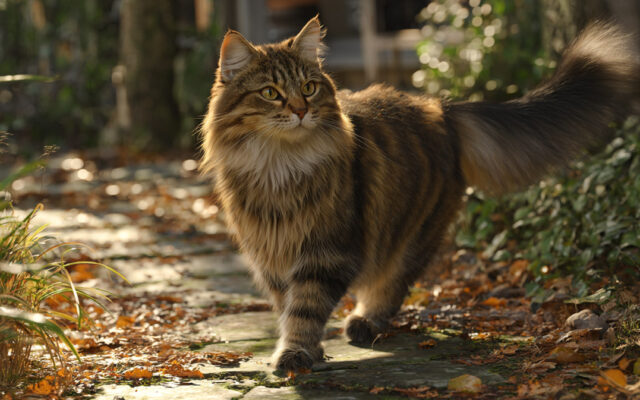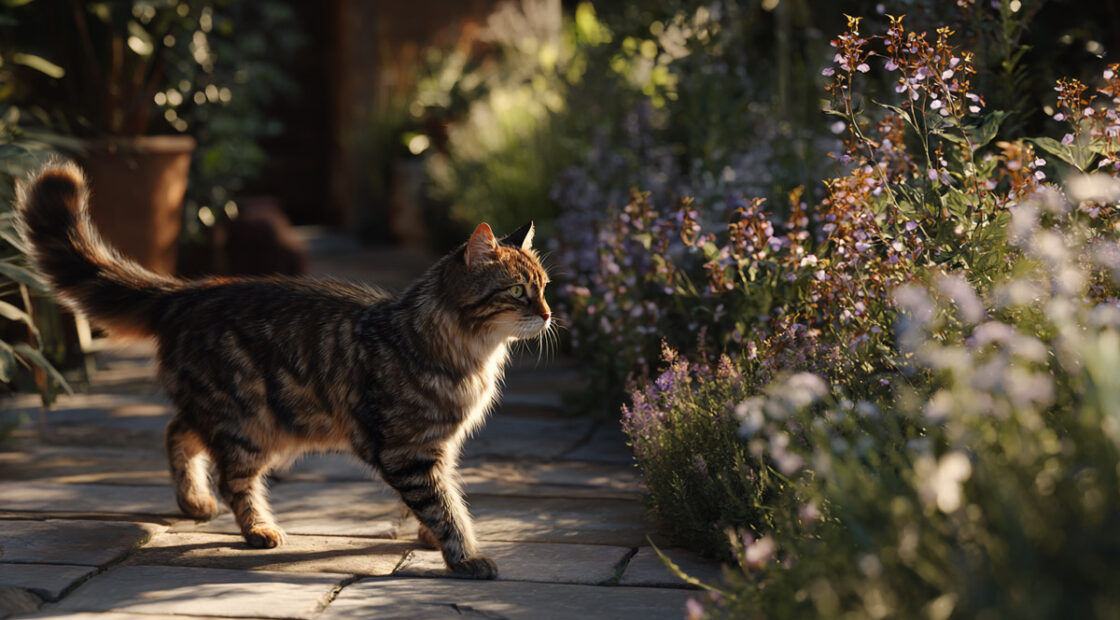
Have you ever wondered what happens when you combine the mysterious tailless genetics of a Manx with the luxurious coat of a longhaired cat? Meet the Cymric cat – a captivating breed with rabbit-like hopping and an unexpectedly robust personality.
Native to the Isle of Man, these semi-longhair felines carry a genetic mutation that creates their distinctive tailless appearance. Despite their plush coats and rounded bodies, Cymrics are surprisingly athletic and intelligent companions.
These cats balance playfulness with loyalty, making them ideal family pets for those seeking an engaged, interactive feline friend.
In this guide, you’ll discover everything about the Cymric’s unique physical characteristics, temperament, care requirements, and genetic background – helping you determine if this Welsh-named breed with its distinctive movement pattern might be your perfect match.
Cymric Cat Breed Statistics
| Characteristic | Details |
|---|---|
| Origin | Isle of Man |
| Size | Medium to large |
| Weight | Males: 10-14 lbs (4.5-6.4 kg)<br>Females: 8-12 lbs (3.6-5.4 kg) |
| Height | 8-10 inches (20-25 cm) at shoulder |
| Body Type | Semi-cobby |
| Coat Length | Medium-long to long |
| Coat Texture | Double-layered; silky outer coat, soft woolly undercoat |
| Colors | All colors and patterns except pointed (Himalayan) |
| Eye Color | Gold, copper, green, blue, or odd-eyed |
| Tail Types | Rumpy (no tail), Rumpy-riser (small stub), Stumpy (partial tail), Longie (nearly full tail) |
| Lifespan | 12-15 years |
| Temperament | Intelligent, loyal, playful, affectionate |
| Activity Level | Moderate to high |
| Vocalization | Moderate |
| Grooming Needs | Moderate to high (brushing 2-3 times weekly) |
| Good with Children | Yes (best with children over 6 years) |
| Good with Other Pets | Yes |
| Indoor/Outdoor | Best as indoor cats |
| Health Concerns | Manx Syndrome, arthritis, corneal dystrophy, spina bifida |
| Recognition | CFA (as Manx longhair division), TICA, ACFA, CCA |
| Breed Type | Natural mutation |
| Price Range | $600-$2,000 depending on quality |
What Is a Cymric Cat?

The Cymric (pronounced “kim-rick”) is a long-haired tailless cat breed that originated from the Isle of Man. This distinctive breed is essentially the long-haired variety of the Manx cat, sharing the same genetic mutation that causes taillessness.
Cymrics are medium to large cats with rounded appearances, powerful hind legs, and double-layered semi-longhair coats. They’re recognized by major cat registries as a natural mutation-based breed.
Though they share ancestry with the Manx, Cymrics were developed separately and recognized as their own breed in the 1960s.
Physical Characteristics
How Big Do Cymric Cats Get?
Cymric cats are medium to large-sized cats with substantial builds. Males typically weigh 10-14 pounds, while females weigh 8-12 pounds.
They stand about 8-10 inches at the shoulder with a semi-cobby body type.
Cymrics reach their full size around 3-5 years of age, developing more slowly than many other cat breeds.
Their rounded appearance and muscular rear legs give them a distinctive silhouette compared to other medium-sized breeds.
What Does a Cymric Cat’s Coat Look Like?
The Cymric coat is medium-long to long with a dense, double-layered structure. The outer coat is silky while the undercoat is soft and woolly.
Coat texture varies from silky to plush, with a tendency toward thickness that provides excellent insulation.
Cymrics come in virtually all color patterns including solid, tabby, tortoiseshell, calico, and bicolor variations.
All colors are accepted in breed standards except those showing evidence of hybridization (such as chocolate, lavender, the Himalayan pattern, or a pointed pattern).
Shedding level is moderate to high, with seasonal increases during spring and fall.
Distinctive Physical Features
Eye color ranges from gold to copper, green, blue, or odd-eyed (each eye a different color), with shape being large and round.
Ears are medium-sized, wide at the base, tapering to a rounded tip, and set rather high on the head.
The Cymric head structure is rounded with prominent cheeks and a strong muzzle.
The most distinctive feature is their tail—or lack thereof. Cymrics come in several tail variations:
- Rumpy: Complete absence of tail
- Rumpy-riser: Small stub of cartilage or several vertebrae
- Stumpy: Partial tail (up to half-length)
- Longie: Nearly normal tail length
Their hind legs are noticeably longer than their front legs, creating a distinctive stance and rabbit-like hopping movement.
Large, round paws complete their sturdy appearance.
Cymric Personality and Temperament

Are Cymric Cats Affectionate?
Cymrics are exceptionally affectionate cats that form strong bonds with their human families. They’re often described as “dog-like” in their loyalty and attachment.
These cats typically choose a favorite family member but will distribute their affection to everyone in the household.
While not typically lap cats, they prefer to be near their people, often following them from room to room.
Cymrics generally respond well to strangers after a brief period of observation, showing cautious friendliness rather than fear or excessive shyness.
How Active Are Cymric Cats?
Cymric cats exhibit moderate to high energy levels, maintaining playfulness well into adulthood. They typically require about 30-45 minutes of interactive play daily.
Their intelligence makes them highly trainable, with many enjoying fetch games and puzzle toys that challenge their problem-solving abilities.
Favorite activities include climbing, jumping to high perches, and hunting-style play with wand toys or small moving objects.
Despite their energy, they balance activity with relaxation periods and aren’t typically hyperactive.
Do Cymric Cats Get Along with Others?
Cymrics generally integrate well with children, especially those over 6 years old who understand how to handle cats gently. Their patient nature makes them suitable family companions.
They typically get along well with cat-friendly dogs after proper introduction periods.
Other cats are usually welcomed by the social Cymric, though they may assert themselves as household supervisors.
Multi-pet households benefit from their adaptable nature, though their hunting instincts may make them unsuitable companions for small rodents or birds.
While not overly territorial, they do appreciate established routines and consistent environments.
How Vocal Are Cymric Cats?
Cymrics are moderately vocal cats, communicating through soft trills, chirps, and melodic meows rather than loud, demanding vocalizations.
Their voices tend to be sweet and musical, with a variety of sounds used to express different needs or emotions.
They communicate as much through body language as vocalization, using head butts, purring, and tail positions (for those with partial tails) to express themselves.
Health and Lifespan
How Long Do Cymric Cats Live?

Cymric cats typically live 12-15 years, though many well-cared-for individuals reach 16-18 years of age.
This lifespan is slightly shorter than the average domestic cat (15-20 years), primarily due to genetic health concerns related to the tailless mutation.
Diet quality, indoor versus outdoor lifestyle, regular veterinary care, and genetic factors all influence their longevity.
Common Health Issues in Cymric Cats
Manx Syndrome is the most significant health concern in the breed, affecting approximately 20-30% of tailless Cymrics. This spinal cord condition results from the same gene that causes taillessness.
Symptoms include constipation, urinary incontinence, partial hindlimb paralysis, and in severe cases, bowel issues. It typically appears by 4 months of age.
Treatment depends on severity, ranging from dietary management to surgery in some cases.
Arthritis affects Cymrics at higher rates than many breeds due to their unique spinal structure and powerful hindquarters. Signs include decreased jumping, stiffness, and reluctance to be handled.
Corneal Dystrophy is an inherited eye condition affecting the corneal layers, potentially causing cloudy vision and in advanced cases, vision impairment.
Spina Bifida occurs in some tailless individuals, causing improper spinal development with symptoms ranging from mild mobility issues to severe neurological problems.
Megacolon (enlarged colon) can develop as a secondary complication to spinal deformities, causing chronic constipation and requiring dietary management or medical intervention.
What Health Testing Should Cymric Cats Have?
Genetic screening for Manx Syndrome markers should be performed before breeding.
Regular veterinary checks are recommended every 6 months (rather than annually) due to their predisposition to spinal issues.
Spinal X-rays should be performed around 6 months of age to evaluate spinal development and detect early signs of spinal bifida or other vertebral malformations.
Urinary and bowel function should be monitored throughout life, with any changes promptly evaluated by a veterinarian.
Annual eye examinations are important to detect early signs of corneal dystrophy or other eye conditions.
Caring for a Cymric Cat

What Do Cymric Cats Eat?
Cymric cats thrive on high-protein diets (40-45% protein) that support their muscular build and moderate to high energy levels.
Adult Cymrics typically need 2-3 meals daily, while kittens require 3-4 smaller meals spaced throughout the day.
Portion sizes vary by weight and activity level, averaging 200-300 calories daily for adults.
A mix of high-quality wet and dry food is often recommended, with wet food particularly beneficial for urinary health and hydration.
Some Cymrics with spinal issues benefit from specialized diets containing higher fiber content (7-10%) to help prevent constipation.
Foods containing artificial colors, flavors, or low-quality fillers should be avoided.
Weight management is critical for Cymrics, as excess weight can exacerbate spinal pressure and joint issues.
How Do You Groom a Cymric Cat?
Cymrics require brushing 2-3 times weekly, increasing to daily during heavy shedding seasons to prevent matting and reduce hairballs.
Their double coat benefits from both wide-toothed combs (for detangling) and slicker brushes (for removing loose undercoat).
Bathing is rarely necessary, typically only 2-3 times yearly unless the cat gets into something messy.
Nail trimming should be performed every 2-3 weeks to prevent overgrowth and splitting.
Dental care includes brushing teeth 2-3 times weekly with cat-specific toothpaste to prevent periodontal disease.
Eye cleaning may be needed occasionally with a damp cloth if discharge is present.
Ear cleaning should be done monthly with a veterinarian-approved solution, especially important since some Cymrics produce excessive ear wax.
Professional grooming is generally unnecessary except for cats with particularly thick or prone-to-matting coats.
How Much Exercise Does a Cymric Cat Need?
Daily exercise requirements include 30-45 minutes of active play, which can be divided into several shorter sessions.
Indoor environmental enrichment is crucial, as Cymrics are best kept as indoor-only cats to protect them from predators and injuries.
Interactive toys that stimulate hunting behaviors (wand toys, laser pointers followed by a physical toy reward) are particularly engaging for this breed.
Mental stimulation through puzzle feeders, training sessions, and rotating toys helps prevent boredom.
Vertical space is extremely important for Cymrics, who love to climb and jump despite their unusual body structure—cat trees, shelves, and window perches are excellent investments.
Interactive play sessions at least twice daily help maintain their physical and mental health while strengthening the human-cat bond.
Living with a Cymric Cat

Are Cymric Cats Good for Apartments?
Cymrics adapt well to apartment living provided they have adequate vertical space and play opportunities. Their moderate size (8-14 pounds) makes them suitable for smaller living areas.
Their moderate vocalization level makes them good neighbors in multi-unit dwellings, as they’re unlikely to disturb those living nearby.
This breed excels as indoor-only cats, making them ideal for apartment lifestyles without outdoor access.
Vertical space is essential—even in smaller apartments, wall-mounted shelves, window perches, and tall scratching posts help meet their climbing needs.
What Environment Do Cymric Cats Need?
Cymrics prefer moderate temperatures (68-75°F) and can be somewhat sensitive to extreme heat due to their double coats.
They adapt well to various humidity levels but may need extra grooming in high-humidity environments to prevent coat matting.
Safe outdoor access options like secured catios or supervised harness walks can enrich their experience while protecting them from hazards.
Environmental enrichment should include multiple scratching surfaces (both horizontal and vertical), hiding spots, elevated perches, and rotation of toys.
Window perches are particularly valued by Cymrics, who enjoy watching outdoor activities from the safety of indoors.
Multiple scratching posts of different materials (sisal, carpet, cardboard) help satisfy their natural scratching needs while protecting furniture.
Are Cymric Cats Good for First-Time Owners?
Cymrics are moderately suitable for first-time cat owners, with a care difficulty level between beginner and intermediate. Their affectionate nature and adaptability make them forgiving companions.
They typically require 1-2 hours of daily attention between play, grooming, and social interaction.
First-time owners should be prepared for their moderate grooming needs and potential health monitoring.
Common challenges include understanding their unique mobility patterns, managing their semi-long coat, and monitoring for any signs of spinal issues.
Cymric Kittens
What Are Cymric Kittens Like?

Cymric kittens are playful, curious, and remarkably intelligent, often showing problem-solving abilities from an early age.
Early socialization from 2-7 weeks is crucial for developing well-adjusted adults who are comfortable with handling, other pets, and various environments.
Kitten energy levels are typically very high, with frequent play punctuated by deep sleep periods.
Training should begin early (8-12 weeks) to establish litter box habits, appropriate play behaviors, and comfort with grooming routines.
When Can Cymric Kittens Leave Their Mother?
Cymric kittens should remain with their mother and littermates until at least 12 weeks of age, with 14-16 weeks being preferable for optimal social development.
Key developmental milestones include:
- 6-8 weeks: Beginning weaning process
- 8-10 weeks: Developing motor skills and social hierarchies
- 10-14 weeks: Learning appropriate play behaviors and bite inhibition
The vaccination schedule before adoption typically includes:
- 6-8 weeks: First FVRCP vaccine
- 10-12 weeks: Second FVRCP vaccine, first FeLV vaccine
- 14-16 weeks: Final FVRCP booster, second FeLV vaccine
Spaying/neutering is typically performed around 4-6 months of age, though some breeders may have this done before adoption.
Breeding and Genetics
Cymric Breed Standards

The Cat Fanciers’ Association (CFA) recognizes the Cymric as a division of the Manx breed rather than a separate breed.
The International Cat Association (TICA) standards emphasize rounded contours throughout the body, substantial bone structure, and the “rump rise” where the spine elevates toward the hindquarters.
Other registries including the American Cat Fanciers Association (ACFA) and the Canadian Cat Association (CCA) recognize the Cymric as a distinct breed from the Manx.
Show quality Cymrics must exhibit the “rumpy” or “rumpy-riser” tail types, while “stumpy” or “longie” varieties are typically sold as pets.
Disqualifying faults include incorrect eye color for the coat color, evidence of poor health, and any sign of weakness in the hindquarters.
Genetics of Cymric Cats
The taillessness in Cymrics is caused by a dominant gene (M) that affects vertebral development. When inherited in heterozygous form (Mm), it produces varying degrees of taillessness.
The gene is lethal in homozygous form (MM), causing embryos to die before birth.
Coat color genetics follow standard feline inheritance patterns, with all color variations possible except those associated with specific breed hybridization.
Responsible breeders never mate two tailless Cymrics together due to the risk of producing homozygous embryos and increasing the likelihood of spinal defects.
The Devon Rex has occasionally been used as an outcross to maintain genetic diversity while preserving the longhaired appearance.
DNA testing is recommended for PKD (Polycystic Kidney Disease) and for the Manx gene to determine carrier status.
History of the Cymric Cat
Where Do Cymric Cats Come From?

Cymric cats originate from the Isle of Man, a small island in the Irish Sea between Great Britain and Ireland, sharing their homeland with the Manx cat.
The breed developed naturally through a spontaneous genetic mutation that appeared in the island’s cat population.
Historical context suggests that the mutation may have been established around the 18th century, becoming concentrated due to the island’s isolated nature.
Originally, these cats served as working farm cats and mousers, valued for their hunting abilities and hardy constitution.
How Did the Cymric Breed Develop?
The Cymric development timeline begins in the 1960s when Canadian breeders began working specifically with long-haired kittens born to Manx cats.
Key breeders including Althea Frahm and Blair Wright-Olson established dedicated breeding programs to standardize the long-haired tailless cats.
The name “Cymric” was chosen to reflect the Celtic connections to the Isle of Man, as Cymric is related to the Welsh word for Wales.
First official recognition came in the 1970s from the Canadian Cat Association.
The breed has evolved with careful selective breeding to minimize health issues while preserving the distinctive tailless trait and long coat.
Related breeds include not only the Manx but also the Japanese Bobtail and the American Bobtail, though the genetic mutations causing shortened tails differ among these breeds.
When Was the Cymric Recognized?
The Canadian Cat Association (CCA) was first to recognize the Cymric as a separate breed from the Manx in 1970.
The International Cat Association (TICA) granted recognition in 1979.
The Cat Fanciers’ Association (CFA) considers the Cymric a longhaired division of the Manx rather than a separate breed, with this classification established in 1994.
Championship status varies by registry, with full championship status granted by TICA in the early 1980s.
Cost of Owning a Cymric Cat
How Much Does a Cymric Cat Cost?
Pet quality Cymric kittens typically cost $600-$1,000, reflecting their relative rarity and specialized breeding requirements.
Show quality specimens with excellent conformation may range from $1,200-$2,000.
Breeding rights for exceptional examples can increase the price to $1,500-$2,500.
Price factors include tail type (rumpies generally cost more), coat color (rarer patterns command higher prices), lineage quality, and breeder reputation.
Additional initial costs include basic supplies ($200-$300), initial veterinary examinations ($100-$200), and spay/neuter surgery if not included by the breeder ($200-$400).
What Are the Ongoing Costs?
Annual veterinary care ranges from $300-$600, potentially higher for Cymrics with health complications related to their spinal structure.
Food expenses average $30-$60 monthly for high-quality commercial diets appropriate for their nutritional needs.
Litter and basic supplies run approximately $25-$40 monthly, including regular replacement of scratching posts and toys.
Grooming costs are generally limited to at-home tools ($50-$100 annually) rather than professional services, though some owners opt for occasional professional grooming ($50-$80 per session, 2-3 times yearly).
Pet insurance is strongly recommended for this breed due to potential genetic health concerns, with monthly premiums ranging from $25-$45 depending on coverage level and deductible.
An emergency fund of at least $1,000-$2,000 is advised to cover unexpected medical expenses, particularly important for a breed with specific health vulnerabilities.
Where Can You Get a Cymric Cat?
Reputable breeders specializing in Cymric cats are the primary source for kittens. Look for breeders who:
- Provide health clearances for breeding stock
- Allow visits to see the cattery conditions and meet the parents
- Offer written health guarantees (typically 1-2 years for genetic conditions)
- Follow responsible breeding practices to minimize Manx syndrome risks
- Register their cats with recognized cat associations
- Ask detailed questions about your home and lifestyle
Red flags include breeders who breed tailless to tailless cats, ship kittens without meeting buyers, or have kittens available at all times without waiting lists.
Breed-specific rescues are rare for Cymrics, but occasionally these cats can be found through:
- Manx breed rescues (which may occasionally have longhaired variants)
- All-breed cat rescues and shelters
- Ragdoll or Persian rescues (as Cymrics are sometimes misidentified)
Adoption costs from rescues typically range from $100-$250, substantially less than breeder prices.
Adult Cymrics may be better suited for homes concerned about potential health issues, as spinal problems generally manifest by 4-6 months of age.
Cymric vs. Similar Breeds

Cymric vs. Manx
Physical differences include the Cymric’s medium to long coat compared to the Manx’s short, dense coat. Cymrics generally appear larger due to their fluffier appearance, though body size is similar.
Temperament differences are minimal, with both breeds showing similar loyalty, playfulness, and intelligence.
Care requirements differ primarily in grooming, with Cymrics needing brushing 2-3 times weekly compared to the Manx’s occasional brushing.
Health concerns are nearly identical, with both breeds susceptible to Manx syndrome and related spinal issues.
Cost differences show Cymrics typically priced $100-$300 higher than Manx cats due to their relative rarity.
Lifespan comparison shows similar ranges (12-15 years) for both breeds.
Cymric vs. British Shorthair
The British Shorthair is significantly different in structure, with a fully developed tail, cobby body, and dense short coat compared to the tailless, longer-coated Cymric.
Temperament differences are notable, with British Shorthairs being more reserved and independent compared to the more interactive and playful Cymric.
Care requirements show British Shorthairs needing less grooming and having fewer genetic health concerns.
Health concern differences include the British Shorthair’s predisposition to HCM (hypertrophic cardiomyopathy) versus the Cymric’s spinal issues.
Cost differences are minimal, with both breeds in similar price ranges for pet-quality kittens.
Lifespan comparison gives British Shorthairs a slight advantage at 14-20 years versus the Cymric’s 12-15 years.
How to Choose Between Cymric and Similar Breeds
Lifestyle considerations include:
- Activity level: Cymrics need more interactive play than British Shorthairs
- Grooming commitment: Cymrics require more regular brushing than Manx cats
- Health risk tolerance: Potential owners concerned about genetic health issues might prefer breeds without the Manx mutation
Decision factors should include:
- Appearance preference (fluffy vs. sleek, tailed vs. tailless)
- Desired interaction level (Cymrics tend to be more involved with their people)
- Long-term commitment to possible special care needs
The Cymric may be ideal for active households wanting an engaged, playful companion, while the British Shorthair might suit more laid-back environments, and the Manx offers a middle ground with similar personality but easier grooming.
Fun Facts About Cymric Cats
Cymric cats possess remarkable balance despite lacking a tail, with an ability to make precise jumps and navigate narrow surfaces that surprises many observers.
The breed’s name “Cymric” is pronounced “kim-rick” and refers to the Celtic language of Wales, connecting to the Celtic heritage of the Isle of Man.
Cymrics are sometimes called “Manx Longhair” or “Long-haired Manx” in some registries, reflecting their close relationship to the Manx breed.
The Manx taillessness mutation is one of the oldest documented cat mutations, with references dating back to the 1700s.
Unlike many tailless animals, Cymric cats can express themselves through body language using their hindquarters, which they raise and lower to show excitement or displeasure.
The rabbit-like hop characteristic of some Cymrics results from their longer hind legs and altered spine, giving them a distinctive movement pattern unlike other cats.
Famous Cymric owners have included Judi Dench and Norman Schwarzkopf, both of whom appreciated the breed’s unique appearance and engaging personality.
Is a Cymric Cat Right for You?
Best Homes for Cymric Cats
Ideal Cymric owners are moderately active people who have time for daily interactive play and enjoy an engaging, intelligent companion.
This breed thrives in homes where someone is present for significant portions of the day, as they form strong bonds and enjoy company.
Home environments with plenty of climbing opportunities, perches, and interactive toys bring out the best in these playful, athletic cats.
Families with older, gentle children make excellent matches for the patient, tolerant Cymric temperament.
Who Should Avoid Cymric Cats?
Extremely busy households with little time for interaction may find Cymrics become bored and potentially develop behavior issues.
Those unwilling to monitor health concerns or perform regular grooming may find this breed’s needs challenging.
People seeking a very independent, low-maintenance cat might be better suited to less interactive breeds.
Better breed alternatives for low-maintenance households include the Russian Blue or British Shorthair, which require less grooming and interaction.
Allergy sufferers should note that despite their plush coats, Cymrics are not hypoallergenic and produce typical levels of the Fel d 1 protein that triggers allergic reactions.
Questions to Ask Before Getting a Cymric Cat
Financial considerations:
- Can you afford potential specialized veterinary care related to spinal issues?
- Is your budget sufficient for high-quality food and regular care?
- Can you establish an emergency fund for unexpected health issues?
Time commitment questions:
- Do you have 1-2 hours daily for interaction, play, and grooming?
- Is your schedule flexible enough to accommodate a cat that forms strong bonds?
- Can you commit to regular grooming sessions 2-3 times weekly?
Long-term planning:
- Are you prepared for a 12-15 year commitment?
- Is your living situation stable enough for the cat’s lifetime?
- Do all family members agree on adding this specific breed to the household?
Other considerations:
- Have you researched the specific health concerns related to the tailless mutation?
- Are you comfortable with the rabbit-like movement pattern some Cymrics display?
- Have you met adult Cymrics to understand their personality and needs firsthand?
FAQ on Cymric
Are Cymric cats born without tails?
Most Cymric cats are born with either no tail (rumpy), a small rise of cartilage (rumpy-riser), a partial tail stub (stumpy), or occasionally a nearly normal tail length (longie). This taillessness comes from a genetic mutation affecting spinal development.
How do you pronounce “Cymric”?
Cymric is pronounced as “KIM-rick” with emphasis on the first syllable. The name has Welsh ancestry, connecting to the Celtic roots shared with the Isle of Man, where the breed originated.
Do Cymric cats have health problems?
Some Cymric cats develop Manx syndrome, affecting roughly 20-30% of tailless individuals. This spinal condition can cause mobility issues, constipation, or incontinence. Other health concerns include arthritis, corneal dystrophy, and spina bifida.
Are Cymric cats good pets?
Cymrics make excellent family companions with their loyal, intelligent disposition and playful personality. They form strong bonds with owners, adapt well to children and other pets, and balance activity with affection.
How are Cymric cats different from Manx?
The primary difference is coat length. Cymrics have medium-to-long double-layered fur requiring regular grooming, while Manx cats have short coats. Otherwise, they share similar body structures, temperaments, and genetic backgrounds.
Do Cymric cats require special care?
Their semi-longhair coat needs brushing 2-3 times weekly to prevent matting. Some tailless varieties may need monitoring for bowel function. Otherwise, care requirements match other breeds with similar activity levels and grooming needs.
How much do Cymric cats cost?
Pet-quality Cymric kittens typically cost $600-$1,000, while show-quality cats range from $1,200-$2,000. Breeding rights increase prices further. Their relative rarity and specialized breeding contribute to higher costs than common breeds.
How long do Cymric cats live?
The typical Cymric lifespan ranges from 12-15 years, though many reach 16-18 years with proper care. This is slightly shorter than average domestic cats due to potential genetic health concerns related to the tailless mutation.
Do Cymric cats really hop like rabbits?
Many Cymric cats display a distinctive rabbit-like hopping movement, especially when running. This results from their stronger rear leg strength and modified spine structure. The hopping varies between individuals but is a charming breed characteristic.
Are Cymric cats rare?
Yes, Cymrics are considered a relatively rare breed. Their specific genetic requirements make breeding challenging, as mating two tailless cats can produce serious health issues. Finding reputable Cymric breeders often involves waiting lists.
Conclusion
Cymric cats represent a fascinating blend of distinctive physical traits and engaging personality that sets them apart in the feline world. With their long-haired tailless appearance and rabbit-like hopping movement, they bring unique charm to any household.
These cats combine intelligence with loyalty, making them perfect companions for families seeking interactive pets that form strong bonds.
Despite their potential health considerations related to the spinal gene variant, responsible breeding practices have improved their overall hardiness and longevity.
Their double-layered fur requires moderate grooming commitment, but rewards owners with a silky texture and beautiful appearance in various color variations.
Whether you’re attracted to their rounded appearance, their playful yet gentle temperament, or their distinctive Isle of Man heritage, the Cymric offers a special combination of traits rarely found in other breeds.