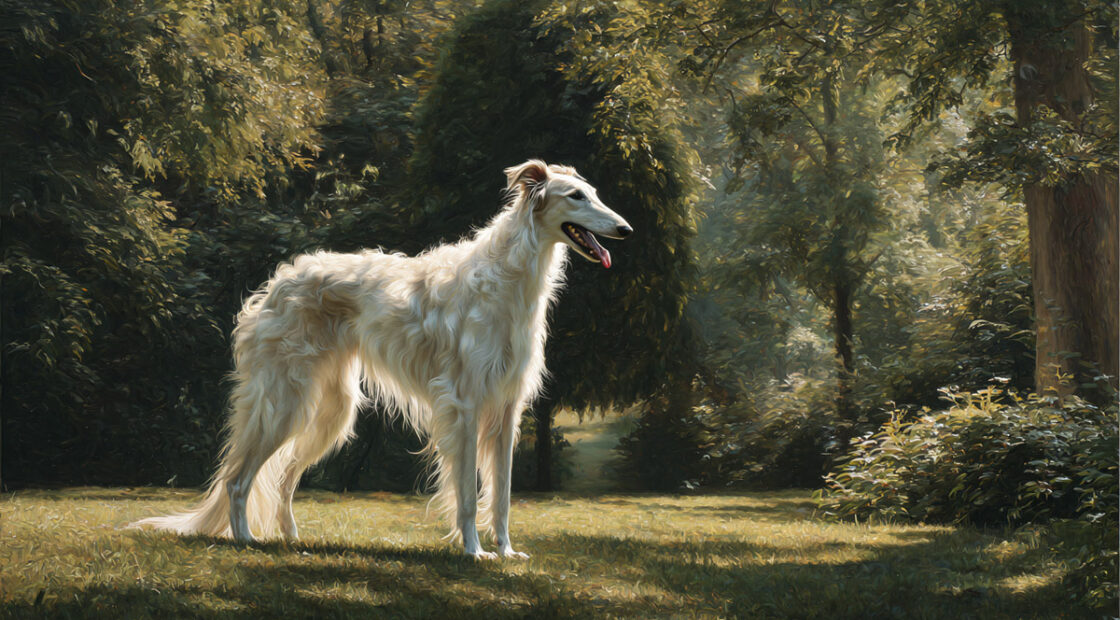
Few dogs command attention like a Borzoi in full stride. This aristocratic Russian wolfhound combines breathtaking speed with gentle elegance, creating a companion unlike any other sighthound breed.
Originally bred by Russian nobility for wolf hunting, the Borzoi represents centuries of careful breeding for both athletic performance and refined temperament. Their silky coat and graceful movement mask incredible athletic capabilities.
Modern pet owners face unique challenges with this ancient breed. Understanding their exercise requirements, grooming needs, and sensitive nature becomes essential for successful ownership.
This guide covers everything from their impressive speed capabilities to specialized coat care techniques. You’ll learn proper training methods, nutritional requirements for optimal health, and seasonal grooming strategies.
What you’ll discover:
- Athletic requirements and safe exercise practices
- Professional grooming techniques for their silky double coat
- Health considerations specific to giant sighthound breeds
- Nutrition guidelines for maintaining coat quality and overall wellness
Borzoi Breed Statistics
| Characteristic | Details |
|---|---|
| Size | Giant breed |
| Height (Male) | 28-32 inches |
| Height (Female) | 26-28 inches |
| Weight (Male) | 75-105 pounds |
| Weight (Female) | 60-85 pounds |
| Life Span | 10-12 years |
| Energy Level | Moderate to high |
| Exercise Needs | 60-90 minutes daily |
| Grooming Requirements | High (daily brushing) |
| Shedding | Heavy, seasonal |
| Trainability | Moderate (independent) |
| Good with Kids | Yes (with supervision) |
| Good with Pets | Caution with small animals |
| Barking Level | Low |
| Apartment Living | Possible but challenging |
| Climate Tolerance | Cold tolerant, heat sensitive |
| Origin | Russia |
| Breed Group | Hound (Sighthound) |
| Primary Purpose | Wolf hunting, coursing |
| Top Speed | 35-40 mph |
| Coat Type | Double coat, silky |
| Coat Colors | All colors acceptable |
| Health Concerns | Bloat, heart conditions, hip dysplasia |
| AKC Recognition | 1891 |
| Temperament | Gentle, independent, calm |
| Drooling Level | Low |
| Stranger Friendly | Reserved but polite |
Built for Speed: Understanding Borzoi Athletics
Anatomy of a Racing Machine
Long legs and flexible spine create the perfect sprinting foundation. The Borzoi’s skeletal structure mirrors that of elite racing breeds, with extended limb bones that maximize stride length during pursuit of prey.
Their spine flexes dramatically during the double-suspension gallop. This allows both front and rear legs to leave the ground simultaneously, creating two distinct flight phases per stride.
Large heart and lung capacity fuel their athletic performance. The deep chest houses oversized cardiovascular organs that pump oxygen-rich blood to working muscles during high-intensity chases.
Speed Capabilities and Performance
Borzois reach 35-40 mph at top speed. Their acceleration rivals the Greyhound in short bursts, though they excel more in sustained running over varied terrain.

The hunting instinct triggers explosive starts. Wild prey movement activates their coursing drive instantly.
Unlike Afghan Hounds bred for mountain terrain, Borzois developed speed for open Russian steppes. Their athletic build prioritizes:
- Rapid acceleration from standstill
- Sustained galloping endurance
- Sharp directional changes during pursuit
Exercise Requirements and Activities
Daily exercise prevents destructive behaviors. Adult Borzois need 60-90 minutes of physical activity, split between walks and free running.
Fenced areas are non-negotiable. Their prey drive overwhelms recall training when small animals appear.
Appropriate activities include:
- Lure coursing – Simulates hunting with mechanical prey
- Racing events – Formal sighthound competitions
- Hiking – Builds endurance on leash
- Free running – Secure, enclosed spaces only
Avoid repetitive fetch games. Borzois prefer single, intense chases over prolonged play sessions.
The Art of Borzoi Grooming: Maintaining That Silky Coat

Understanding the Borzoi Coat Structure
Double coat composition creates their signature silky texture. The soft undercoat provides insulation while the longer topcoat repels dirt and moisture.
Seasonal shedding intensifies twice yearly. Spring and fall coat changes require increased grooming frequency to manage loose hair.
Color variations span the spectrum:
- Solid white, cream, or gold
- Brindle patterns with dark stripes
- Combination markings in black, tan, or mahogany
Unlike Poodles with curly coats, Borzoi hair grows straight with subtle waves.
Daily and Weekly Grooming Routines
Brushing prevents matting in feathering areas. Focus on legs, chest, tail, and ear fringes where tangles form quickly.
Essential grooming tools:
- Slicker brush – Removes loose undercoat
- Metal comb – Detangles feathering
- Undercoat rake – Manages seasonal shedding
Brush against hair growth first, then smooth with growth direction. This technique captures maximum loose hair.
Problem areas require extra attention:
- Leg feathering catches burrs and debris
- Chest hair mats from collar friction
- Tail plumes tangle during outdoor activities
Professional Grooming and Show Preparation
Professional groomers handle difficult mats safely. Never cut matted areas with scissors, as this damages coat texture permanently.
Show grooming standards emphasize natural appearance. Unlike breeds requiring extensive trimming, Borzois showcase their natural silky coat.
Trimming guidelines permit only:
- Foot hair between pads
- Sanitary areas for cleanliness
- Whisker removal (optional)
The elegant appearance attracts owners seeking low-maintenance grooming compared to breeds like Yorkshire Terriers requiring regular professional styling.
Bathing and Skin Care for Your Borzoi

Bathing Frequency and Techniques
Bath every 6-8 weeks unless heavily soiled. Overbathing strips natural oils from their silky coat, causing dryness and irritation.
Pre-bath brushing removes loose hair and prevents drain clogs. Work through all mats before water contact, as wet tangles tighten permanently.
Step-by-step bathing process:
- Wet thoroughly – Saturate undercoat completely
- Apply shampoo – Work from neck down, avoiding face initially
- Massage gently – Focus on skin, not just surface hair
- Rinse extensively – Soap residue causes skin problems
- Second rinse – Ensure complete product removal
Their sensitive nature requires calm, patient handling during baths.
Choosing the Right Products
Gentle shampoos prevent skin irritation. Avoid human products containing sulfates or harsh detergents that damage their coat texture.
Quality conditioners restore moisture and reduce static. Look for formulas designed for long-coated breeds like Afghan Hounds or similar sighthound types.
Products to avoid:
- Flea shampoos with pyrethrin
- Whitening formulas with bleaching agents
- Medicated shampoos without veterinary guidance
Unlike hardy breeds such as Australian Cattle Dogs, Borzois need specialized gentle formulations.
Drying and Post-Bath Care
Proper drying prevents matting and skin issues. Squeeze excess water gently, never wring or twist the coat.
Blow dryers on cool settings work effectively. Keep airflow moving to prevent overheating sensitive skin areas.
Final brushing removes any tangles formed during washing. Check feathering areas thoroughly for missed mats.
Health Considerations Affecting Grooming

Skin Conditions Common in Borzois
Allergies manifest through skin irritation and excessive scratching. Environmental allergens cause red, inflamed patches that worsen with poor grooming habits.
Hot spots develop rapidly in warm, moist areas. Regular brushing prevents hair matting that traps moisture against skin.
Warning signs during grooming:
- Red, inflamed patches
- Excessive scratching or licking
- Strong odors from skin folds
- Bumps or raised areas
Their gentle temperament makes them less likely to show discomfort compared to more vocal breeds like Chihuahuas.
Nail, Ear, and Dental Care
Trim nails every 3-4 weeks. Long nails affect their graceful gait and can catch in their feathering during movement.
Their small, folded ears trap moisture and debris. Weekly cleaning with veterinary-approved solutions prevents infections.
Dental hygiene prevents systemic health issues. Brush teeth 2-3 times weekly using canine toothpaste, never human formulations.
Unlike brachycephalic breeds such as French Bulldogs, Borzois rarely develop breathing-related dental problems.
Age-Related Grooming Adjustments
Puppy coats change dramatically around 12-18 months. Soft juvenile hair sheds completely, replaced by adult double coat requiring different care approaches.
Senior Borzois need gentler handling. Arthritis affects their ability to stand during grooming sessions, requiring shorter, more frequent sessions.
Modifications for older dogs:
- Raised grooming surfaces reduce joint stress
- Softer brushes prevent skin sensitivity
- Shorter sessions with rest breaks
- Extra padding for comfort
Health screening becomes crucial as they age. Regular grooming sessions provide opportunities to detect lumps, skin changes, or mobility issues early.
Seasonal Grooming and Coat Management

Spring Shedding Season Preparation
Undercoat blowout occurs March through May. Daily brushing becomes essential as loose hair doubles in volume during this period.
Increase grooming frequency to prevent matting. The soft winter undercoat sheds rapidly, creating tangles if not removed promptly.
Heavy shedding period tools:
- Undercoat rake – Removes loose fur efficiently
- Shedding blade – Captures maximum hair volume
- High-velocity dryer – Blows out loose undercoat
Unlike breeds with minimal seasonal changes such as Poodles, Borzois shed dramatically twice yearly.
Summer Coat Care and Heat Management
Never shave their protective coat. The double layer provides insulation against both cold and heat, regulating body temperature naturally.
Trimming foot hair prevents overheating during walks on hot pavement. This maintains their elegant appearance while improving comfort.
Sun protection strategies:
- Limit midday outdoor activities
- Provide shade during lure coursing events
- Check for sunburn on nose and ear tips
Swimming requires immediate post-activity grooming. Chlorine and salt water damage their silky coat texture without proper rinsing.
Winter Coat Protection
Thick winter undercoat develops October through December. This natural insulation rivals the dense coats of northern breeds like Siberian Huskies.
Ice and salt accumulate between toes during winter walks. Rinse feet immediately to prevent irritation and coat damage.
Indoor heating dries their skin and coat. Use humidifiers to maintain optimal moisture levels throughout winter months.
Winter grooming adjustments:
- Brush before and after outdoor activities
- Check for ice balls in feathering
- Apply paw balm for protection
- Monitor for dry skin flaking
Training Your Borzoi for Grooming Success
Starting Early: Puppy Grooming Introduction
Begin handling exercises at 8 weeks old. Touch paws, ears, and mouth daily to build tolerance before adult grooming sessions.
Short 5-minute sessions prevent overwhelm. Puppies have limited attention spans compared to more focused breeds like Border Collies.
Positive association techniques:
- High-value treats during handling
- Calm, soothing voice throughout sessions
- Immediate rewards for cooperation
- End on positive notes always
Their sensitive nature requires patience and consistency during early training phases.
Handling Sensitive Areas
Feet and nail trimming challenge most Borzois. Start by touching paws during relaxed moments, gradually introducing nail clippers over several weeks.
Head and ear handling needs careful conditioning. Their aristocratic temperament makes them less tolerant of rough handling than sturdy breeds like American Bulldogs.
Belly and rear grooming requires trust building:
- Practice during calm bonding time
- Use gentle, steady pressure
- Reward cooperation immediately
- Never force compliance
Managing Grooming Anxiety
Stress signals include panting, trembling, and withdrawal. Stop immediately when these appear and resume only after the dog relaxes completely.
Calming techniques work better than restraint. Their independent nature responds poorly to forceful handling methods.
Anxiety reduction strategies:
- Shorter sessions with frequent breaks
- Familiar locations for grooming
- Consistent routines to build predictability
- Professional help for severe cases
Unlike more adaptable breeds such as Golden Retrievers, Borzois need specialized approaches to overcome grooming resistance.
Thundershirts or anxiety wraps help nervous dogs during grooming sessions. The gentle pressure provides comfort similar to swaddling techniques.
Nutrition’s Role in Coat Health

Diet Basics for Healthy Coat Growth
High-quality protein builds strong hair shafts. Borzois need 25-30% protein from animal sources like chicken, fish, or lamb for optimal coat development.
Poor nutrition shows first in coat quality. Dull, brittle hair indicates inadequate protein or essential fatty acid intake.
Critical nutrients for silky coat texture:
- Protein – Hair structure foundation
- Omega-3 fatty acids – Shine and moisture
- Omega-6 fatty acids – Skin barrier function
- Zinc – Hair follicle health
- Biotin – Growth and strength
Unlike active breeds such as Australian Shepherds requiring higher calorie density, Borzois need moderate portions despite their size.
Hydration affects coat moisture directly. Fresh water availability prevents dry, flaky skin that damages hair quality.
Supplements for Coat Enhancement
Omega fatty acid supplements improve coat within 6-8 weeks. Fish oil or flaxseed oil provides concentrated essential fatty acids missing from processed foods.
Biotin supplements help dogs with genetic coat deficiencies. Consult veterinarians before adding supplements to balanced diets.
Effective coat supplements:
- Fish oil capsules – 1000mg per 30 pounds body weight
- Coconut oil – 1 teaspoon per 10 pounds daily
- Biotin complex – Follow manufacturer guidelines
- Zinc chelate – For diagnosed deficiencies only
Unlike breeds prone to coat issues like West Highland White Terriers, healthy Borzois rarely need extensive supplementation.
Foods That Can Affect Coat Quality
Ingredients promoting natural shine:
- Salmon and sardines (omega-3 source)
- Sweet potatoes (beta-carotene)
- Eggs (biotin and protein)
- Blueberries (antioxidants)
Limit or avoid these foods:
- Corn-based fillers (poor nutrient density)
- Artificial preservatives (BHA, BHT)
- Excessive carbohydrates (weight gain affects coat)
- Low-quality meat meals
Food allergies manifest through skin irritation and coat changes. Common allergens include beef, chicken, wheat, and dairy products.
Allergy management through diet:
- Novel protein sources – Duck, venison, or fish
- Limited ingredient formulas – Fewer potential triggers
- Elimination trials – 8-12 weeks minimum
- Gradual transitions – Prevent digestive upset
The gentle temperament makes Borzois less likely to show obvious discomfort compared to more reactive breeds like Jack Russell Terriers.
Age-related nutritional needs:
- Puppies – Higher protein for coat development
- Adults – Maintenance levels with quality sources
- Seniors – Enhanced nutrients for aging skin
Monitor coat changes after diet modifications. Improvements typically appear within 2-3 months of consistent high-quality nutrition.
FAQ on Borzoi
Are Borzois good family pets?
Yes, with proper socialization. These gentle giants bond deeply with their families and show calm temperament around children. However, their large size requires supervision with toddlers, and their sensitive nature needs quiet households rather than chaotic environments.
How fast can a Borzoi run?
Borzois reach 35-40 mph at top speed. This Russian wolfhound was bred for coursing prey across open terrain. Their double-suspension gallop and flexible spine create incredible acceleration, matching other elite sighthound breeds in short bursts.
Do Borzois shed a lot?
Yes, especially during seasonal coat changes. Their silky double coat sheds moderately year-round but dramatically increases in spring and fall. Daily brushing during shedding season prevents matting and reduces loose hair throughout your home.
How much exercise does a Borzoi need?
60-90 minutes daily, including free running time. These athletic dogs need secure, fenced areas for sprinting. Long walks satisfy their moderate exercise needs, but they require occasional opportunities to stretch their legs at full speed.
Are Borzois easy to train?
Training requires patience due to their independent nature. Unlike eager breeds like Golden Retrievers, Borzois think independently and bore easily with repetitive commands. Positive reinforcement and short sessions work best for this aristocratic breed.
What health problems do Borzois have?
Bloat poses the greatest risk in this deep-chested breed. Heart conditions, hip dysplasia, and progressive retinal atrophy also occur. Regular health screening and awareness of emergency symptoms help maintain their 10-12 year lifespan.
How big do Borzois get?
Males reach 28-32 inches tall and weigh 75-105 pounds. Females stand 26-28 inches and weigh 60-85 pounds. This giant breed needs space to stretch out comfortably, unlike compact companions such as Boston Terriers.
Can Borzois live in apartments?
Possible but challenging without dedicated exercise time. Their calm indoor temperament suits apartment living better than active breeds like Australian Cattle Dogs. However, daily access to secure running areas becomes essential for their wellbeing.
Do Borzois bark a lot?
No, they’re naturally quiet dogs. Borzois bark occasionally as watchdogs but lack the vocal tendencies of breeds like Beagles. Their gentle, reserved nature makes them suitable for noise-restricted living situations.
How long do Borzois live?
Average lifespan ranges 10-12 years. This exceeds many giant breeds due to their relatively healthy genetics. Proper nutrition, regular veterinary care, and maintaining appropriate weight help maximize their longevity and quality of life.
Conclusion
The Borzoi stands as one of the most rewarding yet demanding breeds for dedicated owners. This Russian hunting sighthound combines stunning beauty with complex care requirements that challenge even experienced dog enthusiasts.
Success with this breed depends on understanding their unique needs:
- Secure exercise areas for their powerful coursing instincts
- Patient grooming routines to maintain their luxurious coat
- Gentle training approaches that respect their aristocratic temperament
- Quality nutrition supporting their athletic build and coat health
Their independent nature and sensitive personality make them unsuitable for novice owners seeking obedient companions. However, families who appreciate their calm dignity and provide proper care discover an incredibly loyal and elegant family member.
Investment in proper care pays dividends. These gentle giants offer years of companionship when their exercise, grooming, and health needs receive consistent attention. The bond with a well-cared-for Russian wolfhound creates memories lasting far beyond their 10-12 year lifespan.