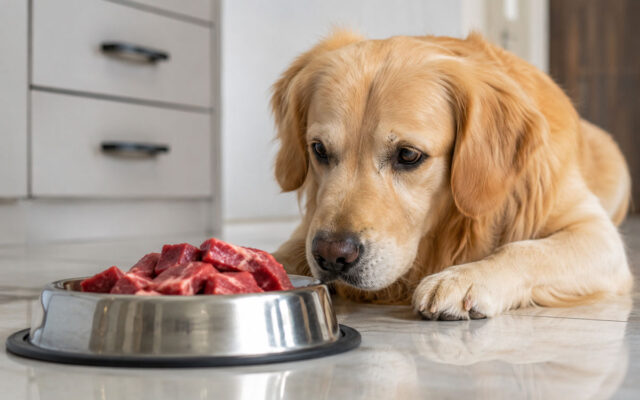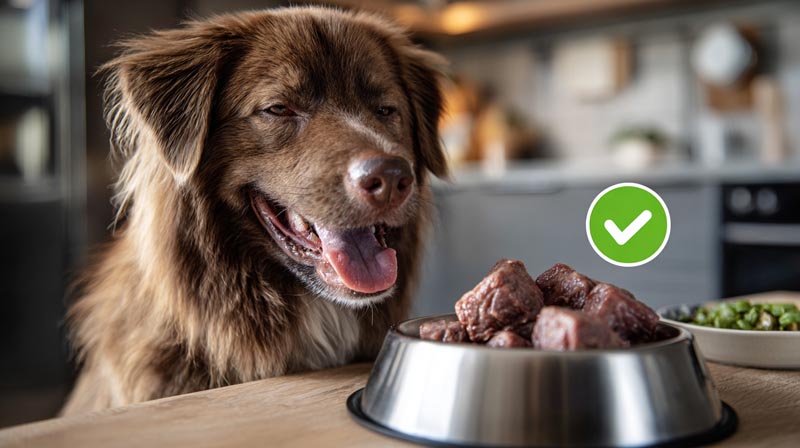
If you hunt moose or know someone who does, the question of whether dogs can eat moose meat comes up fast.
Most dog owners feeding wild game do it without much guidance. That works out fine until it doesn’t.
Moose meat is lean, high in protein, and genuinely useful as a novel protein for dogs with food sensitivities. It also carries risks that farmed proteins don’t, including tapeworm cysts in the organs, parasites that survive freezing, and bacterial contamination from field dressing.
This article covers the full picture: nutritional value, safety conditions, parasite risks, preparation guidelines, and which dogs should not eat moose meat at all.
Can Dogs Eat Moose Meat?
Yes, dogs can eat moose meat. It is safe when properly cooked or when sourced and handled with wild game food safety protocols in mind.
The short answer comes with one firm condition: preparation method determines safety. Raw moose meat from wild-harvested animals carries real pathogen and parasite risks that cooked moose does not.
Moose (Alces alces) is not a standard commercial dog food ingredient. Most dogs in North America have never eaten it, which actually works in its favor as a novel protein source for dogs with existing food sensitivities.
Hunters across Alaska, Canada, and the northern United States have been feeding moose trimmings and organ meat to their dogs for generations. It works. The key is knowing the difference between what makes it safe and what makes it risky.
| Form | Safety Status | Main Risk |
|---|---|---|
| Cooked, unseasoned | Safe for most dogs | Bone fragments if bones are included |
| Raw, properly frozen | Conditional (see parasite section) | Bacteria and parasites that survive freezing; tapeworm cysts in organs |
| Raw, not frozen or cooked | Not recommended | Bacteria, parasites, and potential CWD prion exposure |
| Seasoned or marinated | Unsafe | Garlic, onion, and salt toxicity |
What Nutritional Value Does Moose Meat Offer Dogs?
Moose meat delivers a strong canine nutrition profile. Per 100g of raw moose meat: 22g of protein, 1.5g of fat, 103 calories, zero carbohydrates (USDA FoodData Central, Alaska Native moose meat entry). USDA’s standard “game meat, moose, raw” entry is even leaner, at under 1g of fat and 102 calories per 100g.

That fat figure is striking. Beef ranges from roughly 5g to 20g of fat per 100g raw, depending on the cut and grind. Moose comes in at under 2g. For overweight dogs, dogs recovering from pancreatitis, or dogs on a low-fat diet under veterinary guidance, that difference matters.
Protein and Fat Profile of Moose Meat
Cooked moose meat provides 29g of protein and 134 calories per 100g (USDA FoodData Central, roasted moose).
The amino acid profile supports muscle maintenance, tissue repair, and immune function in dogs. Moose is a muscle meat with no filler, no additives, and no processing.
Compared directly to common dog food proteins:
- Moose fat (1.5g per 100g raw) vs. beef fat (roughly 5-20g per 100g)
- Moose protein (22g raw / 29g cooked) vs. chicken breast (approx 23g raw)
- Moose calories (103 per 100g raw) vs. ground beef 80/20 (254 per 100g)
Vitamins and Minerals Relevant to Canine Health
Cooked moose delivers about 263% of the human daily value for vitamin B12 per 100g, based on USDA nutritional data. B12 supports nerve function and red blood cell production in dogs.
Key micronutrients per 100g of raw moose (USDA):
- Iron: 3.2mg, supports oxygen transport in blood
- Zinc: 2.8mg, supports immune response and wound healing
- Selenium: 9.6mcg, antioxidant function
- Phosphorus: 158mg, bone and kidney health
Selenium and zinc are particularly relevant for dogs with dull coats or recurring skin issues tied to nutritional gaps.
What Are the Risks of Feeding Dogs Raw Moose Meat?
Raw wild game carries 3 distinct risk categories that farmed protein does not: parasites, bacterial contamination, and prion disease exposure. Each requires a different response.
Parasite Risks in Wild Moose Meat
Trichinella is the parasite most people think of with wild game. From 2016 to 2022, CDC received reports of 7 trichinellosis outbreaks involving 35 cases in the US, and bear meat was the source in most of them (CDC, MMWR, 2024).
Moose, however, are not a typical host. Trichinella circulates mainly in carnivores and omnivores such as bears, wild boar, foxes, wolves, and walrus (CDC). When researchers tested 463 hunter-harvested moose in Estonia, where Trichinella is common in wildlife, they found no confirmed infections (Kärssin et al., Journal of Wildlife Diseases, 2021). The freeze-resistant species Trichinella nativa predominates in Arctic and sub-Arctic wildlife, which is why freezing cannot be relied on to make northern wild game safe.
For dogs, the more relevant moose parasite is the hydatid tapeworm (Echinococcus). The Alaska Department of Fish and Game notes that cystic hydatid disease occurs commonly in Alaska’s moose and caribou, usually as cysts in the lungs and sometimes the liver. Dogs that eat those organs become infected and can pass tapeworm eggs to people in their droppings. Its advice is simple: do not feed infected parts to dogs.
Cooking to an internal temperature of at least 165 degrees F is the only reliable kill method for Trichinella in wild game, according to the same CDC report. Freezing does not reliably do the job.
Bacterial Contamination in Raw Game Meat
A 2022 University of Liverpool study found that Salmonella was detected only in the feces of raw-fed dogs (8 of 114, about 4%), and raw-fed dogs were significantly more likely to carry antimicrobial-resistant E. coli than dogs on non-raw diets (Groat et al., Journal of Small Animal Practice, 2022).
In an FDA study of more than 1,000 pet food samples, 15 of 196 raw pet food samples (about 8%) tested positive for Salmonella, compared with 1 of 480 dry and semimoist foods. The FDA warns that raw pet food can be dangerous to both pets and the people handling it.
The 3 bacteria of concern in raw moose meat:
- Salmonella: shed in feces, transmitted to household members including children
- E. coli: found in gut contents, contamination risk during field dressing
- Clostridium perfringens: multiplies quickly in meat held at warm temperatures
Chronic Wasting Disease and Dogs
Chronic Wasting Disease (CWD) is a fatal prion illness that affects deer, elk, moose, and similar animals, according to the CDC. The question of whether dogs can contract CWD has been studied.
There is no evidence that CWD prions have infected any animals other than cervids in nature, including carnivores and scavengers such as coyotes living in areas where CWD is present (Center for Food Security and Public Health, Iowa State University, 2024). Laboratory research has also traced canids’ low susceptibility to prion diseases to a specific amino acid in the canine prion protein (Fernández-Borges et al., PLoS Pathogens, 2017).
Current research supports canine resistance to CWD prion infection. That said, the CDC advises hunters in CWD areas to have animals tested before eating the meat, to avoid handling the brain and spine, and not to eat meat from animals that test positive. Applying the same caution to what you feed your dog, including skipping brain, spinal cord, and lymph node tissue from cervids in CWD-positive regions, is a sensible precaution while research continues.
Is Cooked Moose Meat Safe for Dogs?
Cooked moose meat is safe for dogs when prepared plainly and brought to the correct internal temperature. An internal temperature of 165 degrees F kills Trichinella, Salmonella, and E. coli reliably, and it is the temperature CDC recommends for wild game.
The preparation kills the risk. What you add after cooking can create new ones.
What to Add and What to Skip
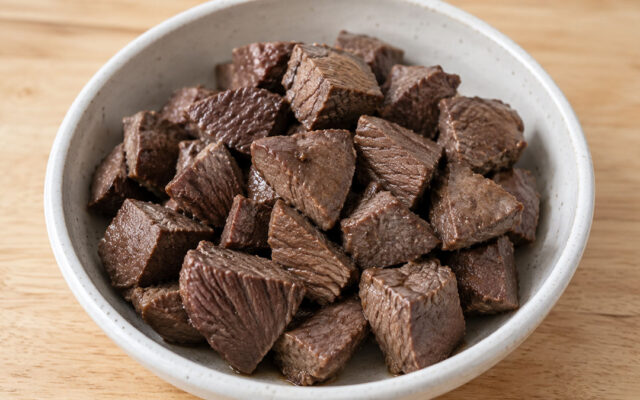
Safe preparation: plain boiling, oven roasting, or pan cooking with no seasoning. No oil is needed. The meat is lean enough that it cooks without it.
What makes cooked moose unsafe for dogs (see the ASPCA’s list of people foods to avoid feeding your pets):
- Garlic and onion (both toxic to dogs, can damage red blood cells and cause anemia)
- Salt in any significant amount
- Xylitol (found in some sugar-free sauces, can cause low blood sugar and liver failure in dogs)
- Butter or heavy oils (high fat load, pancreatitis risk)
Hunters who feed their working dogs moose scraps typically boil the meat plain. That is the right call. Cooking time depends on the size of the pieces, so check the thickest piece with a meat thermometer rather than going by the clock.
Cooking Method Comparison
| Method | Reaches 165°F | Nutrient Retention | Notes |
|---|---|---|---|
| Boiling | Yes | Moderate (B vitamins leach into water) | Easiest method with consistent heat throughout |
| Oven roasting | Yes (use thermometer) | High | Best nutrient retention; avoid seasoning |
| Pan cooking | Yes (use thermometer) | High | Requires monitoring; do not add extra fat or seasonings |
| Microwaving | Inconsistent | Variable | Uneven heating makes it less reliable for parasite safety |
Can Dogs Eat Moose Bones?
Moose bones carry separate risks from the meat itself. The answer depends on whether the bone is raw or cooked, and the size of the dog.
Cooked moose bones are not safe for dogs. Cooking makes bones brittle. Brittle bones splinter into sharp fragments that can lacerate the esophagus, stomach lining, or intestines.
Raw Moose Bones
Raw bones are softer and less likely to splinter than cooked ones. Many raw feeding advocates and some veterinarians consider raw recreational bones from large game acceptable for large dogs under supervision, though bones of any kind can still break teeth or cause blockages.
The relevant factors:
- Weight-bearing leg bones (femur, tibia): very dense, tooth fracture risk for aggressive chewers
- Neck and rib bones: softer, more appropriate as recreational chews
- Bone size vs. dog size: the bone should be larger than the dog’s mouth to prevent swallowing whole
If you want to explore safe chew options for your dog beyond raw bones, there are comparisons worth reading on elk vs deer antlers for dogs and whether antler-based products are a better fit than raw bones for some dogs. If marrow bones are what you have in mind, our guide on whether dogs can eat bone marrow covers the fat and fracture risks in more detail.
One thing I’ve seen with my own dog: she chewed a raw marrow bone from a deer without issue, but she also stopped when she’d had enough. Not every dog has that restraint. Supervision is not optional with any bone.
Signs to Stop Bone Feeding Immediately
Pull the bone and call your vet if you notice:
- Gagging, retching, or distress while chewing
- Pieces breaking off larger than a quarter inch
- Bleeding from the mouth
- Lethargy or vomiting within 12 hours after bone chewing
Can Dogs Be Allergic to Moose Meat?
Dogs can develop an allergy to any protein, including moose. That said, moose functions as a novel protein for nearly every domestic dog in North America, since it does not appear in any mainstream commercial dog food.
Food allergies in dogs develop through repeated immune exposure to the same protein. A dog that has never eaten moose has no prior sensitization to it, which is exactly why novel proteins work in veterinary elimination diets.
Signs of a Food Allergy Reaction
Watch for these in the days and weeks after introduction:
- Persistent scratching, paw licking, or skin redness
- Vomiting or diarrhea more than once
- Ear inflammation or discharge
- Facial swelling (rare but serious, seek vet care immediately)
Moose Meat in Elimination Diets
Veterinary elimination diets for food-allergic dogs require a single protein source the dog has never eaten. Moose qualifies for most dogs. The standard protocol runs at least 8 weeks on the novel protein with zero exposure to previous proteins, then a challenge phase to identify the allergen. A review of the evidence found that 8 weeks is long enough for more than 90% of dogs with food allergies to go into complete remission (Olivry et al., BMC Veterinary Research, 2015).
Moose works well alongside other game proteins like venison-adjacent products in this context. Both are uncommon enough in commercial food that most dogs arrive at them with zero prior immune exposure.
If your dog already eats bison, venison, or elk regularly, moose may not function as a fully novel protein. Cross-reactivity between related cervid proteins is possible, though not well-documented specifically for moose in the veterinary literature yet.
Introduction Protocol
Start with 1 tablespoon of cooked moose meat mixed into regular food on day 1. If no reaction in 48 hours, increase gradually over 7-10 days. A dog that tolerates the full serving by day 10 with no symptoms is likely fine with moose as a regular addition.
How Much Moose Meat Can Dogs Eat?
Portion size depends on whether moose is a treat or a regular meal component. The math is different for each.
As a treat: treats should not exceed 10% of a dog’s daily caloric intake. Cooked moose delivers roughly 134 calories per 100g, which is lower than most commercial dog treats.
Serving Size by Dog Weight
| Dog Weight | Daily Calorie Need (approx) | 10% Treat Allowance | Cooked Moose Equivalent |
|---|---|---|---|
| 10 lbs | ~260–350 kcal | ~30 kcal | ~22g (about 3/4 oz) |
| 25 lbs | ~520–690 kcal | ~60 kcal | ~45g (about 1.6 oz) |
| 50 lbs | ~870–1,165 kcal | ~100 kcal | ~75g (about 2.6 oz) |
| 80 lbs | ~1,240–1,655 kcal | ~145 kcal | ~108g (about 3.8 oz) |
These are treat-level portions, based on typical adult maintenance needs (1.2 to 1.6 times resting energy requirement). Your dog’s actual needs depend on age, activity, and neuter status, so the dog calorie calculator will give you a more precise starting number. If moose meat is replacing a portion of your dog’s regular meal, calculate it as part of total daily intake, not on top of it.
Frequency Guidelines
Occasional feeding means 2-3 times per week at most for treat-sized portions. Daily feeding at meal-replacement level requires more careful nutritional balancing, since moose meat alone is not complete for a dog’s dietary needs (no calcium, no added fiber, no balanced omega ratios).
Dogs fed wild game as a protein base in a raw or home-cooked diet need veterinary nutritionist input to ensure macronutrient and micronutrient targets are being met. This is worth the conversation with your vet, especially if you have a freezer full of moose after a successful hunt.
What Dogs Should Not Eat Moose Meat?
Moose meat is safe for most healthy adult dogs. A handful of health conditions change that calculus entirely.
Skipping the vet conversation when one of these applies is the wrong move. Wild game protein puts extra demand on metabolic systems that are already under stress in sick animals.
Kidney Disease
Dietary phosphorus matters for dogs with chronic kidney disease (CKD). According to an ACVN nutrition review, phosphorus restriction delays the progression of CKD. Moose meat delivers 158mg of phosphorus per 100g raw (USDA), which, like most muscle meats, makes it a poor fit for a phosphorus-restricted renal diet unless your vet builds it in.
Most dogs with CKD do best on a therapeutic renal diet designed to hit phosphorus targets, and adding meat on top of that diet works against it.
That said, protein restriction for CKD dogs is genuinely contested in veterinary nutrition. The issue isn’t high protein damaging healthy kidneys. It’s that nitrogenous compounds from protein metabolism build up when kidney filtration is already compromised, causing uremic toxicity symptoms.
Pancreatitis History
Moose is lean enough (1.5g fat per 100g) that it looks safe on paper for dogs with pancreatitis. That’s partially true, but not the whole story.
Veterinary guidance: dogs recovering from mild pancreatitis are usually switched to a low-fat diet and low-fat treats (Merck Veterinary Manual), but any new food should still be introduced cautiously, and fat content is only one variable. The dog’s individual recovery stage matters too.
Dogs with a single past episode and full recovery can often tolerate plain cooked moose. Dogs with chronic or recurrent pancreatitis need their veterinarian, or a board-certified veterinary nutritionist, to sign off first.
Immunocompromised and Post-Surgical Dogs
Raw moose is off the table entirely for these dogs. Cooked moose is acceptable in most cases, but only after the dog has cleared recovery.
The 3 situations requiring extra caution:
- Dogs actively undergoing chemotherapy
- Dogs recovering from major surgery
- Dogs on immunosuppressive medications like cyclosporine
Puppies Under 12 Weeks
Raw moose is not appropriate for puppies, especially those under 12 weeks. Their immune systems lack the maturity to handle the bacterial load that raw wild game carries.
Cooked, plain moose in very small amounts (under half a teaspoon) is generally fine as an occasional treat for puppies over 8 weeks. Introduce it no earlier than the puppy has been eating solid food consistently for 2-3 weeks.
Dogs on Prescription Hydrolyzed Protein Diets
This one gets missed a lot. If your vet has your dog on a hydrolyzed protein diet for severe food allergies, adding any whole protein source, including moose, can undermine the entire diagnostic process.
Hydrolyzed diets work by breaking proteins into fragments too small for the immune system to recognize as allergens. Introducing a whole novel protein alongside them defeats the purpose and contaminates any elimination trial results.
How to Prepare Moose Meat for Dogs Safely
Preparation is where most people either get this right or mess it up. The steps below are based on CDC and university extension food safety guidance, adapted for canine feeding.
Freezing Raw Moose Meat Before Feeding
Freezing is widely recommended for raw meat before dog feeding, but the science on wild game is more complicated than most people realize.
Key limitation: CDC notes that freezing pork less than 6 inches thick for 20 days at 5 degrees F kills Trichinella, but freezing wild game may not kill all worms because some species that infect wild game are freeze-resistant.
Freezing still helps with:
- Stopping bacterial growth during storage (it does not kill most bacteria)
- Killing some parasites, such as the Trichinella species found in pork
- Improving texture for portioning and grinding
Bottom line: freezing is not a substitute for cooking. Cook moose for your dog to 165 degrees F regardless.
Cooking Moose Meat for Dogs Step by Step
Boiling or oven roasting to an internal temperature of 165 degrees F is the standard. Plain. No seasoning.
Step-by-step:
- Cut moose into pieces no thicker than 1 inch for even heat penetration
- Boil in plain water or oven roast at 325 degrees F until the internal temp reaches 165 degrees F
- Verify temperature with a meat thermometer inserted into the thickest piece
- Cool completely before serving. Do not add salt, garlic, onion, or oil
- Remove all bone fragments before portioning
CDC recommends cooking wild game to at least 165 degrees F, verified with a thermometer, because that is the only reliable way to kill Trichinella, including the freeze-resistant species found in northern wildlife.
Storing Prepared Moose Meat
| Storage Method | Max Duration | Notes |
|---|---|---|
| Refrigerator (cooked) | 3–4 days | Store below 40°F (4°C) in an airtight container |
| Freezer (cooked) | 2–3 months | Quality degrades beyond this point, though it may remain safe longer |
| Freezer (raw, pre-cook) | 6–12 months | Based on Clemson Cooperative Extension storage guidelines for venison roasts, steaks, and chops |
| Room temperature | 2 hours maximum | Discard anything left out beyond this window |
Vacuum sealing or tightly wrapping raw moose before freezing is the best way to prevent freezer burn during long-term storage.
Handling Moose Organ Meat
Moose organ meat (liver, heart, kidney) is more nutritionally dense than muscle meat and warrants different portion rules.
A common raw-feeding guideline keeps organs to about 10% of a dog’s total diet, with liver around 5%, largely because of its vitamin A concentration. The Merck Veterinary Manual notes that feeding only liver can induce vitamin A toxicity in dogs.
Moose liver is rich in vitamin A and B vitamins. Fed daily at high amounts, it can cause vitamin A toxicity over time. Moose heart, closer to a muscle meat nutritionally, is safer at higher frequencies.
There is a second reason to be careful with moose liver and kidneys. The Maine Department of Inland Fisheries and Wildlife and the Maine CDC recommend that people not eat moose liver and kidneys because they can accumulate the heavy metal cadmium, and several other states and provinces have issued similar warnings. That advice is written for people, but it is worth weighing before making those organs a regular part of your dog’s diet. The advisory does not cover the meat or the heart.
Practical rule: a 50-lb dog eating 16 oz of food daily would top out at about 0.8 oz of liver under the 5% guideline. That’s roughly 2 tablespoons of cooked, ground liver.
Keep raw lungs and liver away from your dog entirely if you dress the moose yourself. Those are the organs most likely to carry hydatid tapeworm cysts. University of Maine Cooperative Extension also recommends keeping dogs away from moose and deer viscera and deworming dogs that might contact game carcasses at least twice a year.
How Does Moose Meat Compare to Other Meats for Dogs?
Moose is not the only option. But knowing exactly where it sits relative to common proteins helps you decide when it makes sense to use it.
| Protein | Fat per 100g (raw) | Protein per 100g (raw) | Novel for most dogs? | Wild game parasite risk? |
|---|---|---|---|---|
| Moose | 0.7–1.5g | 22g | Yes | Yes (tapeworm cysts in organs; Trichinella rare) |
| Venison (deer) | ~2.4g | ~23g | Sometimes | Yes |
| Bison | ~2g (lean cuts) to ~16g (ground) | ~19–22g | Sometimes | Lower (often farmed) |
| Beef (lean) | ~5–15g | ~20g | Rarely | Negligible (commercial) |
| Chicken breast | ~1.2g | ~23g | Rarely | None |
Source: USDA FoodData Central (SR Legacy entries for raw moose, deer, bison, beef, and chicken breast).
Moose vs. Venison
Moose and venison are the closest comparison of any two proteins on this list. Both are wild cervids, both are lean, and both carry wild game parasite risk from overlapping geographic regions.
The practical difference comes down to fat content and availability. Moose is slightly leaner than deer (1.5g vs about 2.4g fat per 100g). Venison is far more available commercially, which means many dogs have already been exposed to it and it may no longer function as a novel protein for an elimination diet.
Moose vs. Bison
Lean bison cuts are about as lean as moose in USDA data, but ground bison, the form most owners buy, carries around 16g of fat per 100g raw. That makes moose the stronger choice for dogs with fat restriction requirements unless you are buying lean whole cuts of bison.
Bison is largely farmed in North America, which significantly reduces wild game parasite risk. Moose is almost exclusively wild-harvested, which keeps that risk in play. For dog owners weighing whether wild game or farmed protein is a better fit, bison is the lower-risk wild-type alternative if you want a novel protein without field-dressing concerns.
Moose vs. Chicken
Not a meaningful comparison for most of this article’s audience, but worth stating directly.
Chicken is one of the most common food allergens in dogs, along with beef, dairy, and wheat (Mueller et al., BMC Veterinary Research, 2016). A dog with a confirmed chicken allergy or on a chicken elimination diet cannot eat chicken in any form. Moose, as a mammal with no close protein relationship to poultry, is very unlikely to cross-react with a chicken allergy.
Fat content is nearly identical between moose muscle meat and chicken breast (both under 2g per 100g raw). Moose delivers slightly more iron and B12. For dog owners comparing freeze-dried chicken options against wild game alternatives, moose wins on novelty and allergen profile, while chicken wins on availability and cost.
Where Moose Fits in Practical Feeding Decisions
Moose is not a daily staple protein for most dog owners. It requires sourcing from hunters or specialty wild game suppliers, field-dressing quality matters, and preparation takes more care than opening a bag of commercial food.
Moose makes the most sense in 3 specific situations:
- You hunt or have access to a hunter with surplus moose
- Your dog has confirmed allergies to common commercial proteins (chicken, beef, lamb)
- You are running a veterinary elimination diet and need a genuinely novel protein
Outside those scenarios, bison and venison are easier to source and deliver a comparable nutritional profile. For dogs with no special dietary needs, plain cooked chicken or a quality commercial food with beef heart as a protein component covers the same nutritional bases with less preparation effort.
FAQ on Can Dogs Eat Moose Meat
Is moose meat safe for dogs?
Yes, when cooked plain to an internal temperature of at least 165 degrees F. Raw moose from wild-harvested animals can carry parasites, including tapeworm cysts in the organs, and bacterial contamination. Proper preparation eliminates both concerns for most healthy adult dogs.
Can dogs eat raw moose meat?
It is not recommended without precautions. Raw wild game can carry bacteria such as Salmonella, and some parasites in northern wildlife survive standard home freezing. Cooking to 165 degrees F is the only method that reliably destroys parasites in wild game, and raw moose lungs and liver should never be fed because of hydatid tapeworm cysts.
Is moose a good protein source for dogs?
Yes. Raw moose delivers 22g of protein and only about 1.5g of fat per 100g, making it one of the leanest red meat options available. It also provides iron, zinc, selenium, and high levels of vitamin B12.
Can dogs be allergic to moose meat?
Any protein can trigger an allergy, but moose functions as a novel protein for most dogs since it rarely appears in commercial food. Low prior exposure means low sensitization risk. Introduce slowly and watch for itching, vomiting, or ear inflammation.
Can dogs eat moose bones?
Raw moose bones are safer than cooked ones. Cooked bones splinter and can cause internal lacerations. Raw marrow bones from large moose are suitable for big dogs under supervision, but should be size-appropriate and removed when they become small enough to swallow.
How much moose meat can I feed my dog?
As a treat, keep portions within 10% of daily caloric intake. Cooked moose provides roughly 134 calories per 100g. A typical 50-lb adult dog can have about 75g (2.6 oz) as a treat portion. Daily meal replacement requires veterinary nutritionist guidance for balanced feeding.
Can puppies eat moose meat?
Cooked, plain moose in very small amounts is acceptable for puppies eating solid food. Raw moose is not appropriate for puppies, especially those under 12 weeks, due to immature immune systems. Always introduce new proteins gradually and monitor for digestive upset or allergic reactions.
Does moose meat carry Chronic Wasting Disease risk for dogs?
Current research shows dogs are resistant to CWD prion infection, and there is no evidence of CWD infecting any animal other than deer, elk, moose, and their relatives in nature. As a precaution, avoid feeding brain, spinal cord, and lymph node tissue from cervids harvested in CWD-positive regions.
How does moose meat compare to venison for dogs?
Both are lean wild game proteins with similar protein content around 22g per 100g raw. Moose is slightly leaner at about 1.5g fat vs venison’s 2.4g. Venison is more commercially available, meaning many dogs have prior exposure and it may no longer function as a novel protein.
Can dogs with pancreatitis eat moose meat?
Moose is low-fat enough to seem safe, but dogs with chronic or recurrent pancreatitis need veterinary clearance before any dietary change. A single past episode with full recovery is different from ongoing pancreatic disease. Always confirm with your vet before introducing wild game proteins.
Conclusion
Feeding moose meat to dogs is safe, nutritious, and genuinely useful in the right context.
The fat profile alone sets it apart. At about 1.5g of fat per 100g, moose is leaner than beef, ground bison, and venison, making it a strong lean protein source for dogs managing weight or recovering from pancreatitis.
The wild game risks are real but manageable. Cooking to 165 degrees F eliminates Trichinella and bacterial contamination, and keeping raw lungs and liver away from your dog prevents hydatid tapeworm infection. Organ meat such as heart adds concentrated B vitamins, iron, and zinc when kept within the 10% dietary guideline, while liver and kidneys deserve extra caution because of vitamin A and cadmium.
For dogs with confirmed allergies to common commercial proteins, moose delivers something most diets cannot: a genuinely novel protein with zero prior immune exposure for most dogs in North America.