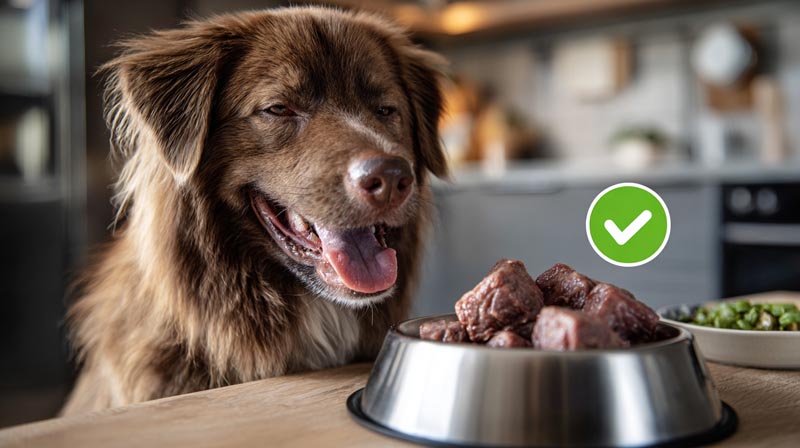
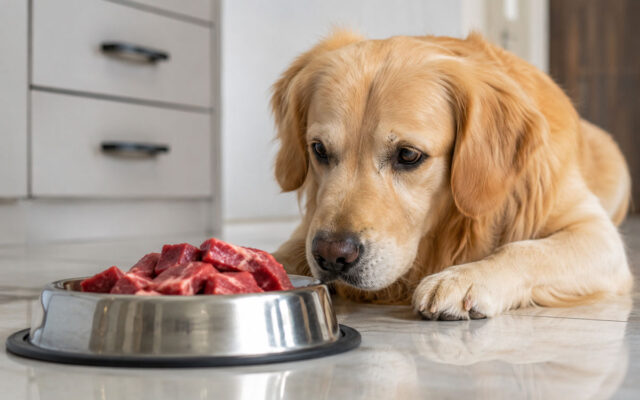
You’ve probably stood in the pet food aisle staring at a bag of freeze dried chicken, wondering if the price tag is actually worth it.
Is freeze dried chicken good for dogs? The short answer is yes, for most healthy dogs. But the longer answer involves raw diet safety, AAFCO label requirements, bacterial contamination risk, and whether your specific dog’s age and health history changes the math entirely.
This article covers what freeze drying actually does to chicken protein and nutrient bioavailability, how it compares to kibble and raw frozen formats, who should avoid it, and exactly what to look for on the label before buying.
What Is Freeze Dried Chicken for Dogs?
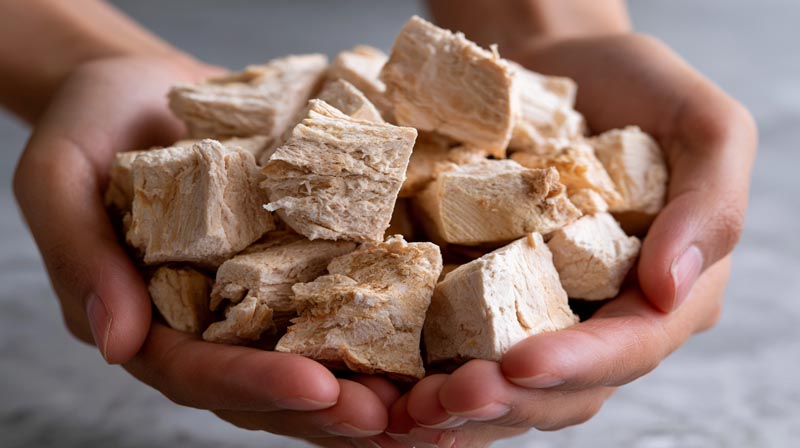
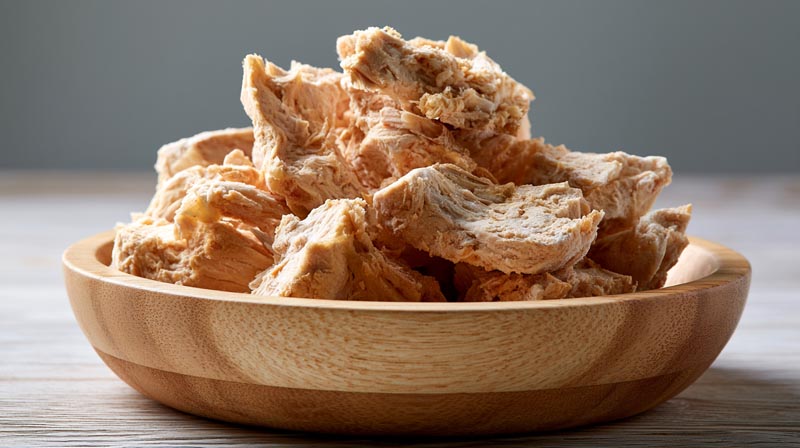
Freeze dried chicken for dogs is raw or fresh chicken that has been processed through sublimation, a method that removes moisture by converting ice directly into vapor under low pressure and sub-zero temperatures. No cooking heat is applied at any point.
That matters because high heat is what destroys enzymes, degrades amino acids, and reduces vitamin bioavailability in standard pet food processing. Freeze drying skips that step.
The result is a shelf-stable product that retains the nutritional profile of raw chicken, with moisture content reduced to roughly 2-5% compared to raw chicken’s 65-70%. It looks nothing like raw chicken, but biochemically it’s much closer to raw than to kibble. That also means that, unless the label says otherwise, freeze dried chicken is a raw product.
How Freeze Drying Differs from Similar Formats
Dehydration uses heat (typically 130-165 degrees Fahrenheit), which degrades heat-sensitive nutrients. Freeze drying does not. Air-dried products fall between the two: some heat is applied, but at lower temperatures than full dehydration.
Raw frozen chicken preserves nutrients similarly to freeze-dried, but requires continuous cold-chain storage. Freeze dried chicken needs no refrigeration until opened, giving it a shelf life of 1-2 years unopened.
| Format | Heat Used | Shelf Life | Nutrient Retention |
|---|---|---|---|
| Freeze dried | None (sublimation) | 1–2 years | High |
| Dehydrated | Yes (130–165°F / 54–74°C) | 1–2 years | Moderate |
| Air dried | Low heat | 1–2 years | Moderate–High |
| Raw frozen | None | 3–6 months frozen | High |
| Extruded kibble | Yes (125–150°C) | 12–18 months | Low–Moderate |
What Forms It Comes In
Freeze dried chicken for dogs comes in 3 main formats: standalone treats (single-ingredient, pure chicken), meal toppers (mixed with other ingredients, sprinkled over existing food), and complete diet patties or nuggets (formulated to meet AAFCO nutritional standards as a full meal).

Not all formats are interchangeable. A single-ingredient freeze dried chicken treat is not nutritionally complete. Feeding it as a primary diet will produce deficiencies over time.
Brands producing complete and balanced freeze dried chicken formulas include Stella and Chewy’s, Primal Pet Foods, Northwest Naturals, and K9 Natural. Each uses different sourcing standards, ingredient ratios, and safety protocols.
Freeze dried dog food has become one of the faster-growing pet food formats, and chicken is one of the most common proteins in it, which reflects a real shift toward minimally processed formats.
What Nutrients Does Freeze Dried Chicken Provide for Dogs?
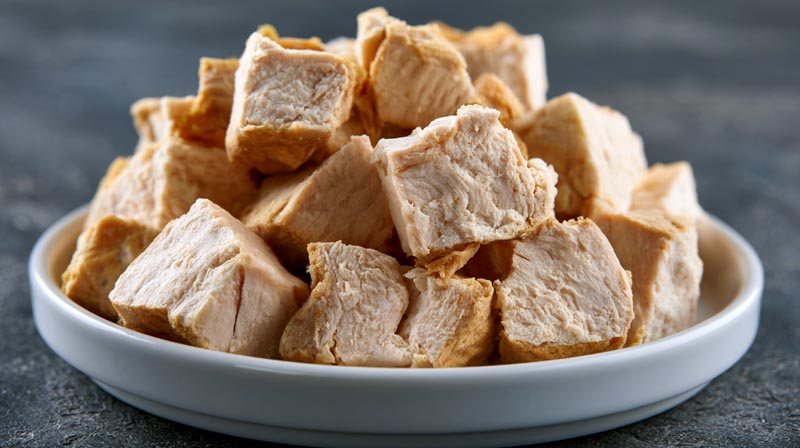
Freeze dried chicken delivers a nutrient profile that closely mirrors raw chicken because the processing method avoids the high temperatures used in heat-based manufacturing. The core value is in the intact proteins, fat-soluble vitamins, and natural enzymes that come through the process largely undamaged.
Protein Quality Compared to Kibble
A University of Illinois Urbana-Champaign study that compared five commercial chicken-based dog foods found that the freeze dried raw diet generally had the highest amino acid digestibility and the extruded kibble the lowest (Geary et al., Journal of Animal Science, 2023). The study used a standard rooster assay rather than dogs, and the authors noted that all five diets performed relatively well, with few differences overall.
Lysine digestibility was notably higher in freeze dried raw and frozen raw compared to extruded. Threonine digestibility was also higher in freeze dried raw than in kibble. Digestibility of the other essential amino acids did not differ between the diets. Lysine and threonine are 2 of the 10 essential amino acids dogs cannot synthesize on their own.
On a dry matter basis, freeze dried chicken formulas typically contain between 40-65% crude protein, depending on the brand and whether organ meats are included alongside muscle meat.
Vitamin and Mineral Retention After Freeze Drying
The fat-soluble vitamins A, D, E, and K generally hold up well in freeze drying because sublimation does not expose them to cooking heat. B-complex vitamins, particularly B12 and B6, are also less exposed to heat losses than in extruded formats where processing temperatures reach 125-150 degrees Celsius.
Natural glucosamine and chondroitin can be present in bone-in freeze dried chicken formulas that include cartilage. These compounds support joint cartilage and are often added synthetically to standard kibble. Getting them from whole food sources provides them alongside the co-factors naturally present in chicken tissue.
DHA, an omega-3 fatty acid important for brain function and coat condition, is present in small amounts in the fat content of freeze dried chicken. Levels vary by formula and whether additional fish or flaxseed sources are included.
One practical consideration: moisture content drops to 2-5% in freeze dried chicken. Dogs on dry kibble already consume low-moisture diets, so adding freeze dried chicken without rehydrating it increases the need for adequate water intake, especially for small breeds and senior dogs.
Is Freeze Dried Chicken Safe for Dogs to Eat?
Freeze dried chicken is generally safe for healthy adult dogs, but the format carries specific risks that matter depending on the product, the brand, and the dog’s health status. The most documented concern is bacterial contamination in raw freeze dried products.
Bacterial Risk in Raw Freeze Dried Formats
Sublimation removes moisture but does not apply cooking heat, which means it does not reliably kill pathogens. Salmonella and Listeria monocytogenes can survive the freeze drying process and remain viable in the finished product. Veterinary nutritionists at Tufts recommend assuming that any freeze dried meat pet food or treat is raw unless the maker states otherwise (Tufts Petfoodology, 2025).
The FDA has issued multiple advisories for raw pet food products testing positive for Salmonella and Listeria in recent years, including a September 2024 advisory for Darwin’s Natural Selections frozen raw chicken recipes for dogs and cats (FDA, 2024). In an earlier FDA study, 15 of 196 raw pet food samples tested positive for Salmonella and 32 for Listeria monocytogenes (FDA).
Pets do not need to show illness symptoms to shed these pathogens. In a UK study, Salmonella was found in the feces of 8 of 114 raw-fed dogs and none of 76 non-raw-fed dogs (Groat et al., Journal of Small Animal Practice, 2022). Bacteria can spread through fecal matter and saliva, contaminating food preparation surfaces, bowls, and hands.
High-pressure processing (HPP) is used by some brands to reduce pathogen load without heat. It applies extreme water pressure to the sealed raw product, usually before it is freeze dried, disrupting bacterial cell walls while leaving nutrients largely intact. Brands using HPP will typically disclose it on the label or website.
Which Dogs Should Avoid Raw Freeze Dried Chicken
The following groups carry elevated risk from raw bacterial exposure:
- Immunocompromised dogs, including those on chemotherapy or long-term steroids
- Puppies under 12 weeks, whose immune systems are not fully developed
- Senior dogs over 10 years, whose immune function declines with age
- Dogs with diagnosed GI conditions including IBD or EPI
There is also a human handling risk. Households with young children, elderly adults, or immunocompromised family members should use particular care when handling raw freeze dried products, washing hands and surfaces thoroughly after feeding. The CDC does not recommend feeding raw pet food for this reason.
HPP-processed freeze dried chicken, or cooked/gently heated freeze dried options, are the safer choice for higher-risk households. The trade-off is a modest reduction in some heat-sensitive nutrients versus meaningfully lower pathogen exposure.
How Does Freeze Dried Chicken Compare to Raw and Kibble Diets?
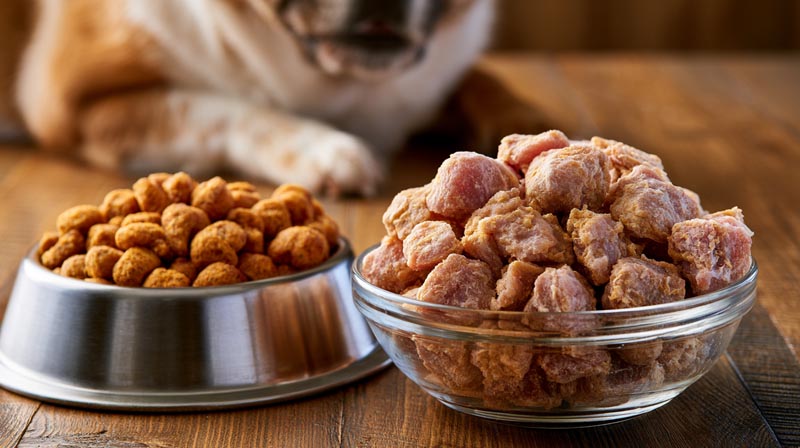
Freeze dried chicken sits between raw frozen and extruded kibble on both the nutrition and convenience spectrum. It delivers nutrition closer to raw while avoiding the cold-chain requirements that make raw feeding logistically demanding for most dog owners.
Digestibility Differences
In a follow-up feeding study in 10 healthy adult beagles, University of Illinois researchers found that protein digestibility was highest for the frozen raw diet and the freeze dried raw patties, and fat digestibility was lowest for the extruded kibble (Geary et al., Translational Animal Science, 2024). The authors cautioned that ingredients and nutrient composition, not just processing, may explain the differences, and one author was employed by Primal Pet Group.
The likely mechanism: extrusion requires processing temperatures of 125-150 degrees Celsius. At those temperatures, the Maillard reaction can tie up lysine and lower protein digestibility, although the reactive lysine ratios in the Illinois rooster study were similar across all five diets. Freeze drying bypasses that high-heat step.
Fecal scores were also firmer in dogs fed the frozen raw diet and the freeze dried patties compared to extruded kibble. That tracks with what most owners notice after switching, which is firmer, smaller stools, a sign of a highly digestible diet.
Cost and Practicality
This is where freeze dried chicken loses ground to kibble pretty fast.
Daily feeding cost:
- Premium kibble for a 30 lb dog: roughly $2-4 per day
- Freeze dried complete diet (e.g. Stella and Chewy’s): roughly $8-15 per day rehydrated
- Raw frozen complete diet: roughly $5-10 per day
Many owners land on using freeze dried chicken as a healthier treat option or as a meal topper rather than a full diet replacement, which brings the cost down to a manageable add-on rather than a complete food budget overhaul.
Shelf life is one area where freeze dried chicken genuinely beats both raw and fresh formats. Unopened bags last 1-2 years at room temperature. That makes it practical for travel, emergencies, or anyone who dislikes the logistics of raw frozen storage.
That partial-switch approach, topping kibble rather than replacing it, is how many dog owners use freeze dried food today.
What Are the Proven Benefits of Freeze Dried Chicken for Dogs?
The benefits of freeze dried chicken are real, but they are not universal. They depend on what you are replacing, the quality of the specific product, and the individual dog’s health and tolerances.
Palatability and Food Motivation
Freeze drying locks in the natural aromas and flavor compounds of raw chicken. Dogs that are picky about kibble or have reduced appetite due to illness or age often eat freeze dried chicken without hesitation.
That strong taste appeal makes it particularly useful as a single-ingredient treat during training or for dogs recovering from illness who need encouragement to eat.
Muscle Maintenance and Energy
High-quality, digestible protein from freeze dried chicken supports lean muscle mass in active and working dogs. Its intact amino acid profile, including leucine and lysine, supplies the building blocks for muscle protein synthesis.
Working breeds, sporting dogs, and high-activity dogs benefit most here. For low-activity or sedentary dogs, the caloric density of freeze dried chicken requires careful portion management to avoid weight gain.
Food Sensitivity Management
Single-protein freeze dried chicken can serve as a limited-ingredient option for dogs that have never eaten chicken. When a dog shows signs of food hypersensitivity, removing all previous protein sources and introducing one novel single protein helps identify the trigger.
Label accuracy matters here. A review of published testing found ingredients not listed on the label in 33-83% of commercial pet foods marketed with “novel” or “limited” ingredients (Olivry and Mueller, BMC Veterinary Research, 2018), so a formal elimination trial should be planned with your vet. Chicken itself is also among the more common food allergens in dogs (see below), so it is not the right elimination protein for every dog.
Food allergies are diagnosed in about 1-2% of dogs seen by veterinarians, and chicken was implicated in about 15% of food-allergic dogs in a review of published cases. Knowing your dog’s history with chicken before committing to a freeze dried chicken diet is worth confirming with a vet first.
What Are the Risks and Downsides of Feeding Freeze Dried Chicken?
Freeze dried chicken is not risk-free. Beyond bacterial contamination, there are 4 documented downside categories that dog owners need to account for before feeding it regularly.
Kidney Disease and High Protein Diets
Dogs with chronic kidney disease (CKD) require controlled phosphorus and protein intake. Freeze dried chicken, particularly bone-in formulas, delivers high phosphorus loads from bone content alongside elevated protein levels.
High dietary phosphorus in dogs with CKD accelerates the progression of renal damage by increasing the workload on already compromised nephrons. This is not a theoretical risk. The International Renal Interest Society (IRIS) treatment recommendations list dietary phosphate restriction as the first step in controlling blood phosphate in dogs with CKD.
If your dog has any history of kidney issues, consult a veterinary nutritionist before introducing freeze dried chicken as anything more than an occasional treat.
Chicken Allergy Prevalence in Dogs
Chicken ranked as the third most common food allergen in a review of published cases covering 297 food-allergic dogs, affecting around 15% of allergic dogs (Mueller, Olivry and Prélaud, BMC Veterinary Research, 2016). Among all dogs visiting veterinarians, food allergy prevalence is 1-2%, but among dogs presenting with skin conditions it ranges up to 24%, and among itchy dogs it ranges from 9% to 40% (Olivry and Mueller, BMC Veterinary Research, 2017).
Symptoms of chicken allergy in dogs include itching, skin redness, recurring ear infections, and chronic soft stools. These can appear gradually after months of regular exposure, not necessarily immediately after the first meal.
Caloric Density and Overfeeding Risk
Freeze dried chicken has very low moisture content, which concentrates calories significantly. Owners accustomed to kibble portion sizes who use the same visual volume with freeze dried chicken will consistently overfeed. Our dog calorie calculator can help you set a daily calorie target before you start.
Most complete diet freeze dried products are designed to be rehydrated before serving, and the feeding guide is based on the dry weight. Feeding dry, by eye, makes it easy to overshoot calories and reduces the water your dog takes in with the meal.
Thyroid Tissue Contamination Risk
Raw neck meat and whole carcass products may contain thyroid gland tissue if not carefully trimmed during processing. Thyroid tissue contains thyroid hormones that can cause hyperthyroidism-like symptoms in dogs when consumed regularly. Dietary hyperthyroidism has been documented in dogs fed raw meat diets or dried gullets (Köhler et al., Journal of Small Animal Practice, 2012) and in 14 dogs eating all-meat commercial foods or treats (Broome et al., JAVMA, 2015). In both reports, thyroid levels returned to normal after the diet was changed.
Reputable freeze dried brands using human-grade muscle meat sourcing reduce this risk. Products explicitly labeled as using USDA-inspected chicken and sourced from muscle meat (not whole carcass grinds) carry lower thyroid tissue contamination risk.
How Much Freeze Dried Chicken Should Dogs Eat Per Day?
Feeding amounts depend on whether freeze dried chicken is being used as a complete diet, a meal topper, or a treat. The right amount looks completely different across those 3 uses, and confusing them is one of the most common mistakes dog owners make with this format.
Feeding as a Complete Diet vs. a Topper
Not all freeze dried chicken products are formulated to be nutritionally complete. The AAFCO nutritional adequacy statement on the label tells you which category the product falls into (FDA).
What to look for:
- “Formulated to meet the nutritional levels established by the AAFCO Dog Food Nutrient Profiles” means the product’s formula meets the nutrient profile on paper
- “Animal feeding tests using AAFCO procedures substantiate…” means real dogs were fed the diet in a controlled study, which is the stronger standard
- “Intended for intermittent or supplemental feeding only” means it is not a complete food and should not replace a primary diet
In July 2023, AAFCO approved new model labeling rules that move the intended use statement (for example, whether a product is a complete food or a treat) to the lower third of the front panel, with a phase-in period of about six years (AAFCO, 2023). Until then, you will often find the nutritional adequacy statement in small print on the back.
Rehydration Guidelines
Rehydrating freeze dried chicken before serving is strongly recommended for 3 groups: small breed dogs, senior dogs, and any dog with a history of urinary tract issues or kidney sensitivity.
The standard rehydration method is to add warm water and let it sit for 1-2 minutes until the chicken absorbs the liquid and expands. The food-to-water ratio varies by brand, so follow the directions on the package.
For dogs that resist rehydrated textures, using low-sodium broth with no onion or garlic instead of water can increase acceptance while maintaining adequate hydration with each meal. If your dog also has a delicate gut, our guide to dog treats for sensitive stomachs covers gentler options.
Dry feeding of complete diet freeze dried chicken is not inherently dangerous for healthy adult dogs with free access to water. But for dogs already prone to dehydration, concentrated caloric intake, or kidney strain, rehydration is the safer default.
Does Freeze Dried Chicken Help Dogs with Digestive Problems?
For healthy adult dogs, often yes. For dogs with active GI conditions, it depends heavily on the specific diagnosis and the fat content of the formula.
The 2024 University of Illinois study (Geary et al., Translational Animal Science) used Stella and Chewy’s Chicken Dinner Patties and a Primal freeze-dried chicken formula alongside Primal frozen raw, Hill’s Science Diet kibble, and Just Food for Dogs fresh food. Fecal scores were firmer in dogs fed the frozen raw diet and the Stella and Chewy’s freeze-dried patties compared to those fed extruded kibble. Firmer stool generally reflects a more digestible diet with less undigested material passing through.
What the Research Actually Shows
The frozen raw diet and the Stella and Chewy’s freeze-dried patties had higher protein digestibility than the other diets, and the extruded kibble had the lowest fat digestibility (Geary et al., 2024).
The same study also measured fecal microbiota. Diet format had a large effect, with more than 40 bacterial genera differing in relative abundance between the diets, though the clinical interpretation of those microbiome shifts requires further research.
Key qualifier: all test dogs were healthy adults. These results do not automatically translate to dogs with IBD, exocrine pancreatic insufficiency (EPI), or pancreatitis.
When Freeze Dried Chicken Is the Wrong Choice for GI Dogs
High-fat freeze dried formulas are a real problem for pancreatitis-prone dogs. The Merck Veterinary Manual describes feeding a low-fat diet (under 20g of fat per 1,000 kcal) as crucial for treatment success in dogs with pancreatitis (Merck Veterinary Manual), although a 2022 review notes that the evidence linking dietary fat to the onset of pancreatitis is still limited (Cridge et al., JVIM, 2022).
Most freeze dried chicken complete diets contain 20-35% fat on a dry matter basis. That is too high for any dog with a history of pancreatitis or hyperlipidemia.
Dogs with EPI have impaired enzyme production and need highly digestible, low-fiber diets, often with enzyme supplementation. Freeze dried chicken may be appropriate here, but only under veterinary guidance and using low-fat, single-protein formulas.
Transition diarrhea during the first 5-7 days of switching to freeze dried chicken from kibble is common and usually self-limiting. A gradual 10-day transition (mixing increasing proportions of freeze dried with current food) reduces GI upset during the switchover period.
What Should Dog Owners Look for on Freeze Dried Chicken Labels?
Most freeze dried chicken products look similar on the front of the bag. The real differences show up on the back label, and knowing where to look takes about 60 seconds once you know the system.
The AAFCO Statement
This is the single most important line on the label. It usually appears on the back panel and tells you 2 things: whether the product is nutritionally complete, and whether real feeding trials were conducted.
What each statement means:
- “Formulated to meet AAFCO nutritional levels” means the formula meets the nutrient profile, but no dogs were tested
- “Animal feeding tests using AAFCO procedures substantiate…” means real dogs were fed the diet in a controlled study
- “Intended for intermittent or supplemental feeding only” means it cannot replace a complete diet
A 2025 study of 61 adult and senior dog foods bought from retail stores in Fort Collins, Colorado found that 18% of the products did not meet at least one AAFCO adult maintenance requirement when analyzed in the lab (German et al., Frontiers in Veterinary Science, 2025). A complete and balanced claim is a starting point, not a guarantee.
Ingredient List Red Flags
Ingredients appear in descending order by weight before processing. In a quality freeze dried chicken product, the first 3-5 ingredients should all be recognizable whole foods.
| What You Want to See | What to Avoid |
|---|---|
| Chicken, chicken liver, chicken heart | Chicken by-product meal as the first ingredient |
| USDA-sourced or human-grade protein | Vague sourcing terms such as “poultry” or “meat” |
| Organic produce listed | Artificial preservatives (BHA, BHT, ethoxyquin) |
| HPP disclosure on label or website | No pathogen control method stated |
Guaranteed Analysis Numbers That Matter
Crude protein minimum, crude fat minimum, crude fiber maximum, and moisture maximum are the 4 numbers required on every label. Phosphorus, calcium, and taurine content are optional but worth finding if your dog has specific health concerns.
For complete diet freeze dried chicken formulas, look for crude protein above 35% on a dry matter basis and moisture below 10%.
High-pressure processing is not a legal requirement to disclose, but brands using it generally advertise it prominently. Stella and Chewy’s, for example, states on its website that it applies HPP to all of its raw products. Brands that do not mention any pathogen control method are worth researching further before buying.
Is Freeze Dried Chicken Good for Puppies and Senior Dogs Specifically?
Age matters more with freeze dried chicken than most dog owners realize. A formula that works well for a healthy 3-year-old Labrador may be nutritionally wrong for a 10-week-old puppy or a 12-year-old dog with early kidney changes.
Freeze Dried Chicken for Puppies
Puppies have 2 non-negotiable nutritional requirements: the AAFCO statement must cover “growth” or “all life stages,” and large breed puppies specifically need controlled calcium levels.
Until 6 months of age, puppies absorb about 70% of dietary calcium passively through the small intestine (Today’s Veterinary Nurse). Unlike adult dogs, they cannot down-regulate absorption when intake is too high. Excess calcium in large breed puppies is associated with developmental orthopedic diseases including osteochondrosis, wobbler syndrome, and radius curvus syndrome.
The recommended calcium range for large breed puppies is 0.8% to 1.2% dry matter basis (Today’s Veterinary Nurse), and VCA Animal Hospitals advises choosing a food that states it meets AAFCO nutrient levels for large-breed puppies (VCA Animal Hospitals). Bone-in freeze dried chicken formulas can exceed this if fed in the volumes needed to meet caloric requirements. Check the guaranteed analysis before feeding any bone-in product to a large breed puppy.
DHA from chicken fat and added fish oil supports neurological development in growing puppies. Freeze dried formulas with added salmon oil or whole sardines provide more reliable DHA levels than those relying on chicken fat alone.
Freeze Dried Chicken for Senior Dogs
Senior dogs can benefit from freeze dried chicken’s high digestibility and palatability. AAHA’s senior care guidelines note that reduced food digestibility is more of an issue in older cats than in dogs, but adding moisture to food increased nutrient digestibility in senior dogs in one study (AAHA, 2023), which is another argument for rehydrating.
Two concerns specific to senior dogs:
- Immune function declines with age, raising bacterial pathogen risk from raw freeze dried formats without HPP
- Early-stage chronic kidney disease is common in senior dogs and may require phosphorus restriction (check with your vet before switching)
The 2025 German et al. study in Frontiers in Veterinary Science evaluated 61 adult and senior dog diets and found that differences between adult and senior product formulations were inconsistent, with no specific AAFCO nutrient profile existing for senior dogs.
That means a product labeled “senior” is not held to a different standard than one labeled “adult.” Checking the actual nutrient profile, specifically protein digestibility, phosphorus content, and fat level, matters more than the age-stage label on the bag.
For seniors already eating a high-quality diet without issues, freeze dried chicken works well as a protein-dense meal topper that adds palatability without requiring a full diet overhaul. That approach keeps cost manageable and avoids the GI disruption of a complete diet switch in an older dog. Some owners compare it with other premium dog food options like Redbarn before deciding.
Senior dogs in good health with no known kidney, pancreatic, or immune issues can safely eat HPP-processed complete diet freeze dried chicken. The raw format without HPP deserves more caution in this age group than it does in healthy adult dogs between 2 and 8 years old.
FAQ on Is Freeze Dried Chicken Good For Dogs
Is freeze dried chicken safe for dogs to eat daily?
Yes, for healthy adult dogs. Use a complete and balanced formula with an AAFCO nutritional adequacy statement. Single-ingredient treats are not nutritionally complete and should not replace a full diet. Check the label before committing to daily feeding.
Does freeze drying destroy nutrients in chicken?
No. Sublimation removes moisture without cooking heat, so vitamins, amino acids, and natural enzymes remain largely intact. A University of Illinois rooster-assay study found freeze dried raw had higher lysine and threonine digestibility than extruded kibble, with no differences for the other essential amino acids.
Can freeze dried chicken cause Salmonella in dogs?
It can. Freeze drying does not reliably kill pathogens. The FDA has issued multiple advisories in recent years for raw pet food testing positive for Salmonella. Choose brands using high-pressure processing to reduce bacterial risk without heat.
Is freeze dried chicken good for dogs with sensitive stomachs?
Often yes, for dogs with food sensitivities or chronic soft stools. Higher digestibility and single-protein sourcing can help, but a formal elimination diet should be planned with your vet. Avoid it in dogs with pancreatitis, as fat content in most formulas is too high.
How much freeze dried chicken should I feed my dog per day?
For complete diet formulas, follow the feeding guide on the package and adjust for your dog’s weight and body condition. Treats should not exceed 10% of daily caloric intake. Rehydrating before serving is recommended, especially for small breeds and senior dogs.
Is freeze dried chicken better than kibble for dogs?
Nutritionally, it often compares well. Research shows higher protein digestibility and firmer stool quality versus extruded kibble in healthy dogs. But freeze dried chicken costs several times more per day and carries raw pathogen risk that kibble does not.
Can puppies eat freeze dried chicken?
Yes, if the formula is labeled for growth or all life stages. Large breed puppies need controlled calcium levels. Bone-in freeze dried formulas can push calcium too high. Always check the guaranteed analysis before feeding to growing large breeds.
Is chicken a common allergen in dogs?
Yes. Chicken ranks among the top food allergens in dogs, affecting around 15% of dogs with food allergies in a review of published cases (BMC Veterinary Research). Only beef and dairy were reported more often. Symptoms include itching, ear infections, and chronic loose stools.
Do I need to rehydrate freeze dried chicken before feeding?
Not always, but it is recommended. Rehydration supports proper digestion and makes portion control easier. It is especially important for senior dogs, small breeds, and any dog with a history of urinary tract issues or kidney sensitivity.
What is the difference between freeze dried and dehydrated chicken for dogs?
The key difference is heat. Dehydration uses temperatures of 130-165 degrees Fahrenheit, which degrades heat-sensitive vitamins and enzymes. Freeze drying uses sublimation at sub-zero temperatures, preserving more of the raw nutrient profile without cooking heat, which also means the product is still raw.
Conclusion
Freeze dried chicken is a genuinely high-quality protein source when the product is complete, balanced, and sourced responsibly.
The digestibility advantage over extruded kibble is real and research-backed, though modest. So is the Salmonella risk in raw formats without high-pressure processing.
Check the AAFCO nutritional adequacy statement. Confirm the calcium-phosphorus ratio if you have a large breed puppy. Factor in your dog’s kidney function, fat tolerance, and immune status before committing to a full raw freeze dried diet.
Used correctly, freeze dried chicken supports canine digestive health, muscle maintenance, and palatability in ways many standard kibbles do not match.