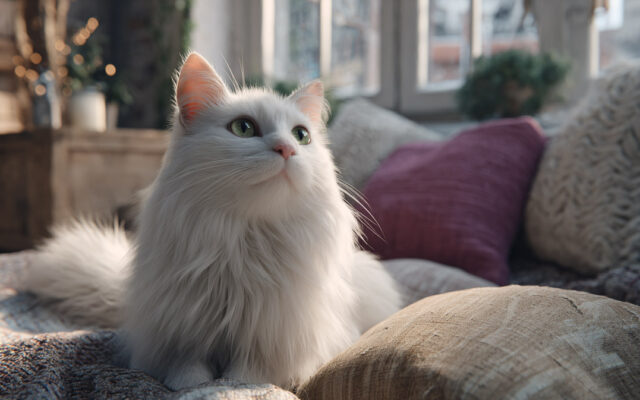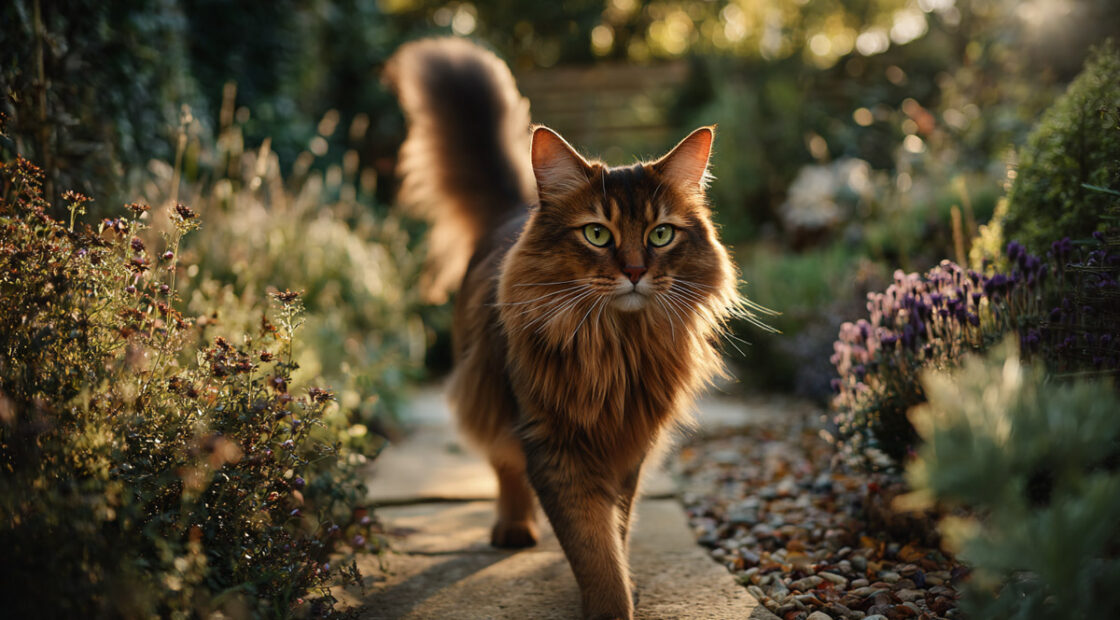
That fox-like tail and wild appearance might fool you at first glance, but Somali cats are completely domesticated companions with personalities that rival any dog’s devotion.
These longhaired relatives of the Abyssinian breed combine stunning ticked coats with incredibly high intelligence and energy levels that keep owners entertained for hours.
If you’re considering adding one of these athletic felines to your family, you need accurate information about their care requirements, health concerns, and whether their intense personality matches your lifestyle.
This guide covers everything from their fox cat nickname origins to the genetic health screenings every responsible breeder should perform, plus realistic costs and what daily life with a Somali actually looks like.
Somali Cat Breed Statistics
| Characteristic | Details |
|---|---|
| Weight | Males: 8-13 lbs / Females: 6-10 lbs |
| Height | 7-11 inches |
| Lifespan | 11-16 years |
| Coat Length | Semi-long to medium-long |
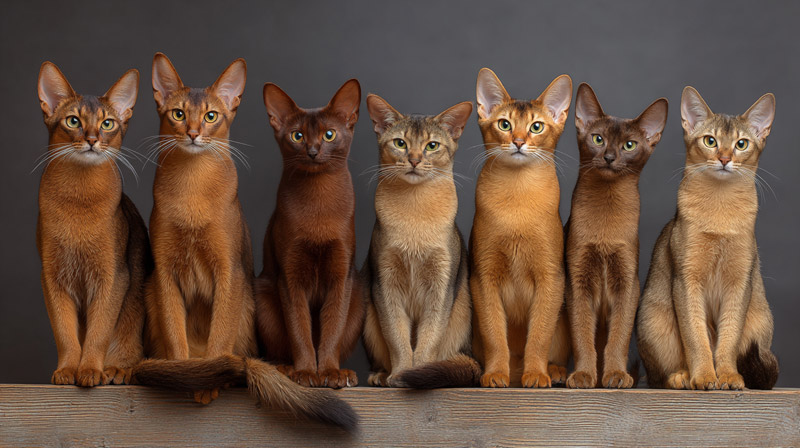
| Coat Colors | Ruddy, red, blue, fawn, chocolate, lilac, silver variations |
| Shedding | Moderate (heavier in spring/summer) |
| Energy Level | Very high |
| Exercise Needs | 60-90 minutes daily |
| Trainability | High (intelligent, responds well to clicker training) |
| Grooming Frequency | 2-3 times weekly brushing |
| Good with Children | Excellent (all ages) |
| Good with Dogs | Good (with proper introductions) |
| Good with Other Cats | Best with similar energy levels |
| Stranger Friendly | Cautious initially, then friendly |
| Vocalization | Moderate (soft, quiet voice) |
| Affection Level | High (but not lap cats) |
| Apartment Suitable | Yes (with vertical space) |
| Indoor/Outdoor | Best as indoor cats or with secure outdoor access |
| First-Time Owner | Intermediate difficulty |
| Time Commitment | 3-4 hours daily |
| Playfulness | Extremely high |
| Intelligence | Very high |
| Attention Needs | High (don’t like being alone) |
| Health Issues | PK deficiency, PRA, renal amyloidosis, dental disease |
| Purchase Price | $1,000-$3,000 (pet to show quality) |
| Monthly Cost | $100-$300 |
| Climate Tolerance | Moderate heat / Good cold tolerance |
| Hypoallergenic | No |
| Recognized By | CFA, TICA, FIFe, GCCF |
What Is a Somali Cat?
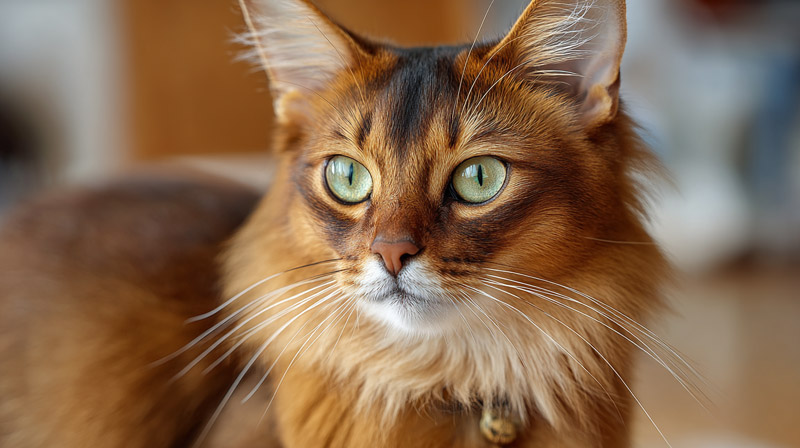
The Somali is a longhaired version of the Abyssinian cat breed with a distinctive ticked coat pattern and fox-like appearance. Males typically weigh 8-12 pounds, while females weigh 6-10 pounds, making them medium-sized cats with athletic, muscular builds.
The breed emerged when longhaired kittens began appearing in Abyssinian litters during the 1940s and 1950s. These cats carried a recessive longhair gene that had been present in the bloodline for years.
British breeder Janet Robertson exported some of these cats to North America, Australia, and New Zealand. Eventually, breeders like Evelyn Mague recognized their unique appeal and worked to establish them as a separate breed.
The Cat Fanciers Association (CFA) granted the Somali championship status in 1979. The International Cat Association (TICA) also recognizes the breed, along with other major registries worldwide.
The name “Somali” references Somalia’s geographic location next to Ethiopia (formerly Abyssinia). This naming convention highlights the breed’s close genetic connection to Abyssinian cats while acknowledging their distinct longhaired coat.
Physical Characteristics
How Big Do Somali Cats Get?
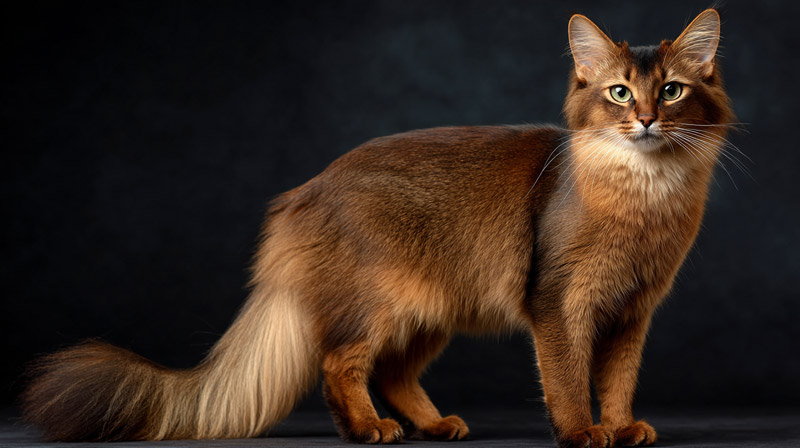
Males: 8-13 pounds
Females: 6-10 pounds
Height: 7-11 inches at the shoulder
Body type: Medium-long, lithe, and graceful with substantial muscle development
Somalis reach full physical maturity slowly compared to other breeds. They continue growing until approximately 18 months to 2 years of age.
Their bodies appear well-balanced with level flanks and a slight arch to the back that becomes more noticeable when sitting.
What Does a Somali Cat’s Coat Look Like?
Coat length: Semi-long to medium-long
Texture: Soft, silky, and fine (not woolly)
Pattern: Ticked tabby (each hair has 4-20 alternating bands of color)
Recognized colors:
- Ruddy (golden brown ticked with black)
- Red (warm copper-red base)
- Blue (soft blue-gray)
- Fawn (warm rose-beige)
- Chocolate (rare)
- Lilac (rare)
- Silver variations of all colors
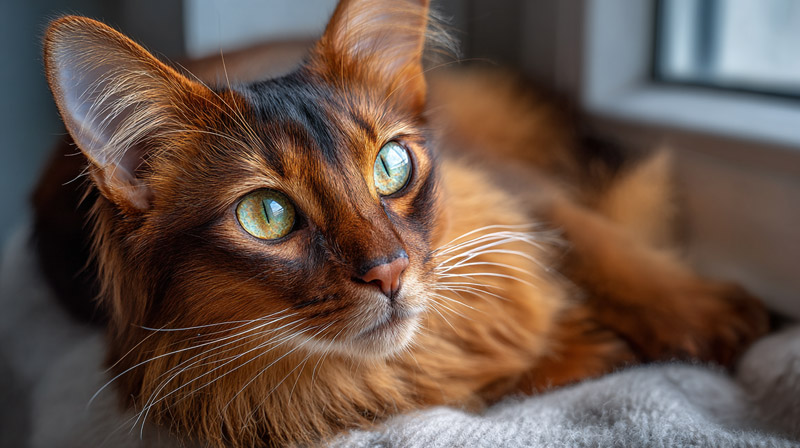
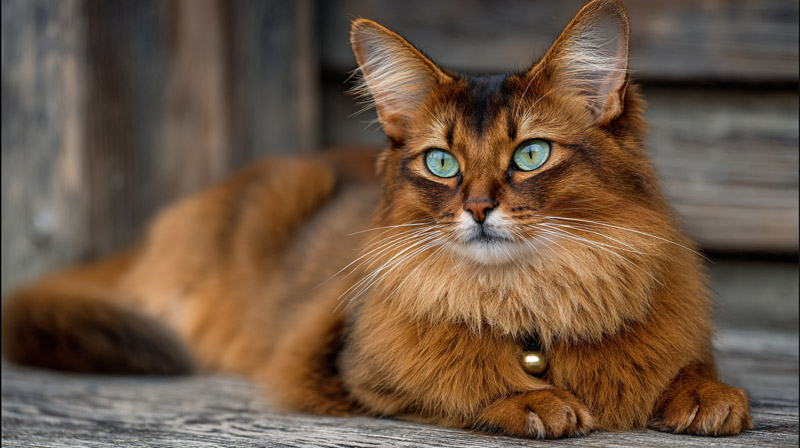
The coat is longer around the neck (creating a ruff), breeches, and tail. The undercoat is lighter, with darker ticking concentrated along the spine.
Shedding level: Moderate, with increased shedding during seasonal changes
Distinctive Physical Features
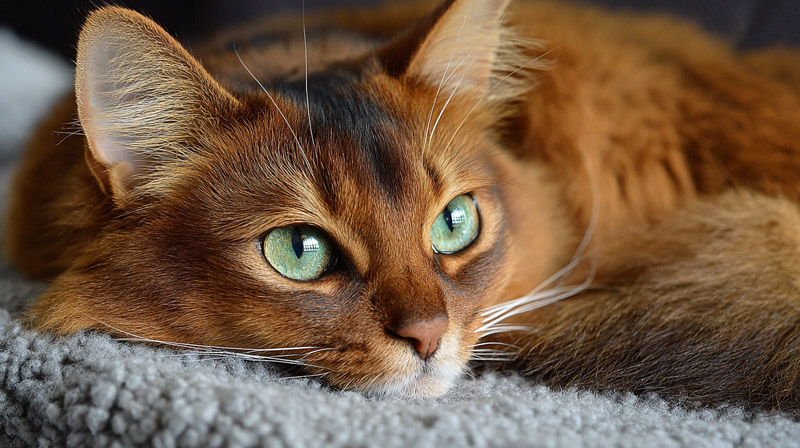
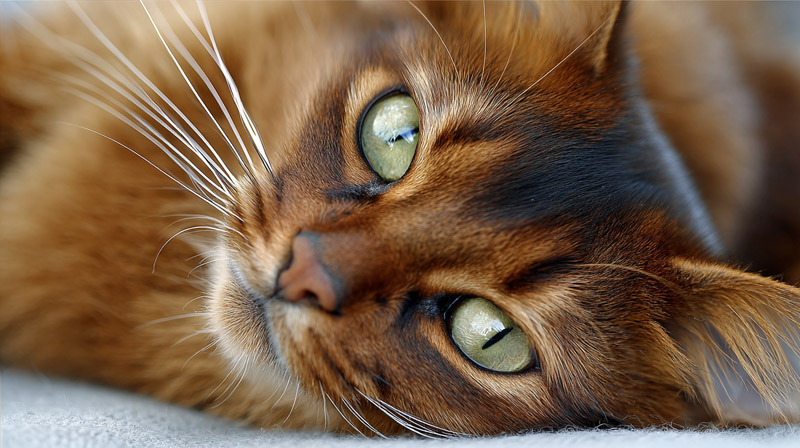
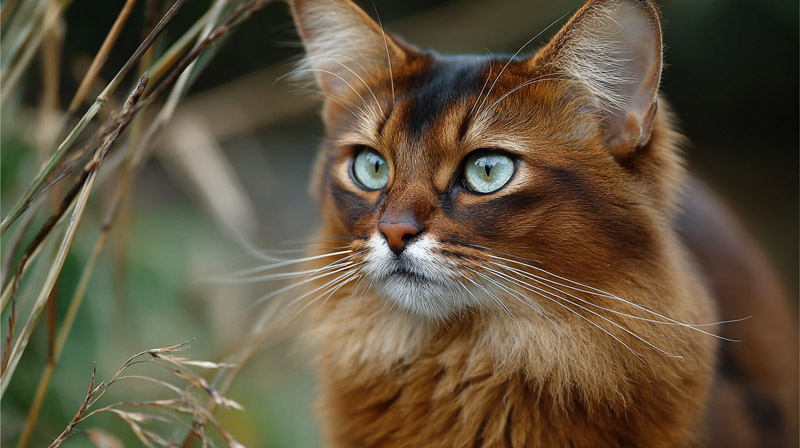
Eyes: Large, almond-shaped, and expressive in gold, amber, or green. Dark pigmentation rings the eyes like eyeliner, surrounded by lighter cream-colored fur.
Ears: Large, cupped, wide at the base, and slightly pointed. They tilt forward in an alert position, often with tufts of fur inside.
Head: Modified wedge shape with rounded contours and a gentle forehead rise. The brow ridge contributes to their wild appearance.
Tail: Long, full brush that tapers slightly. The bushy, fox-like tail earned them the nickname “Fox Cat.”
Legs: Long, slim, and well-muscled with moderate bone structure. Feet are neat ovals, sometimes with tufting between the toes.
Overall appearance: Often described as standing on tip-toes due to their long legs and light-footed movement
Somali Personality and Temperament
Are Somali Cats Affectionate?
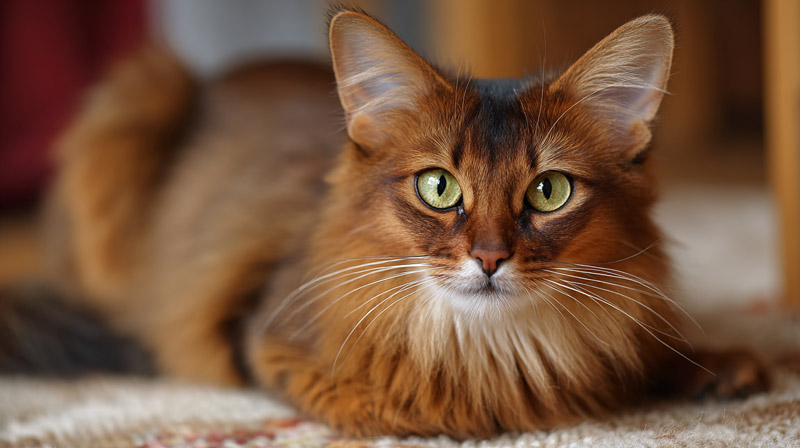
Somalis bond strongly with their human family members but aren’t typically lap cats.
They show affection through head butting, kneading, and following their owners from room to room. These cats want to be involved in everything you do rather than sitting still for cuddles.
Attention requirements: High. They demand 2-3 hours of daily interaction and don’t do well being ignored.
Stranger reaction: Initially cautious but warm up quickly. They’re social cats that enjoy meeting new people once they feel comfortable.
How Active Are Somali Cats?
Energy level: Very high
Play drive: Intense and constant
Exercise requirements: 60-90 minutes of active play daily
Somalis need outlets for their athletic abilities. They excel at:
- Climbing to the highest points in your home (refrigerators, door tops, bookshelves)
- Making impressive long jumps
- Racing from room to room at high speeds
- Playing fetch (and they’ll rarely want to stop)
- Learning tricks through clicker training
- Walking on a leash
Intelligence level: Extremely high. They use their paws to turn on faucets, open cupboards, and manipulate objects.
Many owners describe them as having dog-like personalities due to their trainability and interactive nature.
Do Somali Cats Get Along with Others?
Children: Excellent with kids of all ages, especially those who enjoy active play
Dogs: Good compatibility, particularly with dogs that respect boundaries
Other cats: Best with cats who match their energy level. Siamese or Bengal cats make good companions.
Multi-pet households: Well-suited, but they prefer having at least one other pet for companionship
Territorial tendencies: Moderate. They’re social but can be dominant with other cats.
A sibling from the same litter often makes the ideal companion since they’re accustomed to each other from birth.
How Vocal Are Somali Cats?
Vocalization frequency: Moderate
Voice characteristics: Soft, quiet, and melodic (not loud or demanding)
Somalis communicate through gentle chirps and trills rather than loud meowing. They’re nowhere near as vocal as Siamese cats.
Health and Lifespan
How Long Do Somali Cats Live?
Average lifespan: 11-16 years
Factors affecting longevity:
- Quality of diet
- Indoor vs. outdoor lifestyle
- Access to veterinary care
- Genetic health screening of parents
- Weight management
This lifespan is comparable to the average domestic cat (12-18 years).
Common Health Issues in Somali Cats
Pyruvate Kinase (PK) Deficiency
This hereditary enzyme deficiency causes intermittent anemia.
Symptoms: Lethargy, depression, pale gums, lack of appetite, poor coat quality, weight loss, jaundice
Age of onset: 6 months to 12 years
Prevalence: 10-28% of Somalis carry the mutant allele, with 5-8% being homozygous affected
Treatment: No known cure, but DNA testing available to identify carriers
Prevention: Breeding cats should be tested; affected cats should not be bred
Progressive Retinal Atrophy (PRA)
A genetic eye condition causing retinal degeneration.
Symptoms: Night blindness progressing to complete vision loss
Age of onset: Can appear within the first few months of life
Treatment: No cure; leads to irreversible blindness
Prevention: DNA test available; carriers should not be bred
Renal Amyloidosis
Abnormal protein deposits accumulate in the kidneys.
Symptoms: Excessive thirst, increased urination, weight loss, vomiting, loss of appetite
Age of onset: Can develop at any age
Treatment: Supportive care for kidney function
Prevalence: Relatively rare but more common in Abyssinians and Somalis than other breeds
Patella Luxation
The kneecap slips out of position.
Symptoms: Limping, reluctance to jump, abnormal gait
Treatment: Ranges from conservative management to surgical correction
Periodontal Disease
Both tooth decay and gingivitis occur more frequently in this breed.
Symptoms: Bad breath, red gums, reluctance to eat
Prevention: Daily tooth brushing, regular dental cleanings every 6 months
Myasthenia Gravis
A rare neuromuscular condition affecting nerve-muscle communication.
What Health Testing Should Somali Cats Have?
Genetic screening:
- PK deficiency DNA test
- PRA DNA test
- Blood typing (to prevent neonatal isoerythrolysis)
Regular veterinary checks:
- Annual wellness exams (minimum)
- Semi-annual exams for cats over 7 years
- Complete blood count and chemistry panel annually after age 7
Breed-specific certifications:
- Cardiac screening for hypertrophic cardiomyopathy
- Kidney function monitoring (urinalysis and blood work)
Age-specific monitoring:
- Kittens: Initial vaccines, parasite screening, genetic testing
- Adults: Annual wellness, dental care, weight management
- Seniors: Biannual exams, organ function panels
Caring for a Somali Cat
What Do Somali Cats Eat?
Protein requirements: 35-45% of diet (high-protein diets support muscle mass)
Feeding frequency:
- Kittens (under 6 months): 3-4 meals daily
- Adults: 2 meals daily
- Seniors: 2 meals daily with adjusted portions
Portion sizes: Based on weight and activity level. Active adults typically need 200-300 calories daily.
Wet vs. dry food: Combination works well. Wet food provides hydration; dry food supports dental health.
Special dietary needs: High-quality animal protein as first ingredient. Look for AAFCO-approved foods.
Foods to avoid: Dairy products, raw fish, onions, garlic, chocolate, grapes
Weight management: Monitor closely, though their high activity level usually prevents obesity
How Do You Groom a Somali Cat?
Brushing frequency: 2-3 times weekly (daily during spring and summer shedding seasons)
Their soft, fine coat doesn’t mat easily compared to Persian or Himalayan breeds.
Bathing requirements: Rarely needed (every 3-4 months or when dirty)
Many Somalis enjoy water and may even join you in the bath.
Nail trimming: Every 2-3 weeks
Dental care: Daily tooth brushing recommended to prevent periodontal disease
Eye cleaning: As needed (wipe away any discharge with damp cloth)
Ear cleaning: Monthly inspection; clean only if debris visible
Professional grooming: Not typically necessary
How Much Exercise Does a Somali Cat Need?
Daily activity requirements: 60-90 minutes of active play
Indoor vs. outdoor considerations: Best kept indoors or in secure outdoor enclosures (catios)
Recommended toys:
- Interactive wand toys
- Puzzle feeders
- Balls for fetching
- Electronic moving toys
- Catnip toys
Mental stimulation needs: High. Provide rotating toys and training sessions.
Climbing/vertical space importance: Critical. Install tall cat trees with multiple levels.
Interactive play frequency: 2-3 sessions daily, 20-30 minutes each
Some owners install exercise wheels specifically designed for cats, which Somalis absolutely love.
Living with a Somali Cat
Are Somali Cats Good for Apartments?
Space requirements: Minimum 600-800 square feet with vertical climbing options
Noise level: Moderate. Not excessively vocal, but their activity creates movement noise.
Neighbor compatibility: Good, as they’re not loud cats
Indoor-only suitability: Excellent with proper enrichment
Vertical space needs: Essential. Requires multiple cat trees and perches.
What Environment Do Somali Cats Need?
Temperature tolerance:
- Heat sensitivity: Moderate (handle heat reasonably well)
- Cold tolerance: Good due to their double coat
Humidity preferences: Average home humidity (30-50%) is fine
Safe outdoor access options:
- Enclosed catios
- Leash walking with harness training
- Fully fenced yards with cat-proof barriers
Environmental enrichment:
- Bird feeders visible through windows
- Rotating toy selection
- Hiding spots and exploration areas
- Water features (many love playing with water)
Window perch importance: High priority for bird-watching
Scratching post requirements: Multiple tall posts in different locations
Are Somali Cats Good for First-Time Owners?
Care difficulty level: Intermediate
Time commitment required: 3-4 hours daily (play, interaction, grooming, training)
Experience level needed: Some cat experience helpful but not required
Common challenges:
- Their intense energy can be overwhelming
- They need constant mental stimulation
- Can be destructive if bored
- May open cabinets and get into things
- Require significant play time
First-time owners succeed best if they:
- Work from home or have flexible schedules
- Enjoy highly interactive pets
- Have patience for training
- Can provide adequate enrichment
Somali Kittens
What Are Somali Kittens Like?
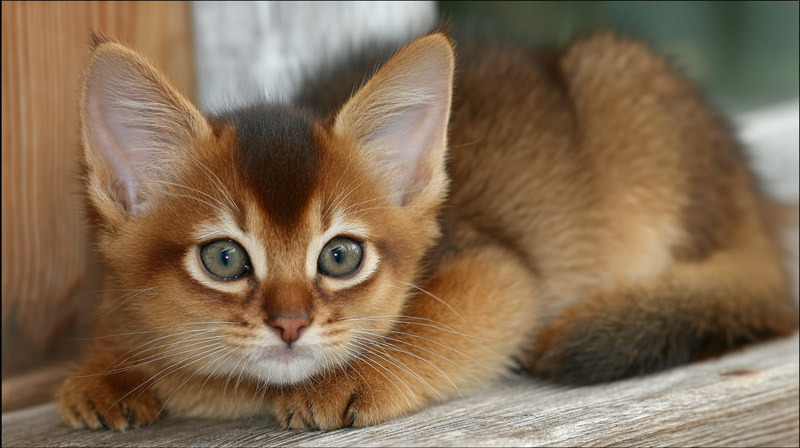
Personality development: Playful and curious from the start, with adult personality emerging by 6-8 months
Early socialization needs: Critical window is 2-7 weeks. Exposure to various people, sounds, and experiences shapes adult behavior.
Kitten energy levels: Extremely high. Expect constant motion and mischief.
Training windows: 8-16 weeks is ideal for litter training, basic commands, and handling acceptance
When Can Somali Kittens Leave Their Mother?
Minimum age: 12-14 weeks (some breeders wait until 16 weeks)
Somalis benefit from extended time with their mother and littermates compared to other breeds.
Developmental milestones:
- 8 weeks: Weaned, litter trained
- 12 weeks: First vaccinations complete, socialized
- 16 weeks: Second vaccine round, ready for new homes
Vaccination schedule before adoption:
- FVRCP (feline viral rhinotracheitis, calicivirus, panleukopenia): 2-3 doses
- FeLV test
- Rabies (if age-appropriate)
Spay/neuter timing: 4-6 months (some breeders do pediatric spay/neuter)
Breeding and Genetics
Somali Breed Standards
CFA standards:
- Body: Medium-long, lithe, graceful with firm muscular development
- Head: Modified wedge with rounded contours
- Ears: Large, cupped, alert
- Eyes: Almond-shaped in gold, copper, green, or hazel
- Coat: Soft, fine, double-coated with ticking
TICA standards: Very similar to CFA with minor variations in color recognition
Accepted colors: CFA recognizes ruddy, red, blue, and fawn. TICA adds chocolate, lilac, and silver variations.
Show quality vs. pet quality:
- Show: Perfect conformation, correct color, ideal temperament
- Pet: Minor cosmetic faults that don’t affect health
Disqualifying faults:
- Kinked tail
- Wrong number of toes
- White lockets or white spots
- Lack of ticking
- Incorrect eye color
Genetics of Somali Cats
Hereditary traits:
- Longhair gene: Recessive (both parents must carry)
- Ticked tabby pattern: Dominant
- Color variations: Multiple genes involved
Coat color genetics:
- Ruddy: Black ticking (most common)
- Red: Red pigment gene
- Blue: Dilution gene
- Fawn: Dilution + red gene
Breed-specific mutations:
- PK deficiency gene
- PRA gene
- Longhair gene (distinguishes from Abyssinian)
Outcross breeds: Only Abyssinian cats allowed. Offspring from this cross are “Abyssinian Variants.”
Genetic diversity concerns: Relatively healthy gene pool, but testing prevents hereditary disease spread
DNA testing recommendations:
- PK deficiency
- PRA
- Blood typing
- Patella evaluation
History of the Somali Cat
Where Do Somali Cats Come From?
Geographic origins: Developed in North America, Australia, and New Zealand from Abyssinian stock exported from Britain
Natural breed vs. developed breed: Natural mutation (longhair gene) + selective breeding
Historical context: Longhaired kittens appeared sporadically in Abyssinian litters throughout the early-to-mid 1900s
Original purpose: Companion cats (no working function)
How Did the Somali Breed Develop?
Development timeline:
- 1940s: Janet Robertson exports Abyssinians containing longhair gene
- 1950s: Longhaired kittens appear in various countries
- 1963: Mary Mailing shows longhaired Aby at Canadian pet show
- 1967: Evelyn Mague coins the name “Somali”
- 1972: Somali Cat Club of America founded
- 1978: CFA accepts Somalis for registration
- 1979: CFA grants championship status
- 1982: FIFe recognizes breed in Europe
- 1991: Broadly accepted internationally
Key breeders:
- Janet Robertson (UK): Exported foundation stock
- Mary Mailing (Canada): Early exhibitor
- Ken McGill (Canada): Advocated for the breed
- Evelyn Mague (USA): Named and promoted the breed
- Don Richings (Canada): Worked with Mague
Important foundation cats:
- Raby Chuffa of Selene: First shown in the United States
- Mayling Tutsuta: First recognized by a fancier organization
Breed evolution: Initially rejected by Abyssinian breeders, gradually gained acceptance as a distinct breed
Related breeds: All Abyssinian variants and some crossbreeds
When Was the Somali Recognized?
CFA recognition: 1979 (championship status)
TICA recognition: 1979
FIFe recognition: 1982
GCCF recognition: 1991
Cost of Owning a Somali Cat
How Much Does a Somali Cat Cost?
Purchase price ranges:
- Pet quality: $1,000-$1,800
- Show quality: $2,000-$3,000
- Breeding rights: $2,500-$5,000
Price factors:
- Lineage and pedigree quality
- Rare colors (chocolate, lilac) cost more
- Geographic location and breeder reputation
- Gender (females sometimes cost more)
- Age (kittens cost more than adults)
Additional initial costs:
- Supplies: $200-$500 (carrier, litter box, bowls, bed, toys, scratching posts)
- Initial vet visit: $100-$200
- Spay/neuter (if not included): $150-$300
- Microchipping: $45-$75
What Are the Ongoing Costs?
Annual veterinary care: $200-$600 (wellness exams, vaccines, preventatives)
Food expenses: $30-$75 monthly ($360-$900 annually) for high-quality cat food
Litter and supplies: $25-$50 monthly ($300-$600 annually)
Grooming costs: Minimal if done at home. Professional grooming: $40-$80 quarterly (if desired)
Pet insurance: $15-$50 monthly ($180-$600 annually)
Emergency fund: Recommend $1,000-$3,000 saved for unexpected medical issues
Total annual cost estimate: $1,200-$3,500
Where Can You Get a Somali Cat?
Reputable breeders:
Look for:
- CFA or TICA registration
- Health guarantees in contract
- Genetic testing of parents (PK, PRA)
- Clean, home-based breeding environment
- References from previous buyers
- Willingness to answer questions
- Take-back policy if needed
Questions to ask:
- What health testing have you done?
- Can I meet the parents?
- What’s included in the adoption price?
- What support do you offer after adoption?
- Are there any genetic issues in the line?
Red flags:
- Multiple litters available at once
- Won’t let you visit
- No health testing
- Extremely low prices
- Pressure to buy immediately
Breed-specific rescues:
- Southern California Abyssinian Rescue (also rehomes Somalis)
- Northeast Abyssinian Rescue (also rehomes Somalis)
- Specialty Purebred Cat Rescue
Adoption costs: $75-$500 from rescues
Retired breeding cats: $200-$500 (ages 1-4 years, already spayed/neutered)
Adult cat vs. kitten considerations:
- Adults have established personalities
- Less destructive than kittens
- May already be trained
- Lower adoption fees
- Shorter adjustment period
Somali vs. Similar Breeds
Somali vs. Abyssinian
Physical differences:
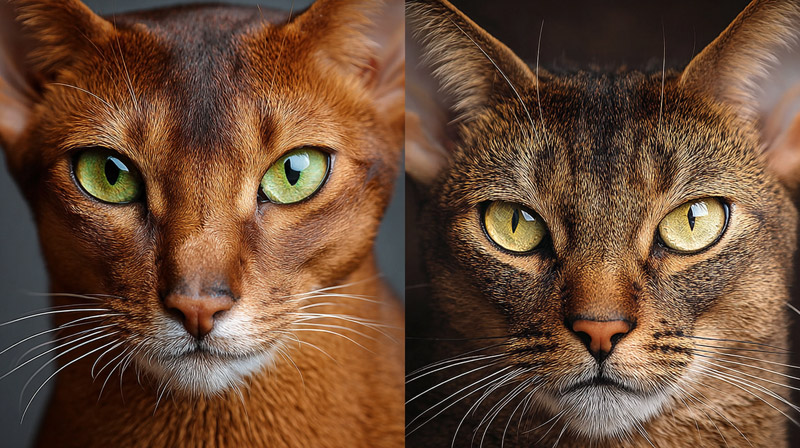
- Somalis have medium-long fur; Abyssinians have short fur
- Somalis appear larger due to their coat (actual body size similar)
- Somalis have fuller ruffs, breeches, and bushy tails
- Both have identical ticked coat patterns
Temperament differences:
- Nearly identical personalities
- Both extremely active and intelligent
- Equal energy levels and social needs
- Same vocal characteristics
Care requirement differences:
- Somalis need more grooming (2-3 times weekly vs. weekly)
- Somalis shed more due to longer fur
- Otherwise identical care needs
Health concern differences:
- Same genetic predispositions
- Both prone to PK deficiency and PRA
- Identical health screening recommendations
Cost differences:
- Somalis slightly more expensive ($100-$300 higher)
- Ongoing costs similar
Lifespan comparison: Both 11-16 years average
Somali vs. Maine Coon
Physical differences:
- Maine Coons much larger (15-25 pounds vs. 6-12 pounds)
- Different body types (Maine Coon substantial vs. Somali lithe)
- Coat length similar but Maine Coon texture coarser
- Completely different facial structures
Temperament differences:
- Maine Coons more laid-back and gentle
- Somalis far more energetic and demanding
- Maine Coons better lap cats
- Somalis need more interaction and play
Care requirement differences:
- Maine Coons need daily grooming
- Somalis need less grooming but more exercise
- Maine Coons eat significantly more
Health concern differences:
- Maine Coons prone to HCM, hip dysplasia
- Somalis prone to PK deficiency, PRA
- Different screening needs
Cost differences:
- Maine Coons typically cost less
- Maine Coon food costs much higher
- Similar veterinary costs
How to Choose Between Somali and Similar Breeds
Lifestyle considerations:
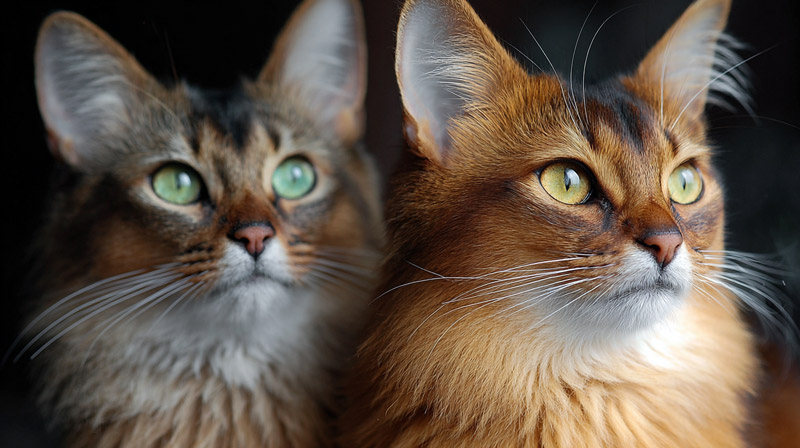
- Choose Somali if: You want constant interaction, enjoy training cats, have high energy
- Choose Abyssinian if: You want same personality but less grooming
- Choose Maine Coon if: You prefer calmer cats who enjoy cuddling
Decision factors:
- Activity level you can accommodate
- Grooming time available
- Space in your home
- Other pets’ temperaments
- Your work schedule
Which breed for which owner type:
- Active families: Somali
- First-time owners wanting gentle cats: Maine Coon
- Allergy sufferers: Russian Blue or Balinese
- Apartment dwellers: British Shorthair
Fun Facts About Somali Cats
The nickname “Fox Cat” comes from their bushy tails and large ears that resemble a fox’s features.
Each hair on a Somali can contain 4-20 bands of color. Most cats have far fewer color bands per hair.
Some Somalis learn to hold objects in their paws like monkeys. They’re famous for their dexterous paw use.
Errol, an Instagram-famous Somali, has over 100,000 followers who enjoy his antics and beauty.
Somalis can run up to 30 miles per hour, making them incredibly fast for domestic cats.
The breed almost didn’t exist because many Abyssinian breeders initially rejected longhaired kittens as undesirable.
Many Somalis enjoy water and will play with faucets, splash in bowls, or even join their owners in the bath.
They’ve been successfully trained to use toilets and even flush them. Their intelligence makes training surprisingly easy.
World War II nearly eliminated the Abyssinian breed, which led to outcrossing that likely introduced the longhair gene.
Somalis often perform tricks more associated with dogs, including fetch, coming when called, and walking on leashes.
The ticked coat pattern is actually a type of tabby pattern, though no stripes appear on the body.
Is a Somali Cat Right for You?
Best Homes for Somali Cats
Ideal owner personality:
- Active and energetic
- Patient and consistent
- Enjoys interactive pets
- Appreciates intelligence and mischief
- Has time for training and play
Lifestyle compatibility:
- Work from home or flexible schedules
- Active households with regular activity
- Families with older children
- People who enjoy cat agility or tricks
- Those seeking dog-like cat companions
Home environment requirements:
- Space for climbing and running
- Multiple rooms to explore
- Safe outdoor access options helpful
- Tolerant of some chaos
Time availability: Minimum 3-4 hours daily for interaction, play, and enrichment
Who Should Avoid Somali Cats?
Incompatible lifestyles:
- Work long hours away from home
- Prefer quiet, sedate pets
- Want a lap cat
- Limited patience for mischief
- Minimal time for interaction
Challenge factors:
- Can be destructive when bored
- May open cabinets and drawers
- Need constant mental stimulation
- Not suitable as “only” pet without extensive owner interaction
- May overwhelm first-time cat owners
Better breed alternatives:
- Ragdoll: Calm, affectionate lap cats
- British Shorthair: Independent, lower energy
- Persian: Quiet, docile companions
- Scottish Fold: Sweet-natured, moderate energy
Questions to Ask Before Getting a Somali Cat
Financial readiness:
- Can I afford $1,500-$2,500 upfront?
- Do I have $100-$300 monthly for ongoing care?
- Can I handle $1,000+ emergency vet bills?
- Will I maintain pet insurance?
Time commitment:
- Can I dedicate 3-4 hours daily?
- Am I home enough or can I get a second cat?
- Will I commit to training and enrichment?
Living situation stability:
- Do I plan to move within 15 years?
- Are pets allowed in my housing?
- Will my living situation support an active cat?
Family agreement:
- Is everyone on board with an energetic cat?
- Can children interact safely and respectfully?
- Who handles care if I’m away?
Long-term planning:
- Am I ready for a 15-year commitment?
- How will this cat fit my life in 5, 10, 15 years?
- Do I have a backup caregiver if needed?
Travel considerations:
- Who will care for my cat when traveling?
- Can I afford pet sitting or boarding?
- Will I bring my cat or leave them?
Other pet considerations:
- How will my current pets react?
- Is my dog cat-friendly?
- Can my older cat handle this energy level?
FAQ on Somali
Are Somali cats hypoallergenic?
No, Somali cats are not hypoallergenic. They produce the Fel d 1 protein that triggers allergic reactions in sensitive individuals. Their semi-long coat and moderate shedding actually increase allergen exposure compared to short-haired breeds.
How much do Somali cats cost?
Pet quality Somali kittens from reputable breeders cost $1,000-$1,800. Show quality cats range from $2,000-$3,000, while breeding rights can reach $5,000. Adoption from breed-specific rescues costs $75-$500, offering a more affordable option.
Do Somali cats shed a lot?
Somali cats shed moderately year-round with heavier seasonal shedding in spring and summer. Their fine, soft coat requires brushing 2-3 times weekly to manage loose hair. Despite being longhaired, they shed less than Persian or Maine Coon breeds.
Are Somali cats good with children?
Yes, Somali cats excel with children of all ages, especially those who enjoy active play. Their high energy and playful nature match well with energetic kids. They’re gentle and patient, though they prefer interactive games over being carried or restrained.
What health problems do Somali cats have?
Pyruvate kinase deficiency causes intermittent anemia and affects 10-28% of the breed. Progressive retinal atrophy leads to blindness. Renal amyloidosis, patella luxation, and periodontal disease also occur more frequently. DNA testing identifies carriers before breeding.
How long do Somali cats live?
Somali cats typically live 11-16 years with proper care. Indoor cats with quality nutrition, regular veterinary care, and genetic health screening tend toward the longer end. Their lifespan matches the average for domestic cats.
Are Somali cats lap cats?
No, Somali cats rarely sit still long enough to be lap cats. They prefer being near their owners rather than on them. These athletic felines show affection through following you around, head butting, and interactive play instead of cuddling.
Do Somali cats like water?
Many Somali cats enjoy water and will play with faucets, splash in their water bowls, or watch running water. Some even join their owners in the bath. This unusual trait makes them easier to bathe than most breeds.
How active are Somali cats?
Extremely active. Somali cats require 60-90 minutes of daily play and constant mental stimulation. They climb to the highest points, jump impressive distances, and race through homes at high speeds. Without adequate outlets, they become destructive from boredom.
Can Somali cats be left alone?
Somali cats shouldn’t be left alone for extended periods. They need 3-4 hours of daily interaction and suffer from loneliness without companionship. Getting a second cat with similar energy levels, like a Siamese or Bengal, helps meet their social needs.
Conclusion
Somali cats demand owners who match their intense energy and constant need for interaction. These fox-like felines aren’t decorative pets.
Their intelligence means they’ll outsmart basic toys within minutes. Expect them to open cupboards, turn on faucets, and explore every inch of your home from ceiling to floor.
The breed’s genetic predisposition to pyruvate kinase deficiency and progressive retinal atrophy makes health screening non-negotiable. Reputable breeders test parent cats before breeding to protect future litters.
Budget $1,500-$2,500 initially, then $100-$300 monthly for quality food, veterinary care, and enrichment supplies. Their 11-16 year lifespan represents a substantial commitment.
But for active households seeking dog-like devotion in a stunning ticked coat package, few breeds compare to these captivating longhaired Abyssinians.