Some dogs have been running alongside humans for so long, and in such isolation, that their DNA was largely spared the crossbreeding that reshaped most modern breeds.
Ancient dog breeds are not simply old. They are genetically distinct, sitting at the base of the domestic dog family tree in genome studies, and several are backed by archaeological evidence spanning thousands of years.
A review in PNAS (Larson et al., 2012) identified 14 basal breeds with minimal crossbreeding signals from modern European dog populations. These are the breeds that have stayed the most genetically separate from everything else.
This article covers what makes a breed qualify as ancient, which breeds hold the strongest genetic and archaeological evidence, and what their survival looks like today.
What Are Ancient Dog Breeds?
Ancient dog breeds are a genetically distinct category of domestic dogs that branch off early in genetic trees of modern breeds. They show minimal crossbreeding signals from European dog populations, which is why they stand apart from the large clusters of modern breeds.
The term is not just about age on paper. It requires confirmation through genetic data or hard archaeological evidence, often both.
Larson et al. (2012) combined earlier genome studies with their own analysis and listed 14 basal breeds that sit at the base of the domestic dog family tree, genetically separate from the main modern breed clusters. The largest breed study since, Parker et al. (2017, Cell Reports), analyzed 1,346 dogs from 161 breeds and found the Asian Spitz and Mediterranean breed clades to be the most divergent and possibly the oldest.
A key distinction worth knowing: “ancient” refers to genetic distinctiveness, not the age of a written breed standard. Many breeds claim centuries of history in text records but show heavy crossbreeding in their DNA. Ancient breeds do not. Larson’s team also stresses that basal breeds look distinct mainly because they were isolated from recent crossbreeding, not because they are direct, unmixed descendants of the first dogs.
| Classification | What It Measures | Example |
|---|---|---|
| Ancient (basal) breed | Early-branching, unmixed position in breed genetic trees | Basenji, Saluki, Chow Chow |
| Historically old breed | Age of documented breed records | Irish Wolfhound, Mastiff |
| Primitive breed | Retention of wolf-like traits and behaviors | Dingo, New Guinea Singing Dog |
Dogs were domesticated from gray wolves somewhere between 20,000 and 40,000 years ago, according to ancient-genome research published in Nature Communications (Botigué et al., 2017). Ancient breeds are living lineages that have stayed comparatively separate since long before modern breeding began.
Cell Research (Wang et al., 2015) found that Chinese indigenous dogs retain 78% of wolf heterozygosity, compared to 66% in the modern dog breeds studied. Indigenous, free-breeding populations like these hold more genetic diversity than the bottlenecked populations typical of purpose-bred modern types. The study’s sample also included East Asian and Tibetan Plateau breeds such as the Tibetan Mastiff.
What Makes a Breed Qualify as “Ancient”
Genetic divergence: The breed’s genome sits at a basal position on the canine phylogenetic tree, meaning it branched off early and stayed separate.
Low admixture signal: Genome-wide analysis shows limited crossbreeding with the European breeds developed in the 19th and 20th centuries.
Archaeological corroboration: Skeletal remains, tomb art, or written records that independently confirm the breed type’s existence hundreds or thousands of years ago. Saluki-type hounds, for instance, appear in ancient Egyptian art, and the AKC notes that the Saluki may go back as far as 7000 BC.
Ancient Breeds vs. Modern Breeds at a Glance
The genomic gap between ancient and modern breeds is significant, not just philosophical.
| Feature | Ancient Breeds | Modern Breeds |
|---|---|---|
| Genetic distinctiveness | High; long isolated from other dog populations | Lower; often shaped by crossbreeding and breeding bottlenecks |
| Crossbreeding history | Minimal or limited | Extensive |
| Selective pressure | Primarily local working and environmental pressures | Primarily human-directed breed standards |
| Estrus cycle | Often annual in some breeds | Typically biannual |
Dogs like the Basenji come into heat once per year, the same as wolves, dingoes, and New Guinea Singing Dogs. Most modern breeds cycle twice annually. That single biological detail tells you more about how little these dogs were reshaped than most breed descriptions ever will.
How Do Scientists Identify an Ancient Dog Breed?
Classifying a breed as genetically ancient requires more than old paintings or breeder tradition. It takes whole-genome sequencing, archaeological corroboration, and statistical confirmation that a breed occupies a basal position in canine phylogenetic analysis.
No single method is definitive on its own. The strongest classifications combine at least 2 of the 3 evidence types below.
Genetic Testing Methods
Researchers use 2 primary genomic tools to classify ancient dog breeds:
- Whole-genome sequencing (WGS): Maps the full DNA sequence, measuring divergence from wolf ancestors and identifying crossbreeding signals from post-Industrial breed development
- Microsatellite and SNP analysis: Earlier studies used microsatellites, while SNP studies screen roughly 48,000 to 150,000 genetic markers across large breed datasets to determine basal positioning on phylogenetic trees
The vonHoldt et al. (2010, Nature) study surveyed more than 48,000 SNPs in 912 dogs and their wild progenitor, the gray wolf, and helped confirm which breeds sit in basal positions.
PLOS Genetics (Freedman et al., 2014) estimated that dogs and wolves diverged 11,000 to 16,000 years ago, with domestication involving at least a 16-fold reduction in population size during the bottleneck event. Later work calibrated with ancient dog genomes pushed that estimate back to 20,000-40,000 years, so the exact date is still debated. Basal breeds largely escaped the 19th-century crossbreeding that blended most European breeds together.
Archaeological Evidence Used
Genetic data alone can miss breeds whose wild wolf ancestor populations are now extinct. Archaeological evidence fills that gap.
Skeletal remains: Radiocarbon-dated dog bones allow comparison of morphology across millennia, showing when sighthound-like, mastiff-like, or spitz-like body types first appear, even though bones alone rarely identify a specific modern breed.
Tomb art and carvings: Depictions at Mesopotamian and Egyptian sites, some made thousands of years ago, show type-specific features like feathered ears, curled or upright tails, and body proportions.
Burial sites: The Bonn-Oberkassel dog, dated to 14,223 years BP (Journal of Archaeological Science, Janssens et al., 2018), comes from the oldest known grave where humans and dogs were buried together. It was found alongside a man and a woman, and the puppy had been nursed through a severe bout of canine distemper, suggesting an emotional bond rather than purely utilitarian use.
| Evidence Type | Method | Limitation |
|---|---|---|
| Whole-genome sequencing (WGS) / SNP analysis | Phylogenetic tree positioning based on genetic markers | Requires surviving DNA samples; extinct wolf lineages can leave gaps in evolutionary reconstructions |
| Radiocarbon dating | Measurement of carbon-14 decay in bone or other organic material | Can determine specimen age but cannot always identify the specific breed or population |
| Morphological comparison | Skeletal measurements compared with modern and archaeological specimens | Fossil and skeletal remains may be degraded or incomplete |
| Art and iconography | Analysis of depictions in tomb paintings, carvings, mosaics, and other artwork | Artistic interpretation and stylization can distort physical characteristics |
What Are the Oldest Dog Breeds With Confirmed Archaeological Evidence?
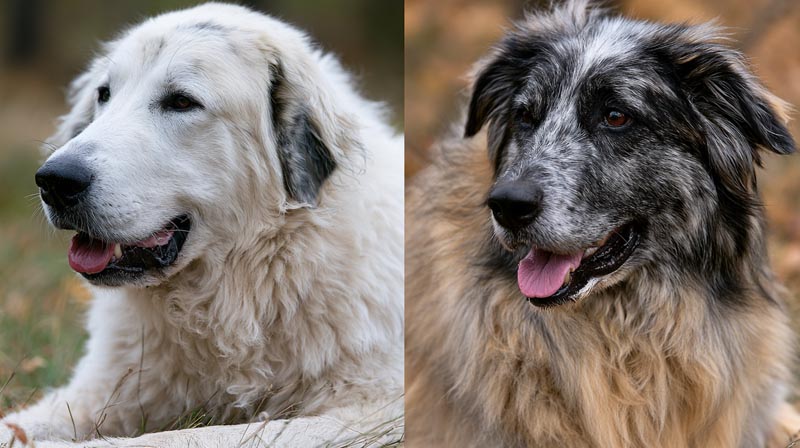
The breeds below are backed by genetic evidence, physical evidence, or both, and where the evidence is weaker, we say so. Oral tradition and breed club lore are not enough. What counts here is radiocarbon-dated remains, peer-reviewed genome studies, and verifiable iconographic records.
African Ancient Breeds
The Basenji sits at the base of the domestic dog family tree. A Basenji genome study (Edwards et al., BMC Genomics, 2021) describes its unique phylogenetic position and the traits it shares with pariah dog types: annual estrus, howls and yodel-like vocalizations, and minimal barking.
Basenji-like dogs are depicted in drawings and models dating back to Egypt’s 12th Dynasty, and the AKC breed history notes they also appear in ancient Babylonian and Mesopotamian art. Basenjis still live and hunt with tribesmen in the Congo today, largely unchanged by Western selective breeding pressure.
The Azawakh is a West African sighthound from the Sahel region, traditionally kept by Tuareg nomads. It is often grouped with the ancient African hounds, though it has not been placed among the genetically basal breeds. Its lean, upright build is optimized for desert coursing. Its primary modern threat is not extinction by crossbreeding but political instability and the decline of the nomadic Tuareg communities who historically maintained the breed.
Middle Eastern Ancient Breeds
The Saluki has one of the deepest documented histories of any named breed. Breed historians cited by the AKC suggest Salukis may go back as far as 7000 BC, and sighthounds with a Greyhound body, feathered ears, and a distinctive tail appear in ancient Egyptian art. The AKC also notes that Salukis were held in such esteem in Egypt that their bodies were often mummified.
Bedouin tribes called the Saluki “el hor,” meaning “the noble.” Unlike ordinary dogs, it was traditionally welcomed inside Bedouin tents. That cultural status helped keep the breed largely separate from other dogs over many centuries.
The Canaan Dog is another Middle Eastern ancient breed with basal genetics, identified in the vonHoldt et al. (2010) data. According to the AKC, the dogs took refuge in the Negev Desert after the Roman destruction of Jerusalem and lived largely undomesticated there until the 20th century, and semi-feral desert dogs of this type are still associated with Bedouin communities.
Asian Ancient Breeds
BMC Genomics (Yang et al., 2017) found the Chow Chow originated from Chinese indigenous dogs approximately 8,300 years ago. It is one of the most basal lineages and originated together with other East Asian breeds such as the Shar-Pei and Akita.
The Tibetan Mastiff is often said to appear in Chinese writings from around 1,100 BCE. Breed tradition holds that it stayed isolated in the Himalayas while other mastiff types traveled west, and the AKC repeats the belief that it is the progenitor of all modern mastiffs. Genetic studies have not confirmed that, and the Tibetan Mastiff is not one of the 14 basal breeds.
The Shiba Inu and Akita both appear in the Larson et al. (2012) list of 14 basal breeds, and the Akita’s basal signature has been confirmed in multiple independent genomic analyses.
Arctic Ancient Breeds
The Siberian Husky and Alaskan Malamute both appear on the basal breed list and descend from Arctic sled and working dog populations. A PNAS study comparing human and dog population histories (Perri et al., 2021) suggests dogs were domesticated in Siberia by roughly 23,000 years ago and then crossed into the Americas with the first people, the population often called the “New World dog.”
The Samoyed, while not appearing basal in the earlier microsatellite study (Parker et al., 2004), shows a basal position when SNP data is used (vonHoldt et al., 2010), making it one of the only breeds where the classification method changes the result.
What Does the Basenji’s Genetics Reveal About Early Dog Domestication?
The Basenji is not just old. It occupies a specific position in canine genomics that makes it one of the most scientifically significant living dog breeds. Its genome is now available as an alternative reference for variant analysis across domestic dog breeds.
PLOS Genetics (Freedman et al., 2014) selected the Basenji and Dingo for whole-genome sequencing specifically because they represent two basal, divergent dog lineages, giving the researchers the best chance to capture distinct alleles missing from the standard Boxer reference genome.
What the Basenji Genome Shows
BMC Genomics (Edwards et al., 2021) published a full chromosome-length genome assembly of the Basenji. Key points:
- The Basenji genome sits at the base of the currently accepted domestic dog family tree
- It shares traits with pariah dog types including the Dingo and New Guinea Singing Dog, such as annual estrus and howl-type vocalizations
- The new assembly is more complete and contiguous than the older Boxer-based reference genome, giving researchers a better tool for comparing breeds and studying dog evolution
Unexpectedly, the PLOS Genetics study found that none of the 3 wolf lineages tested (from Croatia, Israel, and China) was supported as the source population for dogs. This suggests the ancestral wolf population that gave rise to dogs may now be extinct, with modern wolves representing a divergent post-domestication branch.
Primitive Behaviors That Survived 10,000+ Years
The Basenji rarely barks. It produces yodels, howls, and a sound described as a “barroo,” matching vocalizations documented in the Dingo and New Guinea Singing Dog.
It also cycles into estrus once per year, like wolves, rather than twice annually as most modern breeds do. This is not a quirk. It is a preserved biological trait that survived because the Basenji was never reshaped by the Western breeding fashions that changed most other domestic breeds.
I’ve had dogs my whole life, and nothing quite prepares you for meeting a Basenji. It looks at you like it’s deciding whether you’re worth its time. Very different energy from a Labrador.
What the Basenji Tells Us About Domestication Origins
The domestication of dogs likely involved at least a 16-fold population reduction during an initial bottleneck (Freedman et al., 2014). Ancient breeds like the Basenji avoided much of the crossbreeding that came with 19th and 20th century breed standardization.
Where the Basenji fits in the bigger story is more complicated. An analysis of 72 ancient wolf genomes in Nature (Bergström et al., 2022) found that dogs overall are more closely related to ancient wolves from eastern Eurasia, suggesting domestication in the east. But dogs from the Near East and Africa, including the Basenji, derive up to half of their ancestry from a population related to southwest Eurasian wolves, reflecting either a separate domestication process or admixture with local wolves.
What Role Did Ancient Dog Breeds Play in Early Human Civilizations?
Ancient dog breeds were not pets in the modern sense. They were working partners whose specific skills shaped their selective development and determined their status within societies. The roles varied sharply by region.
Hunting Roles
The Saluki was a favored hunting dog of kings, from Egyptian pharaohs to Alexander the Great, according to the AKC. Saluki-type hounds coursed gazelles and hares across desert terrain, and in Arabian falconry they were later paired with falcons. Speed and independent function were the traits that mattered, not trainability or obedience.
Salukis can run at speeds up to 42.8 mph. The 1996 Guinness Book of Records is widely cited as listing a Saluki as the fastest dog on record at that speed.
The Basenji served a different hunting function in the Congo Basin. Forest hunters, including in the Ituri rainforest, used Basenjis to drive game into nets rather than run it down in open terrain. The breed’s near-silence was an asset, not a limitation.
The Cirneco dell’Etna, an ancient Sicilian hound, resembles dogs shown on Sicilian coins from around 500 BC, according to the AKC. It has hunted rabbit, hare, and game birds on the slopes of Mount Etna for thousands of years and is still used for that purpose in parts of Sicily today.
Guardian and Herding Roles
The Tibetan Mastiff was called Do-Khyi, usually translated as “tied dog,” because nomadic Tibetans tied them to gates during the day and released them at night to patrol. They protected livestock from wolves and snow leopards in high-altitude conditions that most modern breeds are not adapted to.
Guardian breed characteristics that survived from ancient use:
- Independent decision-making, not reliant on human commands during night patrols
- Territorial aggression toward predators but recognition of family members
- Dense double coats built for extreme altitude temperatures (Tibetan Mastiff, Samoyed)
- High endurance over low speed, opposite to sighthound builds
The Canaan Dog served as a herding and guard dog for shepherds and Bedouin populations across the Negev and Sinai. According to the AKC, artifacts going back some 4,000 years bear images of dogs that look much like Canaans.
Ceremonial and Symbolic Roles
Several ancient breeds held spiritual or symbolic status that directly shaped how carefully their genetics were preserved.
Egyptians held Salukis in such esteem that their bodies were often mummified, like those of the pharaohs themselves. The Xoloitzcuintli (Xolo), whose history in Mexico goes back thousands of years, was considered sacred by the Aztecs and named for their god Xolotl. Xolos were believed to guide the souls of the dead, and they were often sacrificed and buried alongside their owners for this reason, according to the AKC.
That ceremonial treatment, counterintuitively, served as a preservation mechanism. Breeds tied to religious or royal identity were not casually crossbred. Their genetic integrity was protected by cultural taboo rather than breed club rules.
Which Ancient Breeds Are Considered Basal Breeds in Genetic Studies?
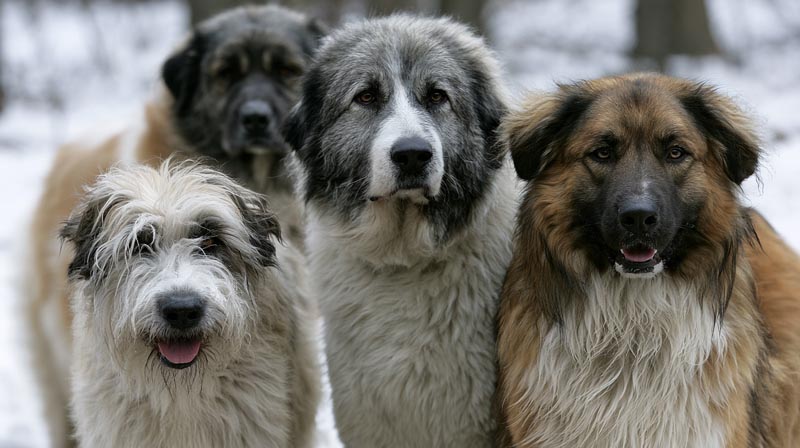
Parker et al. (2017, Cell Reports) remains the largest genomic classification study for modern dog breeds, analyzing 161 breeds across a dense SNP dataset of more than 150,000 markers. The list of 14 basal breeds, though, comes from Larson et al. (2012), who combined the results of Parker et al. (2004), vonHoldt et al. (2010), and their own analysis. These breeds branch off separately from the large clusters of modern breeds in phylogenetic trees.
These 14 breeds show limited genomic admixture with European dog populations, meaning their genomes were not significantly altered by the crossbreeding that reshaped most modern breeds during the 18th to 20th centuries.
Some famous “ancient-looking” breeds did not make the list. Larson’s team noted that historical texts and depictions seem to give 13 European breeds, including the Pharaoh Hound and Ibizan Hound, very deep origins, yet only the Finnish Spitz retains a basal genetic signature. The Pharaoh and Ibizan hounds resemble the dogs in ancient art, but genetically they are not among the oldest lineages.
African and Middle Eastern Basal Breeds
Basenji: Central African origin, base of the dog family tree, annual estrus, barkless vocalization.
Saluki: Middle Eastern origin, thousands of years of documented history, used for gazelle coursing by Egyptian royalty and Bedouin tribes. The Saluki is the only sighthound with a basal signature in all three studies Larson et al. compared.
Canaan Dog: Levantine origin, with roots in the semi-wild desert dogs of the Negev. Among the least crossbred of all living ancient breeds.
Asian Basal Breeds
| Breed | Region | Documented Origin |
|---|---|---|
| Chow Chow | China | Approximately 8,300 years ago (BMC Genomics, 2017) |
| Chinese Shar-Pei | China | Han Dynasty (approximately 200 BCE) |
| Akita | Japan | Basal position confirmed in 3 studies (Larson et al., 2012) |
| Shiba Inu | Japan | Basal position in microsatellite data (Parker et al., 2004) |
| Tibetan Mastiff | Tibet | Not on the basal list; traditionally linked to records from about 1,100 BCE |
| Afghan Hound | Afghanistan | Ancient sighthound lineage; basal genetic position confirmed |
Arctic Basal Breeds
The Arctic cluster includes 3 breeds with confirmed basal genetics: the Siberian Husky, the Alaskan Malamute, and the Samoyed.
All 3 trace back to sled and working dog populations of Siberia and the Arctic. Siberia also matters for the bigger story: Perri et al. (2021) place dog domestication there by about 23,000 years ago. Separately, Cell Reports (Parker et al., 2017) found the first hint that “New World dog” ancestry, from dogs that came to the Americas with early human migrants, may survive in some modern breeds, notably the hairless breeds of Mexico and South America.
Worth noting: with the exception of the Alaskan Malamute, all 14 basal breeds have Old World geographic origins (Larson et al., 2012). The lack of basal lineages in the Americas reflects what happened after Europeans arrived about 500 years ago. Their dogs largely replaced the indigenous canine populations, according to an ancient-DNA study in Science (Leathlobhair et al., 2018).
The New Guinea Singing Dog and the Dingo also appear on Larson’s basal list, but they occupy a position between fully domestic dogs and wild canids. They are often classified separately as wild or semi-feral ancient populations rather than breeds in the conventional sense.
How Do Ancient Dog Breeds Differ Physically and Behaviorally From Modern Breeds?
Ancient breeds are not just historically old dogs. They are physically and behaviorally distinct in ways that trace directly to thousands of years of natural selection rather than human breed standards. The differences are not subtle.
Physical Trait Differences
Wolf-like or “primitive” physical traits appear in many basal breeds regardless of geography.
- Almond-shaped eyes rather than the round eyes selected for in many modern toy and companion breeds
- Upright, triangular ears with full mobility, optimized for environmental sound detection
- Curled or sickle tails carried over the back in many spitz and pariah types, unlike the low-carried tail of the wolf
- Deep, narrow chests built for endurance over burst speed or pulling power
- Tight, hard feet with thicker pads adapted to rocky, desert, or arctic terrain
Compare this to the Bulldog or Pug, brachycephalic breeds whose extreme flat faces were shaped largely by show and companion breeding over the past 200 years. The structural differences reflect completely different selection pressures.
Behavioral and Temperament Differences
Stanley Coren’s “The Intelligence of Dogs” ranked the Basenji and Afghan Hound at the bottom of obedience intelligence rankings. Both breeds are genetically ancient.
That ranking is misleading, though. What Coren measured was compliance with human commands. Ancient breeds score low because they were selected for independent function, not obedience. A Saluki that stopped mid-chase to check in with a human would have been a bad hunting dog. A Tibetan Mastiff that needed instructions to react to a wolf at 3 AM would have been a useless guardian.
A 2021 owner survey in Animals on undesirable behaviors in ancient breeds (Akita, Alaskan Malamute, Basenji, Samoyed, Siberian Husky) notes that these breeds score 1 to 3 out of 5 for ease of training in breed expert ratings. Aggressive behavior toward other dogs and animals, excessive vocalization, and undesirable motor activity were the most common problems reported.
Health Profile Differences
Ancient breeds are spared some of the problems that come with extreme body shapes in modern breeds.
Conditions like brachycephalic obstructive airway syndrome are tied to flat-faced conformation, which basal breeds do not have. But registered ancient breeds are still closed populations, and they can carry recessive disease alleles just like other purebreds. The Basenji, for example, lists Fanconi syndrome (an inherited kidney disorder), progressive retinal atrophy, and hip dysplasia among its primary health concerns in the AKC breed profile.
So ancient breeds carry their own health considerations. The Saluki is prone to heart conditions. The Akita has elevated rates of immune-mediated diseases. These are population-level traits, not the result of selective breeding for extreme physical features. The distinction matters when you’re thinking about what health issues to watch for in daily life with an ancient breed.
What Is the Current Conservation Status of Ancient Dog Breeds?
The UK’s Royal Kennel Club tracks dozens of “vulnerable native breeds,” British and Irish breeds registering fewer than 300 puppies a year, plus an “at watch” list for breeds with 300 to 450 registrations (Royal Kennel Club).
That list covers native British and Irish breeds, not ancient ones, but ancient and primitive breeds face the same low-number problem, often worse. The pressure is not just from low numbers. It comes from genetic dilution, habitat loss for semi-feral populations, and the replacement of local heritage dogs by imported and designer breeds.
The New Guinea Singing Dog
The most extreme case in canine conservation biology.
The entire captive population, no more than 200 to 300 individuals, descends from just 8 partially related founders brought out of the New Guinea highlands, with none captured or exported since the late 1970s (Surbakti et al., PNAS, 2020). That founding bottleneck left the captive population severely inbred, with very low genetic variation.
In 2016, an expedition led by the New Guinea Highland Wild Dog Foundation documented a wild population of highland wild dogs near the Grasberg Mine in Papua, Indonesia. The 2020 PNAS study found that about 72% of the highland wild dog genome matches the Oceanic lineage shared by captive New Guinea Singing Dogs and dingoes, and concluded that these wild dogs are the original population the captive Singing Dogs came from, making them a potential source for conservation breeding.
The Azawakh and Canaan Dog
Azawakh: registered numbers outside Africa are small, and the breed ranked No. 195 of the AKC’s breeds in 2025. Political instability across the Sahel region has disrupted the Tuareg and Fula nomadic communities that historically maintained the breed.
Canaan Dog: the remaining semi-wild desert dogs face pressure from free-breeding domestic dogs. The registered breed is rare worldwide, ranking No. 193 of the AKC’s breeds in 2025.
Both breeds illustrate a pattern common to ancient lineages: their survival was historically guaranteed by cultural isolation. Once that isolation breaks down, genetic dilution follows fast.
What FCI and AKC Recognition Actually Does
Formal recognition creates a double-edged outcome for ancient breeds. On one side, it generates breeder interest and funding for health screening programs. The Xoloitzcuintli was dropped from the AKC stud book in 1959 due to scarcity. By then, a 1954 expedition had already found surviving dogs in remote Mexican villages and started rebuilding the breed in Mexico, and the AKC recognized the Xolo again in 2011.
On the other side, show-standard requirements create new selective pressure. Breeders who prioritize conformation over working traits gradually shift the gene pool toward cosmetic traits, not the functional characteristics that defined the breed for thousands of years.
| Breed | Population Status | Primary Threat |
|---|---|---|
| New Guinea Singing Dog | No more than 200-300 individuals in captivity | Inbreeding resulting from a very small founder population |
| Azawakh | Rare outside Africa (AKC No. 195 in 2025) | Habitat loss and the decline of traditional nomadic communities |
| Canaan Dog | Rare worldwide (AKC No. 193 in 2025) | Encroachment by free-breeding domestic dogs and limited demand |
| Xoloitzcuintli | Recovered; Mexico’s national dog (AKC No. 123 in 2025) | Historical replacement by European breeds and past near-extinction events |
What Does the Dingo’s Genetics Reveal About Ancient Dog Migration?
The Dingo is not just an Australian wild dog. It is a genomic time capsule that reveals when, how, and with whom ancient dogs spread across the Pacific.
A 2024 study in PNAS (Souilmi et al.) analyzed DNA from nine ancient dingo specimens, 400 to 2,746 years old, and found that the regional population structure seen in modern dingoes had already emerged several thousand years ago, long before European colonization. As the study notes, dingo ancestors arrived in Australia more than 3,000 years ago, likely transported by seafaring people.
What the Dingo Genome Shows
Science Advances (Field et al., 2022) published a high-quality genome of a pure Australian dingo, a desert dingo named Sandy.
Key findings from that study and follow-up research:
- Dingoes are an early offshoot of modern domestic dog lineages, not a separate domestication event
- They are genetically distinct from breed dogs, with large chromosomal differences, no expanded starch-digesting amylase gene, and differences in serum biochemistry and gut microbiome
- Modern dingoes derive minimal ancestry from post-colonial hybridization with European breeds, contrary to earlier microsatellite studies suggesting 54% hybrid rates
An Evolution Letters study of 434 Australian canid samples (2024) found no effective introgression from domestic dogs into dingoes since dingoes split from the New Guinea Singing Dog lineage roughly 5,000 to 8,300 years ago. It concluded that an earlier microsatellite study, which flagged about 54% of dingoes as hybrids, likely mistook shared ancestral variation for hybridization.
The Dingo-New Guinea Singing Dog Connection
Both the Dingo and the New Guinea Singing Dog cluster together in phylogenetic analyses, sharing closer ancestry with each other than with any other domestic dog population.
PNAS (Souilmi et al., 2024) detected excess allele sharing between New Guinea Singing Dogs and ancient dingoes from coastal New South Wales, suggesting at least 2 migration waves reached Australia from source populations with varying proximity to New Guinea.
That migration route, Island Southeast Asia to New Guinea to Australia, traces a path that parallels what archaeologists know about early human movement into the Pacific. The dogs went where people went. What makes dingoes unusual is that once they arrived, they were largely cut off from further dog gene flow for thousands of years before European contact, preserving a pre-modern canine genome that no longer exists elsewhere.
What This Means for Dog Domestication Research
Geographic isolation preserved: a pre-modern domestic dog genome unavailable from any other source
Dingo population structure: southeastern dingoes have long been genetically distinct from dingoes across the rest of mainland Australia, a split that was already in place long before European arrival
Practical implication: Dingo DNA provides researchers a window into what early domesticated dogs looked like genetically before millennia of selective breeding reshaped every other lineage
How Has Selective Breeding Affected Ancient Dog Breeds Over Time?
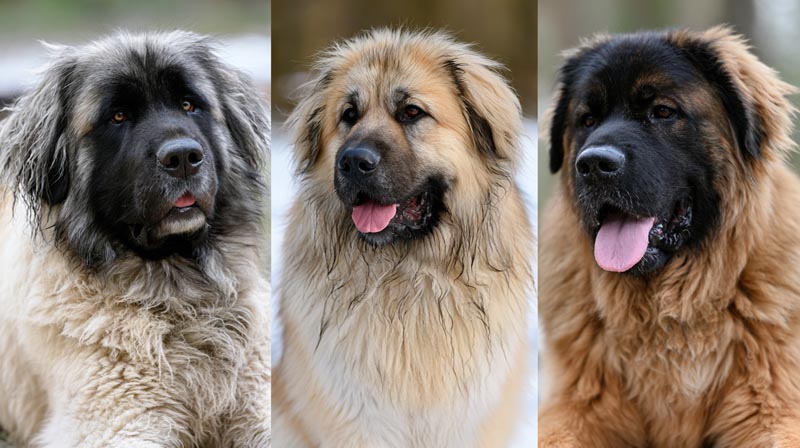
Selective breeding for modern breed standards began in earnest in the mid-19th century, driven by the establishment of kennel clubs and conformation shows. A 2025 PNAS study of museum German Shepherd genomes from 1906 to 1993 (PNAS, 2025) showed how this keeps playing out: genetic diversity dropped after World War II, with repeated bottlenecks linked to the “popular sire” effect.
Ancient breeds mostly avoided this first round. But once they entered Western kennel clubs, the same pressures applied.
The Impact of Breed Standards
When ancient breeds entered formal registration systems, breeders faced pressure to conform to a written standard rather than preserve working genetics.
The Afghan Hound is the most visible example. In Afghanistan, coat length varied by region, from heavily coated mountain dogs to lighter-coated hounds of the lowlands. After entering Western dog shows in the early 20th century, breeders selected for an ever longer, silkier, flowing coat, now considered the breed’s defining feature. Lighter-coated working types became rare in registered populations.
The Saluki split into 2 distinct types with the same pattern: show-line Salukis bred for flowing feathering and extreme elegance, and field-type Salukis maintained by Bedouin breeders in the Middle East closer to the original working profile.
Genetic Bottlenecks in Ancient Breeds
PNAS research on domestic dog genetics (Marsden et al., 2016) found that dogs carry 2-3% more genetic load than gray wolves, driven by the bottlenecks of both domestication and breed formation rather than recent inbreeding alone.
Ancient breeds that entered registries late, or that maintained parallel working populations outside kennel clubs, avoided the worst of this. Those that were absorbed quickly into show culture did not.
The Chow Chow is a useful counterexample. The 2017 BMC Genomics study found that the bottleneck leading to Chow Chows was not strong and that genetic migration between Chow Chows and other populations is low, which helps explain why the breed still reads as one of the most distinct East Asian lineages.
Preservation Breeding Efforts
Several organizations now work specifically to maintain pre-show genetics in ancient breeds.
Saluki preservation: breeders in the Middle East keep desert-bred field Salukis separate from show lines, preserving original desert-coursing genetics. The Sloughi, North Africa’s related sighthound, has its own working lines maintained the same way.
Xoloitzcuintli recovery: After a 1954 FCI-sanctioned expedition found a small number of sound dogs (often reported as 10) in remote Mexican villages, those animals became the foundation of a controlled recovery program. The Xoloitzcuintli was re-admitted to AKC recognition in 2011 after decades of careful breed rebuilding.
New Guinea Singing Dog: The 2020 PNAS team, which included researchers from the U.S. National Human Genome Research Institute (Ostrander and colleagues), called for protecting the highland wild dogs and establishing breeding programs that could bring their genetics into the inbred captive population, restoring diversity that the 8-founder bottleneck eliminated.
| Breed | Standardization Impact | Preservation Status |
|---|---|---|
| Afghan Hound | Coat characteristics were heavily refined for the show ring | Traditional working lines have largely disappeared in Western countries |
| Saluki | Distinct show and field line populations emerged | Field-bred lines continue to be maintained in the Middle East |
| Chow Chow | Founding bottleneck was relatively mild, but the breed is now a closed studbook | Few outcrossing opportunities remain |
| Xoloitzcuintli | The breed came close to extinction during the early 20th century | Population is recovering and the breed is recognized as Mexico’s national dog |
What Ancient Dog Breeds Still Perform Their Original Working Functions?
Most modern dog breeds exist entirely as companions or competitors in conformation shows. Ancient breeds are different. Several of them are still doing exactly what they were bred to do, in the same regions where they were developed thousands of years ago.
Sighthounds Still Used for Coursing
The Saluki is still used for coursing by Bedouin tribes across Saudi Arabia, Jordan, and Iraq. Hunting regulations now restrict traditional coursing of gazelle in most of the region, but informal use of field Salukis for hare coursing continues.
The 1996 Guinness Book of Records is widely cited as listing a Saluki as the fastest dog ever recorded at 42.8 mph. That kind of speed is best preserved in working lines rather than show lines. It exists in the working populations still maintained by breeders who have never entered a conformation ring.
The Azawakh and Sloughi function similarly in West and North Africa respectively. Both are still kept as hunting dogs by some nomadic and semi-nomadic communities who never adopted European breed standards as a reference point, though the AKC notes that dwindling game and the use of firearms have reduced how often the Azawakh is used to hunt.
Guardian Breeds Still Protecting Livestock
The Tibetan Mastiff still works as a livestock guardian on the Tibetan plateau. Remote Himalayan communities that have limited access to modern infrastructure continue to rely on Do-Khyi to protect sheep and yak from wolves and snow leopards at altitudes where most other breeds could not survive.
A 2024 study in iScience on livestock guardian dogs (Coutinho-Lima et al.) analyzed genomic data from 304 LGDs and found extensive shared ancestry and gene flow among modern breeds, which the authors attribute to historical livestock migrations. Even the Himalayan guardians were not sealed off: East Asian guardian breeds from Tibet carry a blend of Southeast Asian dog ancestry and large contributions from ancient Steppe dogs, likely brought east by pastoralists.
Arctic Breeds in Working Roles
The Siberian Husky continues to be used for sled transport in remote communities of northeastern Siberia. Competitive sled racing in events like the Iditarod and Yukon Quest keeps working husky genetics active, though show-line Siberians and racing Siberians are now clearly distinct populations.
The Alaskan Malamute was developed by the Mahlemiut Inuit of northwestern Alaska primarily for heavy freight hauling rather than speed, according to the AKC. That distinction from the Husky still holds in working populations, with Malamutes selected for power and endurance rather than pace.
African Breeds Still Hunting
The Basenji still hunts with tribesmen in the Congo Basin, including the Ituri rainforest of the Democratic Republic of Congo.
What makes the Congo working population scientifically significant: these dogs are largely uninfluenced by the selective pressures that shaped Western Basenji show lines. The 2021 BMC Genomics study assembled genomes from 2 Basenjis. One, China, is Australian-bred, with her most recent African ancestor 18 generations back. The other, Wags, is an AKC champion whose dam was imported directly from the Haut-Ule district of the DRC, giving the study a dog with recent Congolese ancestry.
What Are the Rarest Ancient Dog Breeds in Existence Today?
Rarity in ancient breeds means something different from rarity in modern breeds. A rare modern breed is usually just unpopular. A rare ancient breed is often the last genetic thread connecting the present to a domestication lineage that stretches back thousands of years.
New Guinea Singing Dog
The rarest confirmed ancient dog in existence. No more than 200 to 300 captive individuals worldwide, all descended from 8 founder animals (Surbakti et al., 2020). The entire captive gene pool is extremely narrow, with very low genetic variation.
The 2020 PNAS study confirmed that the wild highland dogs of Papua are the population the captive Singing Dogs came from. That makes the Singing Dog simultaneously compromised in captivity as a genetically healthy population and potentially viable through the introduction of wild genetics.
Azawakh
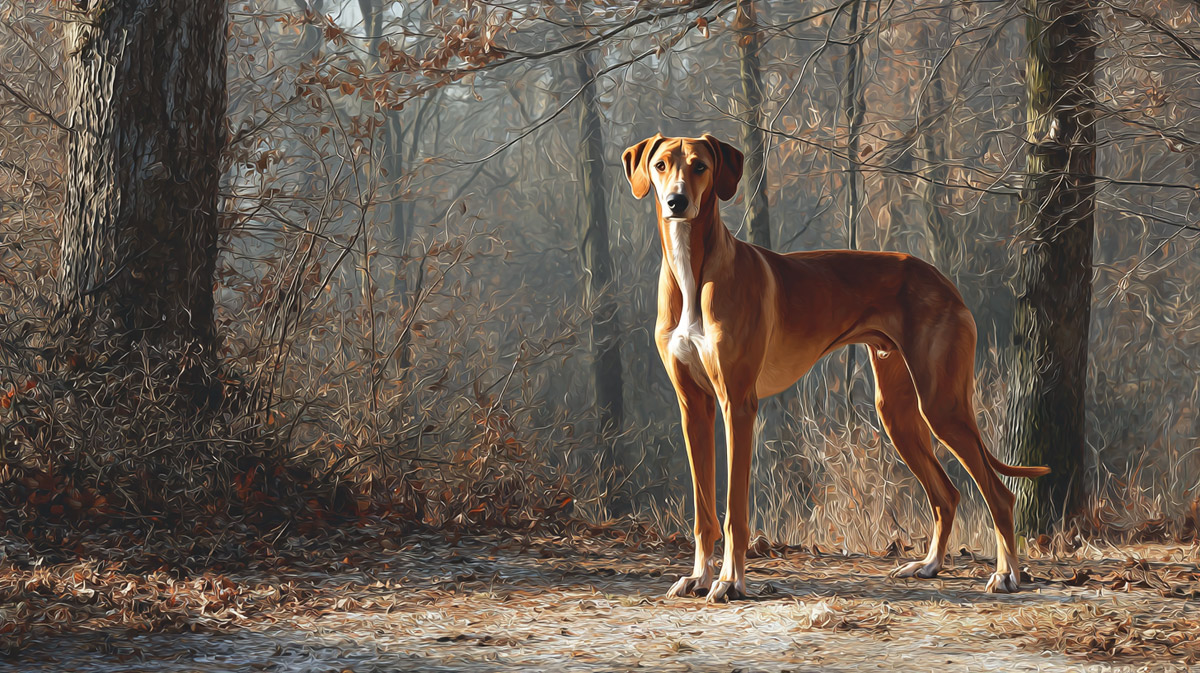
Only small numbers are registered outside West Africa, and the Azawakh ranked No. 195 of the AKC’s breeds in 2025. The breed faces a compound problem: its primary human stewards, the Tuareg and Fula peoples of the Sahel, face ongoing displacement from conflict and desertification.
Western breed clubs have registered and standardized the Azawakh, but the show-type dogs can diverge physically from the extreme leanness of working Sahel dogs. European breeders, especially in France and Germany, have maintained much of the outside-Africa population, but breed numbers remain low.
Cirneco dell’Etna
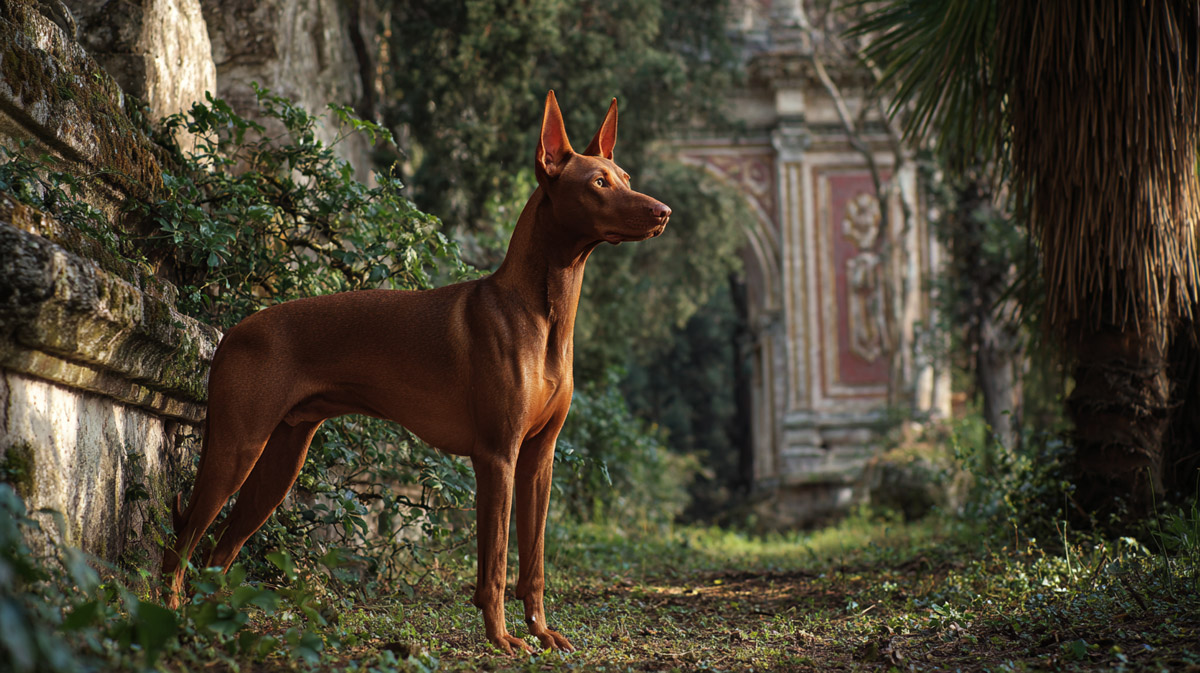
An ancient Sicilian hound resembling dogs depicted on Sicilian coins from around 500 BC. The breed hunts small game in the volcanic terrain of Mount Etna and has done so for thousands of years. By the early 1930s it was close to vanishing, until a Sicilian aristocrat spent 26 years reviving it.
The Cirneco dell’Etna was recognized by Italy’s kennel club in 1939 and by the AKC in 2015, which increased global awareness but also introduced the standard conformation pressure that has altered other ancient breeds. Numbers remain very low outside Italy.
Pharaoh Hound
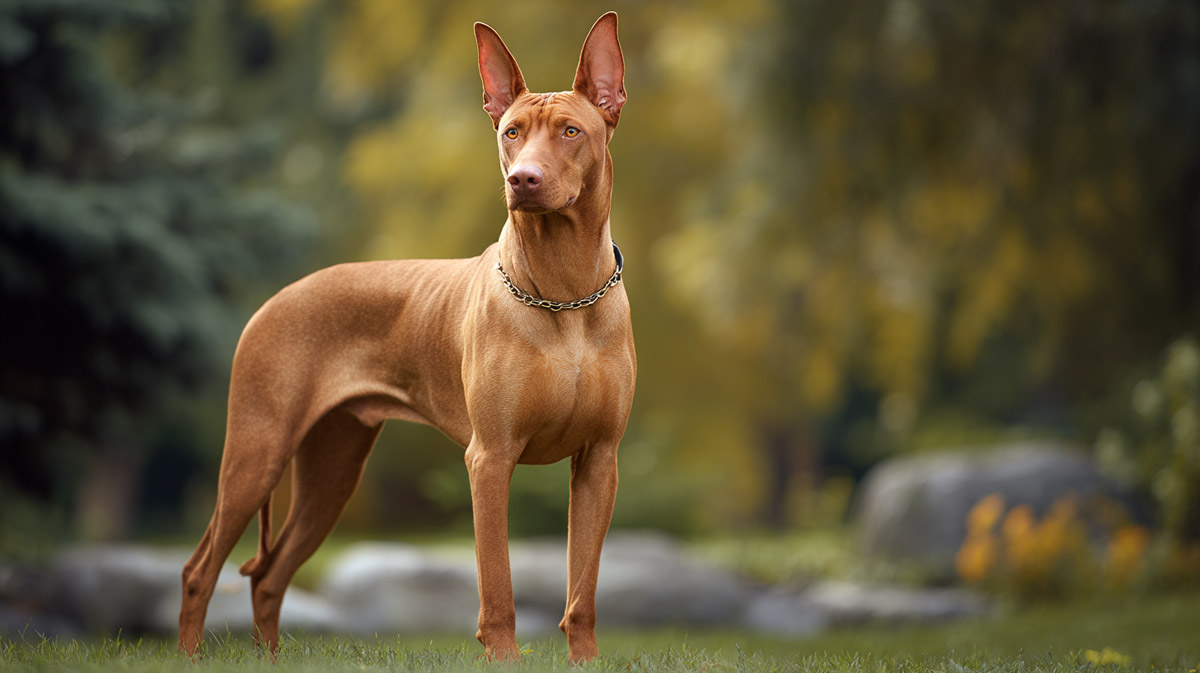
Despite its Egyptian-sounding name and its resemblance to hounds in ancient Egyptian art, genetic studies do not place the Pharaoh Hound among the basal breeds. Larson et al. (2012) list it, along with the Ibizan Hound, among the breeds whose ancient-looking history is not matched by a basal genetic signature. Its known history is Maltese rather than Egyptian, and its ancient appearance reflects the primitive hound type rather than proven direct descent from Egyptian dogs.
Still, it remains rare. Malta named it the national hound in 1979, according to the AKC, and the breed (locally called the Kelb tal-Fenek, or “rabbit dog”) is still kept by Maltese hunters for traditional rabbit hunting. Outside Malta, registered numbers are minimal.
Xoloitzcuintli

The AKC traces the Xoloitzcuintli‘s history in Mexico back thousands of years. Ceramic dog figures resembling Xolos appear at ancient Colima, Maya, and Aztec sites, and Columbus and other European explorers noted these “strange hairless dogs” in their journals.
The breed came close to extinction in the early 20th century. After the 1954 recovery expedition and decades of rebuilding, the Xolo is now celebrated as Mexico’s national dog and a cultural symbol boosted by its appearance in Disney-Pixar’s “Coco” (2017). Outside Mexico it is still uncommon (No. 123 in AKC registrations in 2025), which makes it one of the few ancient breeds with a documented recovery story.
| Breed | Population Status | Oldest Evidence |
|---|---|---|
| New Guinea Singing Dog | No more than 200-300 individuals in captivity | Descends from dogs that reached Island Southeast Asia about 3,500 years ago (Larson et al., 2012) |
| Azawakh | Rare outside Africa (AKC No. 195 in 2025) | Used by nomadic peoples in the Sahel region for millennia |
| Cirneco dell’Etna | Rare outside Italy (AKC No. 184 in 2025) | Dogs resembling the breed appear on Sicilian coins from around 500 BC |
| Xoloitzcuintli | Recovered but uncommon outside Mexico (AKC No. 123 in 2025) | Ceramic figures and burials from ancient Mesoamerica spanning thousands of years |
The Carolina Dog occupies a separate category. It is a free-ranging primitive dog found in remote areas of the southeastern United States, recognized as a breed only in recent decades and not by the AKC. A mitochondrial DNA study in Proceedings of the Royal Society B (van Asch et al., 2013) provided the first DNA evidence that Carolina Dogs may have an ancient East Asian origin, possibly linking them to the dogs that came over with early human migrants. Whole-genome work has not settled the question, since most pre-contact American dog ancestry disappeared after European arrival. The remaining free-ranging populations are concentrated in isolated forests and swamps of South Carolina and Georgia.
FAQ on Ancient Dog Breeds
What is the oldest dog breed in the world?
The Saluki has one of the strongest historical records, with the AKC noting the breed may go back as far as 7000 BC and Saluki-type hounds appearing in ancient Egyptian art. The Basenji sits at the base of the genetic family tree. Both claims are valid depending on whether you prioritize historical evidence or genome data.
How do scientists determine if a breed is ancient?
Through whole-genome sequencing and SNP analysis, researchers map a breed’s position on the canine phylogenetic tree. Breeds that branch off early and show minimal crossbreeding signals from modern European dog populations qualify as basal breeds, and archaeological evidence can add support to a breed type’s age.
Are ancient dog breeds related to wolves?
All domestic dogs descend from an ancient wolf population that is likely now extinct. Ancient breeds like the Basenji and Dingo are basal lineages, but they are not more wolf than other dogs, and their distinctiveness mostly reflects long isolation. Dogs and wolves diverged between 11,000 and 16,000 years ago according to PLOS Genetics (Freedman et al., 2014), though later estimates push this back to 20,000-40,000 years.
What are the 14 basal breeds identified by scientists?
Larson et al. (2012, PNAS), combining earlier genome studies with their own analysis, listed: Afghan Hound, Akita, Alaskan Malamute, Basenji, Canaan Dog, Chow Chow, Dingo, Finnish Spitz, New Guinea Singing Dog, Saluki, Samoyed, Shar-Pei, Shiba Inu, and Siberian Husky.
Do ancient dog breeds make good pets?
They can, but they require experienced owners. Ancient breeds score low on obedience rankings because they were selected for independent function, not compliance. High prey drive, territorial instincts, and low trainability are common traits across most primitive dog breeds.
What is the rarest ancient dog breed alive today?
The New Guinea Singing Dog is the rarest, with no more than 200 to 300 captive individuals worldwide, all descended from 8 founder animals. The entire captive population is severely inbred. A wild population of highland wild dogs, shown genetically to be the original Singing Dog population, was documented in 2016 in the Papua highlands.
Are ancient breeds healthier than modern breeds?
Not necessarily. Ancient breeds avoid the extreme structural problems of breeds like flat-faced dogs, but registered ancient breeds are still closed gene pools that can carry inherited diseases. The Basenji, for example, is prone to Fanconi syndrome and progressive retinal atrophy, so health screening matters just as much as with any purebred.
What is the difference between a primitive breed and an ancient breed?
An ancient breed holds a basal, genetically distinct position confirmed by genome studies. A primitive breed retains wolf-like physical traits and behaviors but may not hold a basal position genetically. The Dingo qualifies as both. Many ancient breeds are also primitive.
How old is dog domestication?
Ancient-genome research timed dog domestication to between 20,000 and 40,000 years ago (Nature Communications, Botigué et al., 2017), though estimates still vary between studies. The Bonn-Oberkassel dog, from the oldest known grave where humans and dogs were buried together, dates to 14,223 years BP (Journal of Archaeological Science, 2018).
Which ancient dog breeds are still used for their original purpose?
Several. The Saluki still courses with Bedouin tribes in the Middle East. The Tibetan Mastiff guards livestock on the Himalayan plateau. The Basenji hunts with tribesmen in the Congo. The Siberian Husky remains a working sled dog in remote Siberian communities.
Conclusion
The genetic, archaeological, and cultural evidence behind ancient dog breeds shows what separates them from the many modern breeds developed in the past 200 years.
Basal lineages like the Saluki, Basenji, and Chow Chow survived because geography, culture, and function kept them isolated from the selective pressures that reshaped other canids.
Their primitive canine behavior, wolf-like physical traits, and annual estrus cycles are not quirks. They are preserved biology.
Some of these breeds face real extinction risk. The New Guinea Singing Dog, the Azawakh, and the Canaan Dog need active conservation, not just kennel club registration.
Understanding dog domestication history means understanding these breeds first.