Dogs actually sweat through their paws. It’s one of the only places they can, so their feet end up doing a lot of work all year. Now picture those same paws in the middle of February, slogging through slush, dirty salt, and whatever else the sidewalk crew tossed down that morning.
The walk itself? Usually the best part of their day. Tails wagging, little snow mustaches; pure happiness. But the next ten minutes?
That’s when things get messy. Wet fur, snow jammed between the toes, muddy paw prints down the hall, and your dog trying to lick everything clean before you can grab him.
Let’s be honest, most of us just wing it. Grab whatever towel’s handy, wipe fast, hope for the best. It works until it doesn’t. So here are nine things to have ready. Some are cheap, some are simple, but they all help.
1. Absorbent Towel Station
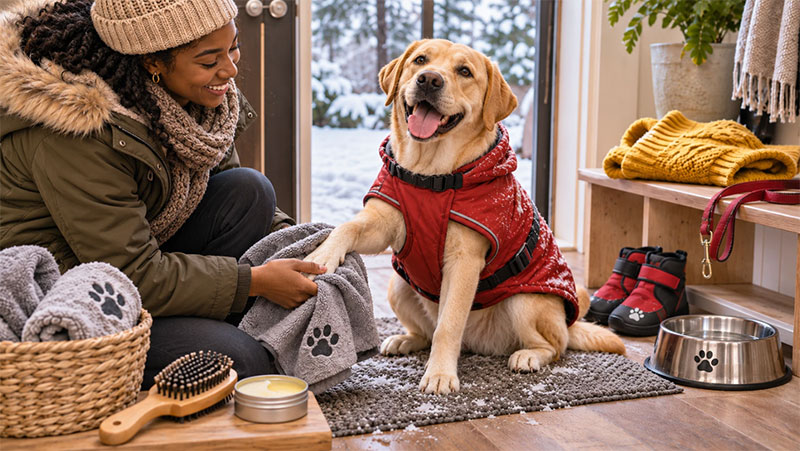
Keep two or three quick-dry towels right by the main door. Really, two is the bare minimum; the first gets soaked in seconds, and a wet towel just moves the mess around.
Go in order: paws, legs, belly, chest, and pay attention to the long hair behind the legs and under the ears since they soak up water. It depends on your dog’s coat, but don’t stress about getting them bone dry. Damp is fine. Dripping is the problem.
2. Paw Protection First
Salt, ice, gravel; all tough on paws. On top of that, some sidewalk treatments irritate the skin, and dogs always lick their feet, so whatever’s on them is going in their mouth.
For dogs crossing treated sidewalks or snowy paths, protecting paws in snow and ice cuts down on direct contact with salt, grit and frozen surfaces. The tricky part is fit. Boots have to sit snug without pinching, and they need a trial run indoors, a few minutes at a time, with treats.
If your dog refuses boots, that’s life. Just make sure you rinse those paws when you get home.
3. Paw-Rinse Setup
Use lukewarm water; never hot. A shallow tub, cup, or squeeze bottle works, plus a fresh towel. Pet wipes are okay on easy days, but a real rinse is better after walking through heavy salt.
Don’t scrub. Just rinse between the toes and around each pad, then pat dry. Winter air dries skin out already; skip the soap unless you really need it.
4. The Right Brush
Wet fur plus gunk equals tangles. If your dog has a short coat, a rubber brush lifts most of the crud.
Dogs with feathered coats (like spaniels or setters) do better with a wide-tooth comb on legs and belly; that’s where ice and mats hide. Double coats need tools that reach the undercoat; a slicker brush or undercoat rake.
Towel first, then brush. Brushing soaked fur hurts and just makes your dog hate the whole idea.
5. Weather-Ready Outerwear
Not every dog needs a jacket. Huskies can skip it. But if you’ve got a small dog, one with a thin coat, or a senior pup, that extra layer is a game-changer when the wind bites and the snow’s wet.
On wet, windy winter walks,weather-ready dog outerwear can help limit how much cold rain and slush reaches a dog’s coat before the post-walk cleanup begins. Look for coverage over the chest and torso that still lets the shoulders move freely.
Check the neck and leg openings for rubbing. And take it off once you’re inside, because a damp jacket left on will chill a dog.
6. Wet-Gear Bin
Letting damp towels and gear pile up? Been there. Doesn’t take long for stuff to go musty.
Use a ventilated bin or hanging bag for the wet things until you can wash or dry them. Salt will make the fabric stiff, so a quick rinse before drying helps, and always check care labels before tossing gear in the washer.
7. Dry Resting Mat
Once you’ve used the towels, your dog’s still a little damp. Give them a washable mat or blanket for drying off, or they’ll just claim your couch. Set the mat somewhere warm but out of direct heat.
If you break out a hair dryer, use the lowest setting, keep it moving, and don’t get too close. Dogs’ skin burns quicker than you’d think, and most hate the noise anyway. A good mat usually does the trick.
8. Basic Paw-Care Kit
Winter’s rough on paws. Keep nail clippers, blunt scissors to trim hair between the pads, and a dog-safe paw balm all together. Make it routine to check after every walk.
Look at the pads, between the toes, and around the nails for cracks, redness, ice balls, or debris. If the dog’s limping, bleeding, or obsessively licking a paw, stop the grooming; call the vet.
9. Post-Walk Routine
All this gear only helps if you use it the same way every time. Peel off jackets, wipe or rinse paws, towel dry, brush as needed, check for problems, then let your dog chill somewhere dry.
Dogs pick up a routine fast. After a bit, most will head straight to the towel spot (okay, especially if you’ve trained with treats). Makes life easier when you’re juggling leashes, snowy boots, and a soggy dog.
Plan Before You Walk
The real stress comes when you’re scrambling after the fact; dog dripping everywhere, boots half on, and you’re grabbing towels like a firefighter.
So set up before the walk. Towels by the door, rinse cup out, brush within reach, wet bin ready, mat in the corner. Doesn’t have to be fancy; just ready to go. Do that, and cleanup is quick, your dog dries off faster, and your floors stand a fighting chance till spring.