Ever wondered what it feels like to pet a cat with fur that resembles crushed velvet? The Cornish Rex is a unique feline breed that will change everything you thought you knew about cats.
With their distinctive wavy coat, large ears, and slim, athletic build, these intelligent companions stand apart from traditional cat breeds.
Born from a genetic mutation discovered in Cornwall, England in the 1950s, the Cornish Rex has evolved from an unusual farm cat to one of the most sought-after pedigree felines.
Unlike standard domestic cats, these warm-seeking, playful pets feature minimal shedding and a remarkably soft undercoat that makes them popular among allergy-conscious pet lovers.
In this guide, we’ll explore everything about these extraordinary curly-coated cats—from their active temperament and specific care needs to health considerations and compatibility with families.
Whether you’re considering adoption or simply fascinated by unique cat breeds, you’ll discover why the Cornish Rex might be the perfect addition to your household.
Cornish Rex Cat Breed Statistics
| Characteristic | Details |
|---|---|
| Origin | Cornwall, England (1950) |
| Size | Medium |
| Weight | Males: 8-10 lbs (3.6-4.5 kg)<br>Females: 5-8 lbs (2.3-3.6 kg) |
| Height | 8-12 inches (20-30 cm) at shoulder |
| Body Type | Foreign (slender, athletic) |
| Coat Length | Short |
| Coat Texture | Soft, wavy, downy, lacks guard hairs |
| Shedding Level | Minimal |
| Colors/Patterns | All colors and patterns |
| Eye Color | All colors possible |
| Lifespan | 12-16 years |
| Temperament | Playful, affectionate, intelligent, active |
| Activity Level | High |
| Vocalization | Moderate |
| Grooming Needs | Low (weekly wipe-down) |
| Hypoallergenic Potential | Moderate (may cause fewer reactions) |
| Kid-Friendly | High |
| Dog-Friendly | High |
| Other Pet-Friendly | Moderate to high |
| Trainability | High |
| Indoor/Outdoor | Primarily indoor |
| Climate Tolerance | Prefers warm environments, low cold tolerance |
| Health Issues | Hypertrophic cardiomyopathy, patellar luxation, skin sensitivity |
| Recognition | All major registries (CFA, TICA, GCCF, FIFe) |
| Average Cost | Pet quality: $800-1,500<br>Show quality: $1,500-2,500 |
| First-Time Owner Friendly | Moderate (requires engagement) |
| Apartment Friendly | High |
What Is a Cornish Rex Cat?
The Cornish Rex is a distinctive cat breed known for its unique wavy coat, slim body, and oversized ears. This breed originated from a genetic mutation discovered in Cornwall, England, and is recognized for its playful, social temperament.
Cornish Rex cats have a lightweight, athletic build with a very soft, curly coat that feels like crushed velvet. The breed is officially recognized by all major cat registries including CFA, TICA, GCCF, and FIFe.
This breed developed from a natural mutation and is classified as a rex-type breed, characterized by its distinctive wavy fur pattern.
Physical Characteristics
How Big Do Cornish Rex Cats Get?
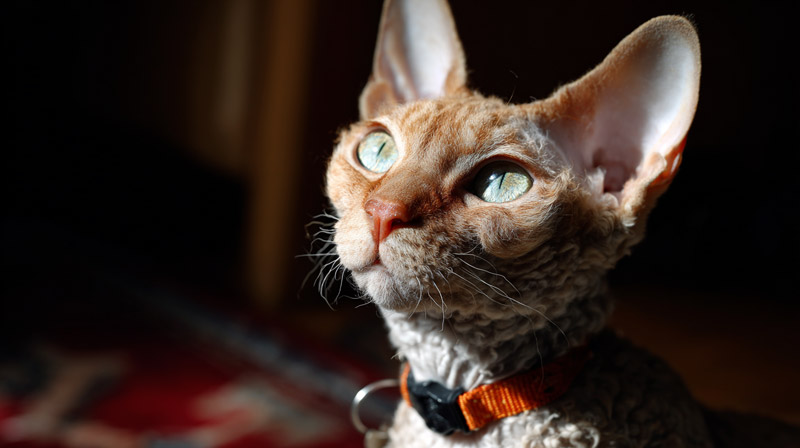
Cornish Rex cats are medium-sized with a slender, athletic build. Males typically weigh 8-10 pounds, while females weigh 5-8 pounds.
They stand about 8-12 inches at the shoulder and have a foreign body type with long, slender legs and a deep chest.
These cats reach their full size at approximately 1-2 years of age, with their slim build and fine bone structure being fully developed by this time.
What Does a Cornish Rex Cat’s Coat Look Like?
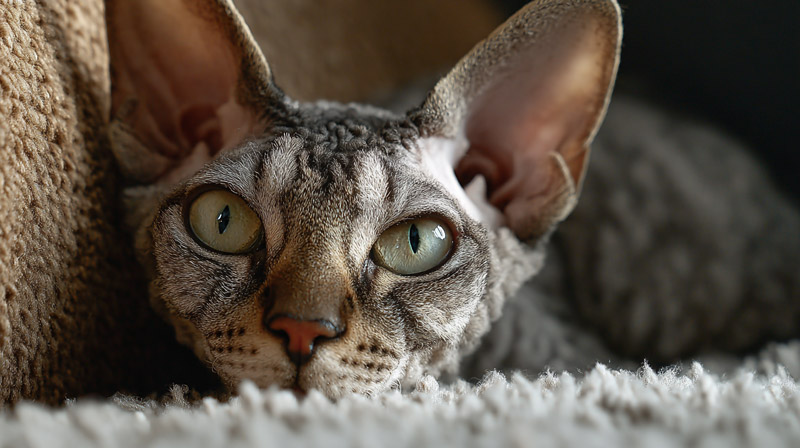
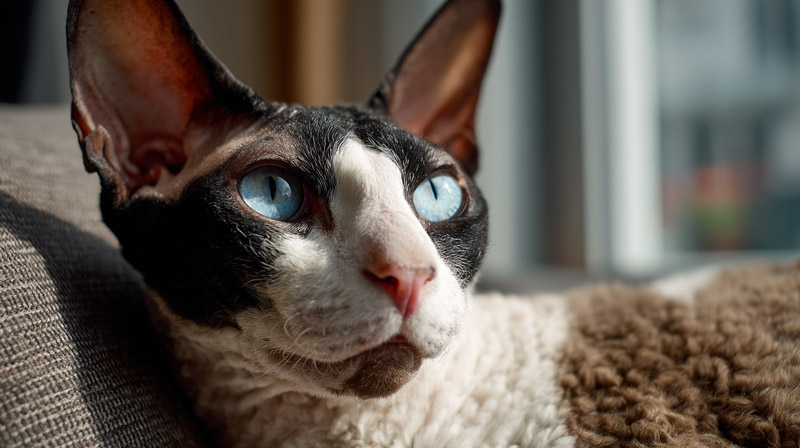
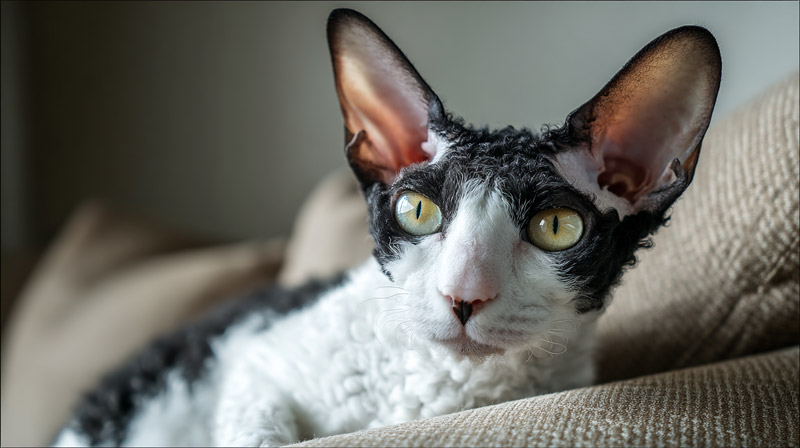
The Cornish Rex has a short, incredibly soft coat consisting primarily of downy undercoat with minimal guard hairs. Their coat feels like velvet or suede to the touch.
The most distinctive feature is the natural wave or curl in the fur, creating a rippled appearance across the entire body.
Cornish Rex cats come in virtually all colors and patterns including:
- Solid colors (white, black, blue, cream, red)
- Tabby patterns (classic, mackerel, spotted)
- Bicolor and particolor
- Pointed patterns
- Smoke and shaded varieties
They’re considered a low-shedding breed since they lack the normal outer coat of most cats, making them popular among those with mild allergies.
Grooming is minimal, as the coat rarely mats and requires only occasional wiping to remove body oils.
Distinctive Physical Features
Cornish Rex cats have large, expressive oval-shaped eyes that can be any color, often corresponding with their coat color.
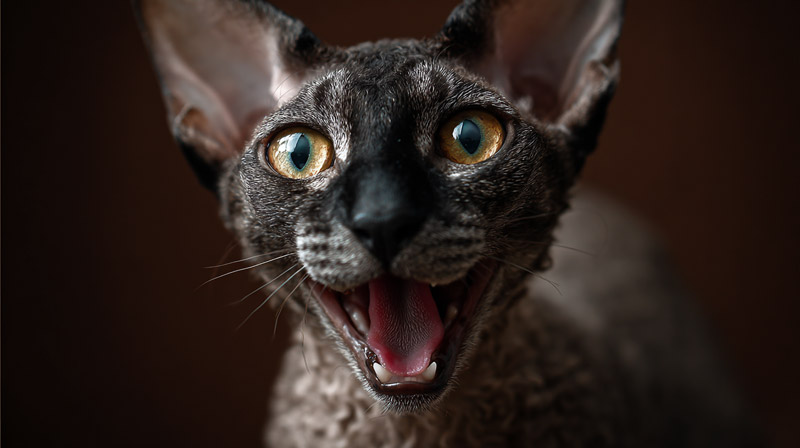
Their most striking features include oversized, high-set ears that appear disproportionately large for their head.
The head is egg-shaped with high cheekbones, a Roman nose profile, and strong chin, giving them an elegant, sophisticated appearance.
Their long, whippy tail tapers to a fine point and complements their slender, arched back.
The legs are exceptionally long and slender with small, oval paws, giving them an almost dainty appearance despite their athletic abilities.
Their body features a distinctive “tuck up” where the abdomen curves up dramatically behind the ribcage, similar to a Greyhound dog.
Cornish Rex Personality and Temperament
Are Cornish Rex Cats Affectionate?
Cornish Rex cats are extremely affectionate and form strong bonds with their human companions. They’re often described as “velcro cats” who follow their owners from room to room.
These social felines crave attention and physical contact, often seeking out warm laps and snuggling under blankets with family members.
They’re unusually friendly with strangers, typically greeting visitors with curiosity rather than hiding. This outgoing nature makes them excellent companions for homes that frequently entertain guests.
How Active Are Cornish Rex Cats?
The Cornish Rex is highly active with energy levels that remain kitten-like well into adulthood. They require about 30-45 minutes of interactive play daily.
These intelligent cats excel at learning tricks, playing fetch, and solving puzzle toys, making mental stimulation as important as physical exercise.
Their favorite activities include:
- Climbing to high perches
- Chasing toys
- Playing fetch (many retrieve like dogs)
- Interactive wand toys
- Jumping and performing acrobatic feats
Their exceptional intelligence makes them highly trainable, with many owners successfully teaching them commands and tricks typically associated with dogs.
Do Cornish Rex Cats Get Along with Others?
Cornish Rex cats typically get along wonderfully with children of all ages, enjoying the high energy level that kids bring to playtime.
They generally form good relationships with cat-friendly dogs, especially when introduced properly and at a young age.
This breed usually enjoys the company of other cats, particularly active breeds that can match their playful energy.
They can adapt well to multi-pet households, including homes with small pets like birds or rodents, though supervision is always recommended due to their strong prey drive.
How Vocal Are Cornish Rex Cats?
Cornish Rex cats are moderately vocal, using a range of chirps, trills, and soft meows to communicate with their people.
Their voices tend to be melodious and pleasant rather than loud or demanding, though they will certainly let you know when they want attention.
They’re known for their conversational communication style, often responding when spoken to and seeming to participate in back-and-forth exchanges.
Health and Lifespan
How Long Do Cornish Rex Cats Live?
The average Cornish Rex lifespan ranges from 12-16 years, with many individuals living into their late teens with proper care.
Their longevity is slightly above average compared to mixed-breed domestic cats, which typically live 12-14 years.
Factors affecting lifespan include genetics, diet quality, exercise, indoor vs. outdoor living, and regular veterinary care.
Common Health Issues in Cornish Rex Cats
Hypertrophic Cardiomyopathy (HCM) is the most significant health concern in the breed, characterized by thickening of the heart muscle walls. Symptoms include breathing difficulty, lethargy, and in severe cases, sudden collapse.
Patellar luxation (kneecap dislocation) can occur due to their fine bone structure. Watch for intermittent limping, especially after jumping.
Their fine coat offers minimal protection, making them susceptible to:
- Sunburn (especially lighter-colored cats)
- Skin irritation and dermatitis
- Heat loss in colder environments
Cornish Rex cats may experience excessive waxy buildup in their large ears, requiring regular cleaning to prevent infections.
Some lines may show higher incidence of umbilical hernias, which usually close naturally but sometimes require surgical correction.
Genetic testing has helped reduce the incidence of Burmese head defect in lines where there was crossbreeding with Burmese cats.
What Health Testing Should Cornish Rex Cats Have?
Recommended health screening for Cornish Rex cats includes:
- Cardiac ultrasound/echocardiogram to screen for HCM (annually after age 2)
- Annual comprehensive physical examination
- Regular blood panels to check kidney and liver function (annually after age 7)
- Genetic testing for breed-specific mutations
Responsible breeders typically provide cardiac screening certifications for breeding cats and may offer genetic testing results for known heritable conditions.
As the cat ages, quarterly veterinary checkups are recommended for cats over 12 years to catch age-related issues early.
Caring for a Cornish Rex Cat
What Do Cornish Rex Cats Eat?
Cornish Rex cats thrive on a high-protein diet (35-45% protein) that supports their muscular, active build.
These active cats typically require more calories per pound than less energetic breeds, particularly during the winter months when they lose heat more easily due to their thin coat.
Feed kittens 3-4 times daily, transitioning to twice-daily feeding for adults.
Portion sizes should be adjusted based on activity level, with the average adult needing approximately 20-25 calories per pound of body weight daily.
Many owners report that their Cornish Rex cats do well on a combination of high-quality wet and dry food, with wet food providing additional moisture.
Foods to avoid include:
- High-carbohydrate diets
- Excessive treats
- Human foods containing onions, garlic, chocolate, or artificial sweeteners
Cornish Rex cats have a reputation for being food-motivated and sometimes “counter surfers,” so secure food storage is recommended.
How Do You Groom a Cornish Rex Cat?
Cornish Rex cats require minimal brushing, with a gentle wipe-down using a soft cloth or chamois once every 1-2 weeks being sufficient.
Their skin produces more oil than other breeds, so occasional bathing (every 2-3 months) helps prevent a greasy feeling to the coat.
Nail trimming should be done every 2-3 weeks, particularly important due to their active, climbing nature.
Dental care is essential, with tooth brushing 2-3 times weekly recommended to prevent periodontal disease.
Their large ears need weekly inspection and cleaning to prevent wax buildup and potential infections.
Most Cornish Rex cats can be groomed at home without professional services, making their maintenance relatively simple compared to long-haired breeds.
How Much Exercise Does a Cornish Rex Cat Need?
Cornish Rex cats need 30-45 minutes of active play daily, divided into several short sessions.
These active felines do best in environments with ample climbing opportunities, such as cat trees, shelves, and perches.
Recommended enrichment includes:
- Interactive toys that challenge their intelligence
- Puzzle feeders that make them work for treats
- Rotation of toys to prevent boredom
- Fetch games with small toys
- Clicker training sessions for mental stimulation
Many Cornish Rex owners create indoor cat highways with shelves and perches to satisfy the breed’s love of heights and jumping.
Living with a Cornish Rex Cat
Are Cornish Rex Cats Good for Apartments?
Cornish Rex cats adapt exceptionally well to apartment living due to their moderate size and indoor-friendly nature.
Their playful vocalizations are generally not loud enough to disturb neighbors, though they can become more vocal if left alone for extended periods.
They require minimal space (approximately 500 square feet is sufficient) but benefit greatly from vertical territory with climbing opportunities.
This breed is well-suited for indoor-only living, which also protects their thin coat from environmental hazards and temperature extremes.
What Environment Do Cornish Rex Cats Need?
Cornish Rex cats are heat-seekers that prefer warm environments of 70-75°F (21-24°C) due to their minimal insulation.
They have low cold tolerance and may need cat sweaters or heated beds in cooler homes or during winter months.
These cats benefit greatly from:
- Sunny window perches for basking
- Multiple comfortable sleeping spots
- Access to cat trees and vertical spaces
- At least one hiding spot for security
- Scratch-friendly surfaces (posts, pads, cardboard)
Many owners provide safe outdoor access through catios, enclosed porches, or leash training to satisfy their curiosity without exposure to predators or weather extremes.
Are Cornish Rex Cats Good for First-Time Owners?
Cornish Rex cats are considered intermediate-level pets due to their high energy and attention needs, requiring approximately 2-3 hours of interaction daily.
Their intelligence can lead to mischief if under-stimulated, with many owners reporting their Cornish Rex can open doors, cabinets, and even simple child-proof locks.
Common challenges for new owners include:
- Meeting their significant need for companionship
- Providing adequate mental and physical stimulation
- Understanding their higher caloric requirements
- Managing their temperature sensitivity
For first-time owners committed to interactive pet ownership, their affectionate nature and trainability make them rewarding companions.
Cornish Rex Kittens
What Are Cornish Rex Kittens Like?
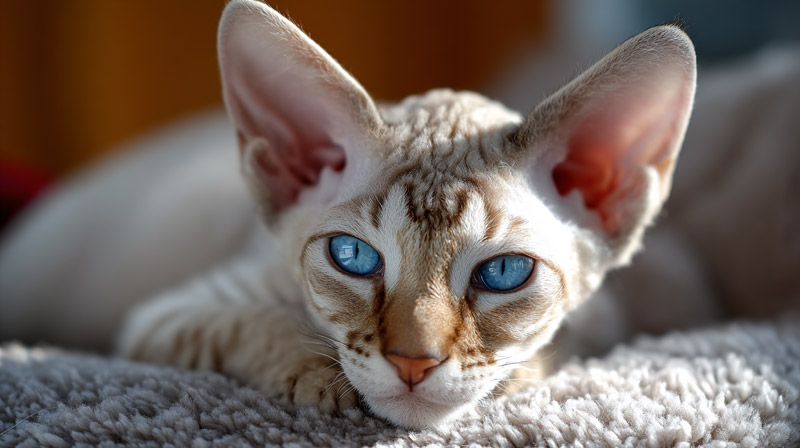
Cornish Rex kittens are extraordinarily energetic and curious, exploring their environment with boundless enthusiasm.
Early socialization from 2-7 weeks is crucial for developing their naturally outgoing temperament into a well-adjusted adult cat.
These kittens mature mentally at an average rate but retain playful, kitten-like behavior well into adulthood and even their senior years.
Training should begin early, with introduction to clicker training possible as young as 8-10 weeks old.
When Can Cornish Rex Kittens Leave Their Mother?
Cornish Rex kittens should remain with their mother and littermates until at least 12-14 weeks of age.
This extended period allows for:
- Proper socialization with other cats
- Learning appropriate play behavior and bite inhibition
- Stronger immune system development
- Completion of initial vaccinations
The vaccination schedule typically includes:
- First FVRCP: 6-8 weeks
- Second FVRCP: 10-12 weeks
- Rabies: 12-16 weeks (depending on local regulations)
Most reputable breeders will spay/neuter kittens before placement at around 12-16 weeks, though some may place kittens with a spay/neuter contract to be completed by 6 months of age.
Breeding and Genetics
Cornish Rex Breed Standards
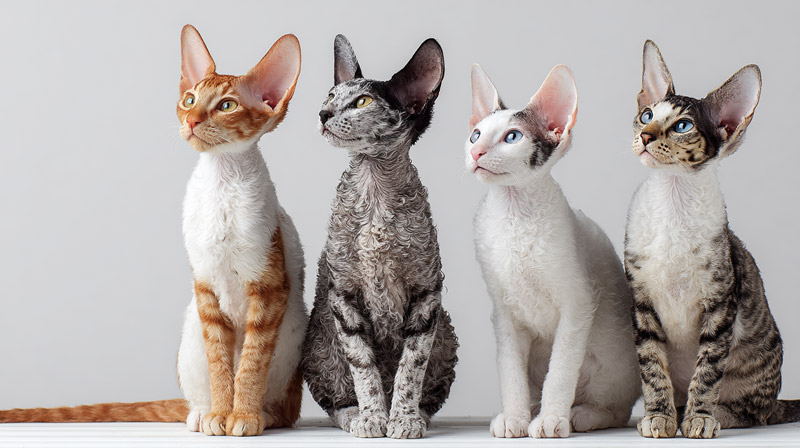
The Cat Fanciers’ Association (CFA) standard emphasizes the distinctive wavy coat, long legs, and large ears that characterize the breed.
The International Cat Association (TICA) standard allows for a slightly broader range of body types while maintaining the distinctive coat requirements.
Other registries like GCCF and FIFe maintain similar standards with minor variations in acceptable body proportions and coat texture.
Show quality Cornish Rex cats must display:
- Even coat waviness across the entire body
- No bare patches
- Proper egg-shaped head
- Large, high-set ears
- Slender, fine-boned legs
- Long, tapering tail
Disqualifying faults include straight hair, coarse texture, presence of guard hairs, and skeletal abnormalities.
Genetics of Cornish Rex Cats
The Cornish Rex coat is caused by a recessive gene (denoted as “r”) that affects hair follicle development, resulting in the absence of guard hairs.
This gene is distinct from the Devon Rex mutation (denoted “re”), which is why crossing these similar-looking breeds produces kittens with normal coats.
Coat color genetics follow standard feline inheritance patterns, with the full spectrum of colors and patterns possible within the breed.
The breed has moderate genetic diversity, with outcrossing to domestic shorthairs occasionally practiced to maintain health and vigor.
DNA testing is available for:
- Coat type confirmation
- Color genetics
- Known heritable diseases that may have been introduced through outcrossing
History of the Cornish Rex Cat
Where Do Cornish Rex Cats Come From?
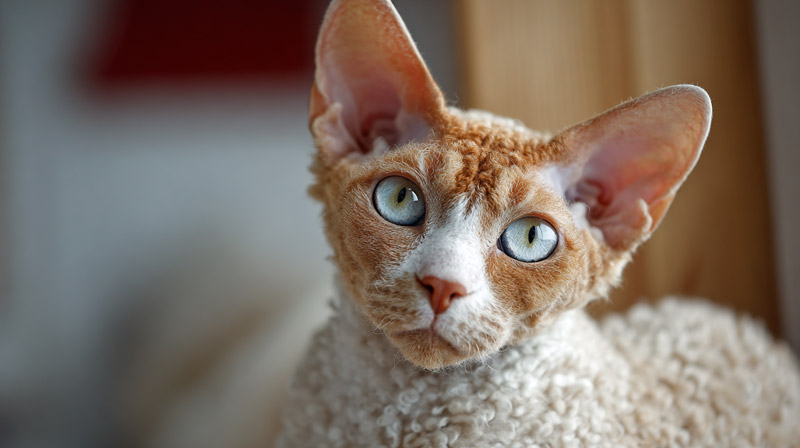
The Cornish Rex originated in Cornwall, England, where the first known example of the breed appeared in a litter of farm cats in 1950.
This distinctively curly-coated kitten, named Kallibunker, was born to a domestic shorthair tortoiseshell mother.
The breed is a natural mutation rather than a human-created hybrid, making it genetically unique among pedigreed cats.
Originally, these cats served as both companions and working cats, though their elegant appearance quickly made them popular as distinctive pets.
How Did the Cornish Rex Breed Develop?
The development timeline for the Cornish Rex began when Nina Ennismore, Kallibunker’s owner, was advised by a geneticist to breed the unusual kitten back to his mother to see if the trait was inheritable.
This breeding produced more curly-coated kittens in 1952, confirming the genetic nature of the coat mutation.
Key foundation cats included:
- Kallibunker (the original curly-coated male)
- Serena (one of the first female Cornish Rex cats)
- Poldhu (an early male used extensively in breeding programs)
The breed was brought to North America in the early 1950s, where breeders worked to establish and expand the gene pool.
Early developmental breeding included crosses with Siamese, Burmese, and Russian Blue cats to diversify the genetic pool while maintaining the distinctive coat.
The Selkirk Rex is distantly related, representing a different curly-coat mutation discovered much later.
When Was the Cornish Rex Recognized?
The Cornish Rex received early recognition from the Governing Council of the Cat Fancy (GCCF) in the United Kingdom in 1967.
The Cat Fanciers’ Association (CFA) granted provisional status in 1964 and full championship status in 1979.
The International Cat Association (TICA) recognized the breed from its formation in 1979.
European registries FIFe and WCF both recognized the breed in the 1970s, cementing its status as a globally accepted pedigree cat.
Cost of Owning a Cornish Rex Cat
How Much Does a Cornish Rex Cat Cost?
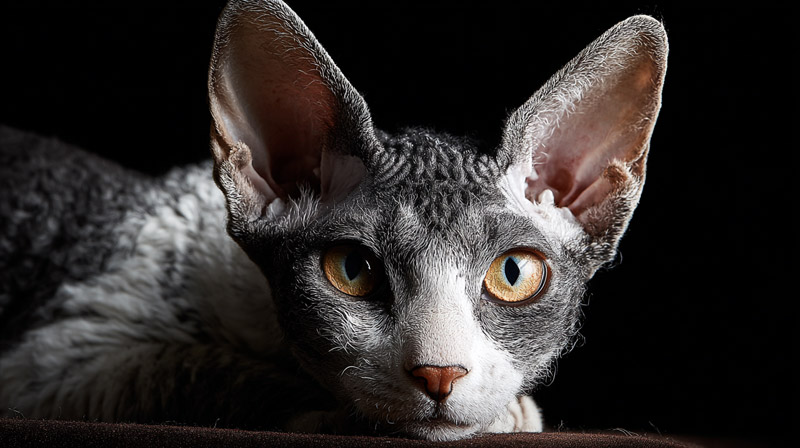
Pet quality Cornish Rex kittens typically cost $800-$1,500 in the United States, with prices varying by region, color, and breeder reputation.
Show quality individuals with excellent conformation and coat texture range from $1,500-$2,500.
Breeding rights for quality cats with health testing and championship lineage can increase prices to $2,000-$3,500.
Price factors include:
- Coat color (rarer colors and patterns command higher prices)
- Pedigree (show-winning lineage increases value)
- Health testing (comprehensive testing increases cost but provides assurance)
- Geographic location (prices are higher in areas with fewer breeders)
Initial setup costs for a new cat typically add $200-$500 for supplies including carrier, litter box, food, toys, and scratching posts.
What Are the Ongoing Costs?
Annual veterinary care for a healthy Cornish Rex averages $200-$400 for routine checkups, vaccinations, and preventative treatments.
Monthly food expenses range from $30-$60 depending on food quality and brand, with these active cats sometimes requiring more calories than similarly sized breeds.
Litter, toys, and basic supplies cost approximately $25-$40 monthly.
Professional grooming is rarely needed, saving $200-$400 annually compared to long-haired breeds.
Pet insurance premiums for this breed average $20-$50 monthly, with rates varying based on coverage level, deductible, and the cat’s age.
A recommended emergency fund of $1,500-$2,000 should be established for unexpected medical issues, particularly given the breed’s predisposition to certain health conditions.
Where Can You Get a Cornish Rex Cat?
Reputable breeders specializing in Cornish Rex cats can be found through cat breed clubs, registry breeder referral services, and cat shows.
When selecting a breeder, look for:
- Health testing for HCM and other breed-specific conditions
- Clean, spacious facilities where cats are part of the household
- Kittens raised with proper socialization
- Written health guarantees and contracts
- Willingness to answer questions and provide support
- Membership in breed clubs and registries
Red flags include:
- Kittens available year-round without waiting lists
- Multiple litters always available
- Unwillingness to show breeding facilities
- No health testing or guarantees
- Pressure to purchase without proper screening
Cornish Rex-specific rescues occasionally have purebred cats available for adoption at costs of $100-$300.
General shelters and rescue organizations sometimes have Cornish Rex or Cornish Rex mixes, though they are relatively rare in rescue.
Adult cats typically cost significantly less than kittens and often have known personalities, making them excellent choices for many homes.
Cornish Rex vs. Similar Breeds
Cornish Rex vs. Devon Rex
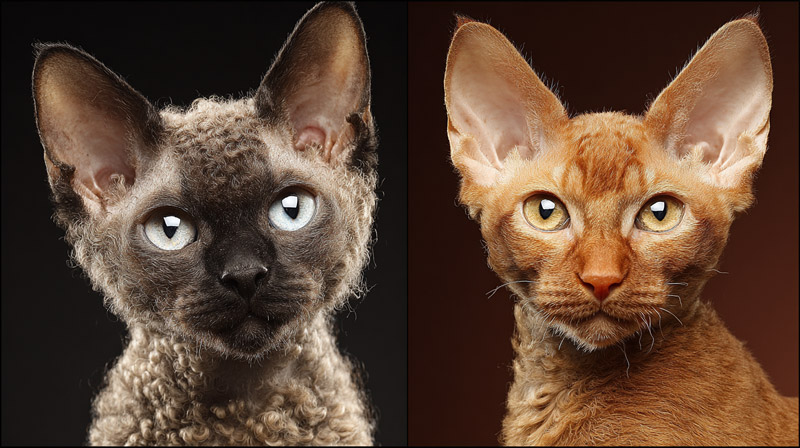
Physical differences include the Cornish Rex’s more slender build and longer legs compared to the Devon Rex’s more compact body and shorter legs.
The Cornish Rex coat has uniform waves while the Devon Rex has a more varied coat pattern with guard hairs and a more “disheveled” appearance.
Both breeds share playful personalities, though the Devon Rex tends to be slightly less demanding of attention.
Health concerns differ slightly, with Devons more prone to patellar luxation while Cornish Rex cats have higher incidence of HCM.
Devon Rex cats typically cost about the same as Cornish Rex cats, with similar price ranges for pet and show quality individuals.
Cornish Rex vs. Sphynx
The Sphynx is nearly hairless while the Cornish Rex has a full coat of soft, wavy down hair.
Both breeds share an athletic build, large ears, and high energy levels, though the Sphynx is typically more muscular and substantial.
The Cornish Rex requires less maintenance than the Sphynx, which needs regular bathing to manage skin oils.
Both breeds seek human companionship and warmth, making them excellent lap cats and bed warmers.
Sphynx cats typically cost more, with pet quality individuals starting around $1,500-$2,000.
How to Choose Between Cornish Rex and Similar Breeds
Consider your climate, as Cornish Rex cats handle moderate temperatures better than the hairless Sphynx but less well than fully-coated breeds.
Activity level is important, with the Cornish Rex being highly energetic compared to many breeds, similar to the Bengal or Abyssinian.
For allergy sufferers, both the Cornish Rex and Devon Rex may cause fewer reactions than standard cats, though the Sphynx is typically better for those with severe allergies.
The Cornish Rex is ideal for owners who want an active, intelligent cat with minimal grooming needs and distinctive appearance.
The Devon Rex might be a better choice for those wanting a slightly calmer but still playful cat with a more “elfin” appearance.
Fun Facts About Cornish Rex Cats
The Cornish Rex coat is often compared to lamb’s wool, crushed velvet, or karakul sheep fur due to its unique texture.
These cats are sometimes called “greyhounds of the cat world” because of their arched backs, deep chests, and tucked-up “waists.”
Many Cornish Rex cats have a distinctive habit of using their paws like hands, scooping up food, toys, or objects with remarkable dexterity.
Cornish Rex cats have appeared in various films and television shows, including as alien or futuristic cats due to their unusual appearance.
The breed has unusually warm body temperature compared to other cats, making them popular “heating pads” for owners in colder climates.
Some Cornish Rex cats have been taught to perform circus-like tricks including jumping through hoops, walking on hind legs, and sophisticated fetch games.
The mutation that created the Cornish Rex is completely separate from the similar-looking Devon Rex, which emerged about a decade later in Devon, England.
Is a Cornish Rex Cat Right for You?
Best Homes for Cornish Rex Cats
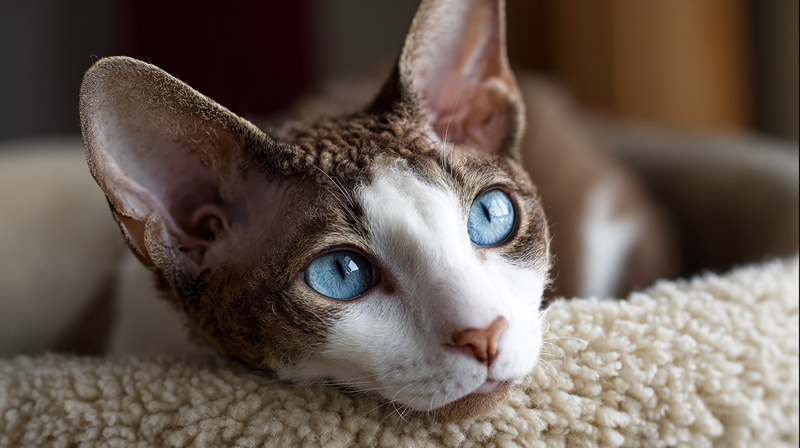
Ideal Cornish Rex owners are active, engaged people who enjoy interactive play and appreciate a cat that actively participates in household life.
These cats thrive in homes where someone is present most of the time, as they can become lonely if left alone for long periods.
Their temperature sensitivity makes them best suited for homes with stable, warm climates or owners willing to provide sweaters and heated beds.
Households with multiple people or pets often work well, as these social cats enjoy having companions.
Who Should Avoid Cornish Rex Cats?
People working long hours with little time for interaction might find the Cornish Rex too demanding.
Those seeking a traditional, independent cat that requires minimal attention would likely be frustrated by this breed’s need for engagement.
Households with uncontrolled access to outdoors aren’t ideal, as their fine coat offers little protection from elements or injuries.
People with severe allergies should note that while Cornish Rex cats produce less allergen-containing dander, they are not truly hypoallergenic.
Better alternatives for low-interaction households include the more independent British Shorthair or Persian cats.
Questions to Ask Before Getting a Cornish Rex Cat
Consider these key factors before bringing a Cornish Rex into your home:
- Can you commit 1-2 hours daily for interaction and play?
- Is your home temperature consistently warm enough for a cat with minimal insulation?
- Are you prepared for a 15+ year commitment to an active, engaging pet?
- Does your household welcome a cat that will be involved in virtually everything you do?
- Are you financially prepared for both routine and emergency veterinary care?
- If you travel frequently, do you have arrangements for proper cat care during absences?
- Are existing pets likely to tolerate an energetic, socially forward cat?
- Is everyone in your household equally enthusiastic about adding this distinctive breed?
FAQ on Cornish Rex
Are Cornish Rex cats hypoallergenic?
Cornish Rex cats are not truly hypoallergenic, but they may cause fewer reactions in some allergy sufferers. Their minimal shedding and reduced dander production make them more compatible with people who have mild cat allergies.
How much do Cornish Rex cats cost?
Pet-quality Cornish Rex kittens typically cost $800-$1,500, while show-quality cats range from $1,500-$2,500. Factors affecting price include coat color, lineage, health testing, and breeder reputation.
Do Cornish Rex cats shed?
Cornish Rex cats shed minimally compared to other breeds. Their unique wavy coat lacks guard hairs, resulting in significantly less loose fur around the home, though they do still shed small amounts.
Are Cornish Rex cats good with kids?
Cornish Rex cats excel in homes with children. Their playful temperament and high energy levels match well with kids. They’re typically patient and enjoy interactive games, making them great family companions.
How do you groom a Cornish Rex?
Grooming needs are minimal. Wipe their fine coat with a soft cloth weekly to distribute natural oils. Occasional bathing every 2-3 months helps prevent greasiness. Regular ear cleaning is important due to their large ears.
Are Cornish Rex cats indoor or outdoor cats?
Cornish Rex cats should primarily be indoor pets. Their fine, wavy coat offers minimal protection from weather, injuries, or sunburn. Supervised outdoor time in secure areas or leash walking can satisfy their curiosity safely.
How long do Cornish Rex cats live?
The average lifespan ranges from 12-16 years. With proper nutrition, regular veterinary care, and an indoor lifestyle, many Cornish Rex cats remain active and healthy well into their senior years.
Do Cornish Rex cats have health problems?
Common health concerns include hypertrophic cardiomyopathy (HCM), patellar luxation, and skin sensitivity. They’re also prone to excessive ear wax buildup and may develop sunburn due to their minimal coat.
What is special about Cornish Rex cats?
The genetic mutation that creates their distinctive wavy fur makes them unique among feline breeds. They have an egg-shaped head, large ears, and an athletic body. Their playful, intelligent personality remains kitten-like throughout adulthood.
Are Cornish Rex cats rare?
While not the most common breed, Cornish Rex cats are readily available through reputable breeders. Their distinctive appearance and personality have created a dedicated following, ensuring continued breeding programs throughout North America and Europe.
Conclusion
Cornish Rex cats stand out as one of the most distinctive feline breeds with their curly coat and playful personality. Their elegant appearance and affectionate nature make them sought-after companions for the right households.
These intelligent, heat-seeking pets bring endless entertainment with their acrobatic abilities and interactive play style.
While they require attention and engagement, their minimal grooming needs and apartment-friendly size make them manageable for dedicated owners.
The fine bone structure and egg-shaped head of these active felines create an unmistakable silhouette among purebred cats.
When considering pet compatibility, remember these social companions typically form strong bonds with their humans and adapt well to family life.
From their genetic mutation origins in Cornwall to their recognition by major cat registries, these wavy-coated treasures have secured their place in the feline world.
For those seeking a distinctive, hypoallergenic-leaning breed with the personality of a perpetual kitten, the Cornish Rex delivers unmatched companionship and charm.