The Laekenois is the rough-coated Belgian shepherd, and of the four varieties it’s the rarest by a wide margin.
FCI Standard No. 15 (English edition of April 19, 2002) separates the four varieties by coat length, direction, appearance and color alone, and the rough-haired one measures about 6 cm. The AKC went the other way and has listed the breed as separate in its Herding Group since July 1, 2020, while the FCI keeps one breed with four varieties.
What Is the Belgian Laekenois?
Laeken is an area near Brussels, and that’s where this herding dog comes from. It was bred to tend flocks and guard fields, and it also kept watch over linen spread out to dry.
Say it “lak-in-wah.” Showsight Magazine describes the breed as overshadowed by the more popular Belgian Malinois, and the numbers back that up. AKC’s recognition-day article (July 1, 2020) put the best estimate at about 1,000 Laekenois worldwide.
Whether it counts as a breed or a variety depends on the registry. The FCI files it under one breed, the Belgian Shepherd Dog (Standard No. 15), with the Laekenois as the rough-haired variety. The AKC treats all four as separate breeds. The Kennel Club in the UK sticks with one breed, according to the AKC’s own recognition history.
Belgian Laekenois Size, Coat and Color
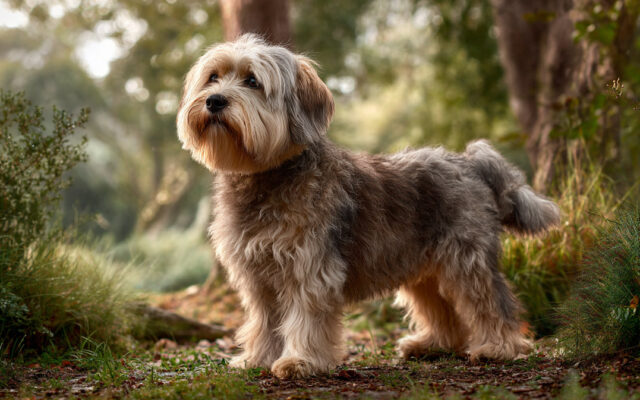
Medium-sized and square, with a rough coat. Under the FCI standard the coat runs about 6 cm (2.4 inches), and the AKC standard puts it at about 2.5 inches.
Both standards say body length equals height at the withers. On height, the FCI wants an ideal of 62 cm for males and 58 cm for females, with limits of 2 cm below and 4 cm above (FCI Standard No. 15, 2002 English edition). The AKC asks for 24 to 26 inches for males and 22 to 24 inches for females (AKC standard, effective June 30, 2011).
Weight is about 25 to 30 kg for males and 20 to 25 kg for females under the FCI, while the AKC breed profile lists 55 to 65 pounds.
Size and Build
Both standards describe the same square outline. The AKC adds moderately heavy bone and a proud head carriage. The FCI asks for dry, strong muscle and elegance without heaviness.

The numbers agree once the units are converted. The FCI limits give 60 to 66 cm for males, and the AKC’s 24 to 26 inches covers roughly 61 to 66 cm.
Females line up the same way, at 56 to 62 cm under the FCI limits and 22 to 24 inches (about 56 to 61 cm) under the AKC.
Weight needs a caveat. The AKC standard text states no weight at all, so the 55 to 65 pound figure comes from the club’s breed profile, and it matches the FCI male range of 25 to 30 kg (about 55 to 66 pounds).
Some pet-site profiles list wider ranges. Neither standard supports them.
Each standard also sets hard limits. The AKC disqualifies males under 23 or over 27 inches and females under 20.5 or over 25 inches, and the FCI disqualifies any dog outside its stated size limits.
Coat Texture and Color
A silky or soft coat is a fault under both standards. The AKC says a silky, soft or single-coated Laekenois should be severely penalized, while the FCI lists silky hair and insufficient undercoat as faults and a complete lack of undercoat as disqualifying.
What both want instead is rough, dry, tousled hair over the whole body on top of a dense double coat. The muzzle carries a beard, and the head hair stays short enough to show the eyes and the shape of the skull. The tail has no plume.
On color, the FCI allows only fawn with traces of black overlay, mainly on the muzzle and tail, and it treats a washed-out, diluted fawn as a serious fault.
The AKC is looser. It accepts all shades of red or fawn to grayish tones, with traces of black principally on the muzzle and tail. So a red or gray-toned dog can be correct in the AKC ring and still fall outside the FCI description.
White is limited in both. A small patch on the chest and white toe tips are tolerated, and solid white markings elsewhere are disqualifying.
How Does the Belgian Laekenois Differ From the Other Belgian Shepherds?
Coat is the only thing that separates them. The FCI standard uses coat length, direction, appearance and color as its criterion for the four varieties and describes body and temperament once for all of them.
| Variety | Coat | Color | AKC breed name |
|---|---|---|---|
| Groenendael | Long | Uniform black | Belgian Sheepdog |
| Tervueren | Long | Fawn or grey with black overlay, black mask | Belgian Tervuren |
| Malinois | Short | Fawn with black overlay, black mask | Belgian Malinois |
| Laekenois | Rough, about 6 cm | Fawn with traces of black on muzzle and tail | Belgian Laekenois |
Coat and color come from FCI Standard No. 15, and the breed names from the AKC.
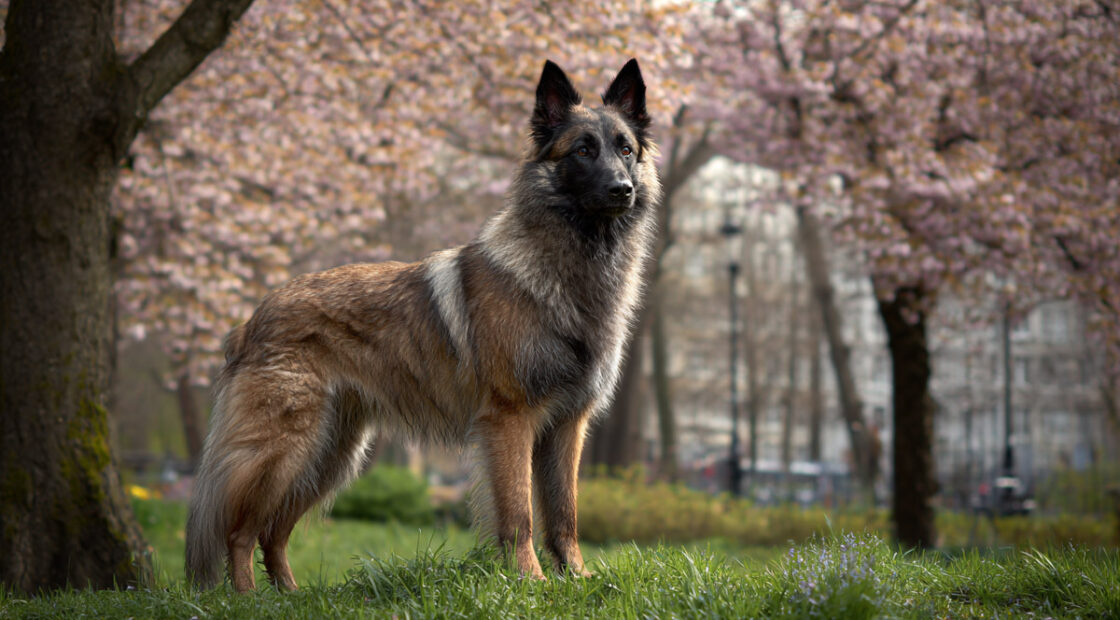
The long-coated fawn variety is the Tervueren, which the AKC lists as the Belgian Tervuren. The solid black Groenendael is the dog the AKC registers as the Belgian Sheepdog.
Under the FCI standard only the Tervueren and Malinois must carry a pronounced black mask. In the Laekenois the black shading is more discreet.
FCI rules forbid matings between varieties unless the official breed councils lift the ban in exceptional circumstances.
Laekenois or Malinois: How to Choose
Choose by coat and availability, not by temperament.
The FCI standard gives one temperament for all four varieties: watchful, energetic and a keen protector of its owner. A zooplus breed guide calls the Laekenois a bit calmer than its relatives, but neither standard describes a low-energy dog.
If you want a Belgian working dog with a rough coat and you can wait for a puppy, the Laekenois fits. Someone who wants a short coat and an easier breeder search is better off with a Malinois.
AKC reported fewer than a dozen Laekenois breeders in the United States when the breed was recognized in 2020, so the search takes planning.
Belgian Laekenois History and Kennel Club Recognition
The Laekenois took shape in Belgium in the 1890s. Full AKC recognition didn’t arrive until July 1, 2020.
Origin in Laeken
FCI’s historical summary names Professor A. Reul of the Cureghem Veterinary Medical School as the real pioneer of the Belgian Shepherd. The dates it gives run like this.
- On September 29, 1891, the Belgian Shepherd Dog Club (Club du Chien de Berger Belge) was founded in Brussels.
- Reul gathered 117 dogs in Cureghem on November 15, 1891, to select the best specimens.
- The club drafted a first detailed standard on April 3, 1892, allowing one breed with three coat varieties.
- In 1901 the first Belgian Shepherds entered the Royal Saint-Hubert Society stud book (L.O.S.H.).
- By 1910 type and temperament were considered established.
The Laekenois is named for Laeken, on the edge of Brussels. The AKC lists its original work as guarding and tending flocks and guarding linen in the fields.
Breed histories tie the name to the Chateau de Laeken and Queen Marie Henriette’s fondness for the rough-coated dogs working around it. The FCI standard doesn’t mention that royal link.
War Losses and Rebuilding
The breed served as a messenger dog in both world wars, and its numbers dropped sharply, according to AKC’s 2020 recognition article.
Breeders rebuilt it from a small base. It remains rare.
Recognition by Registry
AKC’s own tally puts the Laekenois’s stay in the Miscellaneous Class at 3,289 days, the longest of any breed in that class.
| Registry or stage | Classification | Date |
|---|---|---|
| Royal Saint-Hubert Society stud book | Belgian Shepherds registered | 1901 |
| FCI Standard No. 15 | One breed, four varieties; Group 1, Section 1 (Sheepdogs) | Official standard dated March 13, 2001 (English translation April 19, 2002) |
| AKC Foundation Stock Service | Foundation stock record | 1998 |
| AKC Miscellaneous Class | Eligible to compete at shows | June 30, 2011 |
| AKC Herding Group | Separate breed, full recognition | July 1, 2020 |
The dates above come from FCI Standard No. 15, the AKC, and Canine Chronicle for the 1998 Foundation Stock Service entry.
The Kennel Club in the UK still regards the four varieties as one breed.
Profiles written before July 1, 2020 still circulate saying the AKC doesn’t recognize the Laekenois. They’re out of date.
What Is the Belgian Laekenois Temperament Like?

Alert, watchful and devoted to its people, with a protective streak and a reserved first reaction to strangers.
The AKC standard asks for intelligence, courage, alertness and devotion to the owner. The FCI standard describes a dog bursting with energy and ready to act at once.
Family, Children and Strangers
Westminster Kennel Club rates the breed 5 out of 5 for trainability, 4 for protectiveness and 4 for energy level. Good with children and good with strangers both land at 3.
The AKC standard wants a dog that is vigilant with strangers but not apprehensive, and affectionate, even possessive, with the people it knows. Viciousness is a disqualification, and extreme shyness is severely penalized. The FCI standard disqualifies aggressive and timid dogs alike.
Breeders quoted in AKC’s recognition article describe a dog that watches a stranger first and then accepts them without fear. Parent club president Sharrii Hunt says it bonds with one or two people and takes everyone else in stride.
With children, the herding background occasionally shows up as heel nipping when kids run, according to Showsight Magazine.
Temperament also varies from dog to dog. Owner Kelly Goodman raised that point in the same AKC article as the reason only sound, healthy dogs should be bred.
Working Roles and Dog Sports
Trooper was the first Laekenois to earn the requirements for an AKC herding championship, and Icon spent several years as the top Belgian Laekenois in AKC agility, per AKC’s 2020 recognition article.
On a working farm in Acampo, California, owner Lana Teresi uses her Laekenois to move sheep between pastures and help load difficult animals.
FCI lists the Belgian Shepherd as a former sheepdog that now works in guarding, defence and tracking, and also serves as an all-purpose service dog and a family dog.
AKC’s article names herding, agility, scent work, obedience, rally, coursing and therapy work for the breed.
Without a job, the breed struggles. Breeder Diane Koontz Bresee warned in the same article that a Laekenois treated as a casual yard accessory, with no engagement or training, is headed for trouble.
How to Exercise, Train and Groom a Belgian Laekenois
This is where most of the real commitment sits.
Exercise and Mental Work

The breed doesn’t wind down on its own.
Both breed standards call the gait tireless, and the AKC standard adds that the dog is always in motion when not under command.
AKC’s recognition article calls the Laekenois versatile but sets one condition. The owner has to commit to exercise that makes the dog think.
Running, hiking, herding work and play cover the body. For the mind, obedience work, scent games and short training sessions that require problem solving all count.
Daily minutes are where sources split. Purina UK recommends two hours or more and zooplus says several hours, and neither cites a measurement.
For a puppy, the same AKC article advises asking the breeder how much exercise is right at each age.
Training and Socialization

A fast learner picks up bad habits just as fast, and zooplus’s UK guide says training mistakes in this breed are often met with behavior problems.
Club members quoted in AKC’s recognition coverage stress early socialization, in different places and with people of different ages, and advise newcomers to find a trainer who knows Belgians. Wamiz recommends reward-based methods built on praise, treats and play.
Wisdompanel adds that the training never really ends.
Coat Care and Hand Stripping

Wisdompanel puts hand stripping at once or twice a year and says the coat should never be scissored, cut or clipped.
The routine below comes from grooming guides by Chiens de Rafale, a Laekenois kennel, and Cindra.
- Check the coat first, and strip only when the old hair is ready to come out.
- Start about two months before a show, or follow a twice-yearly calendar for a pet or sport dog.
- Split the first strip across a few short sessions, because many dogs will not stand for a full strip in one sitting.
- Strip the head a few weeks after the body, leaving the eyes and skull lines visible.
- Hand strip the tail to keep its outline, with no plume.
Weekly brushing is the bare minimum between strips, according to Chiens de Rafale. Baths stay occasional because too much washing damages the coat texture (Wisdompanel).
Shedding is moderate, with Westminster Kennel Club rating it 3 out of 5 and grooming needs 2 out of 5.
The upside is a coat that rarely needs a groomer. The cost is a skill the owner has to learn. Nail trims and dental care round out the routine.
Belgian Laekenois Health Problems and Lifespan

The American Belgian Laekenois Association’s health statement tells breeders to screen for hip dysplasia, elbow dysplasia, inherited eye disease, heart disease, thyroid disease and dentition.
Screening Tests Before Breeding
The statement (May 5, 2017) strongly recommends testing for all US breeding dogs, with timing set per test.
| Condition | Test | When |
|---|---|---|
| Hips | OFA or PennHIP report | 24 months or older |
| Elbows | OFA report | 24 months or older |
| Eyes | Exam by an ACVO diplomate | Within 12 months before breeding |
| Heart | Exam by an ACVIM (Cardiology) diplomate | 12 months or older |
The statement also names thyroid and dentition, and AKC’s health testing listing for the Herding Group shows all six tests as breed club recommendations. It names the conditions but gives no prevalence rates.
The lists differ by country and by date. An older Vetstreet profile lists only hips, elbows and eyes for CHIC, and Purina UK’s breed page names the Kennel Club’s priority schemes as hip dysplasia and eye screening.
Purina UK also lists hereditary cataracts and progressive retinal atrophy among the conditions seen across the Belgian varieties. Some profiles add epilepsy, but the club’s statement doesn’t.
How Long Does a Belgian Laekenois Live?
US sources give 10 to 12 years (AKC, 2020). Some UK pet-industry sources say 12 to 14 years (zooplus UK and Purina UK).
Neither range cites a survey, so treat 10 to 14 years as the working span, not a measured average.
Is the Belgian Laekenois the Right Dog for You?

It suits experienced, active owners who want a working partner. First-time owners and sedentary households should look elsewhere.
zooplus’s UK guide names sporty, dog-experienced people as the ideal owners and calls the breed unsuitable for first-timers.
Breeders R. Margaret Hyatt Currier and Donald L. Hyatt II, who breed near New Orleans, told AKC the dogs need a lifetime of positive interaction and do not do well as display pieces.
On the plus side, it works well in herding and agility, does scent work, stays devoted to its own people and has a rough coat with modest grooming needs.
The downsides are bigger. Daily demand for exercise and mental work is high, breeders are few and the search runs long. The dog is reserved with strangers, and it’s a poor match for anyone new to dogs.
Households with no time for daily work, buyers who need a puppy quickly and owners with no dog experience should pass.
If the daily work won’t happen, pick a lower-energy breed. Rarity is a poor reason to take a Laekenois anyway.
Where to Find a Belgian Laekenois Puppy and What It Costs
Start with the American Belgian Laekenois Association (ABLA), which AKC lists as the parent club for the breed.
Supply is thin. AKC counted 106 American-bred Laekenois when it recognized the breed in 2020.
Finding and Vetting a Breeder

- Ask the ABLA for breeders with current litters or waiting lists.
- Request written health records for both parents covering the tests the club recommends: hips, elbows, eyes, heart, thyroid and dentition.
- Check that the hip and elbow reports were issued when the dog was 24 months or older.
- Look the results up in the CHIC database, where they are public.
CHIC registration isn’t proof of soundness. A dog doesn’t need good scores to receive a CHIC number, according to Vetstreet, so read the results and not just the certificate.
Vetstreet also warns that a general vet check is no substitute for genetic health testing of the parents.
Price and Importing
zooplus’s UK magazine puts a healthy puppy with papers at EUR 800 to EUR 2,500.
It adds that even in Belgium there are hardly any breeders, so a long journey can be part of the purchase.
Breeders set their own prices, so ask each one what the figure includes.
Import is a real route. Diva, a Laekenois whelped in the Netherlands in July 2013, was brought to Virginia by Flaxfield Kennels as a puppy (AKC).
The ABLA health statement covers imported semen too. It calls for AKC DNA and the same exams as US dogs, or the guidelines of the exporting country’s national club.
Belgian Laekenois FAQ
Can a Belgian Laekenois live in an apartment?
Yes, with conditions, though sources split. AKC’s recognition article says the breed is at home in the city as well as the country, while pet-site guides such as Hepper advise against apartment life.
The daily exercise commitment decides it, not floor space.
Can a Laekenois be left alone during the day?
Not for long stretches. Wisdompanel says the breed doesn’t like to spend much time alone in the house or unattended in the yard.
A dog left idle all day also loses the daily work that a herding breed needs.
Does the Laekenois get along with cats and other dogs?
It depends on the dog. Vetstreet calls cat compatibility hit or miss, and Westminster Kennel Club rates good with other dogs at 3 out of 5.
Introduce new animals under supervision, as the herding instinct can show up as chasing.
Is the Laekenois hypoallergenic?
No. Wisdompanel states that the wiry coat doesn’t make the breed hypoallergenic.
Wamiz agrees, noting that shedding is moderate but the breed is not considered hypoallergenic.
Is the Belgian Laekenois tail docked?
No. The FCI treats a tail that is missing or shortened, at birth or by docking, as disqualifying, and the AKC disqualifies cropped or stump tails.
The natural tail reaches at least the hock.
Is the Laekenois the oldest Belgian Shepherd variety?
Not confirmed. Several breed histories say so, but the FCI’s historical summary doesn’t rank the varieties by age.
The documented claim is narrower. The breed appears in Belgian records from at least the 1800s (AP, 2020).
What a Belgian Laekenois Asks of Its Owner
A Belgian Laekenois asks for daily exercise and mental work across its whole life, and the price of the puppy is the smallest part of that commitment.
Over a lifespan of 10 to 14 years, the daily routine adds up to 3,650 to 5,110 days of work, a total that neither AKC nor zooplus states on its own.
Settle the daily work first, and be honest about whether you can keep it up. Parent health records from the club’s tests and hand stripping skills for the coat can be sorted out while the puppy search is underway.
That order matters because households can’t add exercise capacity after the puppy arrives, while health records and coat skills can be built during the wait.
The cost is a small pool of litters and a longer wait for the right one.
As of October 2026, the recommended tests match the ABLA health statement of May 5, 2017, and a revised list would change which records you ask the breeder for.