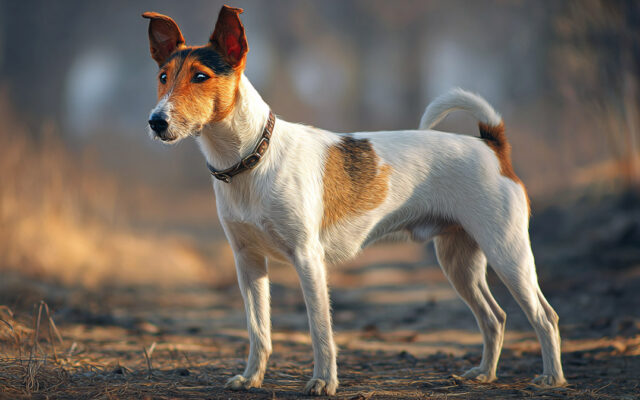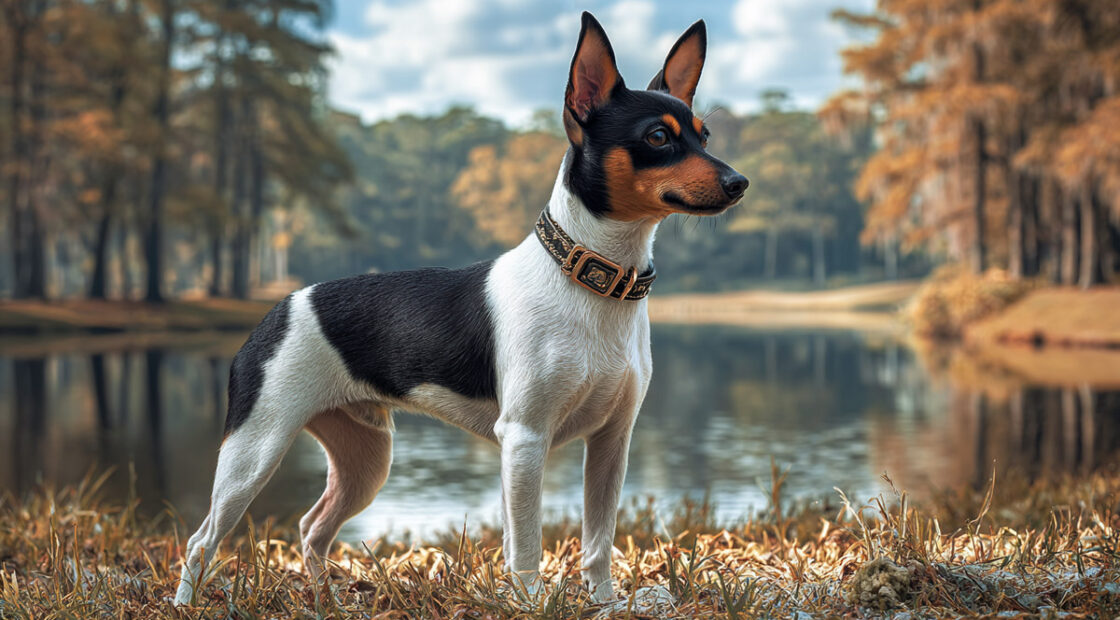
Toy Fox Terriers are small dogs with the alertness of a farm ratter. Breeders scaled them down from Smooth Fox Terriers, and the AKC files the breed under the Toy Group.
On size, the AKC standard, effective August 27, 2003 (American Toy Fox Terrier Club), goes by height alone, 8.5 to 11.5 inches, and sets no weight limit. The 3.5 to 7 pound range printed on many breed profiles comes from an earlier UKC standard, according to Showsight’s judging guide. The current UKC standard (revised January 2, 2024) allows up to 8 pounds, with 4.5 to 7.5 pounds preferred.
Owners keep the dog in apartments and enter it in agility and other dog sports, where the terrier drive shows.
What Is a Toy Fox Terrier?
Standing 8.5 to 11.5 inches tall, this American terrier-type toy breed keeps a ratter’s alertness.
Breeders worked down from small Smooth Fox Terriers to get it, and the AKC now places it in the Toy Group.
Plenty of owners just say TFT. Amertoy and American Toy Terrier are the other names in use.
The United Kennel Club (UKC) has registered it as a breed separate from the Smooth Fox Terrier since 1936.
People often mistake it for a Jack Russell Terrier because of the white coat and terrier build. It’s a separate breed with its own standard, and a much smaller dog.
The “Miniature Fox Terrier” label also circulates online, but Chewy notes it is not an AKC-recognized breed. PetMD treats the Chihuahua comparison the same way, with a different standard and a different temperament.

Where Did the Toy Fox Terrier Come From?
Breeders in the United States developed it in the early 20th century by selecting Smooth Fox Terriers for smaller and smaller size. Sources disagree on the decade and on which toy breeds helped.
Ancestry
Every source agrees on the base stock. Breeders selected small Smooth Fox Terriers and kept shrinking them.
The UKC standard for the larger breed describes a balanced dog of about 18 pounds, against up to 8 pounds (4.5 to 7.5 preferred) in the current UKC standard for the toy version.
The UKC breed standard history puts development between 1912 and the mid-1920s. Chewy says the early 1900s. Purina and Showsight both land on the 1930s.
The toy breeds used are disputed too. The American Toy Fox Terrier Club names Miniature Pinschers, Italian Greyhounds and Chihuahuas, while Vetstreet names the Chihuahua and the Manchester Terrier.
Vetstreet adds that later breedings used only smaller Smooth Fox Terriers, once the early crosses had set the size.
Kennel club recognition timeline
| Date | Body | Event |
|---|---|---|
| 1936 | UKC | Registers the breed separately from the Smooth Fox Terrier |
| 1949 | National Toy Terrier Association | Writes a standard and starts conformation shows |
| April 2001 | AKC | Breed enters the Miscellaneous Class |
| January 1, 2003 | AKC | Toy Group recognition; standard approved July 8, 2003 |
| 2006 | Canadian Kennel Club | Recognition, effective January 2007 |
Wisdom Panel dates AKC recognition to 2000, which conflicts with the AKC’s own history of an April 2001 Miscellaneous Class entry and a 2003 Toy Group debut.
The current UKC standard carries a January 2, 2024 revision date.
Toy Fox Terrier Size, Coat and Colors
Under the AKC standard, height runs 8.5 to 11.5 inches and weight isn’t addressed at all.
Height and weight
- The AKC standard calls for 8.5 to 11.5 inches, with 9 to 11 preferred. Any dog under 8.5 or over 11.5 inches is disqualified.
- The AKC doesn’t specify weight.
- The current UKC standard says 8.5 to 11 inches and up to 8 pounds, with 4.5 to 7.5 pounds preferred.
- Showsight describes the earlier UKC standard as 3.5 to 7 pounds.
- PetMD gives 4 to 9 pounds as a pet-site range.
The 7-pound figure comes from the earlier UKC standard, as described by the American Toy Fox Terrier Club’s judges education chair. The AKC left weight out, and Showsight credits that choice with letting breeders keep strong bone in dogs at the top of the height range.
PetMD lists 4 to 9 pounds, so pet-site ranges run past the current UKC ceiling of 8 pounds. Check which registry a breeder shows under before treating any single weight as a hard limit.
Coat and color
Coats are short and satiny, and the body is predominantly white. Heads are darker and mostly solid. The tail is short and set high.
The standard accepts tri-color, white and tan, white and black, and white, chocolate and tan.
Color takes up more of the standard than any other trait. Six of its nine disqualifications concern color, according to Showsight’s judging guide.
A dog can be disqualified on color for any of the following.
- A head that is more than 50% white
- A body that is 50% white or less
- Head and body spots of different colors
- A blaze extending into the eye or ear
- Any color combination not stated in the standard
Color running below the elbow or hock is a fault, apart from small ticking.
Many dogs gray early, which judges are told to treat as insignificant. The nose is black except in chocolate dogs, where it matches the coat (WebMD).
Shedding is a clothing problem more than a grooming one. Owners spend more time picking white hairs off dark clothes than brushing the dog (Lifelearn).
What Is a Toy Fox Terrier’s Temperament Like?

Toy Fox Terriers come across as alert and clever. They’re loyal too, and the terrier boldness is all there in a toy frame.
The AKC standard calls the breed “truly a toy and a terrier,” and both halves show up in daily behavior.
The terrier half brings courage, animation, keen intelligence and a watchdog’s alertness. The toy half means a dog that’s devoted to its owner and eager to please. It picks up new tasks quickly and adapts to almost any situation.
Wisdom Panel notes that the breed loves to bark and dig, and can be unpredictable with other dogs.
Dogster warns that rough handling can provoke biting, which makes early, calm socialization a priority.
Orvis describes a clownish dog that adores attention and copes with alone time through a crate and a puzzle toy.
Sites rate the breed differently on children and other pets. The individual dog’s socialization history is the better guide.
Toy Fox Terrier Health Problems and Lifespan

Toy Fox Terriers are generally healthy, but breed clubs and health pages track patellar luxation, primary lens luxation, congenital hypothyroidism with goiter, spinocerebellar ataxia, degenerative myelopathy, Legg-Calve-Perthes disease and von Willebrand disease as inherited conditions.
Orvis also lists demodectic mange, a skin condition caused by mites.
Inherited conditions
Conditions with DNA tests
- Congenital hypothyroidism with goiter (CHG) is autosomal recessive and comes from a nonsense mutation in the TPO gene. It was first reported in the breed in 2003 (Fyfe et al., Journal of Veterinary Internal Medicine).
- Primary lens luxation (PLL) means the lens detaches, typically between ages 3 and 8, and can lead to glaucoma and blindness if untreated (UC Davis Veterinary Genetics Laboratory).
- Spinocerebellar ataxia (SCA) is a coordination disorder, and the OFA recommends testing for the breed.
- Degenerative myelopathy (DM) gets tested by many club members, though the American Toy Fox Terrier Club doesn’t require it.
Of 481 Toy Fox Terriers tested by Paw Print Genetics, 30.6% carried one copy of the PLL variant and 1.2% carried two, putting 31.8% at risk. The lab cautions that the true breed frequency is unknown.
Labs describe PLL inheritance differently. UC Davis lists it as recessive with carriers at slight risk, while Paw Print Genetics calls it incomplete dominant, so one copy raises risk.
Affected CHG puppies show low activity, delayed eye opening and a neck swelling within the first week (Fyfe et al. 2003). Untreated, the disease is debilitating and can be lethal. Early thyroid hormone replacement supports near-normal growth, though the goiter may keep enlarging (AnimaLabs; Paw Print Genetics).
OMIA records that Rat Terriers likely picked up the CHG mutation through crosses with Toy Fox Terriers.
Conditions found by exam, imaging or blood work
- Patellar luxation has no DNA test. A vet examines the kneecaps, and OFA certification is available from age one.
- Legg-Calve-Perthes disease needs hip radiographs. No test exists, and the American Toy Fox Terrier Club says affected dogs should not be bred.
- von Willebrand disease shows up on a blood test (PetMD).
Cornell’s Riney Canine Health Center puts Legg-Calve-Perthes signs between 4 and 11 months of age. A progressive hind-leg limp in a young dog is the cue to get radiographs.
Toy-group dogs made up 41.5% of patellar luxation cases but 11.6% of other dogs in a VetCompass study of 210,824 dogs in England (Canine Genetics and Epidemiology, 2016). The data covers the toy group, not this breed alone.
How long Toy Fox Terriers live
| Source | Figure | Basis |
|---|---|---|
| Dogs Trust, 2024 | 12.9 years (median) | Measured survival, 584,734 UK dogs |
| Orvis, WebMD, PetMD | 13 to 15 years | Breed-profile range |
| PangoVet, Petfinder | 13 to 14 years | Breed-profile range |
The same Dogs Trust study found a 12.7-year median for purebreds overall. The Toy Fox Terrier sits slightly above the purebred average, not far above it.
The study covers UK dogs, and a median means half of them lived longer.
Which Health Tests Should a Toy Fox Terrier Breeder Run?
At minimum, a breeder should hold parent results for patellar luxation, primary lens luxation (PLL) and thyroid status. The American Toy Fox Terrier Club asks for more than the AKC’s three-test list.
| Condition | AKC breed health list | American Toy Fox Terrier Club |
|---|---|---|
| Patellar luxation | Patella evaluation | Listed; vet exam on the OFA form |
| Primary lens luxation | PLL | Listed; DNA test |
| Thyroid | Thyroid evaluation | CHG DNA test |
| Spinocerebellar ataxia, degenerative myelopathy | Not listed | SCA listed; DM optional |
| Legg-Calve-Perthes disease, von Willebrand disease | Not listed | Listed as common toy-breed conditions |
The AKC’s Toy Group testing page gives the breed three bullet points and links no health statement, only the parent club’s website.
The thyroid row is where the two lists split. The AKC says only “thyroid evaluation,” and if that means the OFA thyroid panel (free T4, TSH and thyroglobulin autoantibodies, per Antech Diagnostics), it screens for autoimmune thyroiditis.
CHG is a different disease, found by a DNA test. Carriers are not clinically affected, so a normal thyroid panel cannot show whether a dog carries the CHG mutation.
A few checks make a breeder’s paperwork easier to read.
- Ask for results on both parents, as the club recommends.
- Look each dog up in the OFA database, which the club asks outside labs to feed.
- Match every DNA result to the right condition (CHG, PLL, SCA).
- A carrier bred to a clear dog is acceptable. Carrier to carrier is a mating to avoid (OMIA, for CHG).
- Confirm the patella result is an OFA-certified evaluation and not a casual vet comment.
The club also suggests CHIC certification. CHIC requirements come from each parent club and change over time (OFA), so check the current list before assuming a CHIC number covers every test above.
Toy Fox Terrier Exercise, Training and Daily Care
Plan on at least an hour of daily activity (PetMD) and short, positive training sessions. Grooming is light and weekly, and the food needs measuring.
Exercise and dog sports

The American Toy Fox Terrier Club says the breed makes do with very little space. Time is the real demand, not room.
It’s too small to be a distance running partner (Orvis), though easy hiking trails suit it. Swimming should stay to short dips, because small lean bodies lose heat fast. A coat is necessary in cold weather, and the breed dislikes getting wet (American Toy Fox Terrier Club).
Orvis and VCA Hospitals name agility and obedience as natural fits, and VCA adds therapy and assistance work. Orvis also suggests earthdog trials, and the American Toy Fox Terrier Club’s flier lists Earth Dog events, though the breed does not appear on the AKC Earthdog program’s eligible-breed list.
Sources date the breed’s AKC sports eligibility differently. The AKC history page gives April 2001 for the Miscellaneous Class, while the American Toy Fox Terrier Club puts the approval in July 2000, with registration opening April 1, 2001.
That July 2000 step likely explains why some sites quote 2000 for AKC recognition.
Training

They learn quickly, and they get bored quickly too.
PetMD describes an independent worker that tunes out long, dull sessions, so lessons stay short and rewards stay positive. The American Toy Fox Terrier Club goes further and calls the breed very easy to house train.
Treats work, but the breed gains weight easily, so reward with small, healthy dog treats and count them against the daily meals.
Clicker training, nose work, agility and interactive puzzle toys all keep it busy.
PetMD adds that prey drive is strong. Keep the dog leashed or inside a fenced yard, because it will chase smaller animals.
Grooming and feeding

| Task | Frequency | Note |
|---|---|---|
| Brushing | Weekly to twice weekly | Sheds little (PetMD) |
| Nail trim | Routine | Part of the club’s basic care list |
| Bath | Occasional | Dislikes being wet |
| Ears | Regular checks | Upright ears lower infection risk |
| Teeth | Daily brushing | Healthy Paws care list |
Tooth care earns the daily slot. In a Mars Petcare analysis of more than three million Banfield records (The Veterinary Journal, 2021), dogs under 6.5 kg were up to five times more likely than giant breeds to receive a periodontal diagnosis.
The study ranks size classes, not this breed, but an adult Toy Fox Terrier sits well under that line.
PetMD recommends three to four meals a day for puppies and two to three for adults, and ties the breed’s obesity risk to measured portions and a consistent feeding schedule. Comparing puppy food brands comes down to an AAFCO-compliant label, which PetMD says supplies all nutrients.
Toy Fox Terrier vs Chihuahua, Rat Terrier and Other Small Breeds
Orvis lists a higher daily exercise minimum for the Toy Fox Terrier than for the Chihuahua or the Rat Terrier, even though the Rat Terrier is the larger dog (PetMD).
Side-by-side comparison
| Breed | AKC group | Size vs Toy Fox Terrier | AKC-listed health tests |
|---|---|---|---|
| Toy Fox Terrier | Toy | Baseline | Patella, thyroid, PLL |
| Chihuahua | Toy | Smaller | Patella, cardiac, eye exam |
| Miniature Pinscher | Toy | Similar height, heavier | Patella only |
| Rat Terrier | Terrier | Larger, two size varieties | Patella, hip, cardiac, PLL DNA |
A Chihuahua is the lower-effort pick. Orvis lists about half an hour of daily exercise, and notes that it chills easily and dislikes more than an hour alone.
A Rat Terrier suits people with a bigger yard. Orvis lists at least 40 minutes of exercise, a strong prey drive and a habit of escaping, so fencing matters more than it does for the smaller breed.
Of the breeds the parent club names in the Toy Fox Terrier’s ancestry, only the Miniature Pinscher lists fewer tests, with the patella evaluation alone on its AKC list. The Italian Greyhound’s list has the same three tests as the Toy Fox Terrier’s, covering the patella, an eye exam and a thyroid evaluation.
- If you want a small dog and can fit an hour of activity or a sport like agility into most days, the Toy Fox Terrier fits.
- Someone home most of the day, and a lap dog with a lighter exercise load, points to a Chihuahua.
- A fenced yard and a tolerance for strong prey drive make the sturdier Rat Terrier workable.
When a Toy Fox Terrier does not fit

- Very young children are a poor match, according to the American Toy Fox Terrier Club, which does not recommend the breed, like most toy breeds, for them. PetMD takes a softer line and calls it a good playmate for kids who know how to handle small dogs.
- WebMD says the breed may show separation anxiety when left for long stretches.
- Cold, wet climates are rough, since the breed needs a coat in cold weather and dislikes rain and baths.
- The prey drive PetMD describes makes unfenced space and small animals a poor mix.
Apartments are not a limit. The club calls the breed an excellent apartment or house dog, and WebMD says a home without a yard works when outdoor exercise is regular.
How to Find a Toy Fox Terrier Puppy or Rescue
Start with the American Toy Fox Terrier Club’s breeder and rescue pages. Ask for parent test results before paying a deposit. Puppies in the United States run roughly $1,800 to $2,295.99, according to the Good Dog marketplace.
Finding a breeder

- Open the club’s Find a Breeder page and ask each breeder about club membership.
- Request test results for both parents, covering patellar luxation, PLL and the CHG and SCA DNA tests.
- Verify each result in the OFA database instead of trusting a forwarded file.
- Meet the parents and see where the puppies are raised. Paction names health testing, early socialization and open visits as markers of a responsible breeder.
- Get the health guarantee in writing.
Paction also warns that puppy scams are common for popular breeds, so a seller who refuses visits or video calls should end the conversation.
What a puppy costs
Paction, a Canadian marketplace, quotes a wider band for reputable Canadian breeders at $1,400 to $3,300. It says the price reflects health testing and socialization.
The purchase price is the smallest part of the bill, because owning any dog is expensive over its lifetime.
Rescue and adult dogs
Toy Fox Terrier Rescue, Inc. runs separately from the club and often has adult Toy Fox Terriers needing homes. It also takes surrenders through a form on its website.
Adoption sites list dogs by breed label, including crosses such as a Toy Fox Terrier and Chihuahua mix (Adopt a Pet), so ask the rescue how it identified the dog.
Adults rarely arrive with parent test records. The club lists OFA, Embark, Paw Print Genetics and Wisdom Panel as labs that run DNA health tests, and a vet exam covers the patella.
Toy Fox Terrier FAQ
Is a Toy Fox Terrier a good first dog?
Not automatically. Petfinder rates the breed for owners with some experience and extra training, while Purina’s New Zealand profile calls it suitable for non-experienced owners.
PetMD’s point settles the gap: owners must commit time to keeping the dog active.
Can a Toy Fox Terrier live with cats or other pets?

Yes, when introductions start early. Pangovet advises raising the dog alongside other pets instead of adding them later, and Petfinder flags extra training for multi-pet homes.
Is the Toy Fox Terrier hypoallergenic?
No. No dog breed is truly hypoallergenic, because the major allergen, Can f 1, comes from dander and saliva, not hair.
A 2012 study in the Journal of Allergy and Clinical Immunology found higher Can f 1 levels in hair and coat samples of so-called hypoallergenic breeds than in control breeds.
Are Toy Fox Terrier tails docked?
Show standards call for it. The AKC standard specifies a tail docked to the third or fourth joint.
The UKC standard, revised January 2, 2024, leaves about two-fifths of the tail, roughly one to three inches, and accepts a natural bobtail of equal length. The UKC also states that no dog in any UKC event is penalized for a full tail or natural ears.
Does pet insurance cover patellar luxation in a Toy Fox Terrier?
Yes, if the policy covers orthopedic conditions and starts before signs appear. State pet insurance laws such as Maine’s classify patellar luxation as orthopedic, and states that follow the NAIC model law cap orthopedic waiting periods at 30 days.
Insurers like Fetch apply a six-month waiting period to knee conditions that a vet exam within 30 days of enrollment can waive, and pre-existing conditions stay excluded.
Can a DNA test tell whether a dog is a Toy Fox Terrier or a mix?
Yes. Wisdom Panel screens for more than 430 dog breeds, types and varieties, and its Toy Fox Terrier breed page points owners to its tests for confirming the breed.
Results arrive as an ancestry breakdown, so a mix shows up as percentages instead of a yes or no.
Planning the First Few Months With a Toy Fox Terrier
The first 90 days should follow a fixed order, with the veterinary baseline first and the spay or neuter decision last.
- In the first week, book a vet exam and a patella check against the breeder’s parent results.
- The first month goes to socializing with calm people and small dogs.
- Months two and three are for short daily positive training sessions.
Spay and neuter timing sits outside that sequence. The American Toy Fox Terrier Club’s flier quotes AKC chief veterinary officer Dr. Jerry Klein, who cites AKC Canine Health Foundation studies and advises discussing a delay until maturity with a veterinarian.
The trade-off is a longer period of managing an intact dog.
Verified October 26, 2026. This order holds until the parent club revises its recommended tests, at which point the first exam should cover the added ones.