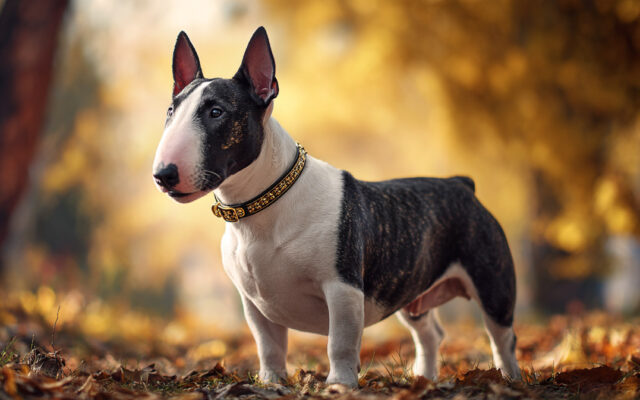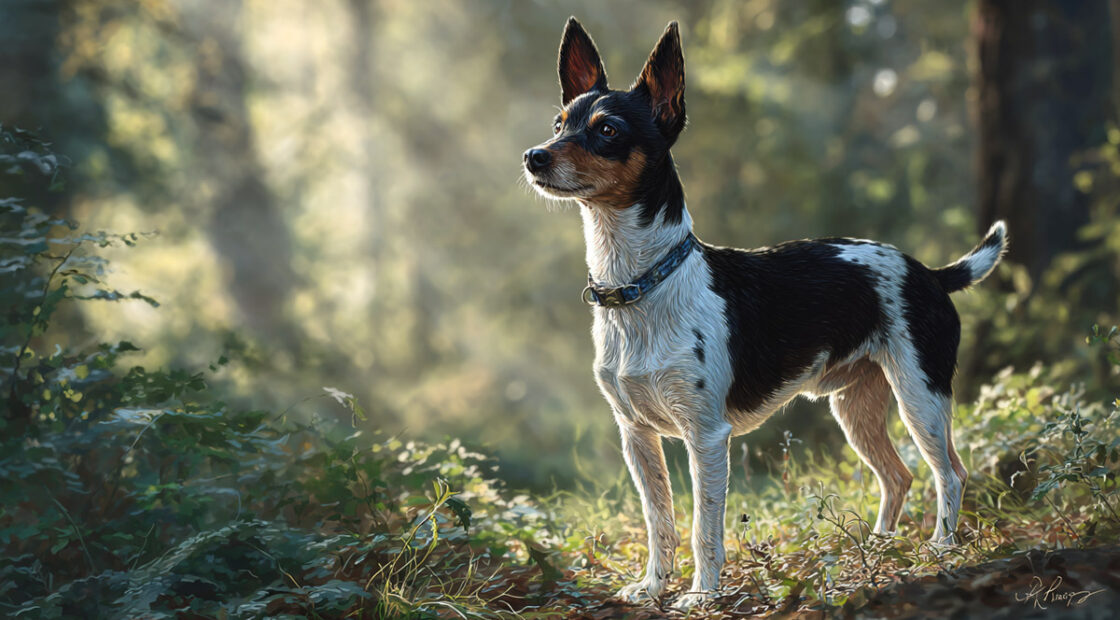
Most Rat Terriers now live in houses, not barns. The breed started on American farms, where it controlled vermin and hunted small game, and that working streak still shows up in how these dogs act.
Two varieties sit under a single breed standard. Miniatures measure 10 to 13 inches at the withers, and Standards run over 13 up to 18 inches.
Breed pages mostly give one of two AKC recognition years, and both are correct. The AKC placed the breed in the Miscellaneous Class on July 1, 2010. Terrier Group eligibility took effect on June 26, 2013, according to the Rat Terrier Club of America and AKC board records.
The UKC got there first, recognizing the breed on January 1, 1999.
What Is a Rat Terrier?
Americans built this dog on farms to kill vermin and hunt small game, starting from English terriers that working-class immigrants brought over. Today it lives mostly as a household companion.
Both the AKC and the UKC place it in the Terrier Group. Owners call it a Rattie or an RT, and older names include American Rat Terrier and Ratting Terrier.
The original work was killing rats, rabbits and squirrels around barns and fields, and the build still reflects it. The dog is muscular, with a body slightly longer than tall (the UKC prefers a 10:9 ratio of body length to height). Height splits the breed into Miniature and Standard varieties.
Rat Terriers get mistaken for Jack Russell Terriers, but the two are separate breeds with separate histories. Two closer relatives get lumped in as well. The Decker is a larger line registered inside the Standard variety, and the American Hairless Terrier split off to become its own breed.
How Big Do Rat Terriers Get?


Miniature Rat Terriers stand 10 to 13 inches at the withers, and Standards run over 13 up to 18 inches, according to the AKC and UKC standards.
| Variety | Height at withers | Registry treatment |
|---|---|---|
| Miniature | 10 to 13 inches | Same breed, shown as its own variety |
| Standard | Over 13 up to 18 inches | Same breed, shown as its own variety |
| Decker | Larger line, often over 25 pounds (UC Davis) | Registered as a Standard by AKC and UKC, tracked as a line by the National Rat Terrier Association |
One breed standard covers both sizes. Orvis’ breed guide notes that a dog gets sorted into its variety by height after six months of age.
Weight is where sources disagree. The Rat Terrier Club of America lists 10 to 25 pounds for the breed. Purina gives 4 to 6 pounds for Miniatures and 12 to 35 pounds for Standards.
The UKC standard explains the gap. It fixes height and says weight varies with the individual dog. It also treats obesity as a fault, along with any height over 19 inches.
When you size up a puppy, look at the parents’ height at the withers. The scale alone tells you very little.
Decker Rat Terrier
Breeder Milton Decker developed the Decker as a larger line, according to Healthy Paws.
The National Rat Terrier Association recognizes it as a distinct line. The UKC and AKC register it as a Standard variety and not a separate breed, per a 2020 report from the UC Davis Veterinary Genetics Laboratory.
So a “Decker Giant” advertised as its own breed is a sales label. Ask for the AKC or UKC papers and measure the parents yourself.
Rat Terrier Coat, Colors and Shedding
The coat is short and smooth with a shine, the whiskers are left on, and pied patterns (patches of color against white) are common (Rat Terrier Club of America).
Showsight’s side-by-side comparison of the two standards shows where the registries diverge. The UKC wants a short, dense coat that’s smooth with a sheen, and wire, broken or long coats are disqualified. The AKC wording is shorter. It asks for a short, smooth coat with a shine and the whiskers left on, and it disqualifies hairless dogs.
The UKC accepts black, tan, chocolate, blue, apricot and lemon, and every dog needs some white. Brindle, merle, a solid color other than white and the absence of white all disqualify.
Fawn splits the registries. The UKC lists it as a fault, while Showsight’s comparison notes that the AKC lists fawn and red as acceptable.
Shedding is moderate and heaviest in spring and fall, per Chewy and Purina.
Healthy Paws suggests brushing weekly and bathing every four to six weeks. A rubber curry brush twice a year helps when the shedding picks up.
Hairless Rat Terriers and the American Hairless Terrier
The American Hairless Terrier began as a mutation. A hairless female pup named Josephine was born in 1972 in a litter of purebred coated Rat Terriers, and breeder Edwin Scott built a breed from her descendants (UKC).
When the UKC recognized the Rat Terrier in 1999, hairless dogs entered its registry as a hairless variety. The UKC recognized the American Hairless Terrier as its own breed effective January 1, 2004, and the AKC granted full recognition in 2016.
A hairless dog is no longer a Rat Terrier. In the AKC ring it is disqualified as one.
Rat Terrier History and Kennel Club Recognition
English miners and working-class immigrants brought terriers to America, and farmers crossed them with sighthounds and Beagles to build a faster farm ratter. That mix is where the Rat Terrier comes from.
Ancestry and Farm Work
In the 1910s and 1920s the Rat Terrier ranked among the most common farm dogs in America. The AKC says it fell out of favor in the 1950s, once farmers switched to poison.
Different farmers used different dogs, so the breed has no single recipe. Most lines start with the Smooth Fox Terrier and the Manchester Terrier, plus the now-extinct Old English White Terrier.
Speed came next, because jackrabbits were a Midwest problem. Farmers added Whippets and Italian Greyhounds for that, and Beagles for pack hunting ability (AKC).
The AKC repeats a legendary case of one dog clearing a barn of 2,500 rats in 7 hours. In the South, working dogs of this type are sometimes known as Feists (UKC).
The Roosevelt story needs a careful reading. The Rat Terrier Club of America describes the breed name as one said to be coined by Theodore Roosevelt, while the UKC credits him with popularizing the breed through his own hunting dogs.
Recognition by the UKC and AKC
Recognition came in stages, and these dates come from the clubs’ own records.
- On January 1, 1999, the UKC recognized the breed (UKC breed standard).
- On January 1, 2006, the AKC admitted Rat Terriers to companion events such as obedience, agility and rally (Rat Terrier Club of America).
- On July 1, 2010, the breed got AKC Miscellaneous Class status (Rat Terrier Club of America).
- On June 26, 2013, Terrier Group eligibility took effect (AKC board record, July 2012 meeting).
Breed pages split between 2010 and 2013 for the AKC because the two dates measure different steps. Miscellaneous Class status came in 2010, and full Terrier Group status came in 2013.
The UC Davis laboratory report lists 2012 for the Terrier Group. That matches the AKC board vote in July 2012, which took effect the following June.
Each registry has its own parent club. The Rat Terrier Club of America, formed in 1993, serves the AKC, and the American Rat Terrier Association serves the UKC.
Rat Terrier Temperament With Children, Pets and Strangers

The UKC standard describes a dual personality. In the field the dog is fearless and tenacious, a hunter. Indoors it is an exceptionally friendly companion.
The same standard says the breed gets along well with children, other dogs and even cats.
Prey drive is the catch. The breed was built to kill rats, rabbits and squirrels, so pet rodents, rabbits and birds are poor company.
Orvis says a Rat Terrier may be able to live with cats if it is raised with them.
Most Rat Terriers greet strangers warmly, though some stay reserved, according to WebMD. Orvis adds that the breed barks readily and can be bossy.
An under-exercised Rat Terrier shows it fast, per WebMD, usually through digging and chewing furniture, plus excessive barking.
The UKC notes the breed enjoys human company and joins any activity its owner starts. A house that sits empty ten hours a day wastes that.
How Much Exercise and Training Does a Rat Terrier Need?
Sources put the daily floor anywhere from 20 to 30 minutes of moderate exercise (WebMD) to at least 40 minutes (Orvis). I’d budget for the higher number.
The UKC standard describes a hunter with seemingly unlimited energy, and a dog built for a full farm day does not run dry at minute 30.
Daily Exercise

WebMD lists brisk walks and jogging as the basics, and fetch works too.
Containment matters as much as minutes. Embrace Pet Insurance’s breed guide says a young Rat Terrier will chew its way out of a closed room, so use tall baby gates and exercise pens set away from drywall.
Training Approach

Rat Terriers learn fast and bore faster.
Embrace’s guide says to keep sessions short and fun. The UC Davis Veterinary Genetics Laboratory report (2020) adds that the breed’s closeness to people makes it very trainable, but early socialization is critical.
Food rewards do most of the work with a terrier. Cut healthy dog treats into small pieces so the calorie count stays sane.
Begin the day the puppy comes home. Keep sessions to a few minutes, not twenty, and get the puppy in front of lots of people, places and surfaces early.
Dog Sports and Working Roles

Barn Hunt takes any dog 6 months or older that fits an 18-inch-wide tunnel, and the rats stay sealed in aerated tubes (AKC, Barn Hunt Association).
The Rat Terrier is also on the AKC Earthdog eligible-breed list, again from 6 months of age.
The Rat Terrier Club of America awards VRT, VRTA and VRTX versatility titles for work across categories that include Barn Hunt, Earthdog, FastCAT, Coursing Ability Test and Scentwork. The award is open to RTCA members and does not appear on the dog’s AKC record.
The AKC has recorded Barn Hunt Association titles since April 1, 2013, so an AKC-registered dog can carry those on its record.
Outside sport, UC Davis notes that police departments use Rat Terriers to search cars, homes and cells for contraband because of their size. The breed also works in therapy roles.
Rat Terrier Health Problems and Lifespan
Sources disagree on lifespan. The AKC says 12 to 18 years, while the CHIC database, as cited in the 2020 UC Davis report, says 16 to 19.
Plan around the AKC range and treat the CHIC figure as the best case.
The breed’s genetic base is unusually broad. UC Davis tested 34 Rat Terriers and found an average of 4.56 effective alleles per locus (Ne), which the report calls the highest of any breed the laboratory had tested to that point.
The sample is small, though, and the same report flagged a subgroup of dogs far more inbred than the breed average. Parentage still matters.
Common Conditions
WebMD, the UC Davis report and the Rat Terrier Club of America’s health statement cover this list between them.
| Condition | What happens | Usual handling |
|---|---|---|
| Patellar luxation | Kneecap slips out of place | Rest, pain medication, physical therapy; surgery if severe |
| Hip dysplasia | Hip joint develops poorly, causing pain and stiff legs; WebMD puts it at 3 to 4 percent of Rat Terriers | Joint supplements through surgery, depending on severity |
| Cardiac disease | Valve disease can lead to heart failure in old age and often shows no symptoms at first | Vet exams that catch a worsening heart murmur |
| Legg-Calve-Perthes disease | Top of the femur breaks down early in life | Surgery |
| Primary lens luxation | Eye lens shifts, risking glaucoma and blindness | Early veterinary care; breeders use a DNA test |
| Dental disease | Tartar builds into gum disease and tooth loss | Chewing, exams, cleanings |
Embrace Pet Insurance puts diagnosing and treating patellar luxation at $1,500 to $3,000.
Small dogs tend to skip heavy chewing, which is why UC Davis points to chewing exercise plus routine exams and cleanings. Natural dental chews cover the chewing part.
Health Tests Breeders Should Hold
The published lists of recommended tests do not match.
The CHIC list cited by UC Davis (2020) covers patellar luxation, cardiac abnormalities, pancreatic issues, hip dysplasia and Legg-Calve-Perthes disease.
The RTCA health statement (June 2025), linked from the AKC’s Terrier Group health page, has its own set. The required tests match the CHIC program and include a cardiac evaluation, hip dysplasia and patellar luxation, plus the primary lens luxation DNA test. Optional tests are Legg-Calve-Perthes, an ACVO eye exam, the BAER hearing test, elbow dysplasia and the PRA-prcd DNA test.
The RTCA statement is newer than the UC Davis citation. The RTCA still links a July 2021 statement on its breeder-advice page, and older copies of the list may show different tests. Ask the breeder for the current version, and for OFA results on both parents (Embrace’s guide names OFA patella certification specifically).
How Much Does a Rat Terrier Cost, and Where Should You Get One?
Rescue fees are the prices you can document, at $165 to $250 across two national groups. Breeder prices are set one kennel at a time, and the ranges on pet sites disagree too much to quote as a rule.
Puppy Price and Ownership Cost
The ASPCA’s small-dog estimate is $1,314 for the first year and $737 for each year after. The table is older, so treat both numbers as floors.
Owning a dog is expensive over a decade or more, and this breed adds its own line item. Embrace says Rat Terrier premiums run above those for mixed breeds because the breed files more claims for hereditary conditions.
A puppy price means little without the health paperwork behind it.
How to Choose a Breeder

- Start with the Rat Terrier Club of America breeder list. Its code of ethics requires honesty about the health, conformation and temperament of dams, sires and offspring.
- Ask for written proof that both parents cleared health testing. Embrace warns that a “vet checked” label is no substitute for genetic tests.
- Match the paperwork to the current RTCA health statement (June 2025): cardiac evaluation, hip dysplasia and patella results, and the primary lens luxation DNA test, plus any optional tests the breeder runs.
- See the puppies in the home and meet the parents. Embrace advises walking away from litters kept apart from the household.
- Get a written contract with a health guarantee, and leave if the breeder claims the breed has no known problems.
Embrace also says never to buy from a pet store.
Rescue and Adoption
Ratbone Rescues charges $165 for adults and $190 for puppies under 12 months, with $215 for American Hairless Terriers (Petfinder listing).
New Rattitude shows $200 to $250 on one directory listing, while its Michigan listing shows $175 for adults and $225 for puppies under 6 months.
Both are volunteer-run and foster-based. New Rattitude’s process covers an application, reference and vet checks, a phone interview, a home visit, a temperament match and a contract.
Consider an adult. Embrace points out that many breed problems are not visible in puppyhood, and an older dog rules most of them out.
Who Should Not Get a Rat Terrier?
Homes where nobody is around for long stretches are a poor match. So are owners who want a calm lap dog, and households with toddlers or cats in the mix.
- Embrace calls the breed prone to separation anxiety and recommends early crate training.
- Orvis warns that even with exercise, the breed’s energy can wear on someone who wants a laid-back pet.
- VCA Animal Hospitals notes the thin coat and small size leave the breed vulnerable to chilling, and Embrace says it belongs inside with its people.
- Embrace frames the breed as a better fit for older children, and one New Rattitude foster listing describes a puppy entering foster care after a mismatch with a cat and a young child.
Rat Terrier vs Jack Russell Terrier
Embrace’s breed guide calls the Rat Terrier calmer than some terrier breeds, naming the Jack Russell as the example. It adds that the Rat Terrier enjoys lap time with its people.
If lap time matters, that tips the choice toward the Rat Terrier. For the more intense option, read up on the Jack Russell Terrier.
Apartments and First-Time Owners

Size is not the obstacle. Embrace says the breed fits any home, but its noisy streak and high activity level should give an apartment dweller pause if nobody is home during the day.
Orvis describes a dog that is intelligent but stubborn and skilled at testing its owner. A first-time owner who commits to daily exercise and early training can do well. One who wants low effort will not.
Rat Terrier FAQ
Are Rat Terriers hypoallergenic?
No. The AKC states that no dog is 100 percent hypoallergenic, because most pet allergies come from dander and saliva, not hair.
A seasonal shedder still produces both, so spend time with the dog before you commit.
Why do some Rat Terriers have short tails?
Some tails are docked and others are naturally short. The bobtail gene is common in the breed, and UC Davis notes that tails were traditionally docked to about 2 to 3 inches.
The UKC standard accepts a full natural tail, and no UKC dog is penalized for one.
How much should a Rat Terrier eat each day?

Orvis suggests half a cup to 1.5 cups of dry food daily, split into two meals, for an average-weight dog. Healthy Paws gives a narrower half cup to 1 cup.
Size and activity level decide where an individual dog lands.
When do Rat Terriers stop growing?
Rat Terriers are sorted into a size variety by height after six months of age (Orvis), and Showsight’s comparison says the AKC standard sets a dog’s final height at six months.
Other features take longer. The UKC standard says ear carriage may not stabilize until a dog is mature, and it tells judges not to penalize a dog under one year old for it.
What are common Rat Terrier mixes?
Dogster’s mix guides cover the Rat-Cha (Chihuahua), Raggle (Beagle), Jack-Rat (Jack Russell Terrier) and Toy Rat Doxie (Dachshund).
None is a purebred, so size and temperament follow whichever parent the puppy favors.
The First Month With a Rat Terrier
The first month goes best in a fixed order. Book the vet exam and set a feeding schedule first. Then put up the gated space and crate, and only after that start socialization and short training sessions.
The order follows risk. Embrace Pet Insurance advises a veterinary visit soon after adoption, and VCA Animal Hospitals warns that very small puppies are prone to hypoglycemia, so frequent small meals come before everything else.
Purina recommends small-breed puppy food for the first year, so compare puppy food brands before pickup day.
The price of this plan is a gated house. Embrace says a Rat Terrier under two years old cannot be expected to stay home alone, so budget for that constraint.
Skip judging ears early. The UKC standard notes that ear carriage does not always settle before 12 months.