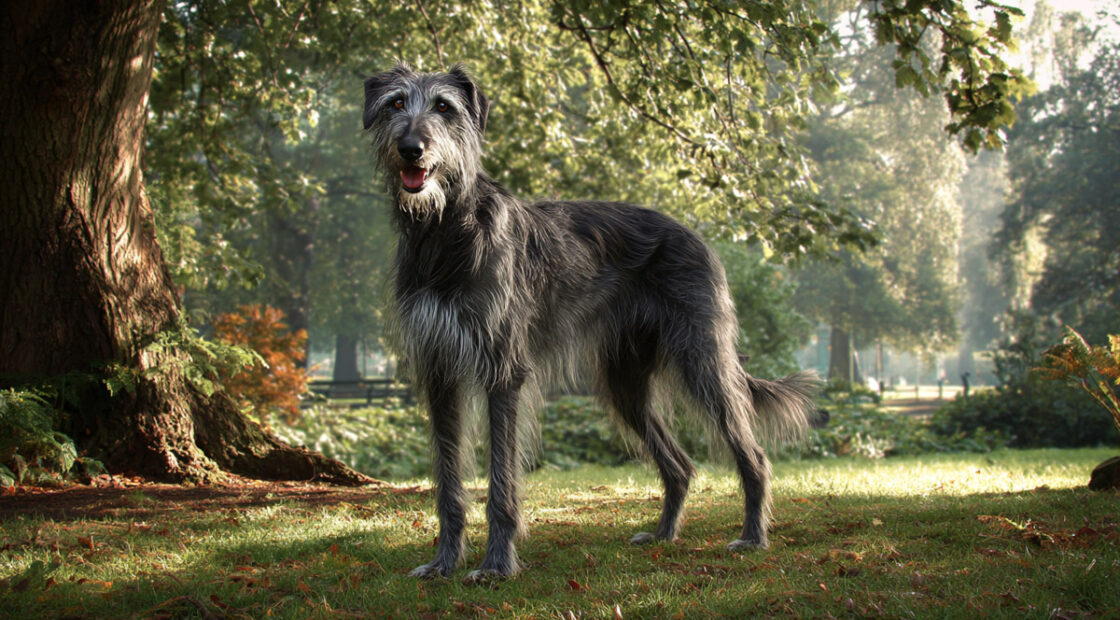
Standing nearly three feet tall with the grace of ancient Highland nobility, the Scottish Deerhound commands attention wherever it appears. This gentle giant carries centuries of Celtic hunting heritage in its wire-haired coat and dignified bearing.
Few dog breeds combine such impressive size with remarkable gentleness. Originally bred by Highland clans to hunt red deer across Scotland’s rugged terrain, these sighthounds possess unique traits that set them apart from other large breeds.
Understanding the Scottish sighthound helps potential owners make informed decisions about this noble breed. Their specific needs for exercise, training, and healthcare differ significantly from typical family dogs.
This comprehensive guide covers everything from their ancient Celtic roots to modern care requirements. You’ll learn about their distinctive temperament, health considerations, and what daily life looks like with these Highland hunting companions.
Whether you’re considering adding a gentle giant to your family or simply curious about this regal breed, these insights will deepen your appreciation for Scotland’s most distinguished canine export.
Scottish Deerhound Breed Statistics
| Characteristic | Details |
|---|---|
| Size | Large/Giant |
| Height | Males: 30-32 inches, Females: 28+ inches |
| Weight | Males: 85-110 lbs, Females: 75-95 lbs |
| Lifespan | 8-11 years |
| Energy Level | Moderate |
| Exercise Needs | 1-2 hours daily |
| Grooming | Weekly brushing |
| Shedding | Moderate |
| Trainability | Moderate (independent) |
| Good with Kids | Yes (with supervision) |
| Good with Pets | Yes (may chase small animals) |
| Apartment Living | Possible with adequate exercise |
| Climate | Prefers cooler temperatures |
| Barking Level | Low |
| Protection Level | Low |
| Coat Type | Rough, wiry |
| Colors | Gray, brindle, yellow, sandy-red, fawn |
| Health Issues | Heart disease, bone cancer, bloat |
| Monthly Food Cost | $80-120 |
| Puppy Price | $1,200-3,000 |
| Origin | Scotland |
| AKC Group | Hound |
| Recognition | AKC, UKC, FCI |
Origins and Heritage of the Scottish Deerhound
Ancient Celtic Roots and Highland History
The Scottish Deerhound traces its bloodline back thousands of years to ancient Celtic hunting hounds that roamed the rugged Scottish Highlands. Archaeological evidence points to sighthound-type dogs living alongside Highland clans as early as the first century.
These noble hounds were bred specifically for hunting red deer across the challenging Highland terrain. The harsh landscape of Scotland shaped their athletic build and endurance capabilities over generations.
Celtic mythology celebrates these dogs as supernatural hunters. Ancient tales describe them as companions to legendary warriors and Highland chieftains.
Royal Patronage and Noble Status

Scottish nobility considered deerhound ownership a mark of prestige. Only titled families and clan leaders could legally own these gentle giants.

Robert the Bruce famously hunted with deerhounds throughout his campaigns. Queen Victoria later maintained a kennel of these dogs at Balmoral Castle, cementing their royal connection.
Strict laws restricted ownership to those of noble birth. Breaking these regulations carried severe penalties in medieval Scotland.
Hunting Heritage in the Scottish Highlands
Highland deer hunting required dogs with specific traits. The Scottish sighthound needed speed to catch deer and gentleness to avoid injuring the prey unnecessarily.
Pack hunting was common practice. Multiple deerhounds would work together to course red deer across the Highland moors and glens.
Their hunting instincts remain strong today. Modern deerhounds still display coursing behavior when they spot fast-moving animals.
Physical Characteristics and Breed Standards
Size and Stature Specifications

Male Scottish Deerhounds typically stand 32 inches tall at the shoulder, while females measure around 28 inches. This substantial height makes them one of the tallest dog breeds.
Weight ranges from 85-110 pounds for males and 75-95 pounds for females. Their large breed status requires specific considerations for housing and exercise.
The breed displays clear sexual dimorphism. Males appear more massive and imposing than their female counterparts.
Coat Types and Color Variations
The wire-haired coat provides protection against harsh Highland weather. The rough texture repels moisture and brambles during outdoor activities.
Acceptable colors include various shades of gray, brindle, yellow, sandy-red, and fawn. Pure white or solid black coats disqualify dogs from breeding standards.
Seasonal coat changes occur twice yearly. The undercoat thickens during winter months and sheds during spring warming periods.
Body Structure and Athletic Build
Deep chest cavity allows for expanded lung capacity during long runs. This feature supports their endurance levels when chasing prey across vast distances.
Long legs and flexible spine create an efficient galloping gait. Their bone structure balances strength with speed requirements.
The narrow head and long muzzle enhance their sighthound characteristics. Small, folded ears lie close to the skull when relaxed.
Head and Facial Features
Gentle expression belies their hunting heritage. Dark eyes convey intelligence and calm temperament.
The slightly domed skull tapers to a pointed muzzle. Strong jaws contain a scissor bite suitable for grasping prey.
Tail Characteristics
The long tail reaches nearly to the ground when hanging naturally. During excitement or movement, it curves slightly upward without forming a complete circle.
Tail carriage indicates mood and energy levels. A relaxed dog carries its tail low, while alert dogs raise it higher.
Temperament and Personality Traits
Gentle Nature and Family Disposition

Despite their hunting background, Scottish Deerhounds display remarkable gentleness with family members. Children often find them patient and tolerant companions.
Their family-friendly nature makes them excellent household pets. They form strong bonds with all family members rather than focusing on one person.
Sensitivity to harsh treatment requires gentle training methods. Raised voices or physical corrections can damage their confidence permanently.
Dignified Demeanor and Calm Presence
The dignified demeanor of these dogs impresses visitors immediately. They carry themselves with quiet confidence and natural grace.
Calm presence in the home makes them suitable for apartment living, despite their size. They adapt well to indoor environments when exercise needs are met.
Stress tolerance varies among individual dogs. Most handle routine changes better than high-energy breeds like Border Collies.
Independent Thinking and Decision Making
Independent thinking characterizes the breed’s approach to problem-solving. They often analyze situations before responding to commands.
Training responsiveness fluctuates based on the dog’s interest level. Unlike eager-to-please breeds such as Golden Retrievers, deerhounds choose when to comply.
Selective listening doesn’t indicate lack of intelligence. Rather, it reflects their breeding for independent decision-making during hunts.
Training Challenges and Solutions
Stubbornness emerges when dogs perceive commands as unreasonable. Consistent, patient training yields better results than force-based methods.
Positive reinforcement works best with this sensitive breed. Food rewards and gentle praise motivate cooperation more effectively than corrections.
Mental stimulation requirements extend beyond basic obedience. Puzzle games and scent work engage their analytical minds productively.
Short training sessions prevent boredom and maintain focus. Multiple brief sessions throughout the day prove more effective than long, intensive training periods.
Exercise Requirements and Activity Levels
Daily Movement Needs

Exercise requirements for Scottish Deerhounds differ significantly from high-energy breeds like Siberian Huskies. These gentle giants need moderate daily activity rather than intense workouts.
Two 30-minute walks plus free running time meet most adults’ needs. Puppies require shorter, more frequent exercise sessions to protect developing joints.
Running and Sprint Capabilities
Speed potential reaches up to 28 mph in short bursts. Their sighthound heritage gives them incredible acceleration when chasing moving objects.
Safe running areas must be securely fenced. Unlike breeds such as Labrador Retrievers, deerhounds often ignore recall commands when prey drive activates.
Off-leash time requires careful consideration of the environment. Open fields work best for supervised free running sessions.
Endurance and Stamina
Endurance levels suit moderate hiking rather than marathon running. They excel at short bursts followed by rest periods.
Age modifications become necessary after seven years. Senior dogs need gentler exercise routines to prevent joint stress.
Mental Stimulation Requirements
Mental stimulation prevents destructive behaviors in this intelligent breed. Boredom leads to digging, chewing, and escape attempts.
Scent work engages their natural tracking instincts. Hide treats around the yard or use puzzle feeders during meals.
Social interaction with other dogs provides mental enrichment. Dog parks require supervision due to their size advantage over smaller breeds.
Health Considerations and Breed-Specific Concerns
Common Genetic Health Issues

Dilated cardiomyopathy affects approximately 20% of Scottish Deerhounds. This heart condition often develops between ages 4-8 years.
Bone cancer susceptibility runs higher than average for the breed. Osteosarcoma typically strikes the long bones of the legs.
Bloat risks increase due to their deep chest structure. Gastric torsion requires immediate emergency veterinary care.
Heart Health Monitoring
Regular cardiac screening becomes critical after age four. Annual echocardiograms detect early signs of heart disease.
Symptoms include decreased exercise tolerance and increased resting respiratory rate. Early detection improves treatment outcomes significantly.
Lifespan and Aging Patterns
Average lifespan ranges from 8-11 years for this giant breed. Size correlates inversely with longevity in dogs.
Quality of life often matters more than quantity with deerhounds. They age gracefully when health issues are managed properly.
Senior care requirements include joint supplements and modified exercise routines. Orthopedic beds provide additional comfort for aging joints.
Preventive Care and Health Screening
Health screening protocols should begin early in puppyhood. Responsible breeders test breeding stock for genetic conditions.
The Scottish Deerhound Club of America recommends specific testing protocols. These include cardiac evaluations and cancer screening markers.
Early warning signs require immediate veterinary attention:
- Sudden exercise intolerance
- Abdominal swelling or pain
- Difficulty breathing
- Lameness or limping
Veterinary Examination Schedules
Puppies need monthly check-ups until six months old. Adult dogs require bi-annual examinations to monitor health status.
Blood work panels detect early organ dysfunction. Complete blood counts help identify developing health issues before symptoms appear.
Care and Maintenance Requirements
Grooming and Coat Management
Grooming needs remain relatively simple despite their wire coat texture. Weekly brushing prevents matting and removes loose hair.
Professional grooming every 6-8 weeks maintains coat health. Hand-stripping preserves the proper wire texture better than clipping.
Seasonal shedding increases during spring and fall months. Daily brushing during these periods reduces household hair accumulation.
Nail and Dental Care
Nail trimming requires monthly attention due to their size. Long nails affect gait and joint health in large breeds.
Dental care prevents periodontal disease common in sighthounds. Daily brushing or dental chews maintain oral health.
Nutritional Needs and Feeding Guidelines
Caloric requirements vary based on age, activity level, and metabolism. Adult dogs typically need 2,200-2,800 calories daily.
High-quality protein supports muscle maintenance in this athletic breed. Look for foods with 22-26% protein content.
Multiple smaller meals reduce bloat risk. Three meals daily work better than one large feeding.
Age-Specific Nutrition
Puppy food should contain 26-28% protein for proper growth. Switch to adult formula around 12-18 months of age.
Senior dogs benefit from joint-supporting supplements. Glucosamine and chondroitin help maintain cartilage health.
Living Space and Environmental Needs
Indoor space requirements exceed those of smaller breeds like Beagles. They need room to stretch out comfortably.
Yard specifications should include 6-foot minimum fencing height. Deerhounds can easily clear lower barriers when motivated.
Climate tolerance favors cooler temperatures. Their Scottish heritage makes them uncomfortable in extreme heat.
Housing Adaptations
Elevated feeding stations reduce neck strain during meals. Orthopedic bedding supports joints during rest periods.
Stairs present challenges for senior dogs. Ramps provide easier access to elevated areas like cars or furniture.
Temperature control becomes important in hot climates. Air conditioning or fans help prevent overheating during summer months.
Training and Socialization Approaches
Early Puppy Development and Socialization

Critical socialization periods occur between 3-14 weeks of age. Missing this window makes later training significantly more difficult.
Exposure to various environments builds confidence in young deerhounds. Car rides, different surfaces, and novel sounds prevent fearfulness later.
Basic Obedience Training Methods
Positive reinforcement works best with this sensitive sighthound breed. Harsh corrections damage their trust and willingness to cooperate.
Food rewards motivate most deerhounds effectively. High-value treats like freeze-dried liver create stronger training associations than regular kibble.
Consistency matters more than intensity with training sessions. Short, frequent lessons prevent boredom and maintain engagement.
Command Training Fundamentals
Recall training presents the biggest challenge for deerhound owners. Their prey drive overrides commands when they spot moving targets.
Start recall work in enclosed areas only. Never attempt off-leash training in open spaces until reliability reaches 100% in controlled environments.
The “wait” command proves more useful than traditional “stay” for this breed. It allows natural movement while maintaining control.
Breed-Specific Training Challenges
Prey drive management requires ongoing attention throughout the dog’s life. Even well-trained deerhounds may chase cats, rabbits, or deer.
Leash training presents unique challenges due to their size and strength. A pulling deerhound can easily knock over children or elderly people.
Gentle handling during training prevents fear-based responses. Unlike tough breeds such as Rottweilers, deerhounds shut down under pressure.
Working with Independent Thinkers
Selective listening characterizes the breed’s approach to commands. They often evaluate whether compliance seems reasonable before responding.
Patience becomes crucial during training sessions. Rushed or frustrated handlers create anxious, uncooperative dogs.
Problem-solving activities engage their intelligent minds productively. Puzzle toys and scent games provide mental stimulation between formal training.
Living with a Scottish Deerhound
Daily Life and Routine Considerations

Sleep patterns typically involve 12-14 hours of rest daily. Adult deerhounds spend most daylight hours lounging or napping.
Morning energy levels peak around breakfast time. Plan active sessions early in the day when motivation runs highest.
Evening routines should wind down gradually. Quiet activities before bedtime help these sensitive dogs relax completely.
Household Integration Strategies
Travel considerations require advance planning due to their size. Most deerhounds need large vehicles or specialized travel crates.
Hotel accommodations become challenging when traveling with giant breeds. Research pet-friendly options that accept dogs over 100 pounds.
Compatibility with Other Pets
Multi-dog households often work well with careful introductions. Deerhounds generally prefer living with other large, calm dogs.
Size mismatches create potential problems. Small dogs risk injury during play sessions with enthusiastic deerhounds.
Cat relationships depend heavily on early socialization. Cats present in puppyhood usually remain safe throughout the dog’s life.
Managing Prey Drive with Small Animals
Supervision requirements increase around small pets like rabbits or guinea pigs. Even gentle deerhounds may accidentally harm tiny animals.
Separate feeding areas prevent resource guarding issues. Some deerhounds become possessive around food bowls or high-value treats.
Family Life and Children Interactions
Supervision requirements focus on preventing accidental knockdowns rather than aggressive behavior. Their size poses risks to toddlers and elderly family members.
Teaching children proper interaction methods protects both species. Kids should avoid roughhousing or sudden movements around these gentle giants.
Protective instincts remain minimal compared to guardian breeds like Great Pyrenees. Deerhounds rarely show territorial or defensive behaviors.
Age-Appropriate Activities
Young children should participate in feeding routines under supervision. This builds positive associations between the dog and family members.
Older kids can help with grooming and basic training exercises. Involving children creates stronger bonds and teaches responsibility.
Exercise partnerships work well with active teenagers. Running or hiking together benefits both the dog and adolescent family members.
Special Considerations for Families
Space requirements extend beyond yard size to indoor living areas. Deerhounds need room to stretch out comfortably inside the home.
Furniture considerations include sturdy pieces that can withstand occasional jumping. Delicate items should be placed out of tail-wagging range.
Noise sensitivity affects some individuals more than others. Loud music, television, or shouting may stress sensitive deerhounds.
Creating a Deerhound-Friendly Environment
Baby gates help manage access to certain rooms. Kitchen barriers prevent counter-surfing behaviors during meal preparation.
Elevated food stations reduce neck strain during meals. Slow-feeder bowls prevent gulping and reduce bloat risks.
Temperature control becomes important in extreme climates. These dogs struggle with both excessive heat and bitter cold.
FAQ on Scottish Deerhound
Are Scottish Deerhounds good family dogs?
Scottish Deerhounds make excellent family companions despite their hunting heritage. Their gentle nature and calm temperament suit households with children.
They bond strongly with all family members rather than focusing on one person. Supervision around toddlers prevents accidental knockdowns due to their large breed size.
How much exercise do Scottish Deerhounds need?
Daily exercise requirements include two 30-minute walks plus supervised running time. Unlike high-energy breeds such as Australian Cattle Dogs, they prefer moderate activity levels.
Their sighthound nature demands secure fencing for safe off-leash time. Prey drive can override training when they spot moving animals.
What health problems do Scottish Deerhounds have?
Dilated cardiomyopathy affects approximately 20% of the breed, typically developing between ages 4-8. Bone cancer and bloat risks also run higher than average.
Regular cardiac screening after age four helps detect heart issues early. Their lifespan averages 8-11 years with proper veterinary care.
How big do Scottish Deerhounds get?
Males reach 32 inches tall and weigh 85-110 pounds. Females measure around 28 inches and weigh 75-95 pounds.
Their gentle giant status makes them one of the tallest dog breeds. Size considerations affect housing, transportation, and veterinary costs significantly.
Are Scottish Deerhounds hard to train?
Training challenges stem from their independent thinking and selective listening habits. They evaluate commands before deciding whether compliance seems reasonable.
Positive reinforcement works better than force-based methods with this sensitive breed. Patience and consistency produce better results than intensive training sessions.
Do Scottish Deerhounds shed a lot?
Grooming needs remain moderate despite their wire-haired coat. Weekly brushing prevents matting and removes loose hair effectively.
Seasonal shedding increases during spring and fall months. Daily brushing during these periods reduces household hair accumulation significantly.
Can Scottish Deerhounds live in apartments?
Living space requirements extend beyond yard size to indoor comfort areas. They adapt to apartment living when exercise needs are met properly.
Their calm indoor demeanor suits smaller spaces better than active breeds like Jack Russell Terriers. Secure outdoor access remains important for physical and mental health.
How much do Scottish Deerhounds cost?
Purchase prices range from $1,200-$3,000 from reputable breeders. Feeding costs run higher due to their size, averaging $80-120 monthly for quality food.
Veterinary expenses increase with their size and health screening requirements. Budget for cardiac evaluations, joint supplements, and potential emergency treatments.
Are Scottish Deerhounds aggressive?
Temperament traits lean toward gentleness rather than aggression. They rarely display territorial or protective behaviors compared to guardian breeds.
Their hunting heritage focuses on prey animals, not humans. Proper socialization prevents fearfulness that might trigger defensive responses in stressful situations.
How long do Scottish Deerhounds live?
Average lifespan ranges from 8-11 years, typical for giant breeds. Size correlates inversely with longevity in dogs generally.
Quality veterinary care and proper nutrition can maximize their years. Senior care becomes important after age seven to maintain comfort and mobility.
Conclusion
The Scottish Deerhound represents a unique combination of ancient Highland heritage and modern family companionship. These noble sighthounds bring centuries of Celtic hunting tradition into contemporary homes with remarkable grace.
Their wire-haired coat and athletic build reflect generations of adaptation to Scotland’s rugged terrain. Yet beneath this hardy exterior lies a temperament perfectly suited to gentle family life.
Feeding guidelines and exercise requirements demand careful consideration from potential owners. Unlike smaller breeds such as Cavalier King Charles Spaniels, deerhounds need substantial resources and space.
Health screening becomes particularly important given their predisposition to cardiac issues and bone cancer. Regular veterinary monitoring can catch problems early and extend quality of life.
The decision to welcome a Highland hunting companion requires honest assessment of your lifestyle and resources. These dogs thrive with owners who appreciate their independent nature and can provide patient, consistent training.
For the right family, Scottish Deerhounds offer unmatched loyalty and dignified companionship that honors their royal Scottish legacy.