Pyrenean Shepherds herd sheep over steep mountain pasture, and a good one keeps going at speed for a whole working day.
In the Pyrenees they worked next to much larger flock guardians. AKC placed the breed in the Herding Group on January 1, 2009.
Plenty of breed profiles list 15 to 30 pounds, but AKC’s official standard (effective January 1, 2007) sets no weight range. It fixes height at 15 to 21 inches at the withers and asks only for the least weight that still leaves the ribs easy to feel.
What Is the Pyrenean Shepherd?
The breed comes from the Pyrenees, on the French and Spanish border. Owners shorten the name to Pyr Shep, and it goes by a few other names too.
The French name, Berger des Pyrenees, is also what the United Kennel Club (UKC) and the Canadian Kennel Club use. Petit Berger means “little shepherd.” At the FCI and in the UK you’ll see Pyrenean Sheepdog.
Every registry files it as a herding dog, just under different labels. The American Kennel Club (AKC) uses the Herding Group, the Federation Cynologique Internationale (FCI) puts it in Group 1 (Sheepdogs and Cattledogs), and the UK’s Royal Kennel Club has it in the Pastoral Group.
It’s easy to confuse with its giant neighbor. According to AKC, the Pyrenean Shepherd drove the flock while the far larger Great Pyrenees guarded it from predators.
Shepherds kept it small on purpose, since a guardian dog already dealt with the wolves and bears (AKC).
Pyrenean Shepherd History and Breed Recognition
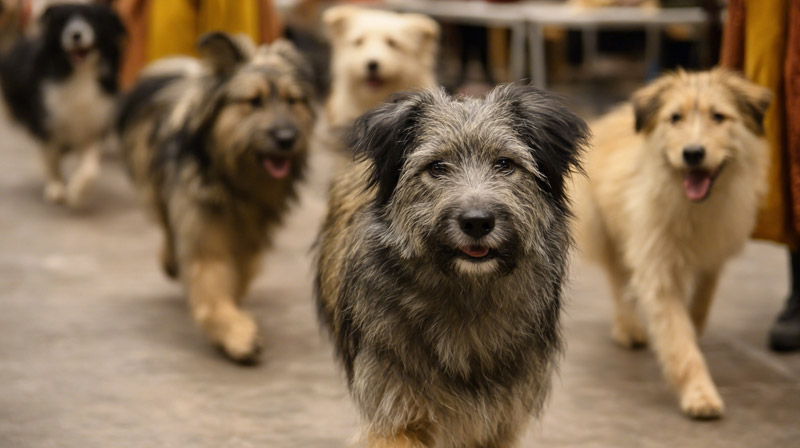

Nobody knows where the breed started. AKC says it could be more than 6,000 years old, but it also states that nothing documents its origin.
For most of that time it stayed local. Each Pyrenees valley kept its own type, with small variations on a shared look (Royal Kennel Club). The FCI standard says type varied a great deal from valley to valley, and that the wider dog world barely knew the breed until the early 20th century.
World War I changed that. French forces used the dogs as couriers and search-and-rescue dogs, and the officers who watched them work carried the news beyond the mountains (AKC).
Bernard Senac-Lagrange drafted the first official standard between 1921 and 1925, per FCI standard 141. The Royal Kennel Club dates the first published French standard to 1926.
Recognition today varies by registry:
- The FCI accepted the breed on a definitive basis on January 28, 1955, in Group 1, Section 1 (Sheepdogs). The long-haired variety falls under standard 141 and the smooth-faced variety under standard 138.
- AKC gave it full registration and show eligibility from January 1, 2009, after a 2008 announcement that added three breeds.
- The UKC recognizes it as the Berger des Pyrenees, with a standard last revised January 2, 2024.
- Canadian Kennel Club puts it in Group VII, Herding Dogs.
- The Royal Kennel Club lists the long-haired dog in the Pastoral Group as Pyrenean Sheepdog (Long Haired). Pyrenean Sheepdog (Smooth Faced) went onto the Imported Breed Register separately on April 1, 2021.
A few Pyr Sheps reached North America in the 19th century with imported flocks. Fanciers brought in breeding stock through the 1970s and 1980s (AKC), and the Pyrenean Shepherd Club of America formed in 1987.
It’s still a rare sight in the ring. The breed placed 191 of 202 in AKC’s 2025 registration rankings.
Pyrenean Shepherd Size, Coat Varieties and Colors
Height runs 15 to 21 inches at the withers depending on variety and sex. Both coat varieties are born in the same litters.
| Variety | Males | Females |
|---|---|---|
| Rough-faced (AKC standard) | 15.5 to 18.5 in | 15 to 18 in |
| Smooth-faced (AKC standard) | 15.5 to 21 in | 15.5 to 20.5 in |
| Rough-faced (FCI standard 141) | 42 to 48 cm | 40 to 46 cm |
Size and weight
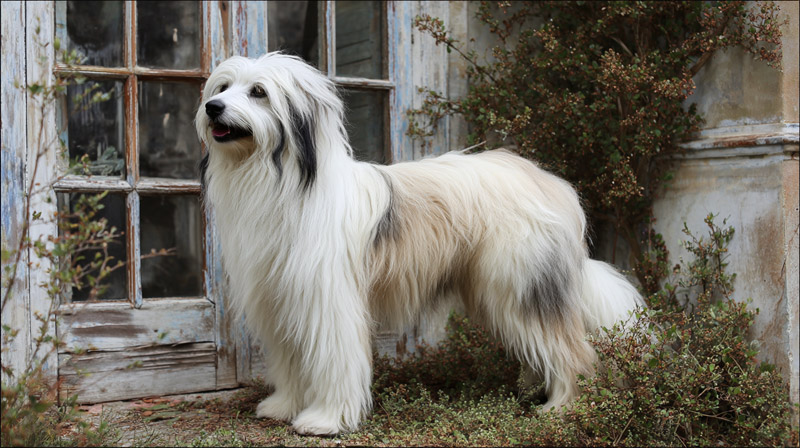
AKC’s standard gives no weight range. It asks for the least weight that still lets a handler feel the ribs easily.
Profile pages fill the gap with their own numbers, such as Vetstreet’s 15 to 32 pounds.
The FCI band for rough-faced dogs sits a little higher than AKC’s, and the FCI allows a 2 cm tolerance for dogs of correct type. AKC disqualifies dogs under the minimum, or more than half an inch over the maximum.
Small or medium depends on who you ask. AKC’s standard calls the breed small, and the Royal Kennel Club’s breed page lists medium (as of October 2026). It’s the same 15 to 21 inch dog either way.
Rough-faced and smooth-faced varieties
The rough-faced dog is the more familiar one.
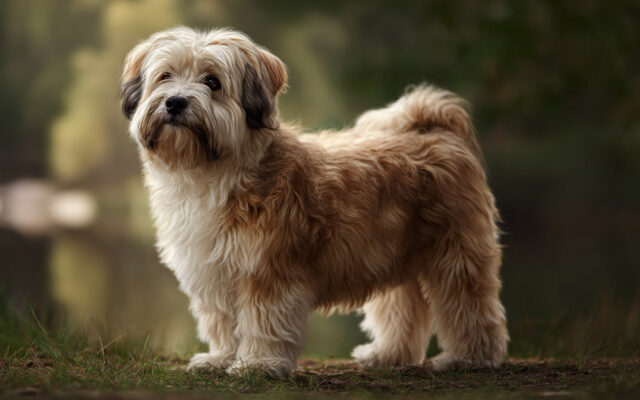
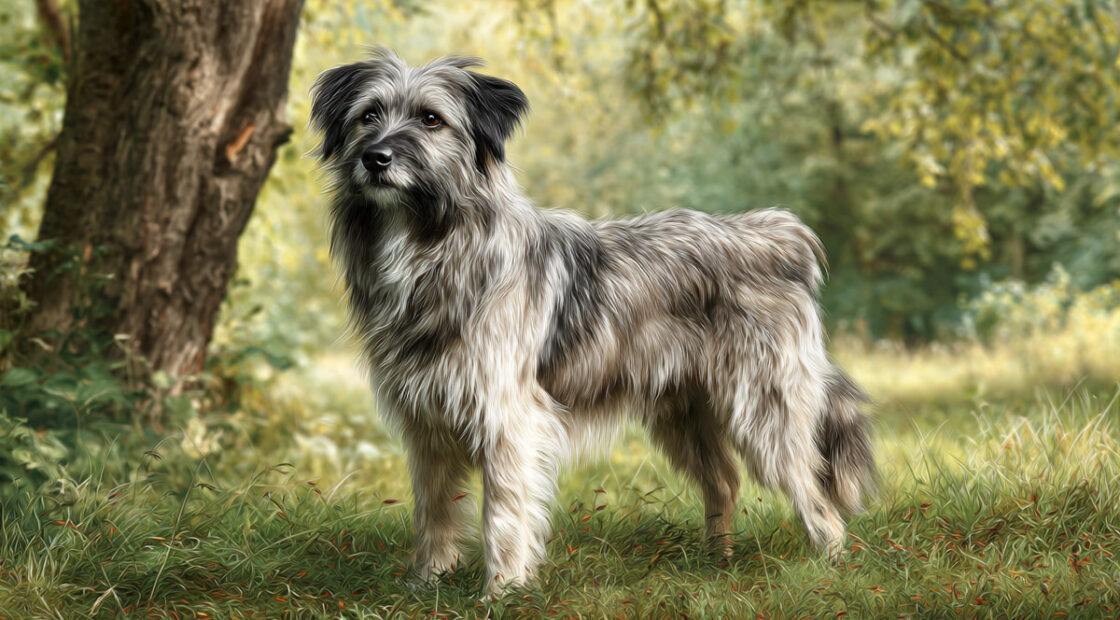
- Long or demi-long coat, nearly flat or slightly wavy
- Harsh texture, halfway between goat hair and sheep wool
- Minimal undercoat, though long-haired dogs may form cords on the elbows, croup and thighs
- A body clearly longer than tall
Smooth-faced dogs have short, fine hair on the muzzle and a modest ruff. Body hair stays no longer than 3 inches at the ruff and culottes, and 2 inches along the back. The outline is squarer, and the muzzle is slightly longer and more pointed.
Registries don’t agree on how to treat the two. The FCI publishes the long-haired variety under standard 141 and the smooth-faced variety under standard 138. The Royal Kennel Club lists them as two separate breeds (Pyrenean Sheepdog Long Haired, and Pyrenean Sheepdog Smooth Faced since April 1, 2021), and WebMD notes that Great Britain treats the two as separate breeds.
Accepted colors
AKC accepts fawn from tan to copper (with or without black hairs), grey from charcoal to silver to pearl, merles, brindle, black, and black with white markings covering no more than 30 percent of the body.
Black with tan points is a fault. White covering 50 percent or more of the body is a disqualification, as are blue eyes on any dog that is not a merle.
The UK adds a breeding rule on the merle pattern. The Royal Kennel Club refuses registration to puppies from merle to merle matings born on or after January 1, 2013, because of vision and hearing risks tied to the merle gene.
Grooming and shedding
The Royal Kennel Club lists grooming at more than once a week and marks the breed as a shedder (as of October 2026).
Brush weekly on either variety, since Dogster reports moderate shedding all year. Baths should be rare because frequent ones dry the skin (a veterinary breed profile from LifeLearn). For the show ring, leave the face unscissored. AKC’s standard withholds ribbons from clipped coats, apart from neatening the feet.
Smooth-faced dogs carry less hair. Neither variety is a wash-and-go coat.
What Is a Pyrenean Shepherd’s Temperament Like?
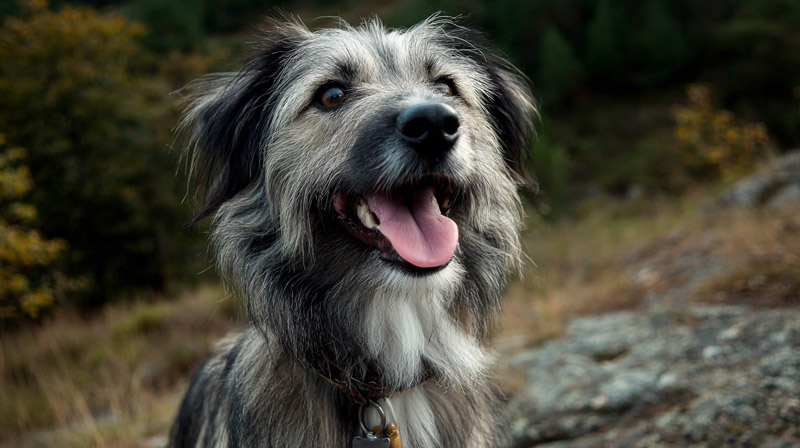
Expect a sensitive, high-energy dog that bonds fiercely with its own household and distrusts outsiders.
AKC’s standard describes a dog that attaches to its owner almost to the exclusion of others, reads the owner’s moods closely, and stays affectionate with immediate family. It ties the cheerful side of the breed to early socialization.
Strangers get a cool reception until the dog knows them, which makes the breed a quick alarm (Royal Kennel Club, VCA Animal Hospitals).
Children are fine if the dog was raised with them. It shows little interest in the neighbors’ kids, and it has a habit of chasing or nipping that Vetstreet says should never be allowed.
The alert nature makes a good watchdog and, without training, a nuisance barker (Vetstreet).
Left alone, it gets bored fast and finds mischief (VCA). WebMD warns of destructive behavior when the dog lacks company.
Nipping is a herding tactic for moving stock that won’t budge. At home it lands on children and other pets.
Sources differ on how the breed handles kids, but the common thread is early exposure. The Royal Kennel Club’s breed page advises against the breed for novice owners.
Exercise, Training and Dog Sports for a Pyrenean Shepherd
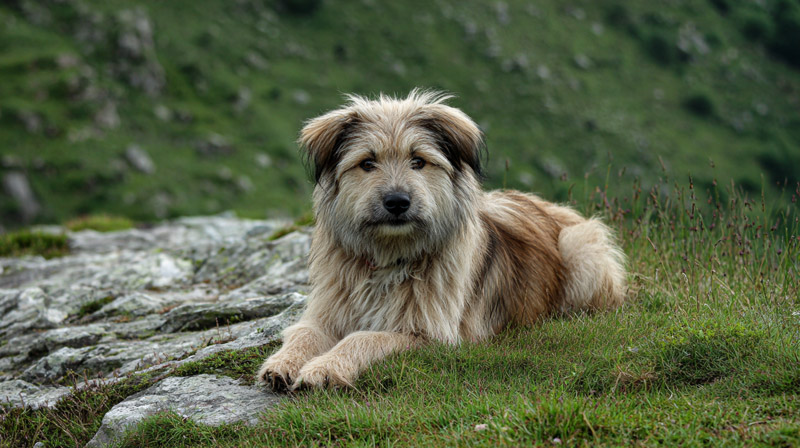
The Royal Kennel Club lists more than 2 hours of exercise a day for the breed (as of October 2026).
That’s a fraction of the working load. AKC says a working Pyr Shep routinely covers 25 miles in a day.
Daily free running in any weather is the baseline, plus a task that uses its head. A bored dog finds its own mischief.
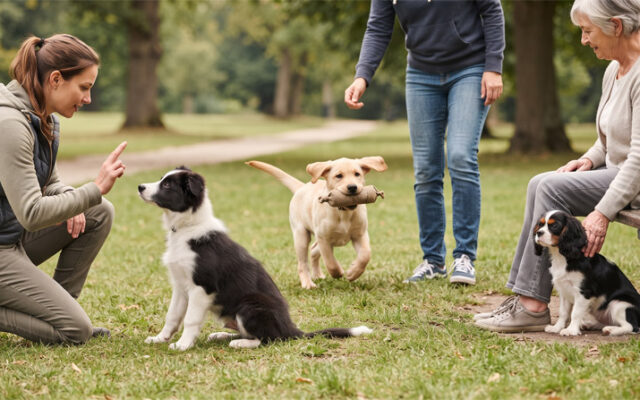
Training should start young. AKC’s standard says the herding instinct is strong enough that puppies manage stock without an older dog’s example, so it shows up early at home.
- Teach a solid recall before any off-leash running
- A quiet cue is worth teaching early, since the breed barks to alert
- Join a puppy class at 10 to 12 weeks once vaccine requirements allow (Vetstreet)
- Redirect chasing and nipping toward toys or sport
Agility and herding both fit the breed.
AKC credits Silvia Trkman and her smooth-faced Pyrenean Shepherd La with the 2003 FCI Agility World Championship. FCI results list Trkman as world champion in 2003 and 2005 with La and in 2015 with Le, three titles in all.
AKC also lists the breed as eligible for herding. Tests and trials open at 9 months, with Instinct Tests allowed from 6 months. The levels go in this order:
- Instinct Test, open from 6 months, with no formal training needed
- Herding Test (HT), pass or fail, and two passes earn the title
- Pre-Trial test (PT), the last non-competitive level
- Herding Trials, which are scored runs, with three qualifying scores per level
The American Herding Breed Association runs its own tests and titles outside the AKC system.
Without a task, the herding drive turns toward children, other pets and anything that moves.
Pyrenean Shepherd Health, Lifespan and Recommended Tests
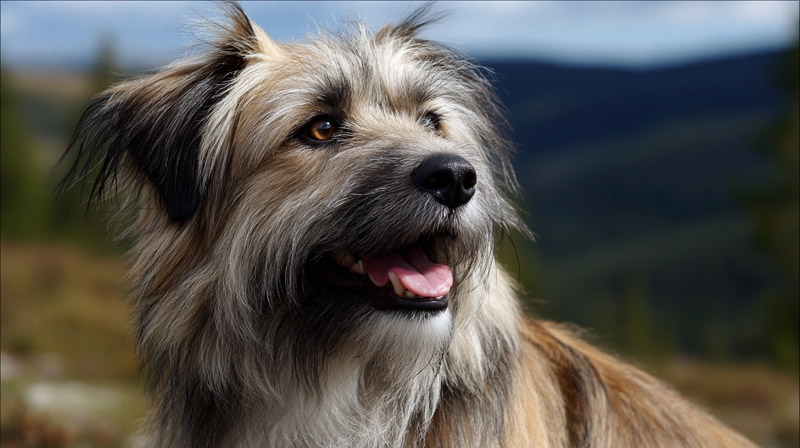
Hips, kneecaps and eyes are the areas that get screened in an otherwise healthy, long-lived breed.
WebMD, citing AKC, describes the breed as healthy and long-lived. The sources split on how long it lives and on how seriously to treat one heart defect.
How long does a Pyrenean Shepherd live?
Among the five sources below, published estimates start at over 12 years and top out at 15 to 16.
| Source | Stated lifespan | Source type |
|---|---|---|
| Royal Kennel Club (long-haired, as of October 2026) | Over 12 years | National kennel club |
| Guild Insurance (Australia) | 12 to 13 years | Pet insurer |
| Wisdom Panel | 12 to 14 years | Canine DNA company |
| Petfinder | 14 to 16 years | Adoption platform |
| VCA Animal Hospitals | 15 to 16 years | Veterinary network |
Three of the five put the low end at 12, and the spread opens above 14. Plan around 12 to 14 years and treat 15 as a good outcome, not a promise.
One trap in search results. A copy of the Royal Kennel Club listing still indexed under its former thekennelclub.org.uk address reads “under 10 years.” The live page says over 12, so ignore the older figure.
Common conditions
- Hip dysplasia is screened by hip evaluation, and Embrace Pet Insurance rates it a medium risk.
- Patellar luxation, where the kneecap slips out of place, gets a low risk rating from Embrace and is tested through a patella evaluation.
- Eye disease shows up in breed profiles as choroidal hypoplasia and progressive retinal atrophy, which is why eye exams by an ophthalmologist sit on the club list.
- Patent ductus arteriosus (PDA) is a heart defect present from birth.
PDA is where the sources really disagree. Embrace puts it at the top of its risk table, while Petfinder files it under minor concerns.
Epilepsy appears on the same Petfinder and Guild lists. AKC’s club list has no test for it.
Health tests breed clubs recommend
AKC’s Herding Group page lists three tests from the national breed club: patella, hip and ophthalmologist evaluations.
A CHIC number asks for more paperwork. That means OFA or PennHIP hips, an OFA knee clearance, an eye clearance, and a DNA sample banked in the OFA repository, per Embrace, with a cardiac exam optional (Vetstreet).
The UK list is shorter. Under the Royal Kennel Club’s Best Practice tier it names hip testing alone.
A buyer outside the US should still ask for patella and eye results. The breed’s US club treats all three areas as screening priorities.
Pyrenean Shepherd Cost: Puppy Price and Ownership Expenses
Good Dog, a US puppy marketplace that vets its breeders, puts the usual price at $2,500 to $3,500 (2026 listing).
Waiting costs time instead of money. The breed is rare, puppies usually come with a waiting list, and the more specific the buyer is about sex, color and coat variety, the longer the wait (VCA Animal Hospitals, For Dummies).
For treatment, Embrace Pet Insurance gives $2,500 to $5,000 for patent ductus arteriosus and $1,500 to $6,000 for hip dysplasia. Patellar luxation comes in at $1,500 to $3,000.
These are diagnose-and-treat ranges from an insurer’s breed guide. Read them as planning numbers, not quotes.
Embrace sells pet insurance and advises enrolling while the puppy is healthy, since cover is hard to get once a problem shows up.
Food is a small line item, because the breed eats little for its energy (PangoVet). Grooming stays a home job, and no source publishes a grooming price for the breed, so get a local quote if the coat cords.
An adult dog from a shelter or rescue group is the alternative to a puppy, and Embrace suggests considering one. Ask the Pyrenean Shepherd Club of America before browsing general shelters.
Pyrenean Shepherd vs Australian Shepherd vs Border Collie
Of the three herding breeds, only the Pyrenean Shepherd gets a small-garden rating from the Royal Kennel Club (as of October 2026).
| Attribute | Pyrenean Shepherd | Australian Shepherd | Border Collie |
|---|---|---|---|
| Size of home | Small house | Large house | Small house |
| Size of garden | Small/medium | Large | Large |
| Town or country | Either | Country | Either |
| Lifespan | Over 12 years | Over 10 years | Over 12 years |
| AKC club-listed tests | Patella, hip, eye | Hip, elbow, eye | Hip, eye |
The UK listing used for the Pyrenean Shepherd here is the long-haired variety. The smooth-faced variety has its own separate Royal Kennel Club listing.
On space, the Royal Kennel Club rates the Australian Shepherd for a large house in the country. The Pyrenean Shepherd lists as a small-house dog that can live in town or country.
AKC’s club lists differ by one test each way. Patella evaluation appears only for the Pyrenean Shepherd, elbow evaluation only for the Australian Shepherd, and the Border Collie list is the shortest, at hips and eyes.
The UK picture flips. The Royal Kennel Club lists MDR1 DNA testing for the Australian Shepherd and the Border Collie, and no DNA test for the Pyrenean Shepherd.
A short list can mean few known problems or little research. The sources don’t say which.
The Pyrenean Shepherd makes sense if the garden is small and the household will train daily, as long as nobody expects a novice-friendly dog (the Royal Kennel Club advises against it for novices).
The Australian Shepherd fits better in the country with a large garden, especially as an all-round sport partner.
And the Border Collie suits a handler who wants a working or sport partner and will keep it engaged, since the Royal Kennel Club says the breed needs that to lead a fulfilled life.
Who Should Not Get a Pyrenean Shepherd
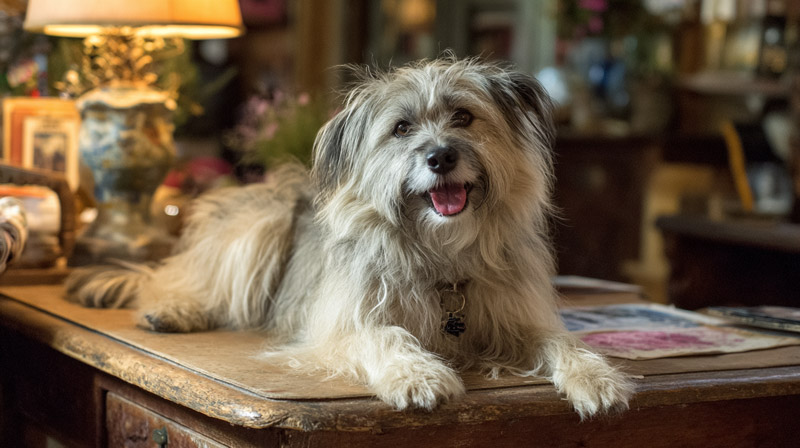
Skip this breed if you cannot name the daily job you will give it for the next 15 years.
Owners who want a finished dog fast will be disappointed, because the breed does not reach full maturity until about 3 years old (Embrace).
Households that might rehome later should think twice. It attaches quickly and is hard to place elsewhere, per Embrace, which asks for a commitment of 15 years or more.
Flat dwellers with no outdoor routine are the third group, and the advice there is split.
Embrace says the breed can live in any home, apartment included, with at least one hour of daily exercise or an active, mentally demanding activity. Dogster says it does best in rural or semi-rural settings.
Embrace’s one-hour floor sits below the Royal Kennel Club figure given earlier. The safer reading is that an apartment works only when the owner supplies the work, not just the walks.
Embrace names the outlets that count:
- Agility
- Flyball
- Herding
- Obedience
- Rally
- Tracking
No named job, no Pyrenean Shepherd.
Pyrenean Shepherd FAQ
How rare is the Pyrenean Shepherd?
The breed is rare outside France. Breeders are hard to find, per For Dummies, and WebMD still calls it rare in the US.
Start with the national parent club or AKC Marketplace early.
Does a Pyrenean Shepherd need MDR1 testing?
It is not a standard requirement. Neither the AKC list of tests from the breed’s national club nor the Royal Kennel Club breed page names MDR1, and Embark’s list of breeds carrying the variant does not include the Pyrenean Shepherd.
The mutation is common across herding dogs and mixes, so a vet may still suggest a test before drugs such as acepromazine or high-dose ivermectin.
Can a Pyrenean Shepherd tolerate heat and cold?
Cold and wet suit it. WebMD says the coat kept working dogs warm in cold, wet weather.
The Royal Kennel Club lists no heat limit, so exercise a dog in cooler hours. The smooth-faced variety carries a shorter body coat than the rough-faced one.
Is the Pyrenean Shepherd hypoallergenic?
No. WebMD lists it among the drawbacks of ownership, and AKC states that no dog is 100% hypoallergenic.
Good Dog rates the breed’s shedding as moderate.
Will a Pyrenean Shepherd get along with cats and other pets?
Usually yes, when the pets are raised together. Vetstreet says the breed accepts family cats and dogs but takes the top spot, and Dogster adds that it nips and herds to prove it.
PangoVet rates cats and small pets a tougher match, so introduce them gradually.
What to Confirm Before Paying a Pyrenean Shepherd Deposit
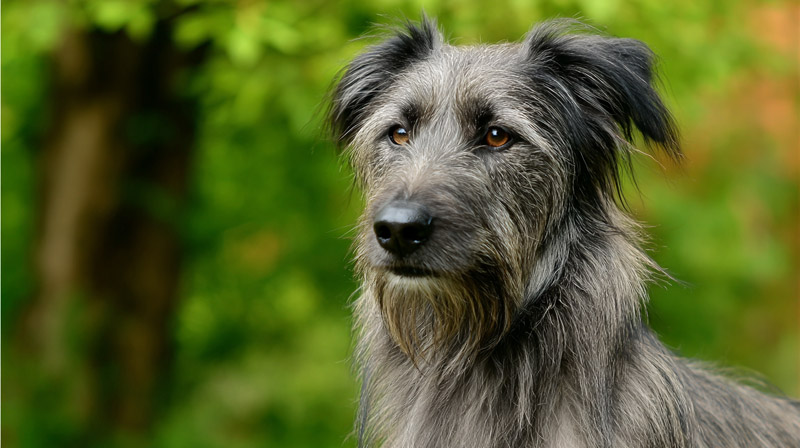
A Pyrenean Shepherd deposit should follow written hip, patella and eye results for both parents, plus a contract stating what the breeder does if a puppy develops a hereditary condition.
Check the parents’ results in OFA’s public database first. Cardiac exam results come next, though they’re optional under CHIC. The written health guarantee and return terms go last.
That order follows the cost of being wrong. One patent ductus arteriosus treatment can cost more than the puppy itself, so a breeder without heart results asks the buyer to carry the larger risk.
The trade-off is time, since breeders who plan litters around confirmed waiting buyers produce longer waits, according to Paction.
This was verified in October 2026 against AKC’s Herding Group list. CHIC requirements change as screening tests change, so recheck the parent club’s current list before signing.