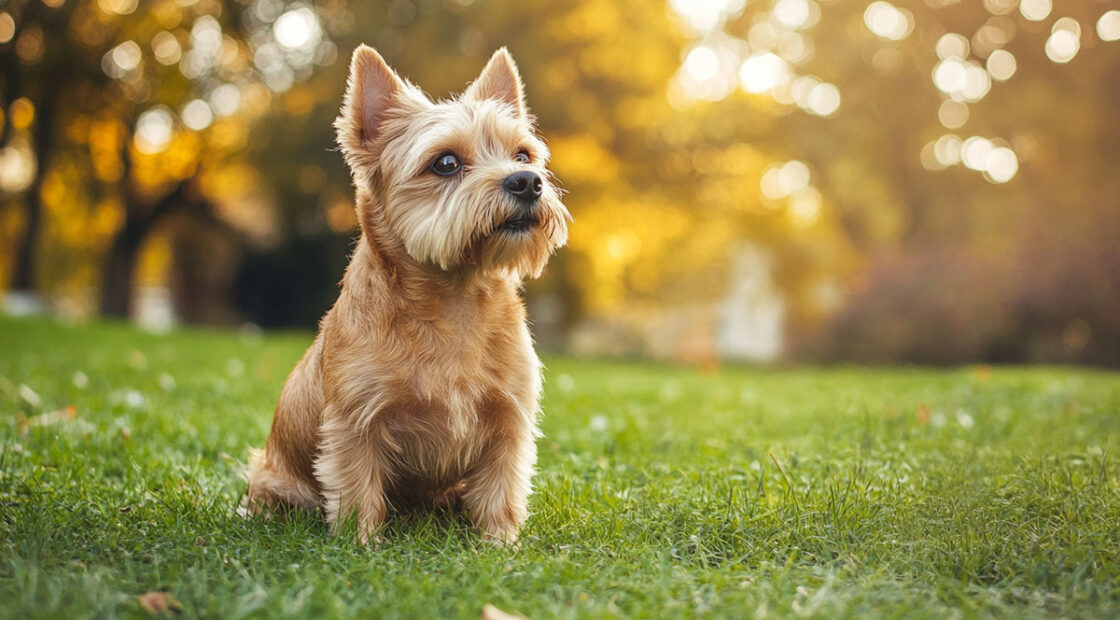
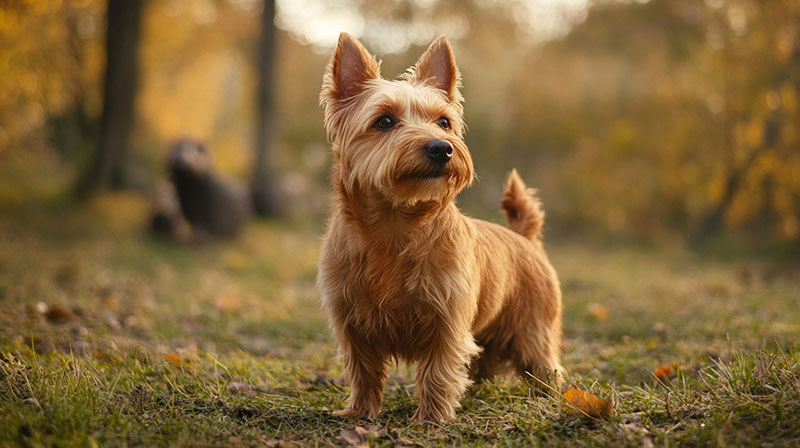
Norwich Terriers stand about 10 inches tall and were bred in East Anglia to kill rats and bolt foxes. The Terrier Group is their home in the registries. Upright, pointed ears set them apart from the drop-eared Norfolk Terrier, and most dogs now live as family companions.
You won’t see many of them. The Kennel Club registered 140 of these dogs in 2024 against 382 Norfolk Terriers (vulnerable breed statistics). Fewer than 300 registrations a year keeps the Norwich on the vulnerable native list, while its drop-eared twin sits on the at-watch list of 300 to 450.
What Is a Norwich Terrier?
Small, prick-eared and built for work, this is a working terrier in the Terrier Group that East Anglian breeders developed to kill rats and bolt foxes. Westminster Kennel Club calls it one of the smallest working terriers, made for portability and wearing a harsh, weather-resistant coat.
The AKC describes a plucky little earthdog named for its hometown, Norwich. The Norwich Terrier Club of America adds that most dogs today are family companions, though the urge to hunt rodents hasn’t gone anywhere.
Ears give it away. Upright with pointed tips, they’re the quickest way to tell a Norwich from the drop-eared Norfolk Terrier.
Ideal height is 25 cm (10 in) at the withers, per The Kennel Club breed standard (published on the site now branded The Royal Kennel Club, updated 1 April 2025). Westminster Kennel Club (2026) puts maximum weight at 12 lb and the top of the life expectancy range at 15 years. Both the AKC and Westminster file the breed in the Terrier Group. As for the split from the Norfolk Terrier, it came in 1964 in the UK (Purina) and 1979 in the US (Norwich Terrier Club of America).
Where Did the Norwich Terrier Come From?
Cambridge University undergraduates in the late 1800s kept small, rough-coated ratters, and that’s where the story starts. The breed took shape later in East Anglia under the horseman Frank “Roughrider” Jones.
The early dogs came from a stable yard on Trumpington Street, so old histories call them Trumpington or Cantab Terriers. Students kept them to clear rats out of their rooms.
Around 1900, a red Trumpington dog named Rags went to a stable yard owner in Norwich, and his offspring became known as Norwich Terriers, according to the Your Dog breed profile.

Jones was first whip to the Norwich Staghounds and bought many of the red whelps, per the Canine Chronicle. American buyers called his exports Jones Terriers, while Jones himself used the name Norwich (Showsight).
Breed histories don’t agree on the blood behind these dogs. The AKC credits a mix of Irish Terriers and other terrier types. Wikipedia reports Yorkshire blood in the Cantabs, alongside Irish Terriers and East Anglian red terriers. Country Life says only that Jones crossed his stock with other, unnamed terrier breeds for added drive and working ability.
Dog writer David Hancock tells a third version, with Jones arriving from Ireland with a brace of Glen of Imaal Terriers and red whelps bred from Dandie Dinmont and Smooth Fox Terrier crosses.
Cambridge ratters and a dog named Rags show up in every account, and so does Frank Jones. Beyond that, the sources part ways.
- In 1914, Willum, then called a Jones Terrier, reached the United States (Showsight).
- The Kennel Club registered the breed in 1932, with prick and drop ears under one name (Showsight).
- The AKC recognized it in 1936 (Norwich Terrier Club of America).
How Do the Norwich Terrier and Norfolk Terrier Differ?
Ears decide it. The Norwich carries them upright, and the Norfolk folds them forward against the cheek.
Until the registries split them, these were one breed with two ear types. The Kennel Club separated them in 1964 and the AKC followed in 1979, which makes the Norfolk Terrier the younger breed on paper, even though the dogs share one history.
| Feature | Norwich Terrier | Norfolk Terrier |
|---|---|---|
| Ears | Erect, pointed tips | V-shaped, folding forward |
| White marks (Kennel Club) | Tolerated | Undesirable |
| Temperament wording (Kennel Club) | Gay (cheerful) and fearless | Alert and fearless |
| Ideal height (Kennel Club) | 25 cm (10 in) | 25 cm (10 in) |
| US parent club | Norwich Terrier Club of America (2009) | Norfolk Terrier Club (2009) |
The shared American club ended in 2009. The AKC split the breeds in 1979, but the two kept one American parent club until members voted in 2009 to create separate ones. Older pages still describe the single club.
If you’re torn between them, go by ear preference and health records rather than temperament. The standards give both breeds the same ideal height and near-identical temperament wording. Norwich breeders also track an inherited upper airway syndrome, so ask for health records on either breed.
Size, Coat Colors and Grooming
At about 10 inches (25 cm) at the withers, the Norwich wears a hard, wiry double coat in red, wheaten, black and tan or grizzle. That coat keeps its texture best with hand stripping, not clippers.
Height and Weight
The 25 cm ideal is a guide, not a promise.
The Kennel Club says any individual dog can come out larger or smaller, and its standard gives a height but no weight. The AKC standard caps height at 10 inches at the withers.
The build is low and compact with strong bone, a short back and a level topline (The Kennel Club). Proportions are roughly square, since the AKC standard makes withers-to-ground and withers-to-tail-base about equal. Tails differ by country. The AKC standard calls for a medium docked tail, long enough to grasp, while the UK standard says docking was previously optional and describes an undocked tail carried jauntily.
Coat and Colors
Hard, wiry and straight, the coat lies close to the body over a thick undercoat.
The Kennel Club standard allows these colors:
- Red
- Wheaten
- Black and tan
- Grizzle (dark and white hairs mixed)
Longer, rougher hair forms a ruff around the neck. Hair on the head and ears stays short and smooth, apart from slight whiskers and eyebrows.
Registries disagree on white markings. The Kennel Club tolerates white marks or patches, while the United Kennel Club’s 2007 revision of its standard lists them as a serious fault.
Grooming and Hand Stripping
Hand stripping pulls dead hair out by hand or with a stripping knife, and it keeps the wiry texture intact. Cutting the coat changes that texture (Orvis breed guide), and the AKC warns that clipping a wire-coated dog can disrupt the coat’s growth cycle and change its texture, color and regrowth.
Brushing happens weekly, or a few times a week, with a comb or brush (Orvis, WebMD). Stripping frequency depends on who you ask. Orvis says occasionally, Purina says about twice a year, and the breed club says about every 8 to 10 weeks. Skip it and the coat turns scruffy and sheds more.
Trimming is acceptable for pets that will never enter a show ring, at the cost of coat texture. Baths should be occasional only, because frequent washing damages the weather-resistant coat.
Shedding reports vary. Orvis says the coat sheds minimally, while Westminster rates shedding mid-scale and grooming needs low.
Temperament, Exercise and Training Needs
Cheerful and affectionate, and fearless with it, the Norwich also has high energy and a strong prey drive. It needs daily exercise and early reward-based training, and it suits active households without rodents or other small pets.
Personality and Family Fit
The Kennel Club standard describes a lovable dog that is not quarrelsome, very active and hardy. Westminster gives the breed its top rating for children.
Other dogs are usually fine, and cats often are too (Orvis). Pet rodents and other small animals are a bad match because of the prey drive (Orvis). Dog-heavy households can be harder, since Westminster scores dog friendliness lower than child friendliness.
Prey Drive and Barking
Westminster Kennel Club rates barking at 4 on a 5-point scale.
Sources disagree. A breed database (hundeo) calls the Norwich not a barker, a claim that could not be checked against a primary source, while Orvis says a bored Norwich will bark and a crate will not stop it.
Plan around the louder reports.
Wisdom Panel describes high energy and a strong urge to chase small animals, so any outdoor time needs a leash or a fenced yard. Off-leash walks in unfenced areas are the clearest failure case for this breed.
Exercise and Training
Published exercise figures run from 20 to 40 minutes a day (Hill’s Pet Nutrition) to an hour or more (Purina), and Westminster says the breed demands a lot of daily activity. Budget for the higher figure, since the working background points that way.
Wisdom Panel recommends reward-based obedience with treats and favorite toys. Westminster scores trainability in the middle of its scale.
Earthdog tests give small terriers an outlet for their instincts, and the AKC lists the Norwich as eligible from six months of age. Outdoors, it’s a leash or a fenced yard every time.
How Long Do Norwich Terriers Live, and What Health Problems Do They Have?
Expect 13 to 14 years, the span that falls inside every published range. The documented problems are upper airway syndrome, hip dysplasia, patellar luxation, eye and neurologic disease, and dental disease.
Orvis lists 10 to 14 years, Wisdom Panel 12 to 15, and Hill’s Pet Nutrition 13 to 15. The Norwich Terrier Club of America calls 12 to 15 the average and says a well-bred dog may live 14 years or more.
The sources disagree mostly about the floor. The general breed guide starts at 10, while the breed club’s own figure starts at 12.
The club’s health page (updated October 2026) names these conditions:
- Upper airway syndrome, which the club calls its most pressing health concern
- Hip dysplasia, found in a minority of the dogs in the OFA data the club cites (14.9% of 1,513 dogs, through April 2021)
- Patellar luxation, with most evaluated dogs normal in the same data (93.8% normal)
- Primary lens luxation, a painful, late-onset genetic eye disorder with a DNA test available
- Epilepsy and paroxysmal dyskinesias, where little is known about prevalence in the breed
- Dental disease, since the breed builds plaque and tartar easily
General eye disease is not a known predisposition, according to the same page.
On testing, the club’s CHIC program requires an eye examination by a board-certified ophthalmologist, a hip evaluation through OFA or PennHIP, and a patellar luxation evaluation through OFA. Results go to the OFA open registry whether positive or negative.
None of those tests looks at the larynx, which is where the breed’s main problem sits. Primary lens luxation DNA testing is recommended but not required.
The club’s testing page was last modified in 2017, so confirm the current panel with the club or the OFA before relying on it.
Norwich Terrier Upper Airway Syndrome: What the Research Shows
Genetic and centered on the larynx, Norwich Terrier upper airway syndrome (NTUAS) narrows the opening air passes through. It mimics the airway disease of flat-faced breeds but is distinct enough to count as its own condition (Journal of Veterinary Internal Medicine, 2021).
Severity runs from noisy breathing to severe distress with heat and exercise intolerance, and the Norwich Terrier Club of America says it can end in death without treatment. True prevalence is unknown because dogs with no apparent signs may be mildly affected.
The research built up over about a decade.
- In 2013, veterinary researchers described the airway changes in 16 Norwich Terriers as a problem separate from flat-faced airway disease (Journal of Veterinary Internal Medicine).
- A 2019 genome-wide study linked a missense variant in the ADAMTS3 gene to the syndrome, with the Norfolk Terrier seemingly unaffected (PLoS Genetics).
- The breed club’s study group published the NTUAS Score in 2020, built from five findings in the larynx and throat.
- In 2021, owners of dogs examined between 2011 and 2018 reported long-term outcomes (Journal of Veterinary Internal Medicine).
That 2021 study enrolled 34 dogs. Three died before follow-up, leaving 31 for the owner survey. Owners rated quality of life as good (3 or lower on the study’s scale) in 25 of 31 dogs (81%) a median of 4.2 years after endoscopy, even though 27 of the 34 dogs had three or more of the five possible laryngeal abnormalities (Journal of Veterinary Internal Medicine, 2021).
The noise did not go away. Respiratory noise, snoring and panting continued or developed in many dogs whether or not they had surgery.
Dogs that had surgery had higher severity scores and worse quality-of-life scores at follow-up. Two dogs that had previously had surgery showed marked distress and bluish gums during excitement or exercise.
The study has limits. Owners reported the signs, the dogs were not re-examined, some owners did not respond, and most dogs lived in a warm to hot but low-humidity climate that may have shielded them.
That reads as better news than the breed club’s framing, which ranks NTUAS as its top health concern and publishes emergency guidance. Both hold. Most affected dogs in the study did well, and a dog that overheats can slide into crisis.
The Norwich Terrier Club of America lists these as emergency signs:
- Noisy, rasping breathing
- Bluish or dark purple gums and tongue
- Fainting, especially in heat or after exertion
- Chest and belly working hard to move air
The club’s advice is to avoid stress and exertion, keep the dog cool, and go to an emergency clinic.
Noise alone proves nothing. The club says cysts, tumors or grass can cause airway noise in any dog, so diagnosis needs a full upper airway examination. A quiet dog can still be affected, which is why the club will not give a prevalence figure.
Surgery has limits too. The 2021 authors say the indications for the common ventricle procedure in this breed have not been fully explored.
Screening is unsettled as well. Animalabs sells a DNA test aimed at the ADAMTS3 variant and describes recessive inheritance, but the OMIA database lists the mode of inheritance as unknown and warns against treating variant tests as settled. The breed club pages retrieved for this article do not list the DNA test among recommended screens.
How Much Does a Norwich Terrier Cost?
Scarcity and breeder health testing set the purchase price. After that, hand stripping and dental care drive most of the running cost.
Puppy Price
GoodDog’s marketplace pages, checked in October 2026, put Norwich Terrier puppies at $3,500 to $3,975 nationally.
The site adds that breeding programs differ, so individual dogs can sell outside that range.
Cost-guide sites quote lower and wider ranges, and none of the ones reviewed show how their numbers were built. Current listing data is the safer baseline.
The only UK price located dates from 2021, which is too old to quote.
Ongoing Costs
| Cost area | Driver | Pattern |
|---|---|---|
| Coat care | Hand stripping about every 8 to 10 weeks | Recurring |
| Dental care | Plaque and tartar buildup | Recurring |
| Airway care | Full upper airway exam, surgery in some dogs | Event-driven |
The breed club asks for stripping about every 8 to 10 weeks, a tighter schedule than the occasional stripping some general breed guides describe. It also says groomers who strip by hand are hard to find, since the work is labor-intensive.
Many owners learn to do it themselves. That swaps a grooming bill for time spent training a dog to stand on a table.
No published price exists for a full airway examination or for NTUAS surgery, so the airway row stays a budgeting gap. Beyond the first year, keeping any dog is expensive over a lifetime, and a small breed does not change that.
How to Find a Reputable Norwich Terrier Breeder or Rescue
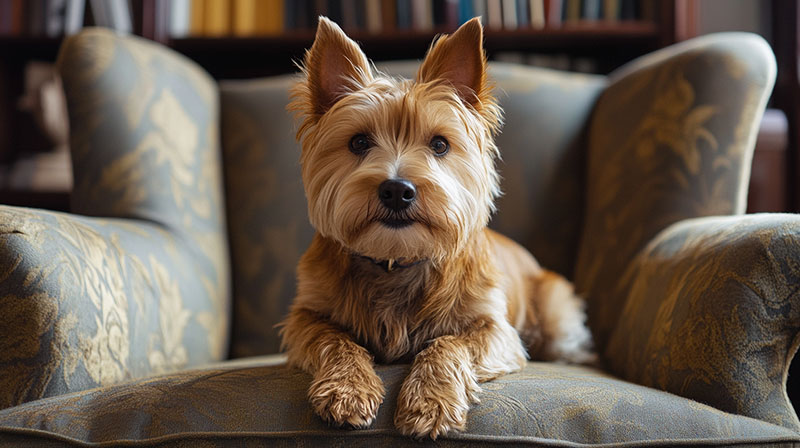
Start with a club-listed breeder, ask for health results on both parents, and expect to wait. Puppies are scarce, and online sellers carry the most risk.
The Norwich Terrier Club of America cites AKC data showing only 201 registered Norwich litters in 2019. In the UK, registrations stayed between 81 and 150 a year from 2015 to 2024, well under the 300 that defines a vulnerable native breed (The Kennel Club).
Breeding is hard on the dogs. The club lists failure to conceive, resorbed puppies, difficult whelping and frequent caesareans among common problems, and it says newborn mortality is too high.
Breeder or Rescue
Club-listed breeders are the main route for puppies, usually with an application and a waiting list. Breeders sometimes place adults they have retired from breeding too, and those dogs are often past puppy antics and may already be trained.
Rescue is the other option. The club’s rescue committee rehomes purebred Norwich from shelters, commercial breeding kennels and import brokers. Member-breeders take back dogs they bred, so rescue Norwich are rare.
Online listings carry the biggest risk. The club says most buyers cannot tell a purebred Norwich puppy from a cross with a Cairn Terrier or another mix at 10 to 12 weeks old.
A sight-unseen internet purchase can bring a pedigree with non-Norwich ancestors, even when the puppy is AKC registered.
Steps to Vet a Breeder
- Find member-breeders on the Norwich Terrier Club of America breeder list, which is organized by state.
- Send a short introduction covering why you want a Norwich, where you live, who is in the household and what dog experience you have.
- Ask for health results on both parents, including the CHIC number and the OFA open registry listing for the eye, hip and patella tests.
- Ask whether the parents have had a full upper airway examination and an NTUAS Score, since the CHIC panel does not cover the larynx.
- Expect questions back. Good breeders may ask you to fill out an application and may introduce you to owners of dogs they bred.
- Stay flexible on sex and color, and ask about the take-back policy. Puppies leave at 10 to 12 weeks, and some breeders keep them longer.
Norwich Terrier FAQ
Is a Norwich Terrier hypoallergenic?
No dog is hypoallergenic for every person, and this breed is no exception. The Norwich Terrier Club of America says many allergic owners live with Norwich without trouble, but dander and saliva can still trigger reactions.
Spend time with an adult dog before you buy a puppy.
Can a Norwich Terrier live in an apartment?
Yes, provided it gets daily exercise. The breed club says Norwich are happy in a city or the country as long as the family stays near, and The Kennel Club lists flat or apartment living as suitable.
How long can a Norwich Terrier be left alone?
The breed club sets no time limit, but long daily absences suit the breed poorly. It says Norwich thrive on human attention, and puppies need socialization to continue after they leave the breeder.
Do Norwich Terriers have their tails docked?
The American standard calls for a medium docked tail, long enough for a hand to grasp. The breed club has also published guidance for AKC conformation judges on how to judge dogs with natural tails.
UK law bars docking for most dogs, according to the PDSA.
How popular is the Norwich Terrier in the United States?
The breed sits near the middle of the AKC’s 2025 rarest breeds ranking, at No. 94 of 202 counted breeds, where No. 1 is the rarest. That is a rarity ranking, so a higher number means a more common breed, not a more popular one in the usual sense.
Few litters are born, though, and the breed club describes the Norwich as in great demand and short supply.
Who Should Not Get a Norwich Terrier
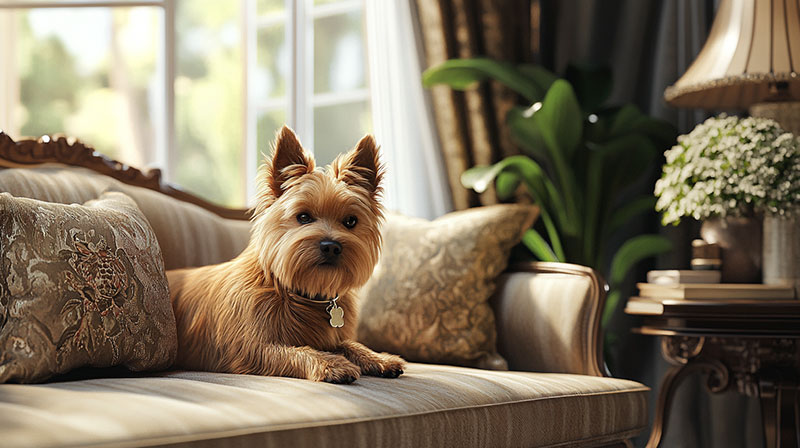
A Norwich Terrier is the wrong dog for households that leave it alone all day, cannot fence a yard or walk it on a lead, or cannot keep it cool in summer heat.
Buyers who clear that screen still compete for few puppies. At an average of three to four puppies per litter (the club’s buyer’s guide says about three), the 201 AKC litters recorded in 2019 yield roughly 600 to 800 puppies for the whole country.
Household fit comes first, because breeders weigh those details in each inquiry and a mismatch wastes months of waiting. After that, apply to breeders who health test. Budget for stripping and airway care alongside.
The trade-off is time, accepted in exchange for parents with documented health results. This position was verified in October 2026 and changes if the breed club endorses an ADAMTS3 DNA screen or adds an airway exam to its CHIC panel.