Hungarian shepherds in the western hills wanted a dog that could move cattle, sheep and pigs along narrow farm roads, so they bred one that works close, barks a lot and nips when it has to.
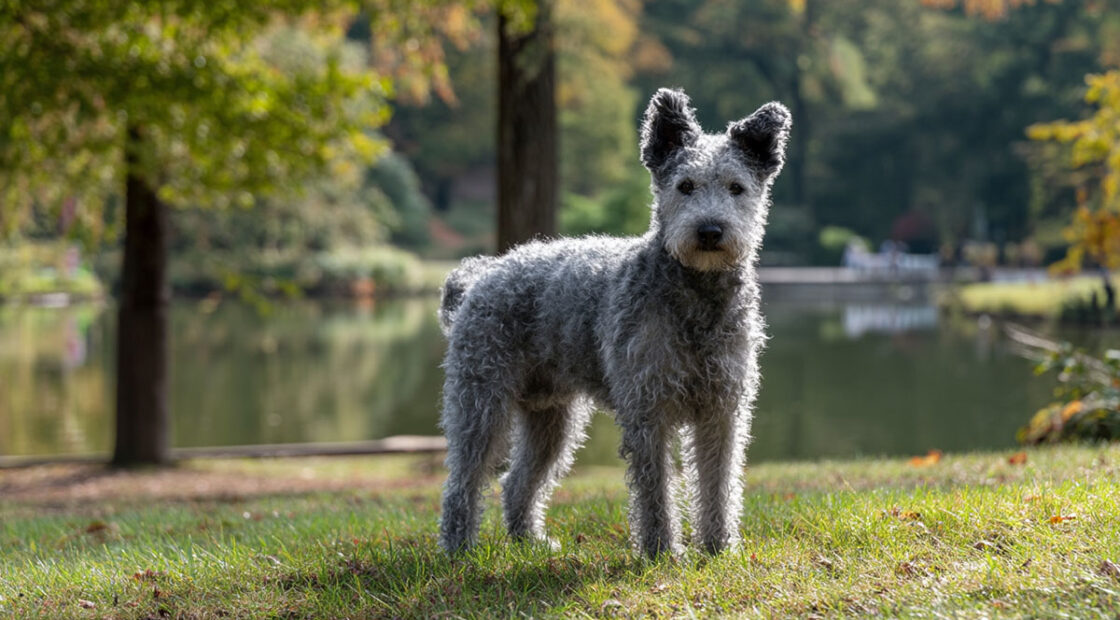
That dog is the Pumi, with a curly coat, tipped ears and a head that looks a bit like a terrier’s. The breed took shape in the 17th and 18th centuries from the Puli and imported German and French terrier-type dogs. The FCI files it under Group 1 sheepdogs, and the AKC admitted it to the Herding Group on 1 July 2016.
Health testing comes up early with this breed. In the Orthopedic Foundation for Animals database as of 31 December 2024, 12.2% of dogs tested for primary lens luxation were carriers and none were affected, according to the breed’s US parent club.
What Is a Pumi?
Curly coat, tipped ears and a terrier-like head sum up the look. The job was driving cattle, sheep and pigs along narrow farm roads.
The Hungarian plural is pumik, and breed clubs in the US use it too. Everyday English often says Pumis instead.
The FCI puts the breed in Group 1, Section 1 Sheepdogs, without working trial (FCI Standard No. 56). The AKC lists it in the Herding Group. In the UK, the Royal Kennel Club has it in the Pastoral group as the Hungarian Pumi.
The breed traces back to the Hungarian Puli, crossed with imported German and French dogs of terrier type.
The terrier link is real but limited. The FCI calls it a herding dog of terrier type, with the terrier character most obvious in the head, yet the FCI, AKC, Royal Kennel Club and Canadian Kennel Club all place it with the herding breeds.
The FCI standard has it herding sheep and larger stock and controlling rodents. It also mentions facing wild beasts of prey, and describes a companion and sport dog that lives indoors.

It is not a corded Puli, and it is not a true terrier.
Where Does the Pumi Come From?
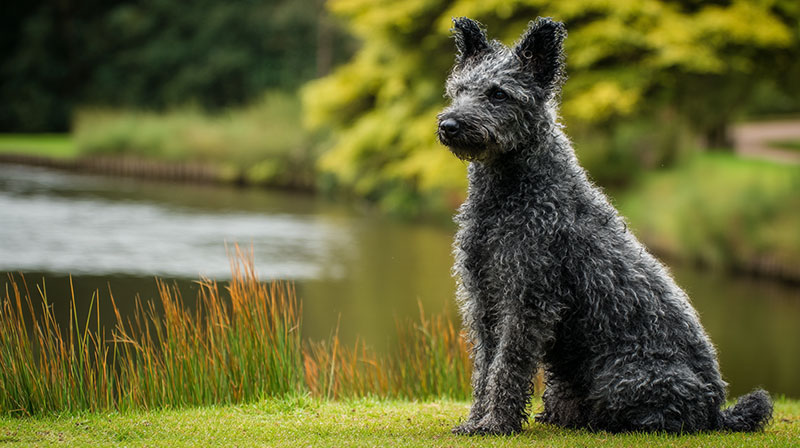
Shepherds in Hungary crossed the primitive Puli with imported German and French terrier-type dogs during the 17th and 18th centuries (FCI Standard No. 56).
The Hungarian Pumi Club of America (HPCA) names two German contributors, the Pomeranian Schafpudel and the Hutespitz, a herding spitz that was considered extinct by 1935. Some breed encyclopedias add the Briard on the French side, though the HPCA does not name a French breed.
The crossings happened on the livestock trade routes between Hungary, France and Germany, where droving dogs met at markets and roadsides.
Terrain did the rest. Small pastures linked by narrow roads left no room for wide outruns, so shepherds kept dogs that worked close to the stock and turned it with barking, quick movement and an occasional nip (HPCA).
- Between the 17th and 18th centuries, the breed forms from the Puli and imported terrier-type dogs.
- 1815 brings the first drawing of a Pumi (Canine Chronicle).
- In 1921, Emil Raitsits writes the first standard and calls the dog a sheepdog terrier (Canine Chronicle).
- The FCI approves the standard in 1935 (HPCA).
- Definitive FCI acceptance follows in 1954 (FCI breed listing, 11 August 1954).
- Full AKC recognition arrives in 2016.
Raitsits taught at the Hungarian University of Veterinary Medicine and began standardizing the Puli and Pumi in the 1910s and 1920s, according to the HPCA.
Nobody knows for sure where the name comes from, according to Canine Chronicle. The HPCA believes it reflects the German side of the ancestry, and one theory ties it to pommern, short for Pomeranian Spitz (Wikipedia).
How the Pumi Differs From the Puli and the Mudi
Hungarian herding dogs split into three types in the early 20th century, and the split followed region more than pedigree (HPCA).
The Puli came from the eastern plains and has the corded coat and round head. The Pumi belongs to the hills of western Hungary, with a curly tufted coat, a long narrow head and tipped ears. Down in the south, the Mudi carries more of its ancestor the Hutespitz.
Before the standards, the Pumi counted as a regional variation of the Puli, and the two names were used interchangeably for centuries. The FCI now disqualifies a Pumi with a round, Puli-like head.
Which Kennel Clubs Recognize the Pumi?
Recognition came in stages, and the year depends on the registry.
- The FCI uses Group 1 and standard No. 56, with the current text dated 13 September 2000. Its breed listing records definitive acceptance on 11 August 1954, and the HPCA dates the first FCI approval of the standard to 1935.
- The AKC gave full status in the Herding Group on 1 July 2016, making it the 190th breed on its roster (AKC; AP, 2016).
- The UKC publishes its own breed standard.
- The Canadian Kennel Club puts it in Group VII Herding Dogs, with a standard effective July 2024.
- The Royal Kennel Club (UK) places it in the Pastoral group, and its standard was last updated 1 April 2025.
Before 2016 the breed competed through the AKC’s Foundation Stock Service and Miscellaneous class. The HPCA’s own Pumifest archive files 2005 to 2015 under Misc/FSS years and 2016 onward under AKC years.
Sources give three different FCI years, which is confusing. The HPCA says the FCI approved the Pumi standard in 1935. The FCI’s own breed listing records acceptance on a definitive basis on 11 August 1954. Some secondary sources give 1966, which matches a revised FCI standard dated 5 July 1966 rather than first recognition. This article uses 1935 for the first standard approval and 1954 for definitive FCI recognition.
How Big Is a Pumi, and What Does It Look Like?
Under the FCI standard a Pumi stands 38 to 47 cm (15 to 18.5 in) at the withers and weighs 8 to 15 kg (about 18 to 33 lb), with males larger than females.
Size by Breed Standard
The numbers look different across registries, but they describe nearly the same dog.
| Standard | Males, height | Females, height | Weight (males / females) |
|---|---|---|---|
| FCI | 41 to 47 cm (ideal 43 to 45) | 38 to 44 cm (ideal 40 to 42) | 10 to 15 kg / 8 to 13 kg |
| AKC | 16 to 18.5 in | 15 to 17.5 in | Ideal 27 to 29 lb / 22 to 24 lb |
| UKC | 16 to 18.5 in | 15 to 17.5 in | 22 to 33 lb / 17 to 28 lb |
| Royal Kennel Club (UK) | 43 to 45 cm, plus or minus 2 cm | 40 to 42 cm, plus or minus 2 cm | 12 to 13 kg / 10 to 11 kg, plus or minus 2 kg |
Mostly this is presentation. The UK standard states the ideal and adds a tolerance, and that tolerance reproduces the FCI limits exactly. Males run 41 to 47 cm, females 38 to 44 cm, and weight 10 to 15 kg and 8 to 13 kg.
The AKC and UKC height ranges convert to the same metric limits, and the UKC weight range converts to the FCI range. The AKC lists an ideal weight instead of a range, and its standard disqualifies a dog half an inch above or below the height range (Showsight, reproducing the official standard).
The Canadian Kennel Club standard repeats the FCI figures. The UK standard also warns puppy buyers that an individual dog can fall outside the stated measurements.
Head, Ears, Tail and Build
- The outline is square, with body length equal to height at the withers, lean and taut in muscle.
- The head is long and narrow with an elongated muzzle, never under 40% of head length and ideally 45% (Royal Kennel Club).
- Ears sit high with the upper third folding forward, and completely upright ears are a disqualifying fault in the FCI standard.
- The tail is set high and curls in a wide circle over the croup, with 7 to 12 cm of wiry hair underneath. Docking is not permitted.
The ears confuse new owners. They change shape through teething at 4 to 5 months, and the HPCA advises against taping or gluing them.
What Is the Pumi Coat Like, and How Much Grooming Does It Need?
Wavy to curly and 4 to 7 cm long, the coat sheds very little. It still needs a thorough comb-out every 2 to 3 weeks and regular scissoring.
Coat Texture and Accepted Colors
The FCI standard sets coat length at 4 to 7 cm, built from a strong but not coarse topcoat over a soft undercoat.
The HPCA says the standard calls for a 50:50 mix of harsh and soft hair. Puppies start almost entirely soft, and the harsher curly hair keeps arriving until about age 2 to 3.
Among wavy-coated breeds, the Pumi is the crisp one. The hair is elastic, shaggy and dense, forms tufts, and is never smooth or corded (FCI).
Accepted colors run from gray in any shade (pups are born black and fade) to black, and from fawn, which covers pale cream through yellow to red, ideally with a trace of black or gray and a dark mask. Intense, solid white is also allowed.
Chocolate, multicolor and clearly defined patches such as tan markings or a mantle are disqualifying (FCI, UKC). A white chest mark under 3 cm and a white line on the toes are allowed.
A pup born gray instead of black carries a dilute color that is not accepted, the HPCA notes.
Shedding and Grooming Routine
Dead hair stays in the curls until it is combed out, so combing matters more than vacuuming.
The HPCA says adults need a thorough comb-out every 2 to 3 weeks, while Petfinder gives 3 to 6 weeks. The shorter interval is the safer one, because the FCI standard disqualifies a very matted coat.
A pet routine means combing out fully in every direction, bathing, air drying so the curls reform, and scissoring to neaten. Show dogs get hand trimming on the back and scissors only for small corrections on head and legs. Over-trimming is out.
Puppies need more combing while the coat changes between 6 and 18 months, and the HPCA suggests a first full haircut at about 3.5 to 4 months. Check the feet often, since Dogs Queensland says they pick up burrs and grass seeds.
What Is the Pumi Temperament Like?
Lively and bold, a little suspicious of strangers and somewhat vocal, but never aggressive or overly shy under the Royal Kennel Club and FCI standards.
Westminster Kennel Club’s breed profile rates trainability 5 out of 5, energy 5 out of 5 and barking 3 out of 5.
The HPCA describes a dog that needs a job. One of its members writes that Pumik dislike long stretches alone and pick something destructive when the energy has no outlet.
Barking and Watchdog Behavior
The FCI standard calls the Pumi rather noisy, and the Royal Kennel Club says somewhat vocal.
Westminster’s 3 out of 5 barking rating is milder than both standards, which suggests the written descriptions reflect farm work more than pet life. On the farm, barking moved stock and warned owners about strangers and unfamiliar animals (HPCA).
What helps is socialization from puppyhood that continues for life (HPCA), plus a daily task or sport. Owners also report that the dogs learn when quiet is expected.
Children and Other Pets
Two sources frame the same dog differently. Wikipedia’s breed entry lists the Pumi as good with children and other animals when trained early, while Vetstreet warns that young herding dogs often try to herd people, especially children.
Both hold true. Chasing, circling and nipping are herding behaviors, and the FCI standard lists rodent control among the breed’s jobs, so hamsters and rabbits deserve supervision.
The HPCA adds that the breed is sensitive, does badly in an angry or tense home, and is a poor match for people with little dog experience.
How Much Exercise and Training Does a Pumi Need?
The Royal Kennel Club’s breed page lists up to 1 hour of exercise a day, while the HPCA says Pumik need enormous amounts of exercise, attention, mental stimulation and a task to do.
The gap is probably definitional. The HPCA counts mental work and a job as part of the requirement, which a timed walk does not cover.
Daily Exercise and Mental Work
Physical exercise means running, fetch and hiking, and HPCA members describe evenings spent racing around a park in heavy rain. Mental stimulation has to happen every day, not only at weekends.
The task can be flexible, since no sheep are needed to keep a Pumi busy, but the owner has to be involved (HPCA). Members also report dogs that learn the days of the week and expect a weekly hike.
A Pumi that has been promised an outing reminds its owner, so build a routine you can keep.
Training and Dog Sports
The AKC and the HPCA both steer owners toward sport.
- Agility
- Nose work
- Flyball
- Obedience
- Herding
Chris Levy of the HPCA, quoted by the AKC, says Pumik have a good work ethic and will do almost anything as long as it is with their people.
The club’s calendar lists agility trials and Fast CAT events, and its archive records Pumik at the 2013 AKC/Eukanuba Agility Invitational.
Herding stays an option for dogs with strong stock instinct. The Royal Kennel Club notes that the breed is still used as a herding dog.
Which Health Problems Affect Pumis, and How Long Do They Live?
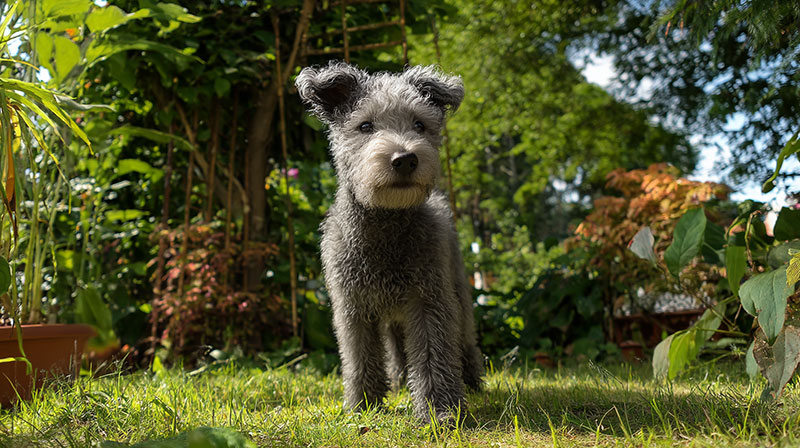
Generally healthy overall, though breeders screen for hip dysplasia, patellar luxation, primary lens luxation and degenerative myelopathy.
The HPCA gives a lifespan of 13 to 15 years. In OFA records to 31 December 2024, hips came out 89.8% normal and 9.3% abnormal. Primary lens luxation showed 12.2% carriers and no affected dogs in the same records, and degenerative myelopathy showed 9.6% carriers, again with no affected dogs.
The HPCA reports the OFA database totals, which include results that owners chose to keep private.
Lifespan
Sources disagree by about a year at each end.
PetMD and WebMD say 12 to 13 years. The HPCA says 13 to 15 and adds that Pumik routinely reach that range. The Royal Kennel Club says over 12 years. I’d budget for 12 to 13 and treat the extra years as a bonus.
Documented Conditions
- Hip dysplasia is the most common problem in the breed according to the HPCA, which asks for an OFA X-ray on every Pumi, bred or not, so treatment can start early.
- Patellar luxation is a CHIC-required test certified by a veterinarian, and it turns up less often in OFA records than hip problems.
- Several puppies in Scandinavian countries have been affected by primary lens luxation (HPCA), while the US records show no affected dogs.
- Degenerative myelopathy gets compared by the HPCA to ALS in humans. Signs appear later in life, and carriers are present in the US.
Elbow dysplasia and eye examinations are optional tests, and the OFA eye registry shows almost entirely normal results.
Health Testing and CHIC Numbers
| Test | HPCA and CHIC (US) | Royal Kennel Club (UK) |
|---|---|---|
| Hips | Required, X-ray | Recommended, BVA/KC scheme |
| Elbows | Optional, X-ray | Recommended, BVA/KC scheme |
| Patella | Required, vet certification | Not listed |
| Primary lens luxation | Required, DNA | Not listed |
| Degenerative myelopathy | Required, DNA | Not listed |
The US list adds a patella certificate and two DNA tests that the UK list does not carry. The UK page also places the breed in Breed Watch category 1, meaning no breed-specific point of concern for show judges.
A CHIC number only shows that the required tests were done and published, not that the results were normal (HPCA).
A carrier of primary lens luxation or degenerative myelopathy can be bred to a clear dog, never to another carrier.
Is a Pumi the Right Dog for You?
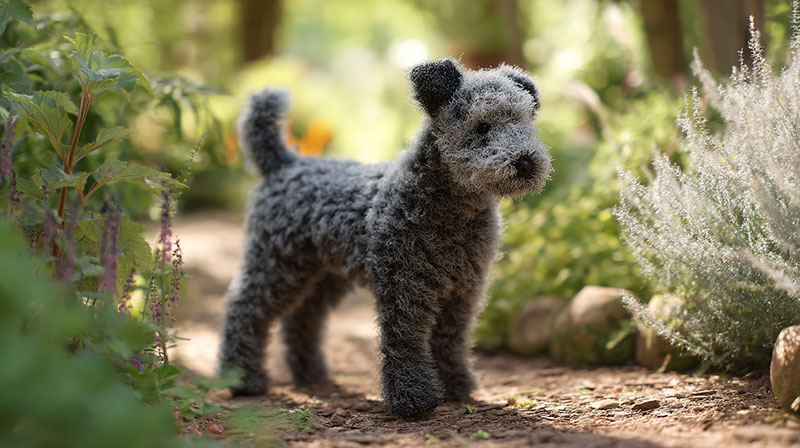
Active households that want a sport partner and can live with noise get the most out of one. Anyone after a quiet, low-effort companion should look elsewhere.
On the plus side, it is medium-sized with a coat that sheds very little, it learns eagerly and enjoys sport work, and it copes with town or country living (Royal Kennel Club). An HPCA member essay also says it can switch off and cuddle once its drive is spent.
The downsides are real, though.
- It is vocal indoors as well as outdoors, with dogs that talk back and forth across the house.
- It draws crowds in public, which the HPCA essay flags as a drawback for owners who want to be left alone.
- Comb-outs come every 2 to 3 weeks, plus scissoring.
- Few US litters are born each year, so expect a wait.
Home size is where sources split. The Royal Kennel Club says a small house and a small to medium garden are enough, while the HPCA treats exercise and attention, not square footage, as the limit.
A Pumi works in a flat or a farmhouse as long as you can give it a daily task and put up with a dog that comments on everything. Someone also needs to be home most of the day. If any of that sounds unlikely, pick another breed.
How Do You Find a Reputable Pumi Breeder, and What Does a Puppy Cost?
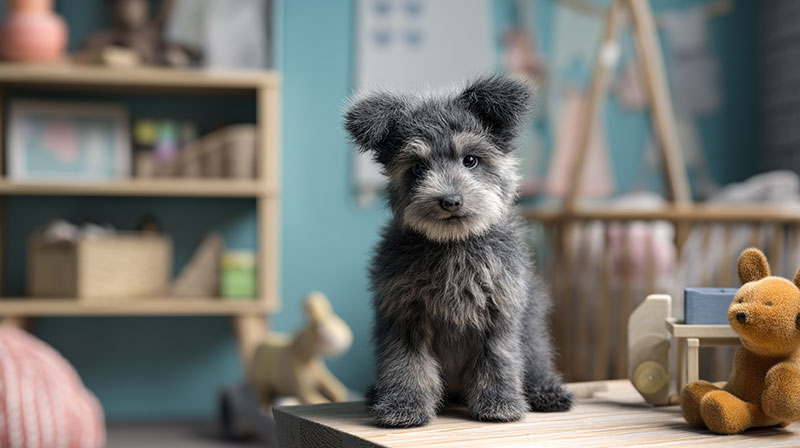
Start with the HPCA’s breeder list, then verify each breeder’s health results yourself, because the club lists members but does not endorse or rate them.
The wait is the first obstacle. The HPCA says only a few litters are born in the US each year, and a preference for color or sex lengthens the wait.
In the UK the breed is newer still, recognized by the Royal Kennel Club in 2015. The same page dates Raitsits’s separation of the Puli and Pumi to 1920, a year earlier than the 1921 first standard reported by Canine Chronicle.
- Meet adults first. Dog shows, agility trials and Meet the Breeds events put you in front of owners and their dogs (HPCA).
- Choose from the club list. Listed breeders agree to the HPCA Code of Ethics, but the club does not recommend or guarantee any of them.
- Check clearances. Look up hips, patellas and the DNA results for primary lens luxation and degenerative myelopathy in the OFA database.
- Ask how the puppies were raised. Reputable breeders socialize puppies with dogs and people and typically do not place a puppy before 8 weeks (HPCA).
- Ask about take-back. A responsible breeder takes the dog back and rehomes it if you cannot keep it.
Breeders sometimes place adult dogs they have decided to rehome, which suits households without time for puppy training.
The HPCA publishes no price. Listings on the Good Dog marketplace run from $2,500 in Memphis to $3,450 in Pharr, which are listing prices rather than an official figure.
The purchase price is the smaller number over time, because owning any dog is expensive across a decade or more.
Pumi FAQ
Is a Pumi hypoallergenic?
No breed qualifies as guaranteed hypoallergenic, and neither the FCI standard nor the HPCA makes an allergy claim for the Pumi.
The coat sheds very little, which keeps loose hair down. Spend time with an adult dog before committing if allergies are a concern.
Can a Pumi be left alone during the day?
Only for short stretches. The HPCA says Pumik dislike long periods alone and may turn to destructive habits when their energy has no outlet.
Training can stretch short absences, but a full workday alone is a poor match.
Can you adopt a Pumi from a rescue?
Yes, though it is uncommon. The HPCA runs a Pumi rescue and rehome program, and breeders sometimes place adult dogs they have decided to rehome.
The breed is rare in the US, so availability depends on timing. Contact the club early rather than waiting for listings.
When should Pumi puppy training and socialization start?
On the first day home, which is 8 weeks at the earliest, since reputable breeders typically do not place puppies sooner (HPCA).
The HPCA says socialization is needed from a young age and never fully ends, and that it also reduces barking.
Planning the First Year With a Pumi Puppy
Start the daily task and socialization in week one. Sport training builds on that, and the hip X-ray comes last.
Socialization leads because the HPCA links it to less barking, and sport work builds on a dog already at ease with people.
The OFA issues a permanent hip number only at 24 months of age, with preliminary evaluations available from 4 months, so a first-year X-ray gives a preliminary read, not a clearance.
Following this order costs daily hours from week one, before any sport result or certified clearance exists.
The OFA percentages for Pumik, current to 31 December 2024, move as more dogs are tested, and this advice was verified in October 2026.