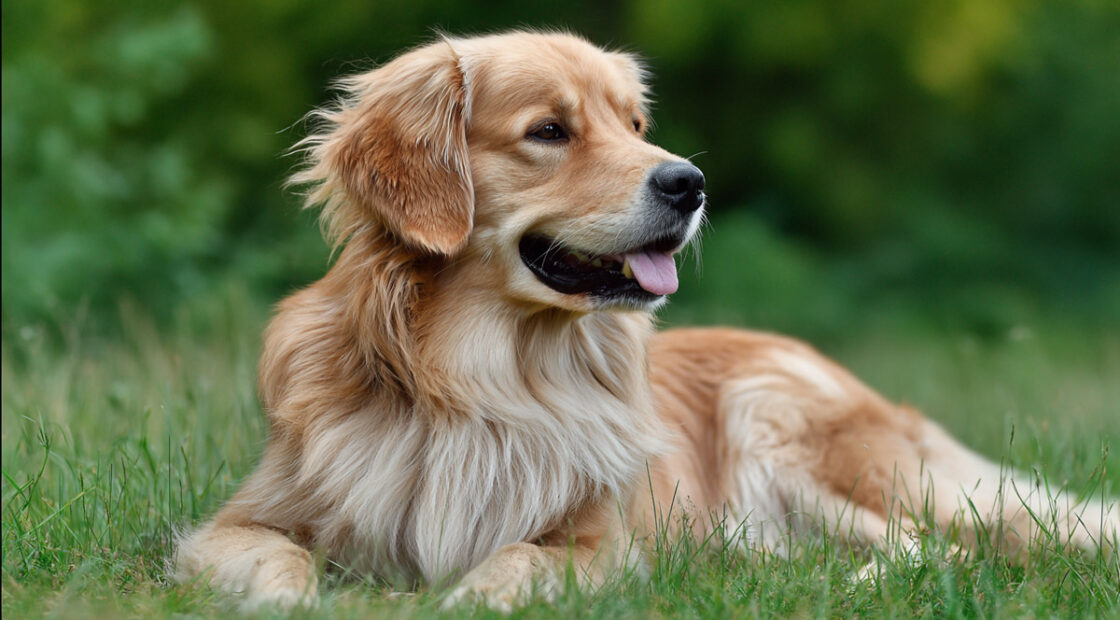
Ask three groomers for a summer trim and you’ll get three different dogs back.
The most requested golden retriever haircut styles are the tidy trim, puppy cut, teddy bear cut, summer cut, field cut, show trim, and sanitary trim. Each one is defined by how much of the double coat stays intact.
Coat type sets the limits. The undercoat insulates, the guard hairs repel water, and cutting below one inch damages both.
Ahead: exact body lengths, blade and guard comb sizes, regroom intervals, honest drawbacks for every style, plus real grooming costs and the wording to hand your groomer so the cut matches what you pictured.
What Determines the Best Haircut for a Golden Retriever?
The best Golden Retriever haircut is determined by coat type, climate, matting tendency, and the brushing time an owner will actually commit to. Goldens carry a double coat, so styles that remove the undercoat are off the table.
The double coat has two layers doing different jobs.
- Undercoat: soft, dense, insulating. Sheds heavily once or twice a year during coat blowing season.
- Guard hairs (topcoat): longer, water-repellent, blocks sun and burrs.
Cornell’s Riney Canine Health Center is direct about the risk. Veterinarian Brian Collins states that shaving a double-coated breed can damage hair follicles and cause poor regrowth.
Regrowth after a full shave-down runs four to six months, and veterinary sources put full thickness closer to a year. Some patches never come back the same.
The texture changes too. Owners report the new coat feeling sticky and velcro-like, grabbing grass seed and twigs that used to slide off.
Coat variables that shift the answer
Feathering volume: heavy feathering on the britches, chest, and tail mats faster and needs more scissor work.
Climate: humid summers push owners toward shorter body work, but the coat still stays on.
Age and activity: senior Goldens with thinner coats and swimmers who dry slowly benefit from tighter feathering.
The Golden Retriever Society sets the floor at one inch as the shortest safe trim length for the body.
Why other double-coated breeds follow the same rule
Nothing here is unique to Goldens. Double-coated dogs across the board lose thermoregulation when the undercoat goes.
The same logic shapes Australian Shepherd trim options and the Great Pyrenees grooming styles groomers recommend.
Compare that to a Labrador Retriever, which carries a short double coat and never needs scissoring at all. Or the Siberian Husky, where deshedding replaces cutting entirely.
Curly-coated crosses are a separate world. Doodle owners work from a completely different menu of Goldendoodle haircut styles because the Poodle coat has no shedding undercoat to protect.
The Most Popular Golden Retriever Haircut Styles

Seven styles cover almost every request that walks into a grooming salon.
- Tidy Trim. Coat left full, edges neatened at feet, ears, hocks, and tail.
- Puppy Cut. Body scissored to roughly half an inch to one inch, uniform all over.
- Teddy Bear Cut. Body clipped short, legs left at natural length, face and feet rounded.
- Summer Cut. Body taken down with a guard comb, one inch minimum.
- Field Cut. Feathering shortened for working dogs, body untouched.
- Show Trim. Thinning shears only, natural outline preserved for the ring.
- Sanitary Trim. Paws, pads, rear, and belly cleaned up. No body work.
| Style | Body length | Maintenance |
|---|---|---|
| Tidy Trim | Natural, full | Medium |
| Puppy Cut | 0.5 to 1 inch | Low |
| Teddy Bear Cut | 1 to 2 inches | Medium |
| Summer Cut | 1 inch minimum | Low |
| Show Trim | Natural, thinned | High |
The Tidy Trim
The Tidy Trim is the Golden Retriever cut that leaves the body coat completely untouched and cleans only the outline. It suits every coat type and owners who want medium maintenance, and it works best year round.
At a glance
- Body length: natural, no clipper work
- Face and head: untouched, natural expression
- Ears: edges scissored, thinned underneath and behind
- Legs and feet: cat feet, hock hair left 3/4 inch to 1 inch
- Tail: tapered base to tip, ending at the point of the hock
- Maintenance: Medium, 10 minutes brushing per day
- Regroom every: 6 to 8 weeks
- Best for: show-line coats, cold climates, owners who like the breed silhouette
Who it suits: Owners who want a clean look without losing coat function. The Golden Retriever Club of America teaches this as the standard pet groom, using straight shears and 46-tooth thinning shears rather than clippers.
Watch out for: The coat stays full, so daily brushing during coat blowing season is not optional and shedding does not drop at all.
The Puppy Cut

The Puppy Cut is a Golden Retriever cut that scissors the body to a uniform half inch to one inch and keeps the face natural. It suits wavy coats and owners who want low maintenance, and it works best in hot, humid summers.
At a glance
- Body length: 0.5 to 1 inch, even all over
- Face and head: left natural, whiskers optional
- Ears: trimmed close to the leather, feathering removed
- Legs and feet: shortened to match the body, feet rounded
- Tail: shortened, plume reduced
- Maintenance: Low, 5 minutes brushing per day
- Regroom every: 6 to 8 weeks
- Best for: swimmers, muddy hikers, owners short on brushing time
Who it suits: Active Goldens who come home wet and filthy several times a week. Daily Paws puts the standard length at around half an inch, cut the same across the whole body.
Watch out for: Going under one inch strips undercoat protection, so ask for the longer end of the range and accept a slightly fluffier result.
The Teddy Bear Cut
The Teddy Bear Cut is a Golden Retriever cut that clips the body to one or two inches, leaves the legs at natural length, and rounds the face and feet. It suits straight and wavy coats and owners who want medium maintenance, and it works best in warm months.
At a glance
- Body length: 1 to 2 inches
- Face and head: rounded, plush teddy bear expression, cheeks left full
- Ears: rounded at the tips, blended into the head
- Legs and feet: natural length, feet scissored into curves
- Tail: trimmed and shaped, plume kept
- Maintenance: Medium, 10 minutes brushing per day
- Regroom every: 6 to 8 weeks
- Best for: family dogs, photo-heavy households, humid climates
Who it suits: Owners who want a shorter body without a stripped look. Rover notes that groomers adopted this cut specifically as a way to shorten the coif without sacrificing the double coat.
Watch out for: Hair around the ears and paws regrows faster than the body, so the round shape goes shaggy well before the six-week mark.
The Summer Cut
The Summer Cut is a Golden Retriever cut that takes the body down with a guard comb to one inch minimum while leaving the head and legs longer. It suits thick, heavy coats and owners who want low maintenance, and it works best in hot climates.
At a glance
- Body length: 1 inch minimum, guard comb over a #10 blade
- Face and head: untouched
- Ears: thinned, edges neatened
- Legs and feet: feathering shortened, pads cleared
- Tail: tapered
- Maintenance: Low, 5 minutes brushing per day
- Regroom every: 8 weeks
- Best for: southern climates, senior dogs, heavy coats prone to matting
Who it suits: Goldens with dense, cottony undercoat that traps heat and mats behind the elbows.
Watch out for: This is the style most often mistaken for a shave down. Teri Becker DiMarino of the California Professional Pet Groomers Association points out that shaving does nothing to cool a dog, since dogs cool through panting and their paw pads.
The Field Cut
The Field Cut is a Golden Retriever cut that shortens feathering on the legs, belly, and tail while leaving the body coat full. It suits working and hunting coats and owners who want low maintenance, and it works best during hunting season and brush-heavy months.
At a glance
- Body length: natural, untouched
- Face and head: natural
- Ears: thinned close to reduce burr pickup
- Legs and feet: feathering cut back to 1 to 2 inches, pads cleared
- Tail: shortened plume
- Maintenance: Low, 5 minutes brushing per day
- Regroom every: 8 to 10 weeks
- Best for: hunting dogs, trail runners, dogs that swim in weedy water
Who it suits: Field-line Goldens, which naturally carry lighter feathering than show lines and pick up less debris to begin with.
Watch out for: Short feathering exposes leg skin to scrapes in dense cover, so check the pasterns and elbows after long days out.
The Show Trim

The Show Trim is a Golden Retriever cut that uses thinning shears only, preserving the natural outline required in the conformation ring. It suits show-quality coats and owners who accept high maintenance, and it works best year round for competing dogs.
At a glance
- Body length: natural, thinned at neck and shoulders only
- Face and head: whiskers optional, soft expression preserved
- Ears: thinned under and behind, edges straight-scissored
- Legs and feet: cat feet, front feathering shaped into a flag
- Tail: trimmed to the point of the hock
- Maintenance: High, 15 to 20 minutes brushing per day
- Regroom every: 4 weeks, plus touch-ups before every show
- Best for: conformation dogs, breeders, owners who want the breed standard silhouette
Who it suits: Handlers and breeders. GRCA guidance calls for a medium tooth steel comb, a slicker, 7.5 inch straight scissors, and 46-tooth thinning shears priced around $45 and up.
Watch out for: Most pet groomers are not trained on Golden-specific finishing, and over-thinning the ear flap creates a hard expression that takes months to grow out.
The Sanitary Trim
The Sanitary Trim is a Golden Retriever cut that clears hair from the rear, belly, groin, and paw pads with no body work at all. It suits every coat type and owners who want minimal maintenance, and it works best as a between-groom touch-up.
At a glance
- Body length: untouched
- Face and head: untouched
- Ears: untouched or lightly thinned
- Legs and feet: pads cleared, hair between toes removed with thinning shears
- Tail: untouched
- Maintenance: Low, brushing schedule unchanged
- Regroom every: 4 to 6 weeks
- Best for: puppies, seniors, long-coated dogs, first-time grooming visits
Who it suits: Owners who want nothing cut and only need hygiene handled. Daily Paws recommends a paw and sanitary trim even for dogs that never get a full haircut.
Watch out for: Overdone rear trimming leaves a bald patch that looks worse than the problem it solved.
How to Choose the Right Golden Retriever Haircut
Four decisions, in order.
- Match the cut to the coat. Heavy show-line feathering handles a teddy bear cut well. Light field coats do not need one.
- Factor in your climate. Anything under one inch on the body belongs nowhere, in any season.
- Estimate your brushing time honestly. A show trim needs 15 minutes a day. A puppy cut needs 5.
- Consider age and activity. Swimmers, seniors, and dogs with hot spots do better with shorter feathering.
| Style | Maintenance | Best season |
|---|---|---|
| Puppy Cut | Low | Summer |
| Teddy Bear Cut | Medium | Spring to fall |
| Field Cut | Low | Fall, hunting season |
| Tidy Trim | Medium | Year-round |
| Show Trim | High | Year-round |
The one non-negotiable
Skip the shave. The AKC is explicit that to preserve the coat’s purpose and appearance, owners should not shave or clip the coat, and should avoid clipping feathers under the body, legs, and tail.
The exceptions are medical. Veterinary shaving for surgery, severe matting that cannot be brushed out, or dermatitis where a vet recommends it.
How Often Should a Golden Retriever Be Groomed?
A Golden Retriever needs a professional groom every 6 to 8 weeks and brushing at least once a week. During coat blowing season that jumps to daily.
Nancy Talbott, Director of Education for the Golden Retriever Club of America, sets the brushing standard: a pin brush once a day for heavy shedding, once a week for normal shedding. She specifically warns against bristle brushes, which cannot get through the coat.
What shifts the interval
Coat blowing season: twice a year, roughly spring and fall. Deshedding appointments every 4 to 6 weeks during these windows.
Swimming: wet feathering mats fast. Line brush the britches and chest after every swim.
Cut choice: show trims need touch-ups monthly. Field cuts stretch to 10 weeks.
Nails run on a separate clock, every 3 to 4 weeks. Ears get checked weekly and after every swim, since floppy ear leather traps moisture.
Clean the ear canal with a proper solution or wipes made for dog ears rather than water, which just adds moisture to the problem.
Golden Retriever Haircut Grooming Cost and What to Tell Your Groomer
A full Golden Retriever groom costs $60 to $100 at a standard salon, $90 to $200 for large-breed specialists, and $140 to $170 for mobile grooming. Deshedding treatments add $20 to $35.
QC Pet Studies puts Goldens and Labs in the $60 to $100 band for a full groom. Golden Paw Pet Services quotes $90 to $200 and up for large breeds with dense coats.
| Service | Price range | Notes |
|---|---|---|
| Full groom, salon | $60 to $100 | Bath, dry, brush out, trim, nails, ears |
| Full groom, mobile | $140 to $170 | 10 to 30 percent premium for convenience |
| Deshedding add-on | $20 to $35 | Removes 70 to 80 percent of loose undercoat |
| Sanitary and paw trim | $15 to $30 | Between-groom touch-up |
Annual math: a large dog groomed every six weeks runs $1,000 to $2,000 a year, according to 2025 industry pricing data.
What to say at the salon
Groomers work from names and numbers, not photos alone. Bring both.
A script that works:
- “Teddy bear cut. Body at one and a half inches with a guard comb, legs left natural, face and feet rounded.”
- “No clipper work under one inch anywhere on the body.”
- “Cat feet, hocks left at three quarters of an inch, tail to the point of the hock.”
- “Thinning shears on the ears and neck, not clippers.”
- “Deshedding treatment added, high velocity dryer if you have one.”
Ask one question before booking: how many Goldens does this groomer finish per month? Salons that mostly do doodles default to clipper work, and a Golden clippered like a doodle looks wrong for a year.
Bring a few healthy treats for the first appointment. Dogs that fight the table cost more, since anxious handling adds time and sometimes a second groomer.
One honest note from experience: the cheapest quote is usually the salon that skips the full blow-out. Undercoat left in the coat is what causes matting three weeks later, and you pay for it at the next visit anyway.
FAQ on Golden Retriever Haircut Styles
Can you shave a Golden Retriever?
No. Shaving strips the undercoat and guard hairs together, which damages hair follicles and causes patchy regrowth. Vets only recommend it for surgery, dermatitis, or matting so severe it cannot be brushed out.
What is the shortest safe length for a Golden Retriever haircut?
One inch. Below that, the coat loses its insulation and sun protection. Groomers reach it with a guard comb over a #10 blade rather than clipping straight to the skin.
What is the difference between a puppy cut and a teddy bear cut?
A puppy cut takes the body to one uniform length, roughly half an inch to an inch. The teddy bear cut keeps the legs at natural length and rounds the face, feet, and ear tips.
How long does it take a shaved Golden Retriever coat to grow back?
Four to six months for basic coverage, up to a year for full thickness. Texture often returns coarser and velcro-like, grabbing grass seed and burrs the old coat shed on its own.
Does a summer cut keep a Golden Retriever cooler?
No. Dogs cool through panting and their paw pads, not their skin. The double coat works like house insulation, blocking heat as well as cold, so removing it raises heatstroke risk.
How often should a Golden Retriever get a haircut?
Every 6 to 8 weeks for most styles. Show trims need monthly touch-ups. Field cuts stretch to 10 weeks. Deshedding appointments run every 4 to 6 weeks during coat blowing season.
Which tools do groomers use on Golden Retrievers?
Straight shears, 46-tooth thinning shears, a greyhound comb, an undercoat rake, a slicker brush, and a high velocity dryer. Clippers appear mainly for pads and sanitary areas.
What is a sanitary trim on a Golden Retriever?
Hygiene work only. The groomer clears hair from the rear, groin, belly, and between the paw pads, and leaves the body coat, feathering, and tail plume untouched.
Do Golden Retriever haircuts reduce shedding?
Barely. Shorter hair means shorter shed hair, not less of it. A deshedding treatment removes 70 to 80 percent of loose undercoat and does far more for your floors than any trim.
Are Goldendoodle haircuts the same as Golden Retriever haircuts?
No. Doodles inherit a curly, non-shedding coat that tolerates close clipping, so their style menu overlaps with Poodle grooming styles. Golden Retriever cuts stay conservative because the undercoat has a job.
Conclusion
Every one of these golden retriever haircut styles works within the same boundary: the double coat stays on the dog.
Pick the tidy trim or show trim if you like the breed silhouette and don’t mind line brushing the britches and tail plume.
Pick the puppy cut, teddy bear cut, or field cut if your dog swims, hikes, or drags half the yard home every afternoon.
Ask for a length in inches, not a vibe. Groomers read numbers, and “short” means something different at every salon.
Book the deshedding treatment during coat blowing season. It handles the undercoat that a haircut never touches, and it saves you the mat removal fee six weeks later.