The most popular dachshund haircut styles are the puppy cut, the teddy bear cut, the breed-standard show trim, and the sanitary trim, each defined by body length and how much feathering stays on the ears, chest, and tail.
Coat type decides which one is even possible.
Longhaired doxies take clipper and scissor work happily. A wirehaired coat gets hand stripped instead, never clipped.
Below: seven styles with blade numbers, regrooming intervals, honest drawbacks, real price ranges, and the exact wording to hand your groomer.
No more guessing at the salon counter.
What Determines the Best Haircut for a Dachshund?

Coat type determines the best dachshund haircut. Longhaired doxies accept clipper and scissor styling, smooth coats need only tidying, and wirehaired coats require hand stripping instead of cutting.
After coat type, four things shift the decision: climate, matting tendency, brushing minutes you’ll actually commit to, and your dog’s age.
| Coat Type | Texture | Haircut Approach |
|---|---|---|
| Smooth | Short, flat, single-layer coat | No haircut needed; focus on nail trims and paw pad maintenance |
| Longhaired | Silky, slightly wavy, with heavy feathering | Clipper and scissor cuts are both suitable |
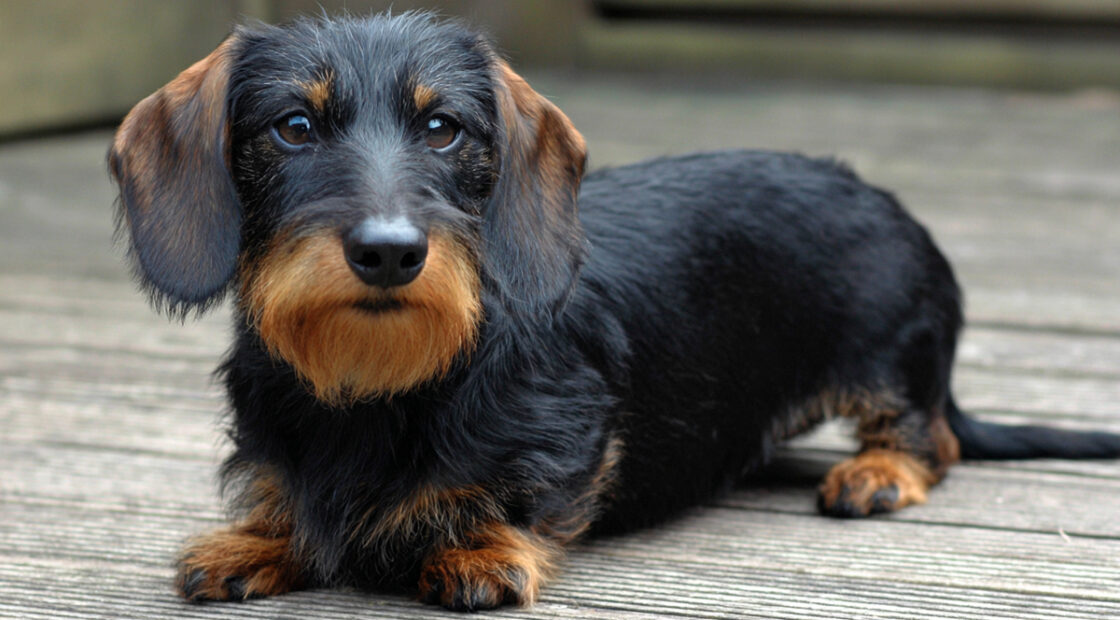
| Wirehaired | Harsh guard hairs over a dense undercoat | Hand stripping is preferred; clippers can soften and damage the coat texture |
Where matting starts: behind the ears, the armpits, the chest bib, and the trousers on the back legs.
Vanessa Slagle, groomer at Lovely Pets Grooming in Bella Vista, Arkansas, told Daily Paws that all three doxie coat types shed, with wirehaired dogs the heaviest shedders of the three.

One more thing that gets ignored: the long back. A dachshund on a grooming table needs supported hindquarters, not a dog left to sit up on its rear like a poodle.
The 7 Most Popular Dachshund Haircut Styles
- Puppy Cut – even short length across the whole body, roughly 1/2 to 1 inch
- Teddy Bear Cut – longer body, rounded face, fuller legs
- Show Trim – full natural coat, tidied to the breed standard
- Sanitary Trim – belly, rear, and paw pads only
- Feather Trim – body left long, feathering evened out
- Summer Cut – clipped down with a #7F or #10 blade
- Hand-Stripped Wire Coat – dead guard hairs pulled, not cut
The first six apply to longhaired dachshunds. The seventh belongs to wirehaired dogs and nobody else.
The Puppy Cut

The Puppy Cut is a dachshund haircut that takes the body coat down to a uniform 1/2 to 1 inch and shortens the ear and leg feathering to match. It suits longhaired coats and owners who want low maintenance, and it works best for spring through early autumn.
At a glance
- Body length: 1/2 to 1 inch (#3 blade or a 1/2 inch guard comb)
- Face and head: tidied close, natural dachshund tapering kept
- Ears: feathering shortened to just below the ear leather
- Legs and feet: trousers reduced, feet scissored round
- Tail: plume thinned and shaped, never clipped bare
- Maintenance: Low. 3 to 5 minutes brushing per day
- Regroom every: 6 to 8 weeks
- Best for: first-time owners, active dogs, warm climates
Who it suits: Owners who love the longhaired look but hate combing out tangles behind the ears. It’s also the standard recommendation for dogs that swim or run in long grass.
Watch out for: The puppy cut erases most of the breed’s silhouette, so the dog reads as a generic small fluffy dog for the first two weeks after the appointment.
The Teddy Bear Cut
The Teddy Bear Cut is a dachshund haircut that leaves 1 to 1.5 inches on the body, rounds the head into a soft shape, and keeps the legs fuller than the torso. It suits silky longhaired coats and owners who accept medium maintenance, and it works best in cool weather.
At a glance
- Body length: 1 to 1.5 inches (1 inch guard comb, scissor finish)
- Face and head: rounded, softened muzzle, no clipper lines
- Ears: left long, blended into the neck feathering
- Legs and feet: cylindrical, rounded feet
- Tail: full plume kept
- Maintenance: Medium to high. 10 minutes brushing per day
- Regroom every: 4 to 6 weeks
- Best for: indoor dogs, cold climates, owners who enjoy brushing
Who it suits: Dogs with soft, cottony hair that looks flat in a short trim. The extra length gives shape back.
Watch out for: Longer trims hide tangles. Primp Paws Grooming Academy flags matting as the main problem with teddy bear lengths, since knots form under the surface where you can’t see them. The same rounded-face principle shows up in the cuts groomers use on Shih Tzus, where scissoring does most of the shaping.
The Show Trim

The Show Trim is a dachshund haircut that leaves the body coat at full natural length and only neatens the feet, hocks, and stray ear hair. It suits longhaired coats in good condition and owners who accept high maintenance, and it works year round.
At a glance
- Body length: natural, untouched
- Face and head: smooth and short by nature, no clipping
- Ears: long fringe kept in full. Short ear hair counts as a fault
- Legs and feet: feathering behind the legs kept, foot hair tidied flush
- Tail: full plume, trimmed only at the tip
- Maintenance: High. 15 minutes brushing per day
- Regroom every: 8 to 12 weeks for shaping, weekly combing at home
- Best for: conformation dogs, retired show dogs, purists
The AKC standard calls for extra length under the neck, on the forechest, along the underside, on the ears, and behind the legs. Curly or overly long coats are penalized.
Who it suits: Dogs whose coat texture actually holds the look. Not every longhaired doxie grows the density this trim needs, and full coat can take 18 months to 2 years to come in.
Watch out for: A neglected show coat mats faster than any other style on this list, and severe matting fees run $50 to $100 or more per PetCareBooker’s 2025 pricing data.
The Sanitary Trim
The Sanitary Trim is a dachshund haircut that clips only the belly, groin, rear, and paw pads and leaves everything else alone. It suits every longhaired and wirehaired doxie regardless of maintenance appetite, and it works in all four seasons.
At a glance
- Body length: untouched
- Face and head: untouched
- Ears: inner ear hair thinned for airflow
- Legs and feet: pad hair cleared, hair between toes shortened
- Tail: underside cleared 1 inch from the base
- Maintenance: Low as a standalone. Add it to any other style
- Regroom every: 4 to 6 weeks
- Best for: low-slung dogs, seniors, dogs prone to ear infections
Who it suits: Every dachshund, honestly. A body that sits two inches off the pavement picks up whatever is on it.
Watch out for: Clipping the groin too close causes clipper burn on thin skin, which shows up as a red rash a day later.
Pair it with weekly ear checks. Floppy ears trap moisture, and a soft wipe with a gentle ear cleaning wipe handles most of the buildup between grooms.
The Feather Trim
The Feather Trim is a dachshund haircut that keeps the body coat natural and evens the feathering on the ears, chest, back of the legs, and tail by 1 to 2 inches. It suits longhaired coats and owners who want medium maintenance, and it works best in autumn and winter.
At a glance
- Body length: natural
- Face and head: untouched
- Ears: fringe shortened by 1 to 2 inches, tips squared or rounded
- Legs and feet: trousers evened, foot hair tidied
- Tail: plume shaped, bottom line straightened
- Maintenance: Medium. 8 to 10 minutes brushing per day
- Regroom every: 6 to 8 weeks
- Best for: owners who want the breed silhouette with less dragging hair
Who it suits: Dogs whose ear and leg hair collects burrs, mud, and food. You keep the look and lose the mess.
Watch out for: Cut the ear fringe too short and it takes 6 to 9 months to grow back to breed proportions.
The Summer Cut

The Summer Cut is a dachshund haircut that clips the body to 1/16 to 1/8 inch with a #10 or #7F blade and leaves almost no feathering. It suits badly matted longhaired coats and owners who want the lowest possible maintenance, and it works for hot months and matting rescues only.
At a glance
- Body length: 1/16 inch (#10) to 1/8 inch (#7F)
- Face and head: left natural, scissored around the eyes
- Ears: clipped to the leather or left with a short fringe
- Legs and feet: clipped down, feet tidied
- Tail: a short plume left for shape
- Maintenance: Low. 2 minutes brushing per day
- Regroom every: 6 to 8 weeks
- Best for: severe matting, seniors, dogs with skin conditions
Who it suits: Dogs whose coat has passed the point where dematting would be kind. Riverview Grooming lists it as the practical option for outdoor lifestyles and coat neglect recovery.
Watch out for: Short body cuts strip the coat’s insulation and expose skin to sun, so plan for shade or a dog-safe sunscreen, and expect patchy regrowth on the first shave-down.
I’ll say it plainly: this is a fix, not a fashion choice. Coast to Coast Dachshund Rescue warns that shaving removes the insulating layer and can damage follicles.
The Hand-Stripped Wire Coat

Hand stripping is a wirehaired dachshund grooming method that pulls dead guard hairs out at the root with finger and thumb or a stripping knife. It suits wire coats exclusively and demands high owner commitment, and it runs on the coat’s own growth cycle rather than the calendar.
At a glance
- Body length: whatever the new guard coat grows to, roughly 1 inch
- Face and head: eyebrows and beard shaped, skull stripped close
- Ears: stripped almost smooth, shorter than the body
- Legs and feet: furnishings tidied, feet neatened with scissors
- Tail: thick and tapering to a point
- Maintenance: High. Brushing 2 to 3 times per week
- Regroom every: 8 to 12 weeks, or 2 to 3 full sessions a year
- Best for: show dogs, working dogs, owners who want correct texture
Who it suits: Wirehaired doxies whose coat has “blown,” meaning the dead outer hairs release with an easy pull. Masterclip advises stripping only when the coat is ready, since pulling early is uncomfortable and teaches the dog to dread the table.
Watch out for: Clipping a wire coat instead of stripping it softens the texture and dulls the color permanently, leaving the undercoat to take over. The same rule governs the Airedale Terrier and other harsh-coated breeds.
The beard and eyebrow furnishings follow the same logic as the facial shaping used on Miniature Schnauzers, though the doxie version stays flatter and closer to the skull.
How to Choose the Right Dachshund Haircut
Match the cut to the coat type first. Wire coats get stripped, smooth coats get left alone, longhaired coats get the full menu.
Factor in your climate. A shaved doxie in January is a cold doxie.
Estimate your real brushing time, not your aspirational brushing time.
Consider age and back health. Senior dogs and post-IVDD dogs do better with short, quick sessions.
| Grooming Style | Maintenance | Best Season |
|---|---|---|
| Puppy cut | Low | Spring to early autumn |
| Teddy bear cut | Medium to high | Autumn and winter |
| Show trim | High | Year-round |
| Feather trim | Medium | Autumn and winter |
| Summer cut | Low | Summer only |
If you’re torn between two, pick the longer one. You can always take more off next visit. You cannot put it back.
How Often Should a Dachshund Be Groomed?
Longhaired dachshunds need a professional haircut every 6 to 8 weeks. Wirehaired dogs need stripping every 8 to 12 weeks, and smooth dachshunds need no haircut at all.
Petco puts puppy and teddy bear cuts on a 6 to 8 week cycle, with breed-standard long styles closer to 4 to 6 weeks to stay ahead of matting.
Brushing at home, by coat:
- Smooth: 1 to 2 times per week with a rubber mitt or soft bristle brush
- Longhaired: daily, or at minimum weekly with focus on ears and tail
- Wirehaired: 2 to 3 times per week with a slicker and metal comb
Bathing is a different clock. Stuck Soap’s guide puts smooth coats at every 6 to 12 weeks, longhaired at every 4 to 6 weeks, and wirehaired at just 3 to 4 full baths a year to protect the coat’s natural oils.
Nail trims run every 4 to 6 weeks regardless of coat.
Two things shorten the interval: a dog that swims, and a coat that’s soft rather than silky. Soft-textured longhaired doxies tangle faster and often need a groom at week 5.
Dachshund Haircut Grooming Cost and What to Tell Your Groomer
A full dachshund groom costs $40 to $75 in most US salons in 2026. Mobile grooming adds $15 to $25, and hand stripping a wirehaired coat typically runs above the standard small-dog rate because it’s slow, manual work.
| Grooming Service | Typical Price | Frequency |
|---|---|---|
| Full groom (small dog) | $40 to $75 | Every 6 to 8 weeks |
| Bath and tidy only | $20 to $30 less than a full groom | Between haircuts |
| Dematting surcharge | $15 to $100+ | As needed |
Bestie Paws reports grooming prices climbed roughly 40 to 50 percent since 2019, driven by a shortage of trained groomers against rising demand.
What to say at the counter:
- Name the style and the number: “puppy cut, half inch guard comb, please”
- State what stays: “keep the ear fringe and the tail plume”
- Flag the back: “she’s had a disc episode, so no sitting her up on her rear”
- Say no to clippers on a wire coat, out loud, every single visit
Bring a photo. Groomers hear “just a little off” and interpret it eleven different ways, and the most common complaint I’ve seen in dachshund owner groups is a dog coming home shaved when nobody asked for it.
Ask about matting policy before the appointment, not after. A groomer who calls you when they hit a bad mat is worth keeping.
Bring a few simple, single-ingredient treats for the drive home. Ending the appointment on something good makes the next one easier, especially with puppies.
FAQ on Dachshund Haircut Styles
Do dachshunds need haircuts?
Longhaired dachshunds need haircuts. Smooth coats never do, and wirehaired coats need hand stripping rather than cutting.
Every variety still needs a sanitary trim around the belly, rear, and paw pads.
Can you shave a long haired dachshund?
Yes, but treat it as a fix for severe matting or a skin condition, not a summer default.
Shaving removes the coat’s insulation and sun protection, and regrowth often comes back patchy on the first shave-down.
What is the best haircut for a long haired dachshund?
The puppy cut suits most owners. It takes the body to 1/2 to 1 inch, cuts brushing to a few minutes daily, and keeps enough length to protect the skin.
How often should a long haired dachshund get a haircut?
Every 6 to 8 weeks for clipped styles.
Longer teddy bear and show lengths shift closer to 4 to 6 weeks, since matting behind the ears and in the armpits builds faster than owners expect.
Can you clipper a wirehaired dachshund?
You can, and groomers do it for pet dogs. Clipping cuts through the guard hairs, though, so texture softens and the wild boar or red coloring dulls over successive grooms.
Hand stripping preserves both.
What blade or guard comb does a dachshund puppy cut use?
A #3 blade or a 1/2 inch guard comb for the body, finished with scissors on the feet and ear tips.
Summer cuts drop to a #7F (1/8 inch) or #10 (1/16 inch).
Do smooth dachshunds need grooming?
They need brushing 1 to 2 times weekly with a rubber mitt, plus nail trims every 4 to 6 weeks.
No clipper work. A smooth coat has nothing to cut and clipping it damages the guard hairs.
How much does a dachshund haircut cost?
Most US salons charge $40 to $75 for a full small-dog groom in 2026. Mobile grooming adds $15 to $25, and dematting surcharges start around $15 and climb past $100 on badly neglected coats.
Can I cut my dachshund’s hair at home?
Light work, yes. Paw pads, sanitary areas, and stray ear fringe are manageable with blunt-tip scissors.
Full body clipping and hand stripping both go better with a groomer who knows the breed’s long back.
Does a haircut stop a dachshund from shedding?
No. It shortens the hair you find on the sofa, nothing more.
All three coat types shed, and regular brushing plus a deshedding tool does far more than any clip. Unlike the sculpted clips poodles wear, doxie cuts are practical, not structural.
Conclusion
Picking between dachshund haircut styles comes down to three things: coat texture, the minutes you’ll spend with a slicker brush, and the weather outside.
Longhaired doxies have real options. Wire coats have one, and it involves a stripping knife rather than a clipper blade.
Book the regroom before you leave the salon. A coat that goes 10 weeks between appointments turns into a dematting bill, and severe tangles behind the ears end in a shave-down nobody wanted.
Brush the trouble spots twice a week. Armpits, chest bib, and the back of the legs.
And keep a photo on your phone of the trim you liked. Groomers change, memories fade, and “the usual” means nothing at a new salon.