Ask about the Fila Brasileiro and the first thing most people bring up is where it’s illegal. The United Kingdom, Norway and Denmark restrict ownership. Australia and New Zealand won’t let one in at the border.
The dog behind those laws is a molossoid guardian breed from Brazil. It was bred to watch property and work cattle, and it was used on big game too. It does not warm up to strangers, and it isn’t meant to.
The Federation Cynologique Internationale (FCI) keeps it under standard 225, Group 2, mastiff type. Acceptance on a definitive basis came on 1 January 1960.
The interesting part is what that standard actually asks for. It counts the wariness as a breed characteristic, but it also disqualifies any dog that is aggressive or overly shy (FCI standard 225, 2016). So by the breed’s own definition, an aggressive Fila is a faulty one. Governments read the same dog very differently.
What Is the Fila Brasileiro?
Brazil is the country of origin. The reference standard is kept there by the Confederacao Brasileira de Cinofilia (CBKC), which is affiliated with the FCI.
On the FCI side, it’s standard 225, and the listed use is watch dog. The classification is Group 2, Section 2.1, molossoid breeds of mastiff type, with no working trial. The wariness toward strangers is written into that standard as one of the breed’s characteristics, not tolerated as a side effect.
You’ll also see it called the Brazilian Mastiff, the Cao de Fila, or just the Fila.
The name comes from the Portuguese verb filar, to grip or hold. A “cao de fila” is a dog that grabs and doesn’t let go. Fairly literal, as breed names go.
Loyalty is the other half of the reputation. The standard calls it proverbial, and the CBKC breed presentation hosted by the FCI quotes the Brazilian saying “faithful as a Fila”.

Where Does the Fila Brasileiro Come From?
It took shape on Brazilian plantations and cattle farms in the colonial period, out of European working dogs the settlers brought over. Which breeds exactly is still an argument.
Ancestor Breeds and Original Roles
It was a farm all-rounder, and the build makes more sense once you see what it was asked to do:
- Guarding farms and livestock
- Holding and herding cattle
- Chasing jaguars and other large game
- Tracking and returning escaped enslaved people, which is part of the breed’s documented history and shouldn’t be skipped over
The traditional story gives the bulk to the English Mastiff and the tenacity to the extinct Old English Bulldog.
The loose skin and the nose suggest the Bloodhound, and the resemblance around the head and neck is real. The Fila is taller, though, and heavier in the bone.
Not everyone buys this. Breeder and researcher Antonio Carlos Linhares Borges argues in his 2018 book for an Iberian origin through the extinct Portuguese Alaunt. He also blames the English-ancestry belief for crossbreeding that diluted the original dog, according to Wikipedia’s Original Fila Brasileiro entry.
Competing Standards in Brazil
Brazilian breed histories put the first written standard in 1946 (Dogster, Wikipedia). Paulo Santos Cruz, later called the father of the breed, started breeding the Fila systematically around then.
Today Brazil doesn’t have one standard. It has a few.
The CBKC/FCI version is the international reference and accepts brindle, fawn and black. CAFIB built its standard on what it calls the “ancient phenotype” and rejects black, mouse-grey, black-and-tan, blue and dappled dogs as signs of crossbreeding, while allowing larger white markings than the FCI does. AMFIBRA also works from the first Cruz standard but has a smaller following than CAFIB.
The split goes back to accusations that CBKC registrations in the 1970s, 1980s and 1990s let in dogs with foreign mastiff-type traits.
Most international breeders still follow CBKC/FCI. It’s the one people know.
Then there’s the Original Fila Brasileiro, which SOBRACI registers as a separate breed. Those dogs were selected from farm stock that never went near the show ring.
Fila Brasileiro Size, Coat and Body Structure
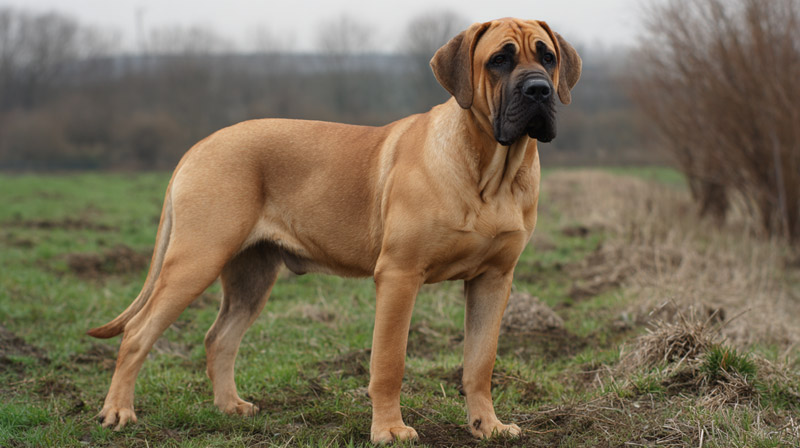
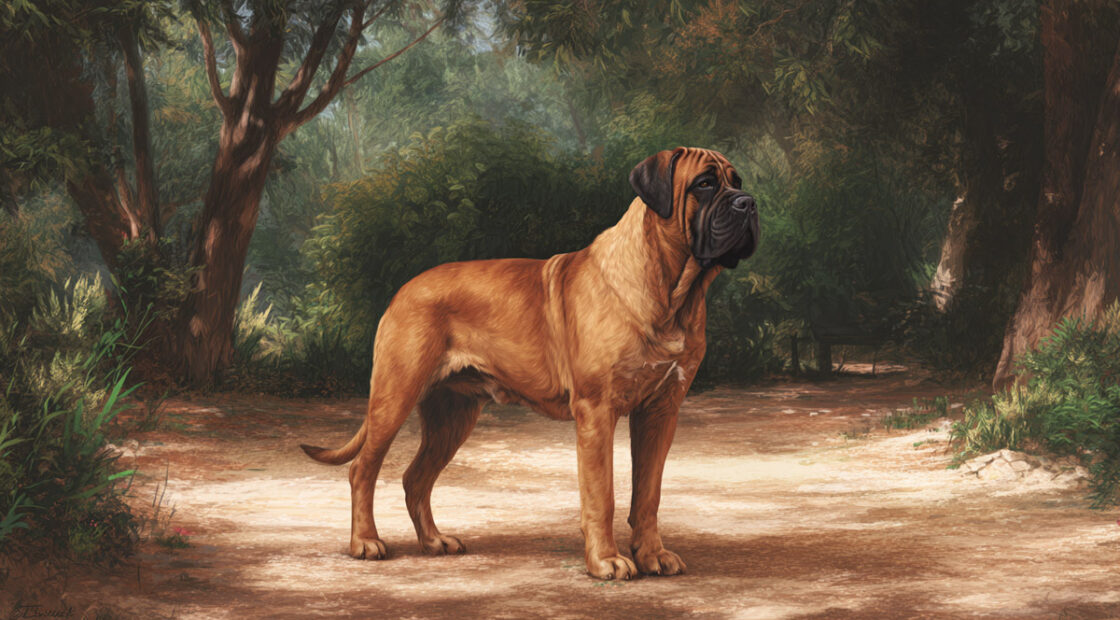
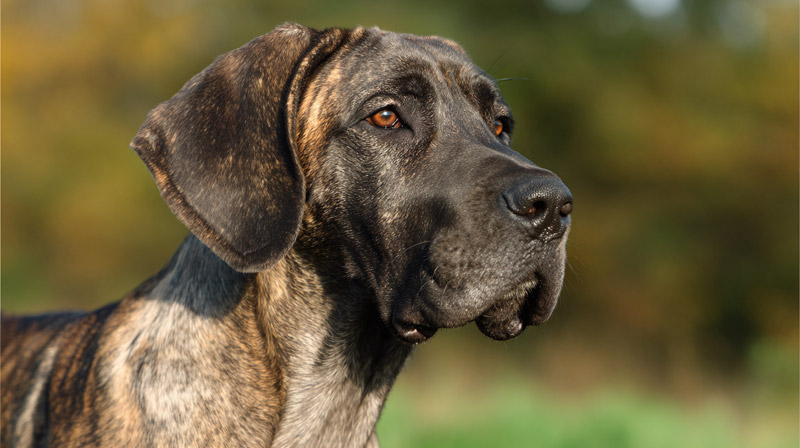
Large, heavy, loose-skinned. The coat is short, smooth and dense, lying close to the body, and comes in brindle, fawn or black.
The size limits in FCI standard 225 (2016) look like this:
| Measure | Males | Females |
|---|---|---|
| Height at the withers | 65 to 75 cm | 60 to 70 cm |
| Minimum weight | 50 kg | 40 kg |
| Maximum weight | Not set | Not set |
Since the standard only sets a weight floor, popular breed profiles are all over the place. Wisdom Panel says 41 to 82 kg. Vetstreet says 90 to 100 pounds.
Height is where the standard gets strict. Going over the maximum is a serious fault, and a male under 65 cm or a female under 60 cm is disqualified.
Body Structure and Gait
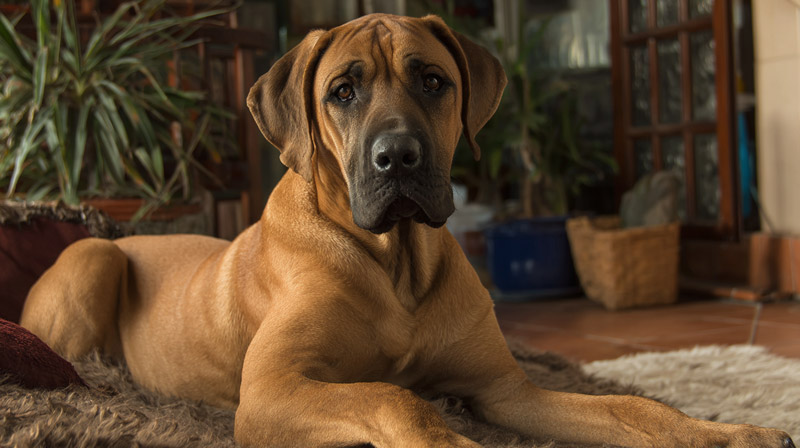
The outline is rectangular and the bone is heavy. The head is big and broad, with a thick upper lip that hangs.
The skin is thick and loose over the whole body and forms dewlaps at the neck. This isn’t cosmetic. A dog without loose, supple skin is disqualified.
Then there’s the walk. The Fila moves with what breeders call the camel’s pace, a two-beat lateral gait where both legs on one side swing together. In a lot of breeds pacing is marked as a fault. In this one the standard requires it, and a dog that doesn’t move this way is disqualified. I find that one of the stranger details in any breed standard, honestly.
Coat and Colors
Under the FCI standard, these are accepted:
- Brindle
- Fawn
- Black
- A black mask, which is optional
- White on the feet, the chest and the tip of the tail
And these get a dog disqualified:
- White
- Mouse-grey
- Dappled
- Black and tan
- Blue
White markings anywhere else on the body are a fault. CAFIB goes a step further than the FCI and rejects black too, reading it as a sign of crossbreeding.
Fila Brasileiro Temperament and the Meaning of Ojeriza
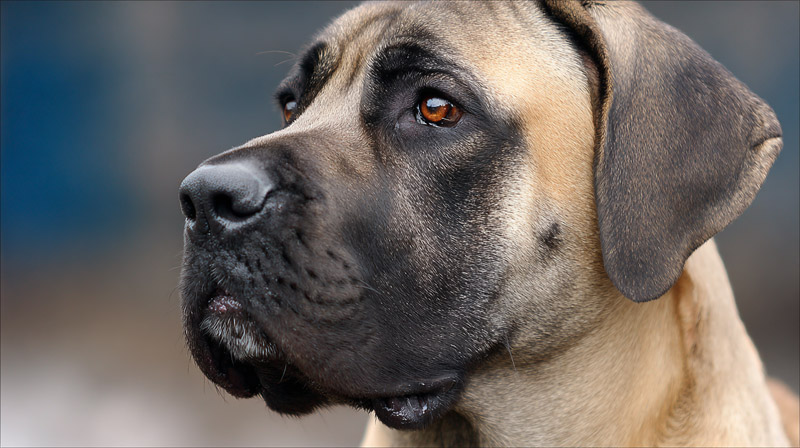
With its own people, docile and loyal. With everyone else, wary.
With Family and Children
The FCI standard describes a calm, self-assured dog that isn’t bothered by strange noises. With its owners it is docile and obedient, and it’s described as extremely tolerant of children.
That tolerance applies inside the household. The standard puts it right next to aloofness toward strangers, especially when the dog is on its own ground.
What Ojeriza Means
The Portuguese CBKC standard calls the trait ojeriza. Modern Molosser translates it as grudge or spite, and that’s about where agreement ends.
The FCI’s English text softens it into a natural aloofness toward strangers, with acceptance of controlled handling. Modern breeders tend to wear it as a point of pride. They describe an extreme aversion to strangers and keep it separate from guard-dog training.
Some Brazilian trainers are less flattering. A view attributed to trainer Jairo Teixeira on Wikipedia’s Original Fila Brasileiro entry says ojeriza is mostly fear with a nicer name.
This matters in practice. The same standard that rewards wariness also disqualifies a Fila that is aggressive or overly shy, and where a given dog falls depends a lot on who’s doing the reading.
Is the Fila Brasileiro Dangerous?
The governments that ban it think so, and they point to the guarding temperament.
Norway’s food safety authority, Mattilsynet, puts the Fila among six breeds it considers potentially dangerous, citing aggression and tenacity. The FCI standard, on the other hand, asks for a guardian you can control.
So the trait lawmakers go after is the same trait the standard values. In my view that shifts the real risk onto containment, supervision and early socialization. The breed name on the paperwork is a much weaker predictor.
Which Countries Ban or Restrict the Fila Brasileiro?
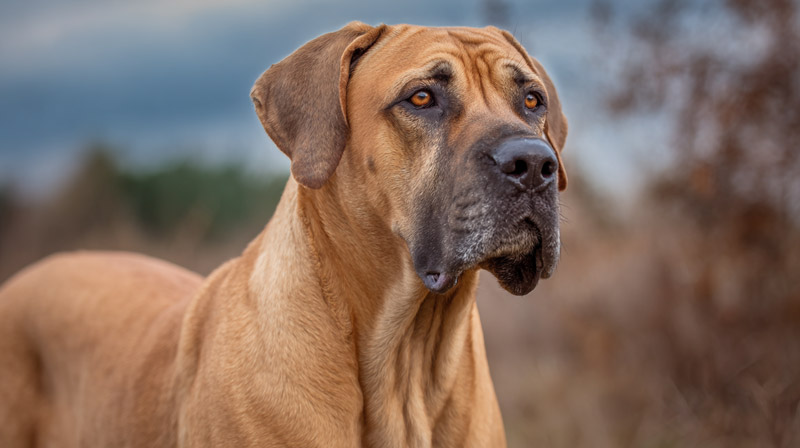
As of October 2026, the United Kingdom, Norway and Denmark restrict ownership of the Fila Brasileiro. Australia and New Zealand block imports.
Country-by-Country Status
| Country | What the law covers | Source |
|---|---|---|
| United Kingdom | Ownership, breeding, sale, exchange, advertising; court exemption needed | Dangerous Dogs Act 1991 |
| Norway | Owning, breeding, importing; crossbreeds included | Mattilsynet, Dog Act |
| Denmark | Keeping, breeding, commercial import | Danish Veterinary and Food Administration |
| Australia | Import prohibited | Customs (Prohibited Imports) Regulations 1956 |
| New Zealand | Import prohibited | Dog Control Act 1996, Schedule 4 |
The UK law targets a type, not a pedigree. A court decides whether a dog is a Fila based on its physical and behavioural characteristics. Owning one that isn’t on the Index of Exempted Dogs risks up to six months in prison, an unlimited fine, or both (Dangerous Dogs Act 1991, section 1).
Small catch: the fine was capped at 5,000 pounds sterling until 2015, when this level of fine became unlimited in England and Wales. Some council summaries still quote the old cap.
Norway lists six breeds and Denmark 13. The Dogo Argentino appears next to the Fila on every list in the table, so a household ruled out for one is usually ruled out for the other.
Denmark’s 2010 transitional rule let existing owners of a listed dog keep it. Passing through the country in transit is allowed.
Other Countries Named in Secondary Sources
Wikipedia’s breed entry, citing national legislation, adds a few more. In Turkey, owning and breeding are both illegal. Cyprus, Hong Kong and Fiji make ownership illegal without a court exemption. Trinidad and Tobago gives the breed automatic dangerous-dog status, bans imports and requires males to be neutered.
Euronews (2023) also names Malta, and a Hundeo breed guide names Israel. No official text for either turned up in the checks behind this list, so I’d treat both as unconfirmed until you see the law yourself.
The sources reviewed show no national ban in the United States. Hundeo notes that breed-specific rules vary by state, and city ordinances sit on top of that.
How the Bans Are Enforced
A lot comes down to how a dog gets identified. A look-alike carries the same risk as a registered Fila.
- In Norway, police and customs can demand proof of breed or type. Where there’s doubt, the police can have the dog killed or require it to leave the country.
- Danish police can require the keeper to prove the dog’s breed.
- Australia lets mixed-breed dogs in if every other condition is met, but the Department of Home Affairs may investigate a dog that could be a prohibited breed.
- New Zealand asks importers of unregistered dogs to sign a statutory declaration that the dog is not wholly or mainly a listed breed.
Check the law at the destination before buying or moving. A banned dog can be stopped at the border or taken from your home.
Fila Brasileiro Health Problems and Lifespan
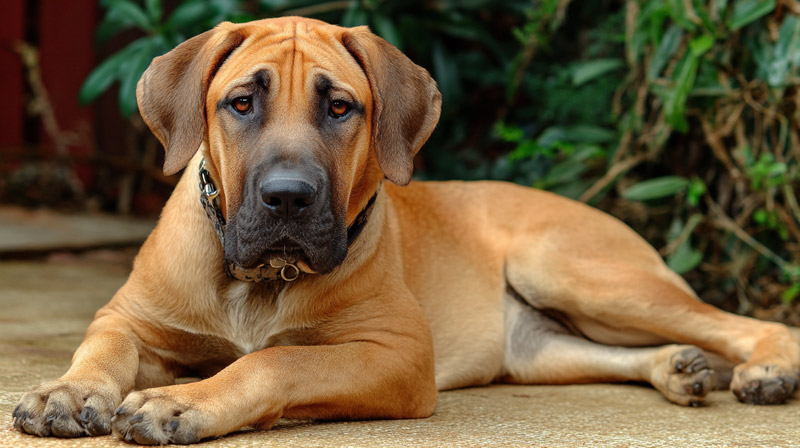
Joints and bloat are the big worries. Specifically hip dysplasia, elbow dysplasia, and gastric dilatation-volvulus (GDV, also called bloat). Lifespan numbers vary depending on who you ask, and none of the figures reviewed here come from a study of Filas alone.
Hip and Elbow Dysplasia
Orthopedic Foundation for Animals (OFA) statistics for 1974 to 2013 list 182 Fila Brasileiro elbow evaluations, and 23.1% were dysplastic (data as reproduced by K9 Carts). Nearly one in four.
Hips aren’t any better. The Institute of Canine Biology looked at OFA data through December 2016 and placed the Fila among the breeds with the worst hips, and among the least improved over time.
Keep in mind that OFA submissions are voluntary. A VIN review notes that obvious cases are probably screened out before anyone sends the X-rays in, so the published rates may understate the problem.
Both conditions are inherited. According to the OFA, a high-calorie diet during rapid growth can make joint changes worse in a predisposed dog but doesn’t create the disease, and there’s no evidence that supplements prevent it.
Gastric Dilatation-Volvulus (Bloat)
GDV comes on fast. The stomach fills with gas, food or fluid and twists on itself, and it’s an emergency. Cornell’s Riney Canine Health Center lists large, deep-chested dogs as the most exposed.
A Czech survey of 241 giant-breed dogs that had died, Filas included, found GDV behind 30% of deaths in the mastiff-type breeds (Fiala Sebkova and colleagues, 2020).
That number covers a group. The survey lumped the Fila in with four other mastiff-type breeds, so it doesn’t describe the Fila on its own.
Vets often bring up preventive gastropexy for deep-chested dogs. Cornell says it greatly reduces risk. Veterinary Practice News adds that it stops torsion but not the dilatation itself.
Skin, Ears and Eyes
- The skin folds around the neck and shoulders can get infected (Hundeo)
- Pendant ears hide the early signs of an ear infection (Wisdom Panel)
- Eye problems sit next to hip dysplasia on Dogster’s list of common issues
Lifespan: What the Figures Show
Breed guides disagree by several years.
| Source | Stated lifespan | Basis |
|---|---|---|
| Wisdom Panel | 8 to 11 years | Breed profile |
| Dogster | 9 to 13 years | Breed profile |
| My-PersonalTrainer (Italy) | 10 to 14 years | Cites veterinary literature |
The Czech survey puts the average giant breed at 7.60 years (n = 241). There weren’t enough Filas in the sample for a breed-level figure.
The guide ranges are estimates. If you’re planning, the giant-breed average is the more cautious number to work with.
Training and Socializing a Fila Brasileiro
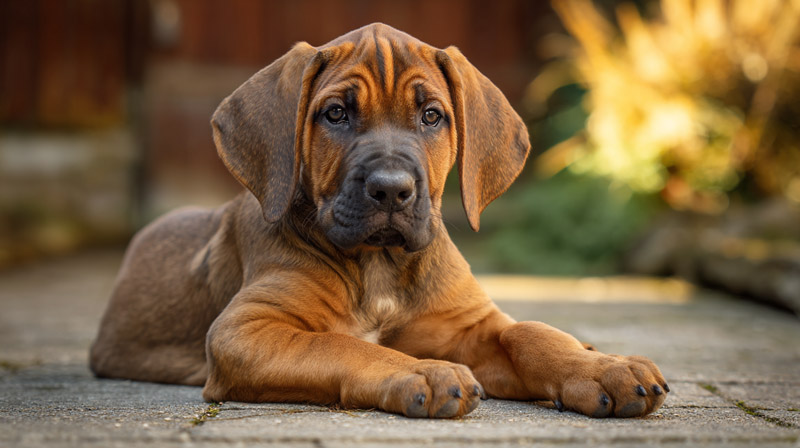
Start the day the puppy comes home. The American Veterinary Society of Animal Behavior (AVSAB) calls the first three months the primary window, and with this breed, wariness of strangers is the main thing you’re working on.
You are not trying to make a dog that greets every visitor. That won’t happen. The goal is a dog that accepts controlled handling, which is what the FCI standard asks for anyway.
- Buy from a breeder who raises puppies in the home. Vetstreet advises one who exposes the litter to household sights, sounds and people.
- Start handling at home. Touch every part of the body, add new surfaces and car trips, and get several people involved in feeding and handling, since Fila puppies tend to bond with one or two (Dogster).
- Get into a puppy class by 7 to 8 weeks. AVSAB allows classes from that age once the puppy has had one set of vaccines at least 7 days earlier and a first deworming.
- Keep every exposure positive. Stop before the puppy gets overstimulated, and stay away from dog parks and other busy areas until vaccines are done.
- Move on to basic obedience. After puppy kindergarten, take an obedience class, ideally with a trainer who knows the breed (Vetstreet).
- Keep going through adolescence and into adulthood. AVSAB says exposures should continue to keep a dog sociable, and the Fila matures late, so adolescence runs long (Zooplus).
Use reward-based training and be consistent about it. AVSAB links positive reinforcement to fewer behavioral problems and better obedience than punishment or dominance methods.
Be realistic about the ceiling. Poor socialization raises the risk of fear and aggression, but a well-socialized Fila is still going to be aloof. It’s built that way.
If your puppy shows fear, AVSAB tells owners to get veterinary guidance.
Daily Care: Exercise, Feeding, Space and Grooming
Exercise needs are moderate. Grooming barely registers. The things that take real thought are fencing and how you feed.
Exercise and Space
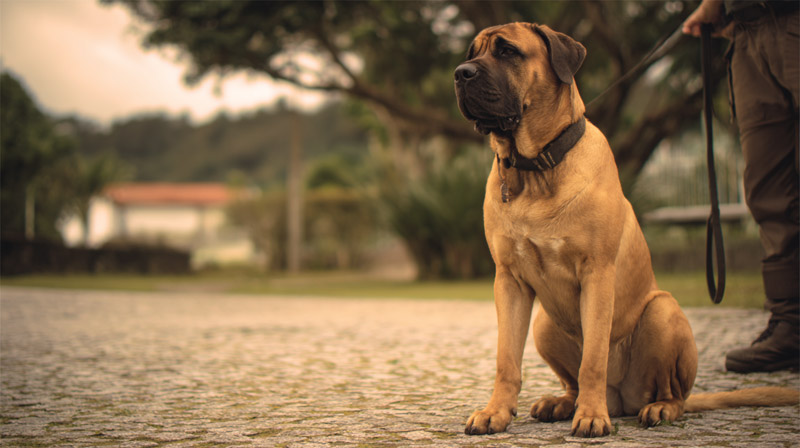
Hundeo suggests two walks of 30 to 45 minutes a day for adults, plus a securely fenced garden. Puppies should get gentle exercise until about 18 months to protect growing joints (Hundeo).
Hard exercise in a growing puppy can impair growth, according to Pet Insurance Quotes.
Containment means a fenced property at home and a leash in public. Hundeo rates apartments as a poor fit, which won’t surprise anyone who has seen one of these dogs.
Feeding and Bloat Prevention
Cornell lists the feeding habits that push up bloat risk in deep-chested dogs:
- Eating too fast
- Getting one meal a day, or a large volume per meal
- Exercising soon after eating
The fix Cornell gives is two or more meals a day. Splitting the ration and letting the dog rest after eating doesn’t cost anything.
A slow-feeder bowl is a cheap way to slow down a fast eater, but the evidence on eating speed is mixed. A 2016 Veterinary Evidence summary found most studies show no effect, and one major study found an effect in large breeds but not giant ones.
Feeding a Growing Puppy
According to the UK Kennel Club, any puppy expected to reach 30 kg or more should be on a large-breed growth diet for its entire growth period.
The Kennel Club also names overfeeding and fast weight gain as risk factors for hip dysplasia and other developmental orthopaedic conditions.
When you’re comparing puppy food brands, look for a large-breed formula with an AAFCO complete-and-balanced statement backed by feeding trials.
VCA Animal Hospitals says not to add calcium supplements to a balanced diet, and not to free-feed. For giant breeds, the growth formula can run to 24 months.
Grooming and Skin Care
One brushing a week clears out dead hair from the short coat, according to Petlove, a Brazilian pet retailer.
The folds and ears take more work than the coat does. Wipe out the folds around the neck, check the pendant ears regularly, and accept the drool from those heavy upper lips (Hundeo).
How Much Does a Fila Brasileiro Cost and Where Do Buyers Find One?
In the United States, a puppy from a reputable breeder runs about $2,000 to $4,500 (Hundeo, 2026). Add equipment and veterinary setup and the first year comes to roughly $5,000 to $9,000.
These are breed-guide estimates. No published market study turned up. Hundeo also reports that legitimate sellers are hard to find outside the US and Ireland.
What Drives the Price
Pedigree is part of it, with Brazilian working lines priced differently from European show lines. Health testing adds cost, since both parents should have hip and elbow X-rays.
Where the breed isn’t bred locally, import logistics come into play too, meaning shipping and paperwork. Dogster notes that US buyers may have to get a puppy from a kennel in Brazil, which pushes the total up.
Ongoing Costs
Food, vet care and insurance all go up with body weight. Owning a dog is expensive at any size, and a giant breed makes every line bigger.
Pet insurance costs more for a Fila than for a mixed breed (Embrace Pet Insurance). Some homeowner policies exclude the breed outright (Hundeo), which is worth checking before you bring one home, not after.
Choosing a Breeder
- Written OFA hip ratings of fair, good or excellent for both parents (Vetstreet), plus elbow results
- Documented genetic health testing, since a vet check on the puppy doesn’t replace it
- One price for every puppy, because a lower price without papers is a red flag (Vetstreet)
- Be suspicious of a price far under the $2,000 floor, which Hundeo treats as a warning sign
- Home-raised litters, and a breeder happy to do a visit or video call, which reputable ones welcome (Paction)
- A written contract and ongoing support, and keep an eye out for puppy scams (Paction)
When a Fila Brasileiro Is the Wrong Dog
For a lot of homes, it is. First-time owners are the clearest case. Wisdom Panel recommends the breed only for very experienced owners.
Homes with frequent visitors are another problem. Every introduction to a stranger needs supervision, and Hundeo calls unsupervised contact with unfamiliar people dangerous.
Multi-dog households can work, sometimes. Embark says a Fila may accept dogs it grew up with but probably won’t tolerate a new one.
No fenced yard, or an apartment? That rules it out. And anywhere ownership is restricted, legality comes before everything else, because a banned dog can be seized.
Small children are a split verdict. The FCI standard calls the breed extremely tolerant of children, but it’s describing the household’s own kids. Hundeo rates the breed as less suited to families with small children.
The owner who fits best is an experienced handler with a fenced property, not many visitors, and a trainer nearby who knows the breed.
Fila Brasileiro FAQ
Is the Fila Brasileiro recognized by the American Kennel Club?
No. The AKC does not register the breed (Dogster, Vetstreet). The FCI does recognize it.
The United Kennel Club is murkier. One breed profile lists the Fila in its Guardian Dog Group, while Vetstreet says the UKC doesn’t recognize it.
Can a Fila Brasileiro live with cats?
Only with early socialization, and even then carefully. Zooplus says the breed gets along with cats only if socialised as a puppy, and will still chase loose ones.
Dogster adds that many Filas have a strong prey drive toward animals smaller than they are.
How does the Fila Brasileiro compare with the Cane Corso?
The Cane Corso is the more flexible dog. The FCI classes it as a polyvalent utility dog with a working trial, while the Fila is a watch dog with none.
It’s also much easier to own legally. The Cane Corso isn’t on any of the UK, Norwegian, Danish, Australian or New Zealand ban lists.
Can a Fila Brasileiro be trained as a protection dog?
It guards on instinct and needs no protection training. Some countries ban that training outright anyway. Norway prohibits owning or breeding dogs trained to attack or defend against people, whatever the breed (Mattilsynet).
Many breeders of the modern Fila also reject guard-dog training, according to Wikipedia’s Original Fila Brasileiro entry.
Can you adopt a Fila Brasileiro from a rescue?
Rarely. Dogster says Filas aren’t commonly found in shelters or rescues, so a breeder is usually the only option.
If an adult does come up, Embrace notes that many of the breed’s health problems stay hidden in puppyhood. An adult’s record can rule most of them out, which is a real advantage.
What to Settle Before Buying a Fila Brasileiro Puppy
Start with legality. Then pick the breeder, and after that the training plan. The order is about what can’t be undone.
The law can end ownership outright. The breeder fixes the dog’s inherited health before you ever see it. Training can be adjusted, and it keeps going long after the puppy window closes.
Before pickup, that means you’ve confirmed the legal status where the dog will live, you have the parents’ OFA certificates from the breeder, and you’ve already booked a trainer.
Pairing the low and high ends of Hundeo’s price and first-year ranges, the puppy accounts for 40 to 50 percent of year one. So budget 2 to 2.5 times the purchase price.
The other cost is time. Hundeo reports waiting lists of up to 12 months at Irish breeders who import the breed.